What Restaurant Does Brian Malarkey Own in San Diego?
A plain answer to which San Diego restaurants belong to chef Brian Malarkey, where they sit, and how to fold one into a food-focused trip.
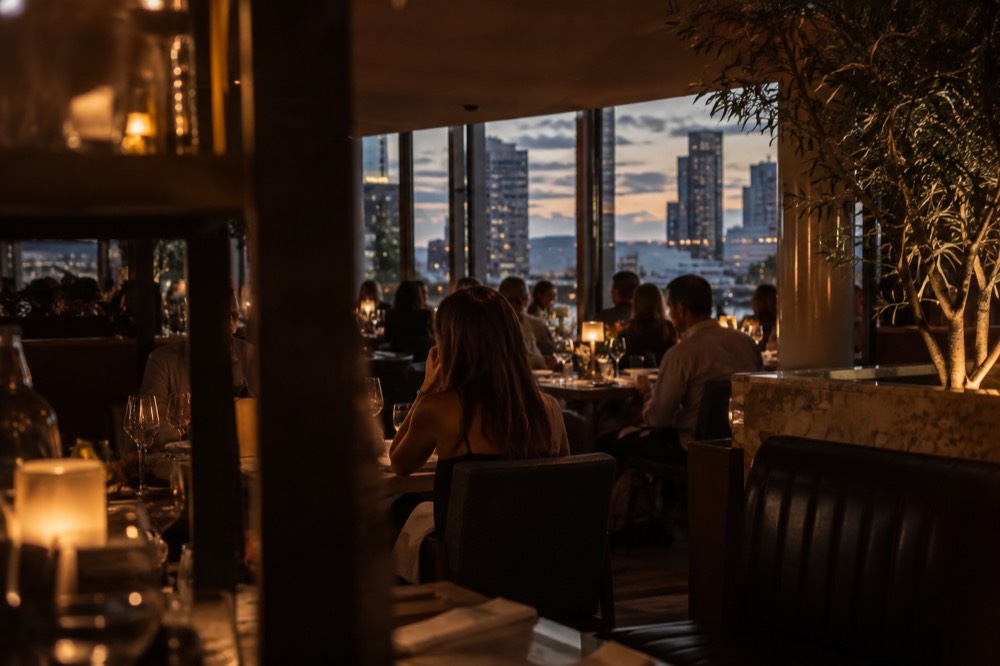
What Restaurant Does Brian Malarkey Own in San Diego?
Chef Brian Malarkey's San Diego portfolio has included Herb & Wood and Animae downtown, Herb & Sea in Little Italy, Born & Raised steakhouse in Mission Hills, and smaller concepts such as The Gabardine and Little Finch. His lineup changes as concepts open and close, so treat any list as a snapshot and confirm against his group's own site before you book a table.
That hedging is not evasion, it is how restaurant groups actually work. Malarkey became nationally visible as a contestant on a network cooking competition, then built a string of San Diego restaurants whose names and formats have rotated over the years. Local food coverage has tracked openings, closures and rebrandings throughout, and the honest answer to this question is a moving one.
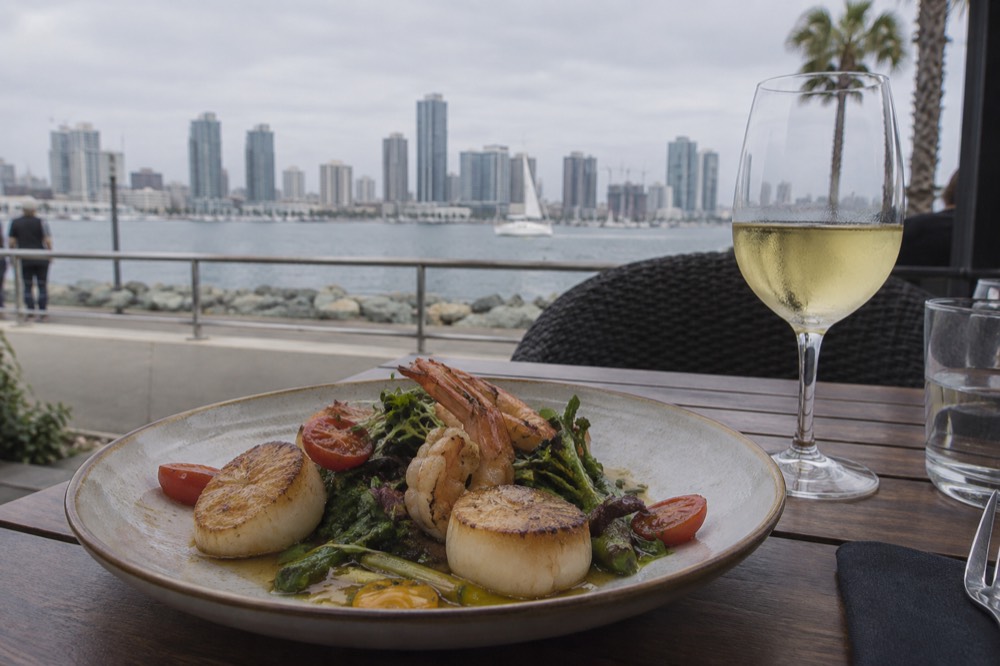
What stays consistent is the pattern. His flagship tables cluster around two of the city's most walkable food districts: the Gaslamp and East Village edge of downtown, and Little Italy. If you are planning a trip around his cooking, you are really planning around those neighborhoods, both of which reward a whole evening rather than a single reservation.
There is a second reason the question is worth answering carefully. San Diego's dining scene has grown deep enough that a name-brand chef is one option among hundreds, not the automatic best table in town. Knowing where Malarkey's kitchens sit lets you decide whether a chef-driven dinner belongs in your itinerary at all, and that decision is genuinely different for a weekend visitor than for someone with five days to spare.
Where Are Malarkey's Restaurants Located?
The core of the portfolio sits in two clusters: downtown concepts within or near the Gaslamp Quarter, including the large-scale Animae, and Little Italy and Mission Hills addresses such as Herb & Sea and the Born & Raised steakhouse. Each is walkable from hotel districts visitors already choose, so you can pair a Malarkey dinner with a bar crawl or an after-dinner stroll without moving your car.
Downtown is where the big rooms live. Malarkey's downtown projects have leaned theatrical: open kitchens, dramatic lighting, menus built to be photographed. The Gaslamp Quarter is the natural base for that kind of night, and our Gaslamp Quarter neighborhood guide covers what else to do within a few blocks of those tables, from historic buildings to the nightlife that follows dinner.
Little Italy is the quieter cluster. The district has become the city's most concentrated dining neighborhood, and a chef with Malarkey's profile was always going to land there. Our Little Italy visitor guide walks the whole neighborhood, including the weekly farmers market that supplies many of its kitchens.
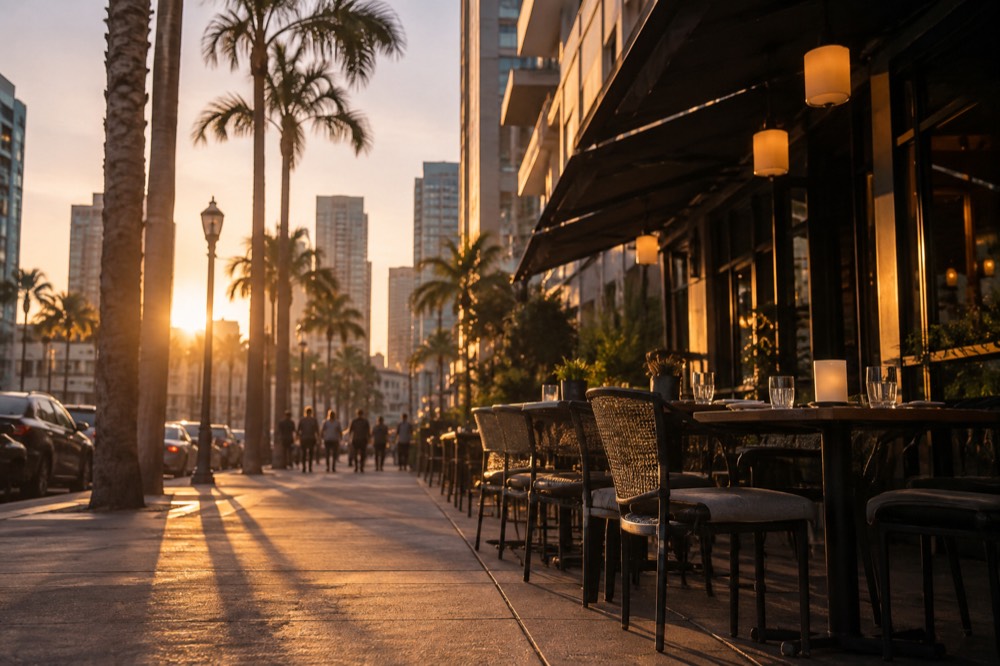
Mission Hills sits a short ride north of downtown and feels like a different city: quieter streets, older buildings, a neighborhood crowd rather than a visitor crowd. The steakhouse there draws a mix of locals celebrating anniversaries and travelers who made the trip deliberately. It is the kind of reservation you make when you want the evening to feel like an event rather than a stop on a crawl.
A quick orientation table, with the caveat that concepts in this group have opened, closed and been renamed over the years, so verify the current lineup before you go:
| Concept | Neighborhood | What it leans toward |
|---|---|---|
| Herb & Wood | Downtown / East Village edge | Wood-fired cooking in a converted industrial space |
| Animae | Downtown | Large-format Asian-influenced dining, big-room atmosphere |
| Herb & Sea | Little Italy | Seafood-forward Italian, tighter and more casual |
| Born & Raised | Mission Hills | Classic steakhouse, cocktail program |
| The Gabardine | Downtown | Smaller-format neighborhood bistro cooking |
Which Malarkey Restaurant Should You Pick for a First Visit?
Pick by neighborhood, not by menu. If you want the theatrical big-room night, head for the downtown flagships in or near the Gaslamp. If you want the version of his cooking locals actually eat weekly, book in Little Italy or Mission Hills. Travelers who only have one dinner in the city should weigh whether a chef-name table matters more than variety, because San Diego's strength is range, not any single kitchen.
For a first-time visitor, the downtown rooms are the easier logistics. They sit inside the walkable core covered in our downtown San Diego guide, close to the Embarcadero and the hotels most visitors book anyway. You can dinner at a Malarkey table and still see the waterfront lights on the walk home.
For a longer stay, the Mission Hills and Little Italy addresses give you a different city. Those neighborhoods are where San Diego's own restaurant conversation happens, and our piece on the city's top-rated restaurants places Malarkey's kitchens inside a much wider field of contenders, from taco shops to fine dining.
One honest note on expectations: a chef with a multi-restaurant group is rarely standing at your stove. The kitchens run under executive and sous chefs, and the name on the door is a promise about style and standards rather than a guarantee of a personal appearance. That is true of nearly every restaurant group at this scale, in every city.
It is also worth knowing what the kitchens have in common stylistically. The menus across the group tend toward bold, shareable plates with strong coastal influences, which fits a city where the ocean is never more than a few miles away. If you have eaten at one of his concepts before, you will recognize the handwriting at the others, and if you liked it once, the safer bet is the concept closest in format to the one you enjoyed.
How Do You Fold a Malarkey Dinner Into a San Diego Food Trip?
Treat the reservation as one anchor night, then build the rest of the trip around variety: tacos in Old Town or Barrio Logan, a brewery afternoon, a food tour that samples several kitchens in one walk. A three- or four-day itinerary absorbs one splurge dinner easily, and Little Italy in particular works as a district you return to twice, once for the tasting walk and once for the sit-down table.
The practical pattern that works well: book the splurge table for your second or third night, once you have calibrated your budget against the rest of the trip. Our San Diego trip cost guide helps with that arithmetic, and it is the difference between a dinner that feels like a highlight and one that quietly wrecks the daily budget.
The other half of the pattern is sampling broadly on the cheap nights. A short guided tasting walk is the efficient way to do that, and the Taste of Little Italy food tour covers a string of the neighborhood's kitchens in about 30 minutes of stops, a format that leaves your evening free for the big reservation later.
If your trip runs longer, the same logic extends. A brewery afternoon in North Park gives you the city's other famous export, and a dinner cruise on the bay turns the harbor itself into part of the meal. Neither competes with a chef-driven table; they are different courses of the same trip.
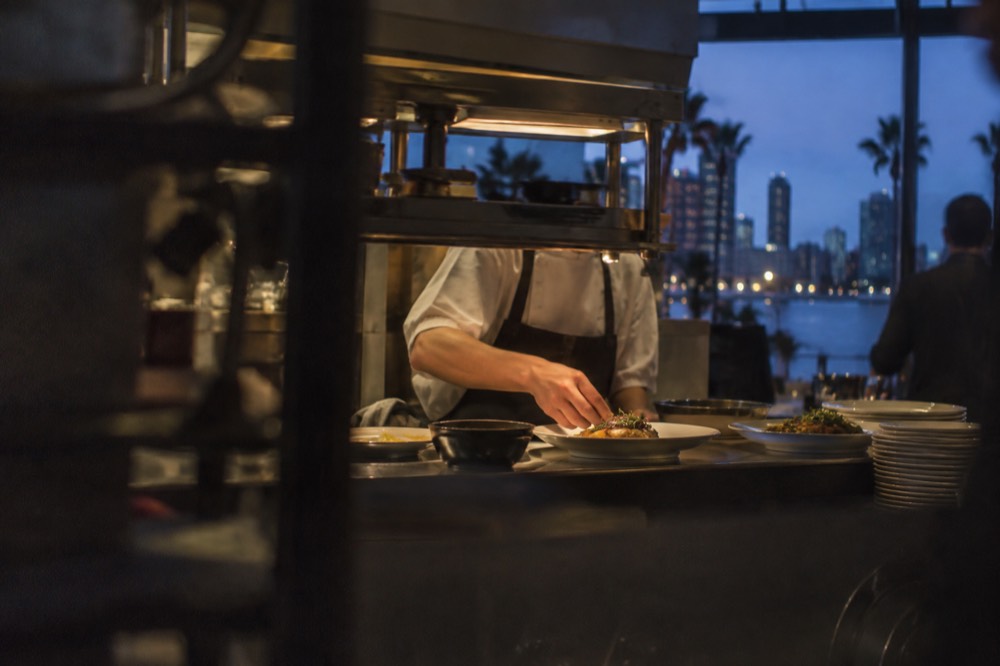
Timing matters more than travelers expect. September is the month when the city's own weather data argues hardest for an outdoor-adjacent dinner: the normal high sits at 77.2F, essentially level with August and above July's, and the crowds of peak summer have thinned. A reservation on a warm September evening, with the walk home through lit streets, is about as good as a San Diego dinner gets.
Is a Chef-name Restaurant the Best Use of One Dinner in San Diego?
Sometimes, but not automatically. A single-splurge visitor should weigh a Malarkey table against the city's signature experiences: a fish taco crawl, a sunset over the water with something simple to eat, or a neighborhood like North Park where the beer and the food are equally the point. The chef's kitchens are excellent at what they do; what they do is big-city dining you could find in any major food town.
That is the fair framing. What you cannot replicate elsewhere is the setting: dinner a few blocks from the bay, a walk home through the Gaslamp, an October evening warm enough to sit outside. Our best restaurants in San Diego guide makes the same point at scale, mixing name kitchens with the taquerias and neighborhood rooms that only exist here.
For travelers who care less about any single chef, the alternative is to let a guided experience do the choosing. A brewery tour built around beer education covers North Park's taprooms with pairings, and a harbor dinner cruise makes the meal about the skyline. Both are easier to book than a hard-to-get Saturday table, and neither needs a reservation strategy.
Common Questions About Brian Malarkey's San Diego Restaurants
what restaurant does brian malarkey own in san diego?
His portfolio has included Herb & Wood and Animae downtown, Herb & Sea in Little Italy, Born & Raised in Mission Hills, and smaller concepts such as The Gabardine. The lineup changes as concepts open and close, so check his group's current site before booking.
Is Brian Malarkey still cooking in San Diego?
He remains a San Diego-based chef and restaurateur, but in a group of this size the day-to-day cooking is led by each kitchen's own chefs. The name on the door signals the style and standards rather than a personal appearance at your table.
Which Malarkey restaurant is closest to the Gaslamp Quarter?
The downtown concepts, including Animae and the East Village-edge flagships, sit within or beside the Gaslamp Quarter, all walkable from the main hotel districts downtown.
Do I need a reservation for his restaurants?
For the flagship rooms, yes, especially on weekends and in the summer and convention-season peaks. Book ahead online, and check the cancellation terms when you do, since plans shift on a trip.
Can I visit Little Italy without a big dinner budget?
Yes. Little Italy is free to wander, its weekly farmers market costs nothing to enter, and a short tasting walk samples several kitchens for less than one sit-down meal. Our Things to Do in San Diego coverage of the neighborhood lists the free parts.