Best Tacos in San Diego: A Local-Style Guide to the City's Essential Taquerias
San Diego takes its tacos seriously, and the city's proximity to the border means the standards here are higher than almost anywhere else in the country. This guide breaks down where to eat by neighborhood, style and time of day.
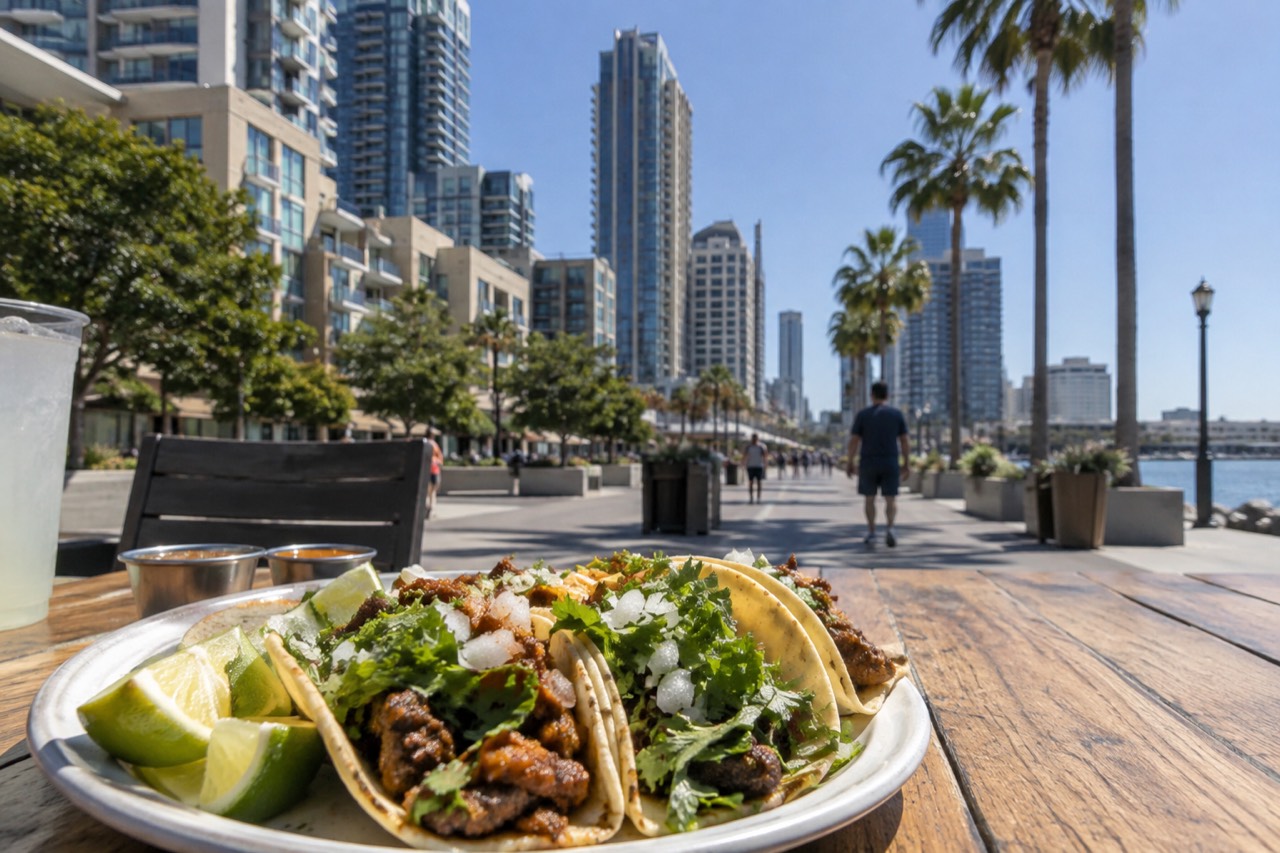
Short answer
The best tacos in San Diego cluster in a handful of neighborhoods: Barrio Logan and Sherman Heights for traditional street-style tacos, Old Town for sit-down history, North Park for creative fillings, and the waterfront spots near Point Loma for Baja-style fish tacos. Most taquerias charge a few dollars per taco, so a crawl across three or four stands is cheap, filling and the most San Diego meal there is.
San Diego sits roughly twenty miles from the busiest land border crossing in the western hemisphere, and the food shows it. This is a city where the taco is not a trend but a daily habit, where a gas station taqueria can outcook a sit-down restaurant, and where arguing about which neighborhood does birria best is a legitimate local pastime. The Things to Do in San Diego desk eats the way the city does: by neighborhood, by style, and by time of day.
What follows is a practical map. It is not a ranked countdown of one to ten, because a taco list that puts a $4 street taco against a $16 sit-down tuna tostada is comparing two different meals. Instead, this guide sorts the city by where you actually are and what you actually want: the neighborhoods with the deepest taco benches, the fish taco question, the sit-down dinner options, the late-night circuit, and how to string it all into one very good day.
Where Are the Best Tacos in San Diego?
The best tacos in San Diego are found in Barrio Logan, Sherman Heights and the streets around Chicano Park for traditional street-style tacos, Old Town for sit-down Mexican plates with history attached, North Park and its surrounding neighborhoods for creative and chef-driven fillings, and the Point Loma and Ocean Beach waterfront for Baja-style fried fish tacos. Most stands sell individual tacos at street prices, so the smart move is not picking one spot but crawling three or four.
That answer hides a useful truth about the city. San Diego's taco culture is not concentrated in one tourist zone. Downtown's Gaslamp Quarter has tacos, but the taquerias that locals defend with real passion sit in the neighborhoods around it: Barrio Logan, where the taco shops sit under the Coronado Bridge approaches, and Sherman Heights, a few minutes east of downtown. The food there is the reason those neighborhoods appear on so many itineraries.
The other thing worth knowing before you start: portions and pricing here reward the crawler. Tacos are sold individually at nearly every stand and taqueria in the city, usually for a few dollars each, and the portions are small enough that two or three tacos per person per stop is the normal order. That structure, small tacos, low per-unit prices, many stands, is exactly why the crawl format works so well. Plan to share, order in waves, and keep moving.
Which Neighborhoods Have the Best Taco Scenes?
Barrio Logan is the city's most distinctive taco neighborhood, with taquerias clustered around Chicano Park and Logan Avenue. Sherman Heights and the blocks east of downtown carry the deepest traditional bench. Old Town is the sit-down, full-plate option with the most history. North Park, University Heights and City Heights mix old-school stands with newer chef-driven spots, and Ocean Beach and Point Loma own the fried fish taco.
Each neighborhood rewards a different kind of visit. Barrio Logan is the one that feels unlike anywhere else: an arts district under the bridge approaches where murals and taco windows share the same block, and where an afternoon can be spent moving between a stand, a brewery and the park. Sherman Heights is quieter and more purely about the food, with cash-friendly walk-up windows doing steady business from the neighborhood itself.
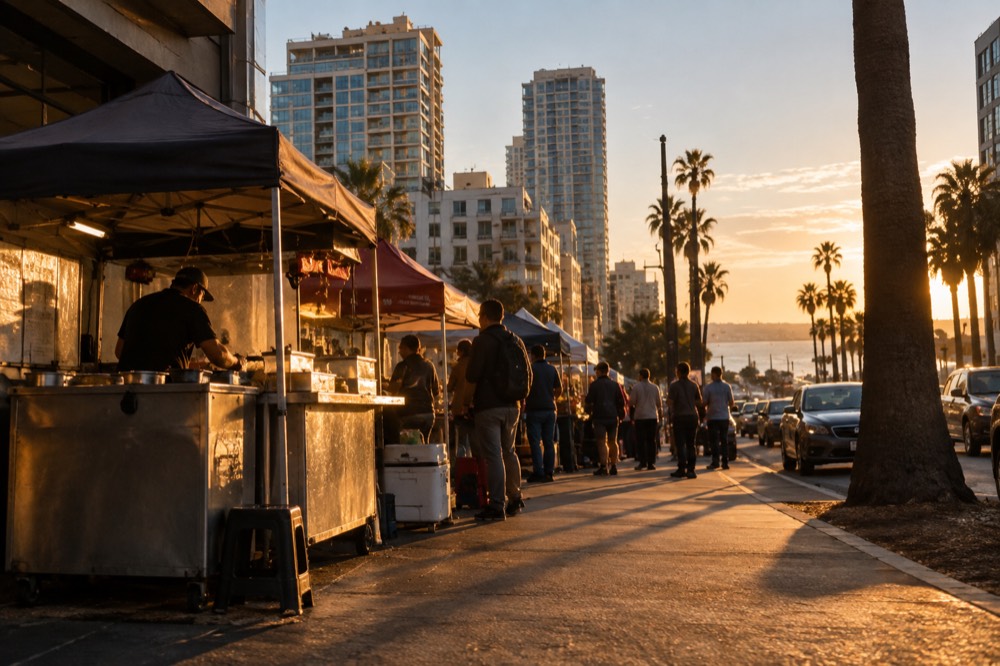
Old Town plays a different role entirely. It is the state historic park where San Diego's Mexican and early American past is preserved, and its restaurants lean toward big plates, table service and margaritas. It is the right choice for a relaxed sit-down dinner, and the wrong choice if what you want is a $3 al pastor taco off a trompo. Our Old Town neighborhood guide covers the full picture, including the non-food reasons to go.
| Neighborhood | Taco character | Best for |
|---|---|---|
| Barrio Logan | Street stands and windows around Chicano Park | A crawl with murals and breweries between stops |
| Sherman Heights | Traditional walk-up taquerias east of downtown | No-frills asada, birria and lengua |
| Old Town | Sit-down restaurants with full plates | Dinner with table service and history |
| North Park | Old stands plus newer creative spots | Chef-driven fillings and a beer alongside |
| City Heights | Long-running family taquerias | Some of the best value in the city |
| Ocean Beach / Point Loma | Baja-style fried fish specialists | Fish tacos near the water |
If you only have one afternoon and want the fullest experience, Barrio Logan is the pick. You can walk it, the stands are close together, and the neighborhood's breweries mean the crawl has a natural rhythm: two tacos, one beer, repeat. The North Park guide makes the same case for the west side of the city, with a beer scene that pairs with its food just as naturally.
What Are the Best Fish Tacos in San Diego?
The best fish tacos in San Diego are the Baja-style ones: battered white fish fried to order, tucked into a corn tortilla with shredded cabbage, a creamy white sauce and a squeeze of lime. The style came north from Baja California, and the specialists cluster around Ocean Beach, Point Loma and the Sports Arena area, with the classic order being fried fish rather than grilled, and a side of the broth-based consume that birria shops popularized.
The fish taco is the one item on this list with a genuine regional claim. San Diego's fish taco is the Baja California fish taco, the fried version with cabbage and white sauce, and the city's best versions of it sit in the western neighborhoods closest to the water. The classic move is a beach-adjacent stand where the fish goes into the fryer after you order, not before.
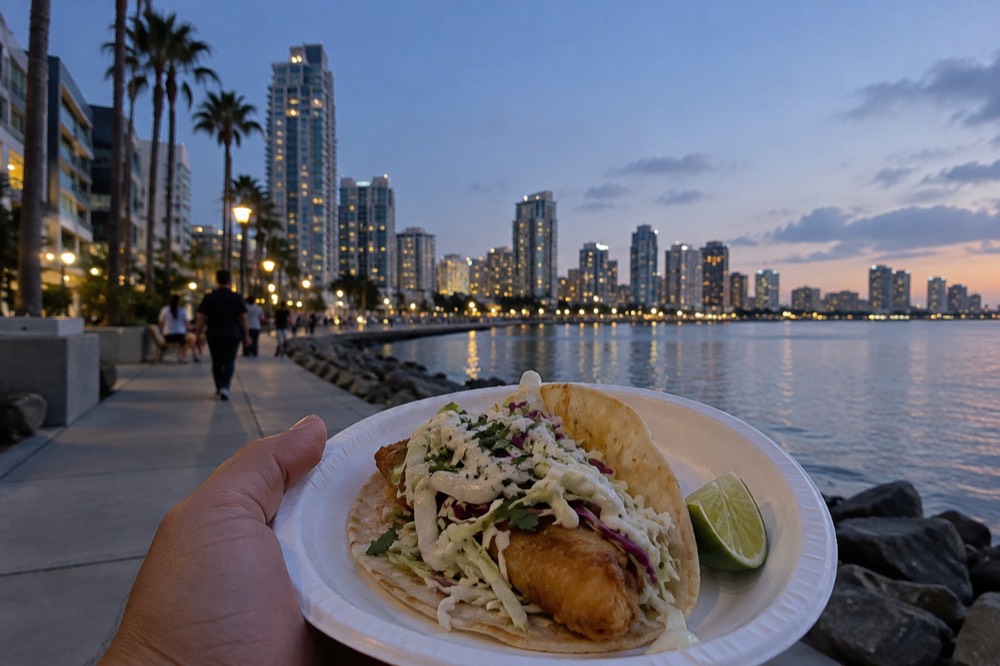
Grilled fish tacos exist everywhere now, and some are good, but they are a different dish. The fried version is the one that made San Diego's taco reputation, and it is the order to default to when you are anywhere near the coast. Two spots worth building an afternoon around: the walk-up seafood windows in Ocean Beach, where the beach is a five-minute walk from the counter, and the Point Loma corridor on the way to Cabrillo National Monument, where a fish taco stop fits naturally before or after the park.
If the fish taco question is your main question, our dedicated best fish tacos in San Diego guide goes deeper on the style, the neighborhoods and how the Baja original differs from what most menus serve. One practical note for beach days: alcohol is prohibited on San Diego's beaches, boardwalks and parks under city rules, so the fish-taco-and-beer-on-the-sand image is not a legal one. Eat at the stand's tables, then walk the beach. The city's summer safety page states the rule plainly: no alcoholic beverages on San Diego beaches and boardwalks.
Where Can You Sit Down for a Proper Taco Dinner?
For a sit-down dinner built around tacos, Old Town's table-service restaurants are the historic option, North Park and University Heights have the creative kitchens, and the Gaslamp Quarter and Little Italy put tacos within a short walk of downtown hotels. Expect composed plates, better seating and higher prices than the street stands, with the trade-off being that a sit-down taco dinner in San Diego is a real restaurant meal, not a snack.
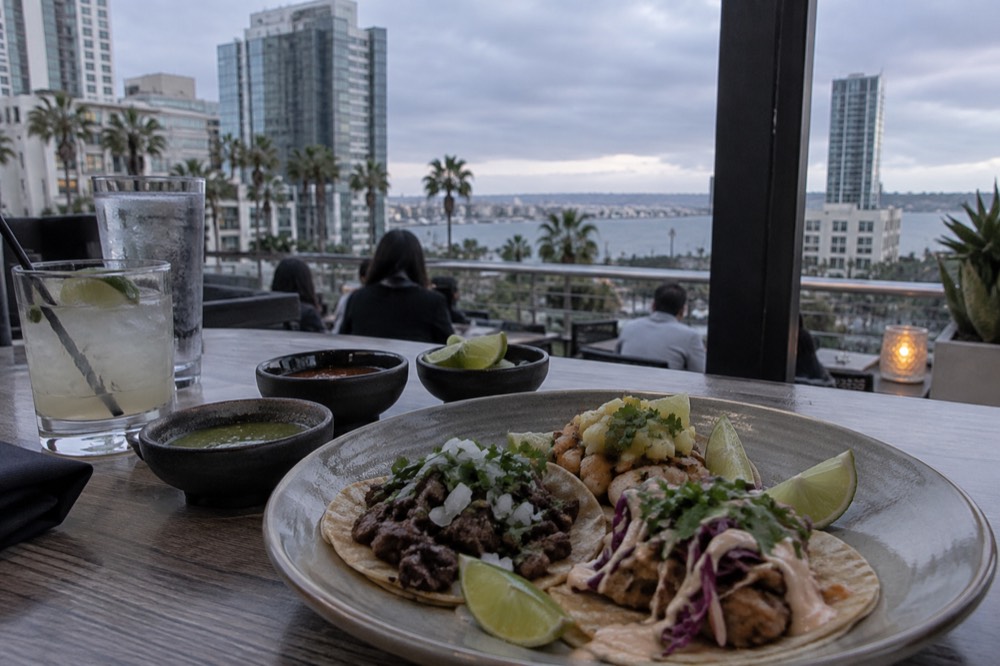
The sit-down tier is where San Diego's chefs get playful: grilled fish with charred salsa, duck confit tacos, upscale margarita programs. North Park is the center of gravity for that style, and the neighborhood's restaurants sit close enough together that a dinner there can turn into a dessert-and-mezcal second stop without moving the car. Our Gaslamp Quarter guide covers the downtown version of the same idea, where taco dinners sit inside the nightlife district rather than beside it.
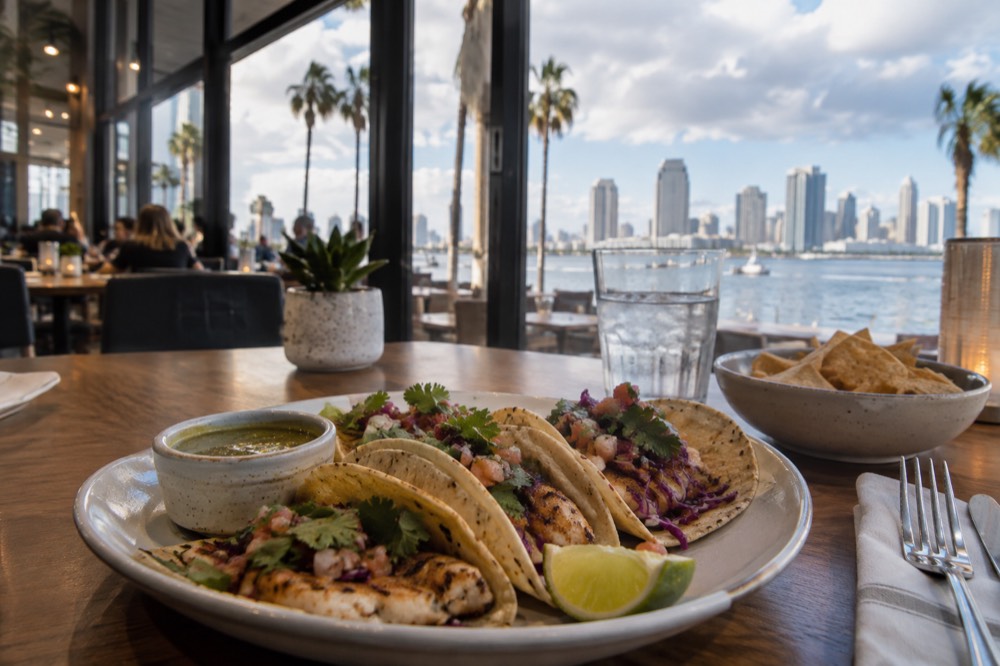
Little Italy deserves a specific mention, not because it is a taco neighborhood, but because it is the strongest food neighborhood downtown and the natural place to end a day that started at the taco stands. The Little Italy guide covers the weekly market and the restaurant row; the tasting walk below is the shortcut version for anyone who wants the neighborhood's food explained rather than just eaten.
If you want the dinner to come to you with a view instead, the harbor dinner cruise runs about two and a half hours on the bay, and it solves the "nice dinner with a visiting parent" problem in a way no taqueria can. It is not a taco dinner. It is the other kind of San Diego night out, and the two make a good one-two across a long weekend.
A sit-down dinner is also the right format for groups with mixed enthusiasm. Not everyone in a family or a bachelorette party wants to stand at a counter ordering in Spanish, and the restaurant tier means nobody has to. Order the tacos anyway. The kitchens in this tier are frequently run by chefs who trained in the traditional neighborhoods first, and the upscale menu is usually a remix of the same flavors, not a replacement for them.
Is a Guided Food Tour Worth It for Finding Tacos?
A guided food tour is worth it if you want the neighborhood's food explained rather than just found, since a local guide handles the ordering, the standing and the pacing, and the tours cluster in the walkable food neighborhoods. It is not worth it if you already know exactly which taqueria you are going to, since a tour is a survey rather than a deep dive into one kitchen. Prices sit on the live listing, and most carry free cancellation.
The honest framing is that a tour trades control for context. You will not pick the exact stops, but you will learn why each stop matters, what to order on a return visit, and how the neighborhood's food culture fits together. For a first visit, or for travelers who do not want to navigate a Spanish-only menu alone, that trade is usually a good one.
The Gaslamp food and drink walk covers the downtown side of the ledger, about two and a half hours through the quarter's kitchens and bars, and it fits neatly before a night out since it ends where the nightlife starts. Check availability if the downtown version suits your plans better than the neighborhood version.
The Little Italy tasting walk is the shortest version of the idea, about thirty minutes of the neighborhood's best bites, and it works as an appetizer course before a dinner you book yourself. The North Park Beerucation Tour is the beer-world equivalent, a three-hour walk built around beer education in the city's best beer neighborhood, and it pairs naturally with a taco dinner in the same blocks afterward.
Where Do Locals Go for Late-night Tacos?
Late-night taco traffic in San Diego flows through the walk-up windows in Barrio Logan, Sherman Heights and City Heights, plus the stands near the Gaslamp's bar close, and the standard late-night orders are birria de res with consume, carne asada and al pastor. The stands that stay open late are mostly cash-quick, counter-service windows, and the crowd after midnight is a reliable signal in itself: if a window has a line at 1 am, that window is good.
The late-night scene is the city at its most honest. The restaurants that serve the after-bars crowd do not survive on atmosphere, they survive on volume and speed, and the ones that have done it for years are doing something right. Birria is the defining late-night order: slow-cooked beef served in its own broth, with the consume on the side for dipping, and the quesabirria version, the tortilla griddled with cheese until it crisps, is the upgrade.
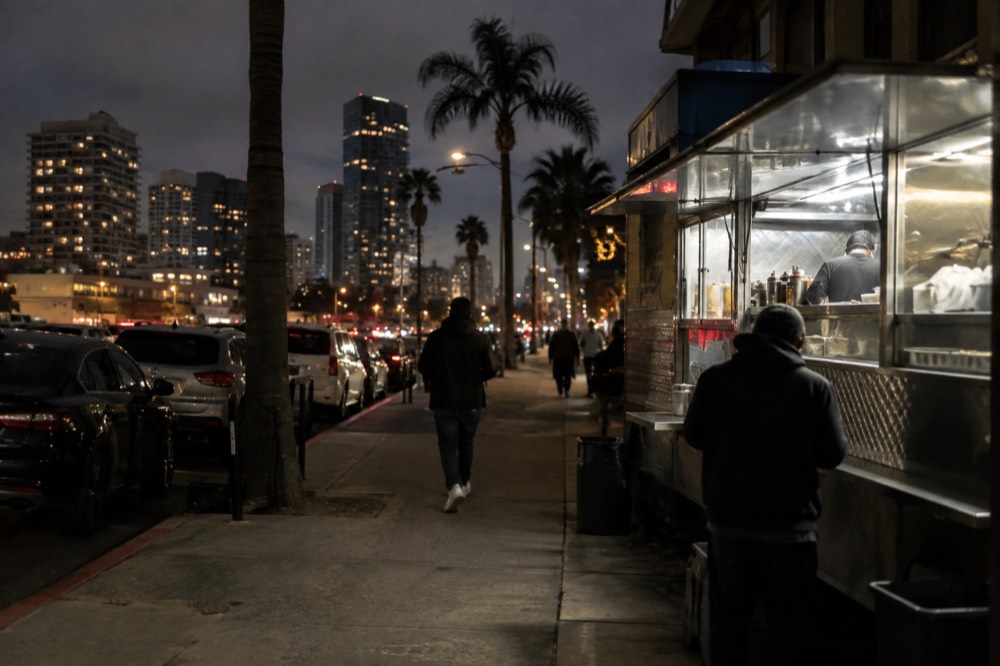
Timing matters more here than anywhere else in this guide. The late-night windows hit their stride after the bars empty, which in the Gaslamp means a wave of hunger arriving around closing time, and in the neighborhoods it means a steadier trickle of regulars until the windows close for the night. Go before the wave if you want to eat standing up; go during it if you want the full scene.
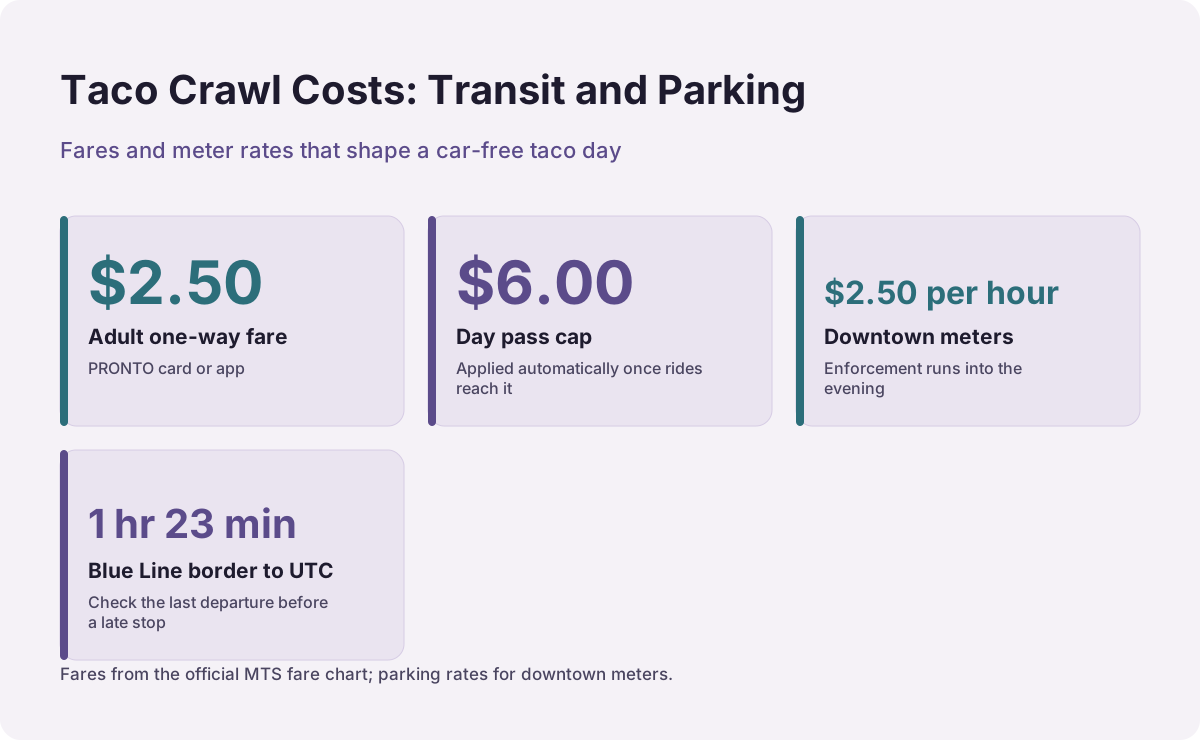
One practical note: the trolley is the right way home from a late-night crawl in the neighborhoods east of downtown, but check the last departure for your line before you commit to a 1 am second stop. The Blue Line's end-to-end run from the border to UTC takes an hour and twenty-three minutes, and service does not run all night. Plan the last taco around the last train, not the other way around.
How Do You Plan a Full Taco Day in San Diego?
A full taco day works best west to east: fish tacos near the water in the late morning, a Barrio Logan crawl in the afternoon, a sit-down dinner in North Park or downtown, and a late-night birria window if you still have room. Keep each stop to two or three tacos per person, walk between stands wherever the geography allows, and use the trolley rather than driving the stretches you cannot walk.
The shape of the day follows the shape of the city. Start where the fish is, on the Point Loma or Ocean Beach side, ideally timed so the morning's first stop doubles as an early lunch. The corridor between the waterfront and Old Town is short, and the drive along Harbor Drive is the same stretch the harbor cruises run, so the food and the sightseeing share a route.
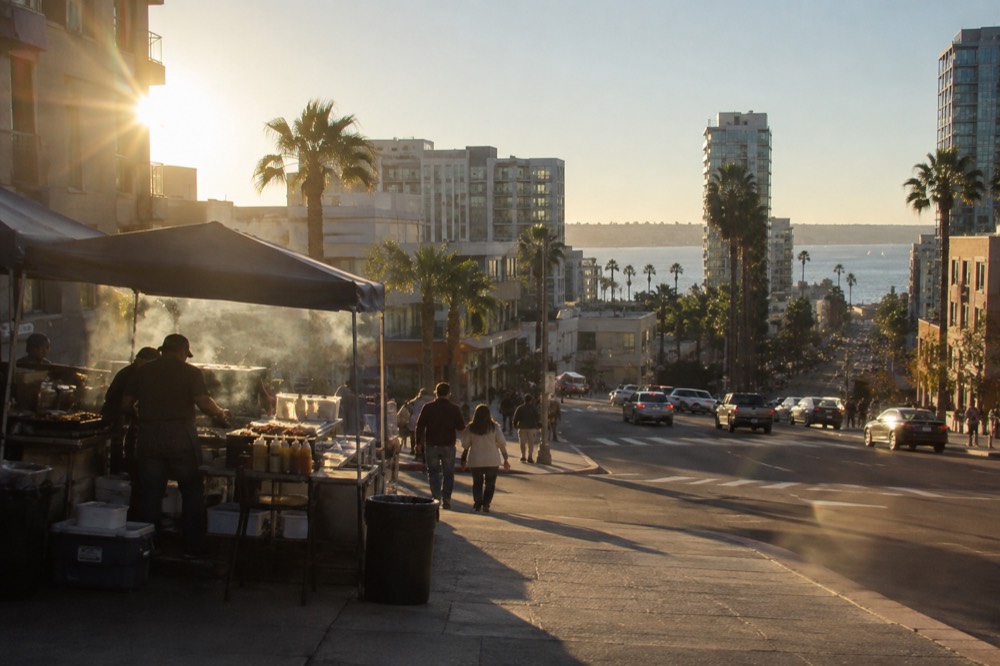
The afternoon belongs to Barrio Logan. Park once, or arrive on the trolley, and do the Logan Avenue and Chicano Park circuit on foot: two tacos here, the murals, two tacos there, a brewery, repeat. This is the single best two-hour food walk in the city, and it requires no car and no plan more complicated than walking east to west and back.
| Stop | Time of day | Order | Setting |
|---|---|---|---|
| Ocean Beach or Point Loma | Late morning | Fried fish taco, Baja style | Walk-up window near the water |
| Old Town | Early afternoon, optional | A full plate, table service | Historic park setting |
| Barrio Logan | Afternoon | Asada and al pastor, two per stand | Street crawl around Chicano Park |
| North Park | Dinner | Chef-driven tacos and a local beer | Sit-down restaurant |
| Sherman Heights or City Heights | Late night | Birria with consume | Walk-up window |
The evening is where the day becomes a dinner, and the North Park Beerucation Tour is a deliberate part of this plan rather than a detour: three hours of beer education in the neighborhood where you were going to eat anyway, with the taco dinner following the last stop. Book the tour for the afternoon slot and let dinner happen wherever the walk ends.
If the day is running long and the group is flagging, cut the late-night window, not the crawl. The birria will be there next trip. What makes the day is the variety: the same tortilla, the same city, five completely different rooms.
How Do You Get Between Taco Neighborhoods Without a Car?
You can do most of a San Diego taco crawl without a car by anchoring on the trolley and walking: the Blue Line connects downtown, Barrio Logan-adjacent stops and points south, MTS buses cover North Park and City Heights, and the adult fare is $2.50 one-way with a $6 day pass that the PRONTO fare system applies automatically once your rides reach it. The neighborhoods themselves are all walkable once you are inside them.
The fare detail is the one that saves money. The PRONTO card and app cap fares, meaning the day pass is earned automatically once your one-way rides total its value, so there is no reason to buy a day pass up front. Load the app, tap on each ride, and the system stops charging you at the cap. The official fare chart lists the adult one-way at $2.50 and the day pass at $6.00: MTS fares and the PRONTO system.
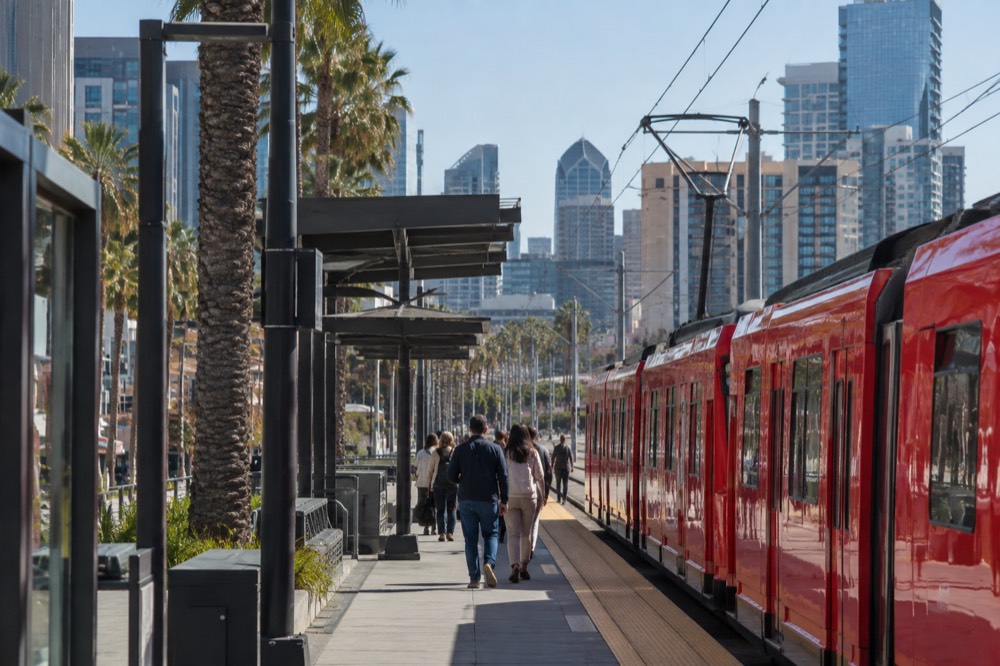
The one part of the taco map that fights the trolley is the west side. Ocean Beach and Point Loma are not on a rail line, so the fish taco leg needs a bus, a rideshare or a car, and the honest advice is to do that leg first, while you still have the vehicle or while the rideshare is cheap. Everything after the waterfront can be trolley-and-shoes.
Parking, for the legs where you do drive, is the city's real friction and the subject of its own parking in San Diego guide. The short version for taco purposes: the neighborhood stands sit on residential-adjacent streets where meters are cheap or absent, and the downtown legs are where the meters and structures live. Downtown meters run $2.50 per hour with enforcement into the evening six days a week, so feed the meter or take the trolley in.
What Should You Order at a San Diego Taqueria?
Order by filling, not by combo: carne asada for the baseline, al pastor off the trompo for the classic, birria with consume for the rich order, lengua and cabeza for the traditional deep cuts, and fried fish for the regional signature. Default to corn tortillas, two per taco at street stands, add cilantro and onion unless you have a reason not to, and try the salsa bar before committing to one.
The vocabulary is small and worth learning, because the windows move fast and the menus are short. Asada is the grilled beef baseline that tells you whether a kitchen cares. Pastor, the marinated pork shaved off the vertical spit, is the one that separates the good stands from the great ones, because a trompo that is not turning is a kitchen that has given up.
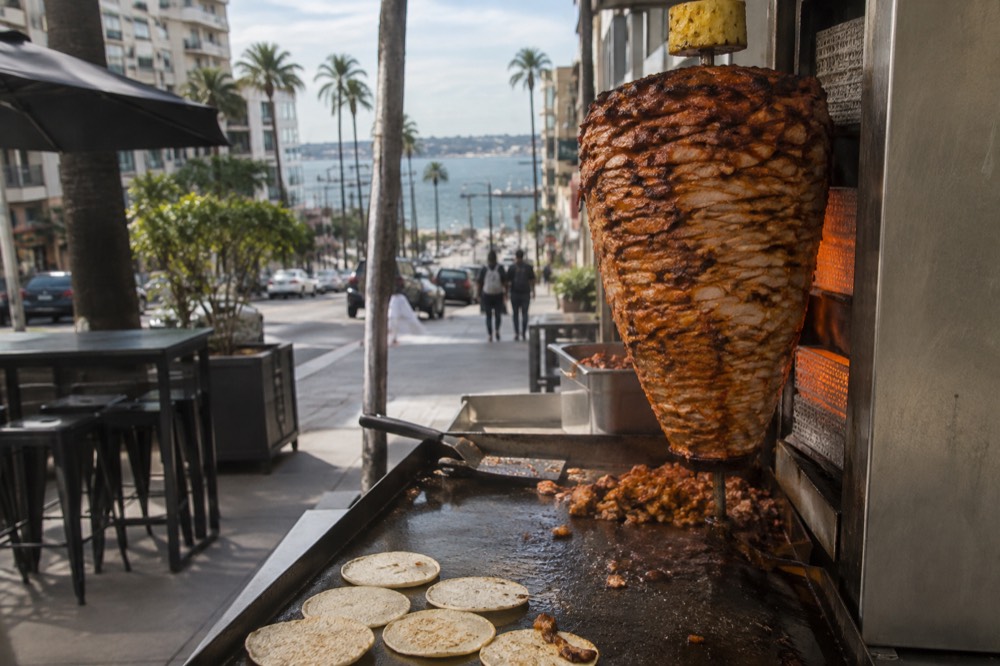
Birria is the one that needs the ritual explained: the tacos come with a cup of the cooking broth, consume, on the side, and the correct move is to dip each bite. Quesabirria adds cheese to the griddle. Lengua and cabeza, tongue and head, are the fillings that reward the adventurous and that long-running neighborhood shops tend to do best.
| Filling | What it is | How to spot the good version |
|---|---|---|
| Carne asada | Grilled, chopped beef | Charred edges, fresh chop, not pre-cooked and held |
| Al pastor | Marinated pork off a vertical spit | A trompo actually turning with pineapple in reach |
| Birria de res | Slow-cooked beef in chile broth | Consume served on the side for dipping |
| Quesabirria | Birria griddled with cheese | Crisped tortilla edges, served with the same consume |
| Lengua / cabeza | Tongue / head, traditional fillings | Offered at long-running neighborhood shops |
| Pescado frito | Baja-style battered fried fish | Fried to order, cabbage, white sauce, lime |
Two habits to steal from locals. First, order in waves: two tacos, eat, decide, two more. Every counter expects this. Second, ask which salsa is the hot one rather than guessing, because the house salsa at a serious taqueria is frequently hotter than anything a visitor expects, and the person at the counter will always tell you the truth about it.
Which Taco-adjacent Experiences Are Worth Booking?
The experiences worth booking around a taco trip are the neighborhood food walks, which turn the eating into a guided tour of a district like Little Italy or the Gaslamp; the brewery education walks in North Park, which pair the city's other signature product with dinner; and a bay dinner cruise, which covers the special-occasion meal the taquerias cannot. Everything else in a taco trip, the stands themselves, needs no booking at all.
That last point is the freeing one. The core experience this guide describes costs a few dollars per taco, needs no reservation, and has no capacity limit. The bookable layer is for the moments around it: the evening you want explained, the group that wants a plan, the birthday that needs a boat.
For travelers deciding between neighborhoods, the same logic that orders a taco order orders a trip: pick two styles, not five. A weekend that does Barrio Logan and North Park well beats one that races Old Town, City Heights, Ocean Beach and Sherman Heights in three days. The one day in San Diego guide is the template if you are compressing, and the what is a must eat in San Diego post covers the foods beyond tacos that belong on the same trip, since the city's signature dish conversation does not start and end with the tortilla.
Common Questions About Tacos in San Diego
Where are the best tacos in San Diego?
Barrio Logan and Sherman Heights for traditional street-style tacos, Old Town for sit-down plates with history, North Park for creative fillings, and Ocean Beach and Point Loma for Baja-style fried fish. The best strategy is a crawl across three or four stands rather than one destination.
What are the best fish tacos in San Diego?
The Baja-style fried fish taco: battered white fish fried to order, corn tortilla, shredded cabbage, creamy white sauce and lime. The specialists cluster around Ocean Beach, Point Loma and the Sports Arena area, and the fried version is the regional original rather than the grilled one.
How much do tacos cost in San Diego?
Street stands and taquerias sell tacos individually at street prices, typically a few dollars each, with two or three per person per stop being a normal order. Sit-down restaurants charge more for composed plates. Prices vary by spot, so treat any crawl budget as a range rather than a fixed figure.
Is a guided food tour worth it for finding tacos?
Yes, if you want the neighborhood's food explained rather than just found. A local guide handles ordering and pacing and gives context you cannot get from a menu. It is not worth it if you already have a specific taqueria in mind, since tours are surveys rather than deep dives.
Where do locals go for late-night tacos?
The walk-up windows in Barrio Logan, Sherman Heights and City Heights, plus the stands serving the after-bars crowd downtown. Birria with consume is the defining late-night order, and a line at 1 am is the most reliable quality signal in the city.
Can you do a taco crawl without a car?
Mostly yes. The trolley covers downtown and the eastern neighborhoods, buses reach North Park and City Heights, and the adult fare is $2.50 one-way with PRONTO fare capping that applies the $6 day pass automatically. The Ocean Beach and Point Loma fish taco leg is the one part that needs a bus, rideshare or car.