What Is the Hippie Beach in San Diego?
Ocean Beach is San Diego's hippie beach: a dog-friendly, counterculture neighborhood with a clothing-optional past, a fishing pier and a laid-back scene that never gentrified.
What Is the Hippie Beach in San Diego?
The hippie beach in San Diego is Ocean Beach, the neighborhood everyone calls OB, at the western end of Point Loma. It earned the nickname in the late 1960s when surfers, artists and counterculture residents settled around its pier and never really left. The beach itself sits beside a year-round dog beach, a 1,971-foot fishing pier and a Newport Avenue strip of head shops, record stores and taco stands. The clothing-optional history, the tie-dye storefronts and the refusal to let a chain restaurant onto the main drag are all part of why the name stuck.
Ocean Beach is not a state of mind, it is a specific place with a specific history, and it is one of the few San Diego beach neighborhoods where the 1960s and 1970s character survived the decades of development that reshaped almost everything around it. The question gets asked constantly by travelers who have heard the phrase secondhand, so this page answers it plainly and then fills in the practical parts: where OB is, what the beach rules actually are, what the scene looks like today, and what else to do nearby.
Why Is Ocean Beach Called the Hippie Beach?
Ocean Beach picked up the hippie label in the late 1960s and early 1970s, when it became one of the cheapest coastal neighborhoods in the city and drew surfers, students, artists and back-to-the-land types who stayed. The community fought off large-scale development repeatedly, most famously around the construction of a planned marina and high-rise complex, and that scrappy resistance became part of the local identity. The neighborhood's main street, Newport Avenue, filled with head shops, organic grocers, used record stores and independent coffee houses rather than franchise storefronts.
The label is affectionate rather than mocking. Locals wear it. The weekly farmers market on Newport Avenue, the surf-and-dog culture on the sand, and the general dress code of flip flops and faded band shirts all keep the reputation alive in a way that feels genuine rather than performed. It helps that the neighborhood sits at the end of the peninsula, physically cut off from the through-traffic that homogenized other beach towns. You do not end up in OB by accident, and the people who go there tend to go there on purpose.
The counterculture history also shows up in the politics of the place. OB has a long tradition of loud, participatory community planning, and the neighborhood has repeatedly voted to keep things small: no big hotel towers, no chain formula retail on the main strip, and a strong preference for local ownership. That is the mechanism that keeps a "hippie beach" from becoming a nostalgia theme park. The culture is maintained by zoning fights and community meetings, not just by murals and tie-dye.
What Is the Beach Itself Actually Like?
Ocean Beach is a wide, flat, mile-long stretch of sand at the mouth of the San Diego River, backed by a grassy park, a fishing pier and a year-round dog beach at the north end. The surf is consistent and beginner-friendly, which is part of why the surf culture took root here. The pier, opened in 1966 and rebuilt after storm damage, is one of the longest concrete piers on the West Coast and is free to walk out on. Sunset views from the pier and from the adjacent park are a genuine local ritual.
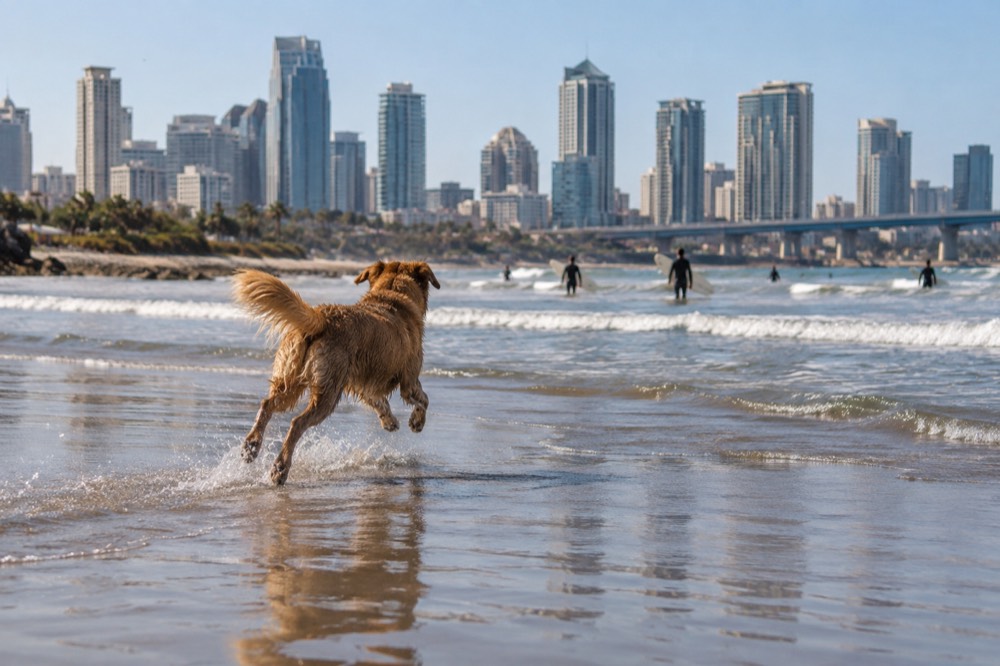
The dog beach is the other signature. Dogs run off-leash legally at the north end of the beach, on the river-mouth side, year round, which is rare in Southern California and draws visitors from all over the county. The vibe on the sand is accordingly loose: frisbees, drum circles on summer evenings, and a crowd that skews local rather than tourist.
The rules that matter are the standard city ones, and they are enforced. Alcohol is prohibited on San Diego's beaches, boardwalks and parks, per the city's summer safety rules. Glass containers, smoking and overnight camping are all banned too, and the city's beach regulations page carries the full per-beach amenity list. If you are planning a beach day anywhere in the city, the Ocean Beach neighborhood guide covers parking, the pier and the dog beach in more depth, and the general best beaches in San Diego rundown places OB against the other major strands.
If water activities are the goal, the coast north of OB offers the most dramatic paddling in the county. The sea caves at La Jolla are the standout, and a guided kayak trip is the standard way to see them safely.
Is Black's Beach the Hippie Beach Instead?
Some people say Black's Beach, the isolated strand below the cliffs of Torrey Pines, because of its history as a clothing-optional beach, but the hippie beach in the cultural sense is Ocean Beach. Black's earned its counterculture reputation through its remoteness and its nudist tradition, which dates back decades, and through the trail-hike access that keeps crowds thin. It is a spectacular, wild beach backed by one of the most scenic reserves in the state. But nobody lives a hippie lifestyle at Black's, it has no neighborhood attached, no main street and no community. It is a destination, not a scene.
The confusion is worth clearing up because the two places deliver completely different days. Black's is for hikers, surfers and naturists who want solitude and are willing to walk a steep trail to get it. Ocean Beach is for people who want the beach plus the culture: the taco shop afterward, the record store, the sunset crowd on the pier. Families and casual visitors almost always mean OB when they ask the question, and that is the answer that leads this page. More of these guides are collected on Things to Do in San Diego.
What Should You Actually Do on a Day in Ocean Beach?
A classic OB day is a morning surf or pier walk, lunch from a Newport Avenue taco shop, an afternoon at the dog beach or on the sand, and the sunset from the pier, all on foot and without moving the car. The neighborhood rewards slow travel. The farmers market, held weekly on Newport Avenue, is one of the best in the city for prepared food and local produce. The antique malls and thrift stores along the strip are genuinely good, not tourist filler, and the independent bookshop and record stores are worth an hour on their own.
Practical notes for the day:
| Part of the day | What to do | Good to know |
|---|---|---|
| Early morning | Surf session or pier walk | Surf is most consistent in the morning before wind picks up |
| Late morning | Coffee and breakfast on Newport Avenue | Independent cafes, no chains on the main strip |
| Midday | Farmers market (on market day) or thrift and record stores | Prepared food stalls are the local lunch move |
| Afternoon | Dog beach or main beach | Dogs off-leash at the north end, year round |
| Evening | Sunset from the pier or the grass park | Alcohol is prohibited on the beach and park |
| Nearby add-on | Drive or bus south to Sunset Cliffs | Best golden-hour viewpoint on the Point Loma side |
The Sunset Cliffs add-on deserves the mention. The Sunset Cliffs Natural Park guide covers the bluff-top walk and the overlooks, and it is only a few minutes south of OB, which makes the pairing one of the best free afternoons on this stretch of coast. For readers planning a whole weekend rather than a day, the things to do in San Diego this weekend page keeps the OB stop in the context of everything else the city offers.
How Does Ocean Beach Compare to Other San Diego Beach Towns?
Ocean Beach is the counterculture option among a set of beach neighborhoods that each have a distinct personality: Pacific Beach is the party town, Mission Beach is the tourist boardwalk, La Jolla is the polished upscale one and OB is the one that stayed weird. The contrast is useful for choosing where to stay. Travelers who want nightlife within walking distance of the sand go to Pacific Beach. Travelers who want amusement rides and rental properties go to Mission Beach. Travelers who want galleries, sea caves and fine dining go to La Jolla.
OB is the pick for travelers who want none of those things, or who want them at half the price and a quarter of the polish. The neighborhood has a deliberate smallness to it. There is no hotel tower, no big resort, no boardwalk amusement zone. What there is: a pier, a dog beach, a main street of independent shops, and a community that shows up to keep it that way. The La Jolla vs Coronado comparison covers the upscale end of that spectrum if you are weighing the polished options.
The beach itself is genuinely good, not just culturally interesting. It picks up consistent surf, the sand is wide, and the river-mouth setting means the north end stays uncrowded even on busy weekends. The trade-off is the same one that defines the whole neighborhood: fewer amenities, fewer services, more character.
Is Ocean Beach Still Hippie Today, or Is It a Throwback?
Ocean Beach is still counterculture in character, but it is a real working neighborhood rather than a time capsule, and the hippie reputation today lives mostly in the community's rules, its shops and its dog-and-surf culture. The neighborhood fought to keep formula retail off Newport Avenue and won, which is why the strip still reads like 1974 in the best way. The weekly farmers market, the off-leash dogs, the pier fishermen and the sunset drum circles carry the tradition forward without anyone performing it for tourists.
That said, the economics of coastal San Diego have reached everywhere, and OB is no exception. Housing costs on this peninsula are high, the crowd skews older than the stereotype, and plenty of visitors will find a pleasant, slightly gritty beach town rather than a commune. The honest framing is this: OB is the least corporate beach neighborhood in the city, with the strongest community identity, and it earned the hippie name through fifty years of choosing to stay that way.
For travelers, that means the appeal is real but specific. If you want a beach day with a side of character, independent shops and a sunset that costs nothing, OB delivers exactly what the nickname promises. If you want resort amenities, rides or upscale dining, one of the other beach towns is the better fit, and the where to stay in San Diego guide sorts the whole city by neighborhood personality.
The coast north of Point Loma holds the other half of the story. The kayak and snorkel trips out of La Jolla are the most popular water experiences in the county, and the sea cave paddle is the one most first-time visitors book.
What Is the Hippie Beach in San Diego?
To restate the core answer: the hippie beach in San Diego is Ocean Beach, the neighborhood at the western tip of Point Loma, known for its dog beach, its 1,971-foot pier, its chain-free main street and its fifty-year counterculture identity. Black's Beach sometimes gets the label for its clothing-optional history, but it has no neighborhood and no scene attached. OB is the answer that matches the question's intent, and it remains one of the most distinctive beach towns on the entire California coast.
A few closing practicalities. Parking in OB is street-and-lot parking, free to park in and very hard to find in summer, which is the honest description for every beach neighborhood in the city. The neighborhood is on the city bus network, and the beach is walkable from anywhere in the commercial strip. Alcohol stays prohibited on the sand, the dog beach is at the north end, and the pier is free to walk. Beyond OB itself, the surrounding coast offers the sea caves at La Jolla, the cliffs to the south, and a harbor full of boat tours, three of which are the most-booked water experiences among visitors to this stretch of the city.
Common Questions About the Hippie Beach in San Diego
what is the hippie beach in san diego?
Ocean Beach, the neighborhood at the western end of Point Loma. It earned the name in the late 1960s through its counterculture residents, its dog beach, its chain-free Newport Avenue strip and its long resistance to development.
Is Ocean Beach the same as the clothing-optional beach?
No. The clothing-optional history belongs to Black's Beach below the cliffs of Torrey Pines. Ocean Beach is a standard city beach where normal beach rules apply, and alcohol is prohibited on the sand.
Can you take your dog to Ocean Beach?
Yes. The north end of the beach, at the San Diego River mouth, is a year-round off-leash dog beach, which is rare in Southern California and one of the neighborhood's signature features.
What is there to do in Ocean Beach besides the beach?
The Newport Avenue strip: independent record stores, thrift and antique shops, a weekly farmers market with strong prepared-food stalls, and the pier, which is free to walk. Sunset Cliffs is a few minutes south.
Is Ocean Beach good for surfing?
Yes. The beach picks up consistent, generally beginner-friendly surf, and the surf culture is a core part of why the counterculture identity took root here in the first place.
How far is Ocean Beach from downtown San Diego?
It is a short drive west of downtown, at the end of the Point Loma peninsula. You do not pass through it by accident, so plan it as a destination rather than a stop on a driving route.