Sunset Cliffs Natural Park: Oceanfront Bluffs and the Best Sunset in San Diego
Sunset Cliffs Natural Park is a strip of unprotected oceanfront bluff at the western edge of Point Loma, and on a clear evening it stages the most reliable sunset show in San Diego. Here is how to time it, reach it, and enjoy it without incident.
Short answer
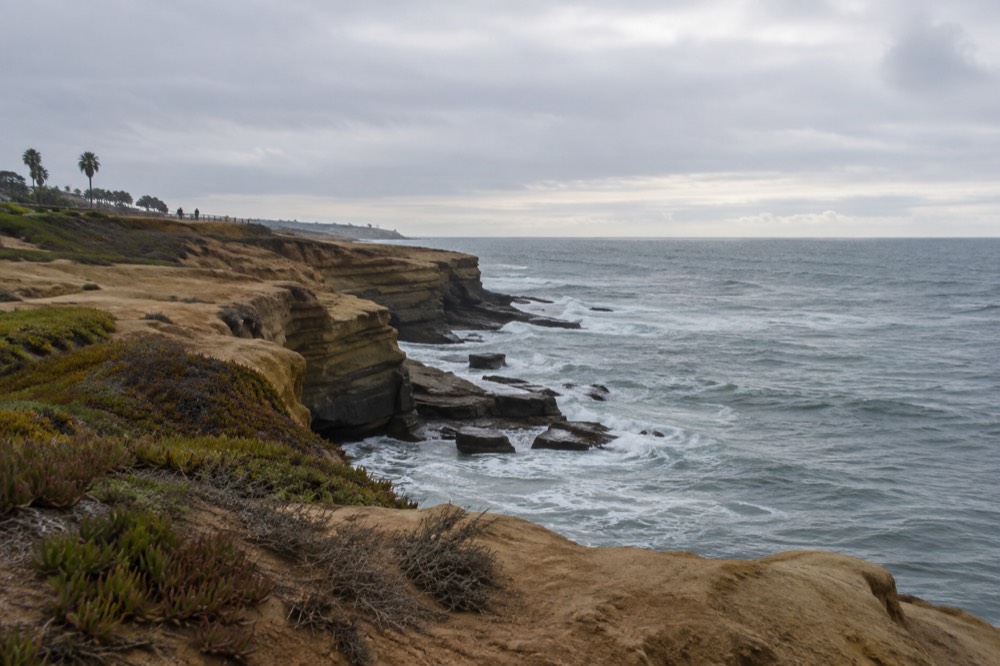
Sunset Cliffs Natural Park is an oceanfront park on the Point Loma peninsula with sandstone bluffs, pocket beaches and an uninterrupted view west over the Pacific. It is free to enter, open to the public year round, and at its best in the hour before sunset on a clear evening, ideally between August and October when the marine layer is weakest.
What Is Sunset Cliffs Natural Park?
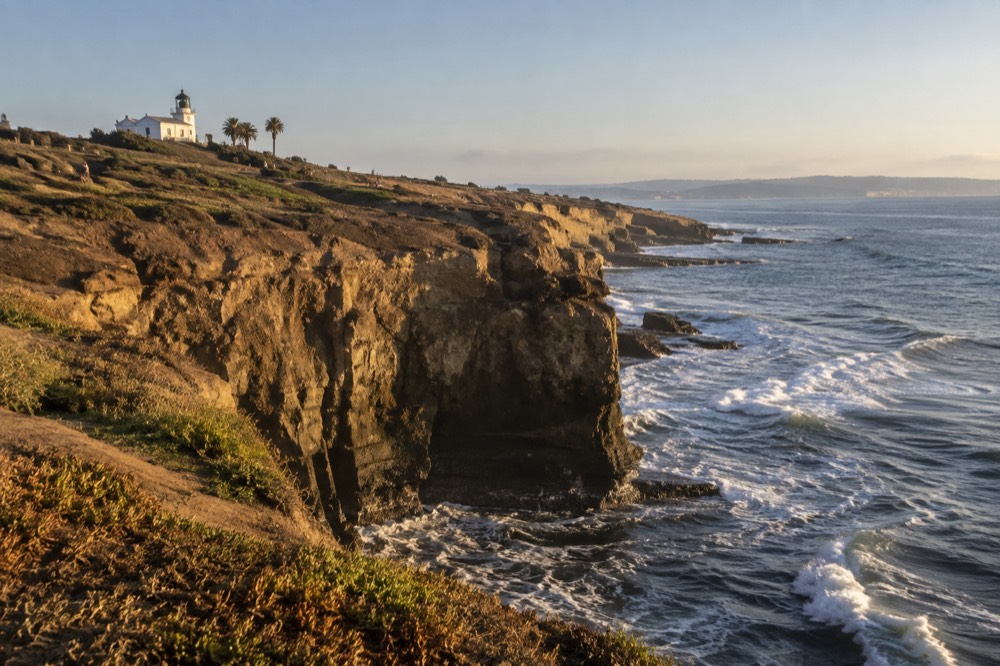
Sunset Cliffs Natural Park is a free, open oceanfront park on the western edge of the Point Loma peninsula, where eroding sandstone bluffs drop to pocket beaches and the Pacific stretches unbroken to the horizon. There is no gate, no ticket booth and no timed entry. It exists for walking, watching waves and, above all, for the sunset that gives it its name, and on a clear evening the guardrail-lined bluff top fills with people doing exactly that.
The park runs along the coast below the Sunset Cliffs neighborhood, a quiet residential finger of Point Loma. The bluff top is the main event: a walkable edge of dirt path, railings and overlooks where the ground falls away to the ocean. Below it, narrow cove beaches appear and disappear with the tide, reachable by steep stairs in a few spots. The whole setting is exposed, windswept and, on a good evening, cinematic in a way that few urban parks anywhere manage.
What surprises first-time visitors is how informal it is. This is not a landscaped attraction with signage and amenities. It is a natural area with a road running along the top of it, and the experience depends heavily on when you come and how much of the marine layer is in the sky. Locals treat it as an evening ritual, a dog-walking route and a surf-check spot all at once.
The park sits at the end of a peninsula that also holds some of San Diego's heavier hitters. Cabrillo National Monument occupies the very tip of Point Loma, and the drive between the two passes through some of the prettiest coastal terrain in the city. If you are mapping a Point Loma day, our Point Loma neighborhood guide covers the full peninsula, and the best beaches in San Diego places the cliffs' pocket coves in context against the bigger sandy strands.
When Is the Best Time of Year for Sunset at Sunset Cliffs?
The best sunsets at Sunset Cliffs come from August through October, when the marine layer is at its weakest, the ocean is at its warmest and evening skies most often clear before the sun drops into the open Pacific. September is the sweet spot: its normal high of 77.2F beats July's, and the gray coastal overcast that locals call May Gray and June Gloom has largely released its grip on the coast by then. Winter sunsets can be spectacular, because rain-cleaning storms leave crisp air behind them.
The single most useful thing to understand about San Diego's coast is the marine layer. In May and June, a thick blanket of coastal cloud frequently grey the shoreline in the late afternoon even while inland areas stay blue, and June's normal high of 71.7F is actually lower than October's 74.6F. The 30-year temperature normals show the pattern plainly without a single cloud statistic: the coast warms steadily from spring into late summer, and the clearest, warmest evenings cluster at the end of that curve.
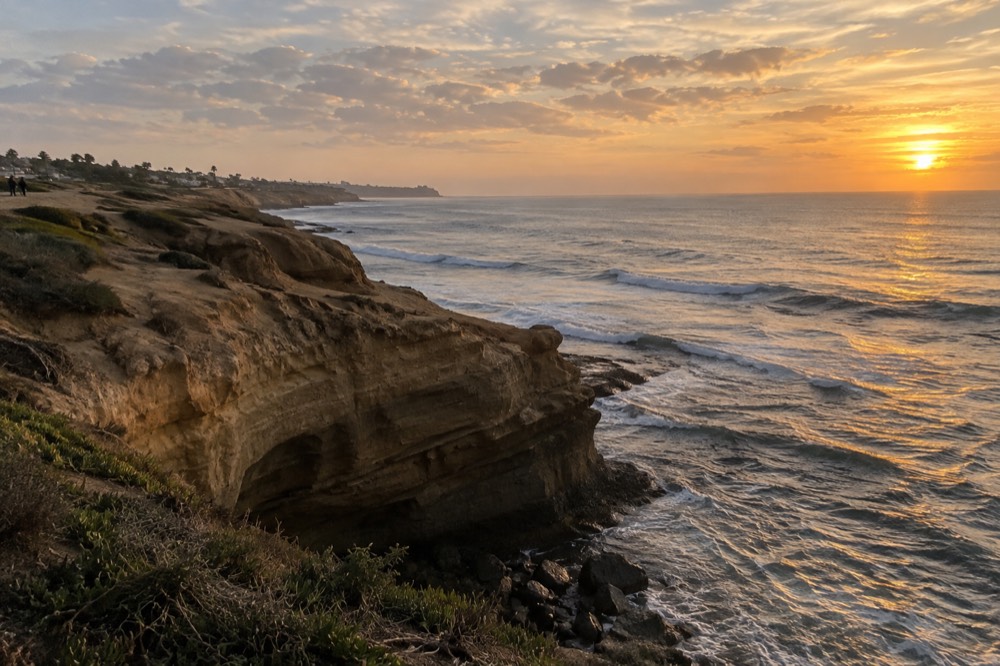
The ocean tells the same story. Mean sea-surface temperature at the La Jolla Scripps Pier station peaks in August at 68.7F and holds 67.6F through September, then slides down through autumn. Warmer water means less of the coastal gloom machine, which is one more reason late summer and early fall deliver the dependable orange-and-pink evenings the park is named for.
| Month | Normal high (F) | Normal low (F) | Ocean temp (F) | Sunset character |
|---|---|---|---|---|
| May | 69.5 | 60.0 | 63.4 | Marine layer often spoils the finale |
| June | 71.7 | 62.6 | 64.0 | Grayest month on the coast; patience required |
| July | 75.3 | 66.1 | 66.5 | Good, with occasional evening clearing |
| August | 77.3 | 67.5 | 68.7 | Best combination of warmth and clear skies |
| September | 77.2 | 66.2 | 67.6 | Warm air, warm water, thinnest marine layer |
| October | 74.6 | 61.5 | 64.0 | Crisp evenings, low crowds after summer |
| December | 66.0 | 49.8 | 60.8 | Cold but often clear between storms |
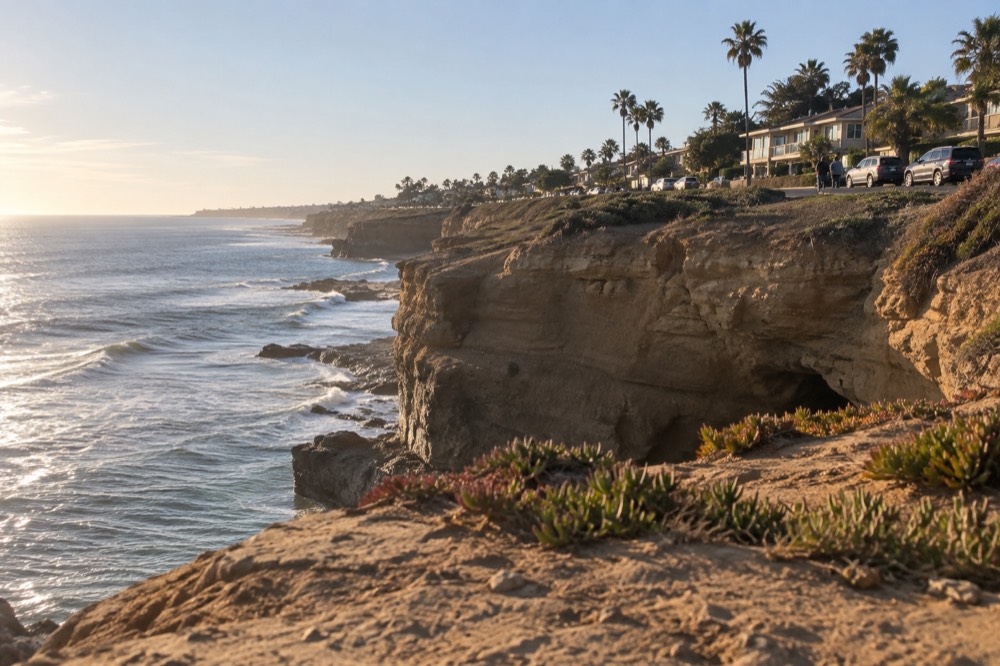
Day of week matters almost as much as season. Weekend evenings draw crowds, and on a particularly good summer Saturday the bluff top can feel like a stadium. Weeknights are calmer, and a Monday sunset in October can feel close to private. Arrive 45 to 60 minutes before the posted sunset time, both for the pre-show light on the bluffs and to find street parking, which is the park's real bottleneck.
There is also a case for seeing the cliffs from offshore. The sunset light hits the bluff face directly when you are on the water, and a sailing excursion turns the whole park into a silhouette. If that idea appeals, these are the three experiences that pair best with an evening at the cliffs:
How Do You Get to Sunset Cliffs and Where Do You Park?
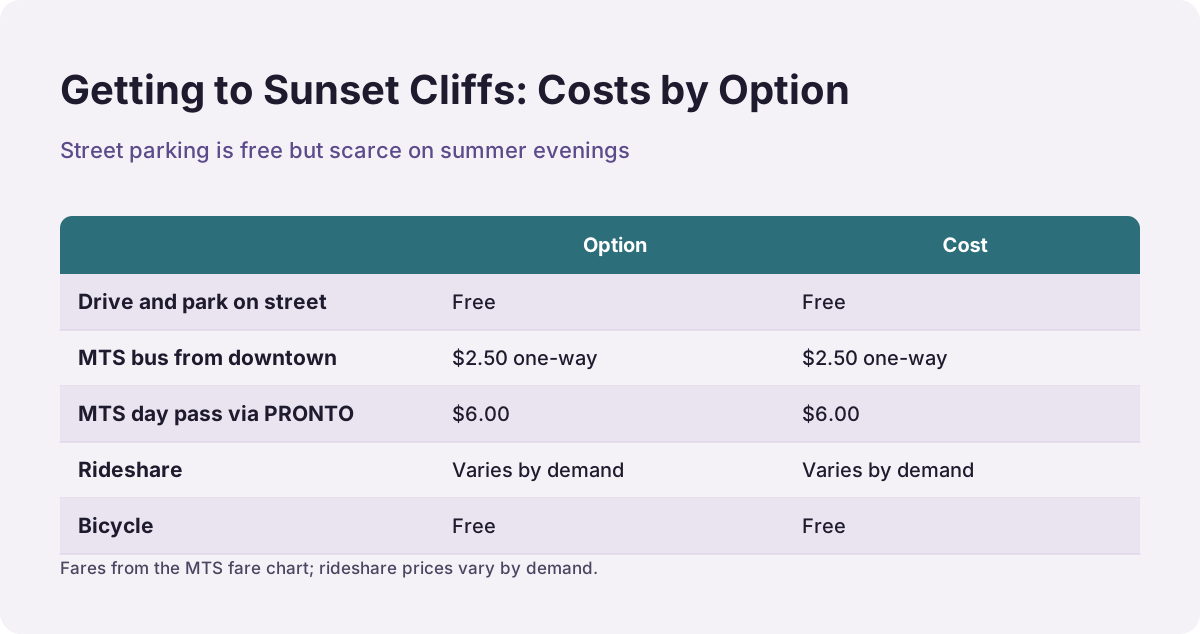
Sunset Cliffs Natural Park sits at the end of Sunset Cliffs Boulevard in Point Loma, about 15 minutes by car from downtown San Diego, and the honest answer on parking is that it is free street parking along the bluff top that becomes genuinely hard to find on summer evenings. There is no dedicated lot for the natural area itself. The MTS system reaches the neighborhood by bus, and a $2.50 one-way fare or a $6.00 day pass covers the trip on the PRONTO card or app.
Driving is what most visitors do, and the approach is part of the pleasure: Sunset Cliffs Boulevard runs straight down the spine of the neighborhood toward the ocean, and the road along the bluff top is the park's front door. The parking reality is street parking on the residential blocks above and along the cliffs. In summer and on good-weather weekends it fills early, and the closer you cut it to sunset, the longer the walk from wherever you finally slot the car. Be a good neighbor: the blocks above the park are people's homes, and driveways fire hydrants and red curbs are enforced.
Public transit works, with a caveat about the walk. MTS bus routes serve the Point Loma peninsula and connect from downtown, and the fare chart is simple: $2.50 one-way with two-hour transfers, or a $6.00 day pass, with reduced fares of $1.25 and $3.00 for seniors 65+, disabled riders, Medicare cardholders and youth with ID. PRONTO fare capping means you never need to buy a day pass up front: pay as you go and the system stops charging you once your rides reach the day-pass value. Contactless bank cards work for single rides but do not cap, so load the app or card if you plan to ride more than twice.
| Option | Cost | Notes |
|---|---|---|
| Drive and park on street | Free | Scarce on summer evenings; arrive an hour before sunset |
| MTS bus from downtown | $2.50 one-way | Two-hour transfers included; reduced fare $1.25 |
| MTS day pass via PRONTO | $6.00 | Earned automatically by fare capping, no need to prebuy |
| Rideshare | Varies by demand | Drop-off along the bluff top is easy; pickup can be slow after sunset |
| Bicycle | Free | Flat approach along the peninsula; bike racks are limited |
One more practical note: the road along the bluff top is one-way in sections and the geometry confuses first-time drivers. Approach from the north along Sunset Cliffs Boulevard, expect the traffic to slow near the main overlooks, and do not plan a fast exit. After a good sunset, hundreds of people walk back to their cars at once. Build in twenty minutes of patience on the way out, or linger until the crowd thins and the afterglow does its quiet work.
If an evening on the cliffs is one stop in a bigger coastal plan, a guided highlights tour handles the driving for you and pairs naturally with a later visit on your own.
What Is the Walk Along the Bluffs Like?
The bluff-top walk at Sunset Cliffs is an easy, mostly flat stroll of a mile or so along an ocean-facing edge of dirt path, paved stretches and overlooks, with the eroding sandstone bluffs on one side and residential streets on the other. It is not a wilderness trail. It is a promenade, and its whole point is the unbroken view west, the wave action below and the changing light on the cliff face as the sun drops. Allow 30 to 60 minutes at an amble.
The terrain underfoot is a mix of sidewalk, compacted dirt and short boardwalk sections around the main overlooks. It is walkable in ordinary shoes, and the railings at the established viewpoints mark where the park wants you to stand. The bluffs themselves are actively eroding, which is precisely what makes them beautiful and also why stepping off the marked edge is a genuinely bad idea. Fences exist because the ground beyond them is not trustworthy, and bluff collapse is a real coastal hazard on this entire shoreline, not a theoretical one.
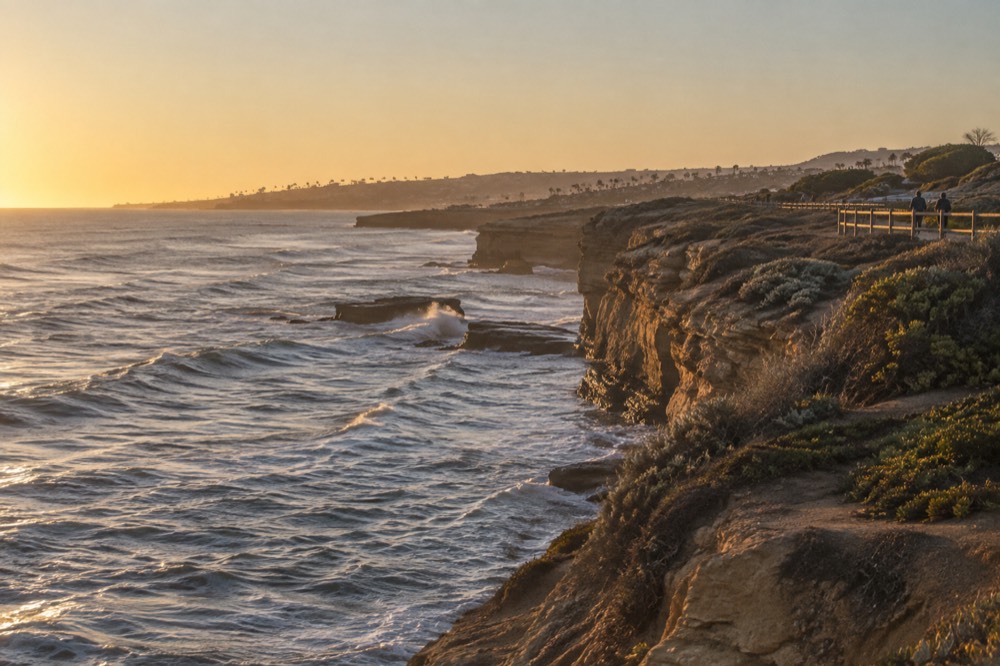
The walk changes character with the tide. At high water, the pocket beaches below shrink to slivers and the surf throws spray high on the cliff base. At low tide, sand reappears in the coves and the tide pool zone opens up. The stairs that connect the bluff top to the beach below are steep and get slick with spray, so if beach access is part of your plan, time it with a falling tide and wear shoes that can handle wet sand and rock.
Photographically, the hour before sunset is the golden stretch. The low sun lights the bluff face from the side, the surf picks up the warm color, and the crowd thins slightly from its peak as casual visitors head for dinner. If you want the postcard shot, our San Diego photography spots guide places the cliffs among the city's best frames, and the San Diego sunset spots roundup compares this stretch against Mount Soledad, Torrey Pines and the other contenders.
Is It Safe to Swim at the Beaches Below Sunset Cliffs?
Swimming below Sunset Cliffs is possible but demands respect: the beaches are small, the surf breaks close to the cliffs, and this coast carries the same rip-current hazard as every other San Diego beach. The city's lifeguard division staffs nine permanent oceanfront stations along roughly 24 miles of coastline, but do not assume a tower is steps away at a pocket cove. Check water quality before you go, never swim alone, and if caught in a rip current, swim parallel to the shore until the pull relaxes.
The official safety advice from the City of San Diego is worth quoting in spirit: rip currents are the primary hazard on this coast. The instruction is to stay calm, swim parallel to the beach until the current releases you, then angle in toward shore. If you cannot make it, float and wave for help. The city's rip current page lays this out plainly, and it applies identically at the cliffs as at Pacific Beach. More of these guides are collected on Things to Do in San Diego.
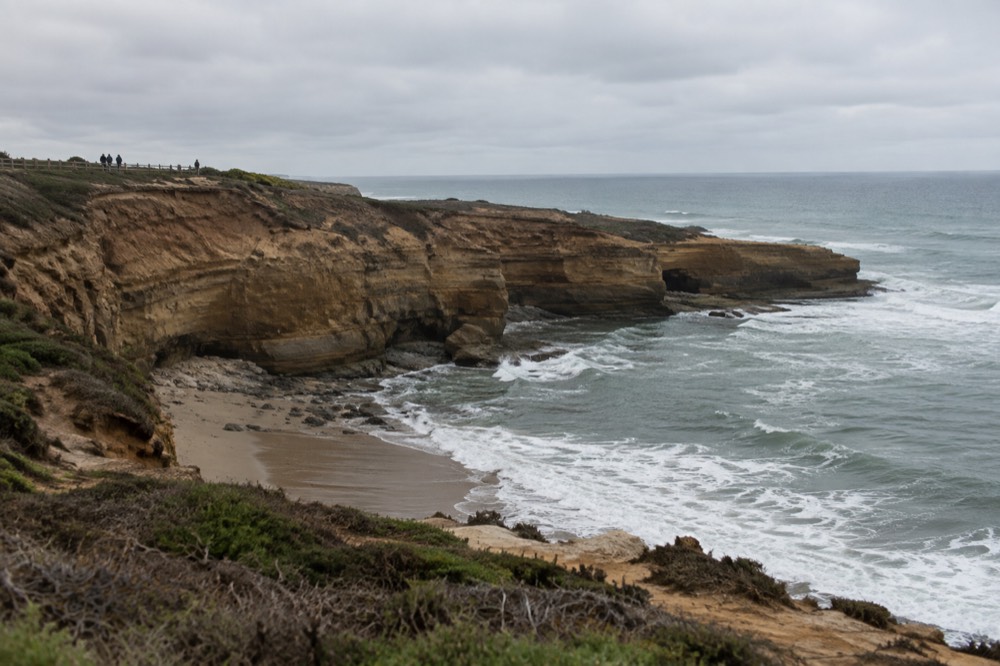
Two more rules matter here. Alcohol is prohibited on all San Diego city beaches, boardwalks and parks, and glass containers are banned with it. And before you swim anywhere in the county, check the water quality postings: the County of San Diego Department of Environmental Health publishes closure and advisory status at sdbeachinfo.com, updated same day or next business day. After rain, coastal runoff frequently triggers advisories, and the honest move is to check the page rather than guess.
The ocean temperature shapes expectations more than most visitors expect. Even at the August peak the mean surface temperature off La Jolla is only 68.7F, and it drops through the 60s and into the high 50s by winter. That is swimmable in a wetsuit and bracing without one. The surf community here wears rubber year round, and nobody considers that a concession.
| Month | Mean ocean temp (F) | What it means for swimmers |
|---|---|---|
| January | 58.1 | Full wetsuit territory; short sessions |
| April | 59.2 | Still cold; spring suit at minimum |
| July | 66.5 | Comfortable for most swimmers |
| August | 68.7 | Warmest month; peak swim season |
| September | 67.6 | Nearly as warm as August |
| November | 62.4 | Cooling fast; wetsuit recommended |
| December | 60.8 | Cold-water surfers only, in rubber |
If your interest in the water is more about watching it than entering it, the tide pools are the better target. At a low tide, the rocky benches at the base of the cliffs hold the usual cast of hermit crabs, anemones and small fish. Our San Diego tide pools guide covers how to read a tide table and where the county's best pools are, and the cliffs rank among the closer-to-downtown options.
Can You See the Tide Pools at Sunset Cliffs?
Yes, at low tide the rocky intertidal zone at the base of the Sunset Cliffs bluffs opens into walkable tide pools holding anemones, hermit crabs, chitons and small fish, and it is one of the more accessible tide pool stretches in the city. You need a meaningfully low tide, ideally a minus tide, and shoes with grip that you do not mind getting wet. The pools sit below an actively eroding cliff face, so stay aware of what is above you as well as below.
Timing is everything. Tide pools here are a two-to-three-hour window around the daily low, and the best days are those with minus tides, which cluster around the new and full moon cycles in fall and winter. A tide table, checked the day of, tells you everything: if the low is above roughly a foot, the benches may never fully clear. Winter delivers the lowest tides of the year and, conveniently, some of the clearest afternoons between storms.
The etiquette is the same as every intertidal zone: touch gently with one wet finger or not at all, never pry animals off rocks, fill holes you dig in sand, and take nothing home. The pools are small ecosystems and the trampling of careless visitors does more damage than any storm. The city's beach regulations prohibit disturbing marine life in protected areas, and the same rules that govern the La Jolla reserves apply here in spirit.
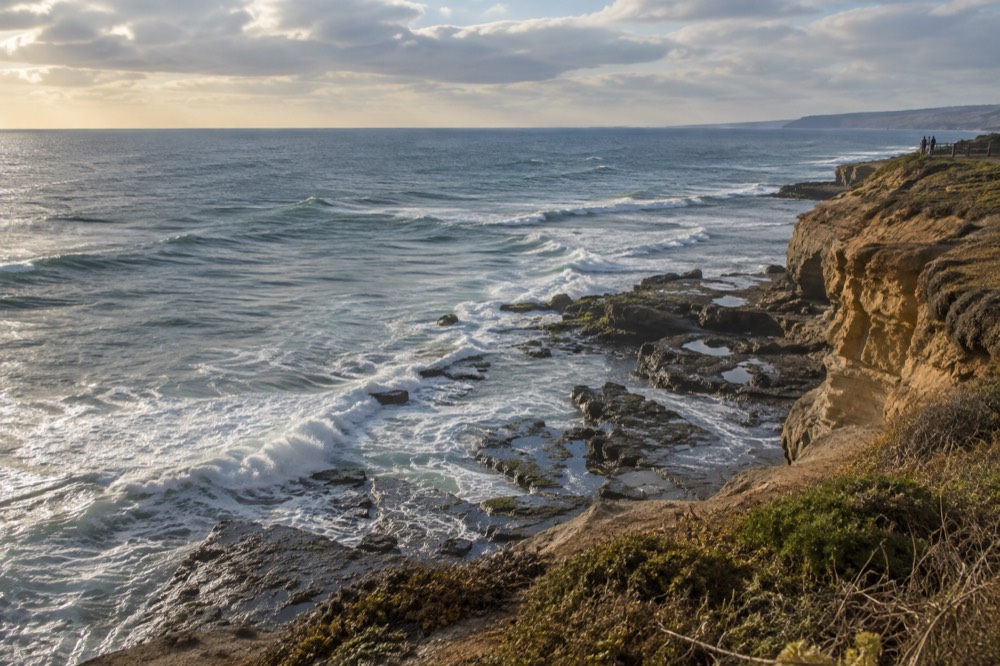
A practical pairing: a late-afternoon minus tide with a sunset afterward is one of the best single evenings this park can produce. You get the pools in daylight, climb back up the stairs as the light goes gold, and watch the finale from the railing. Bring a headlamp for the walk back to the car, because the bluff top is not fully lit and the neighborhood streets go quiet after dark.
What Are the Best Ways to See the Cliffs from the Water?
The best water-level views of Sunset Cliffs come from a sunset sailing excursion on San Diego Bay, which puts you offshore as the western sky does its work and the bluff face catches the last color, and from harbor cruises that trace the Point Loma shoreline at a slower pace. Kayaking and surfing give the closest look, since the surf breaks at the foot of the cliffs, but those are activities rather than sightseeing. For most visitors, a sail is the strongest upgrade to a cliffs evening.
A small-group sunset sailing excursion is the natural complement to the park. You spend the golden hour out on the bay with the city behind you and the open ocean ahead, and Point Loma becomes a long dark shape with the sky burning above it. The small-group format keeps the deck uncrowded, the silence on the water is a genuine contrast to the bluff-top crowd, and you still make it back to shore in time for dinner. If the evening is the centerpiece of your day, this is the tour that matches it.
The harbor cruise is the easier, shorter commitment: an hour on the water with narration, suitable for almost anyone including kids and visitors who would rather not be on a sailboat's heel. It will not chase the sunset with the same intent, but it does put the city skyline, the naval fleet and the Point Loma coastline in one frame. Our USS Midway Museum guide covers the Embarcadero where most bay cruises depart, which makes it simple to bolt a cruise onto a waterfront day.
The third option flips the perspective entirely. A guided city and beaches tour runs by road, and its value here is context: you see the whole sweep of the city's shoreline in one guided pass, from downtown to the peninsula, and the cliffs stop being an isolated stop and start being the western edge of a coastline you now understand. It is a good choice for a first day in town, before you commit an evening to the park itself.
Where Should You Eat Near Sunset Cliffs?
The closest food to Sunset Cliffs sits a few minutes inland in Ocean Beach, the bohemian neighborhood immediately north of the park, where Newport Avenue holds taco shops, burger joints, brewpubs and the classic wooden pier, and Point Loma's Sports Arena corridor adds sit-down options a short drive east. There is no food vendor at the park itself, so if you want to eat with the sunset, bring a picnic, and note that alcohol is banned on the beach and the bluff top.
Ocean Beach is the answer most locals would give. The neighborhood begins where the cliffs end, and its commercial spine is a five-minute drive or a twenty-minute walk up the hill. Our Ocean Beach guide covers the pier, the dog beach and the sunset scene there, and the honest comparison is this: Ocean Beach has the food and the carnival energy, while Sunset Cliffs has the unobstructed horizon. Plenty of evenings involve both, dinner in OB and the drive back down for the finale.
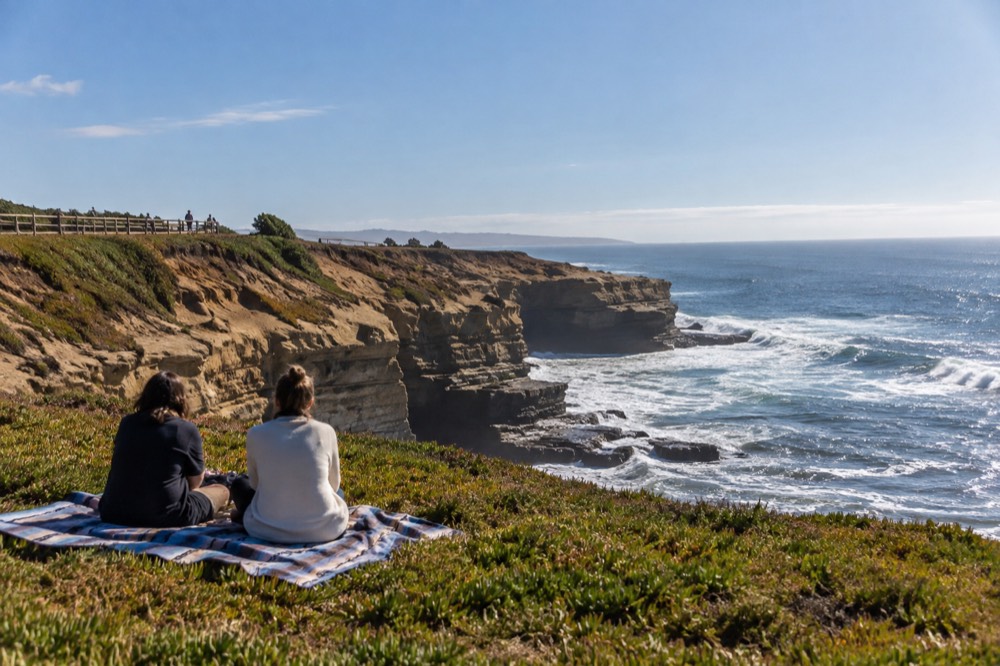
For a picnic at the park, the rules are simple and worth restating: no alcohol, no glass, pack out everything you bring. The grassy strips near the main overlooks are the picnic spots, and an hour of grazing while the light drops is one of the cheapest, best evenings in a city that markets itself on exactly this. The cheap things to do in San Diego guide has more evenings in this price bracket, which is zero.
If dinner after sunset is the plan, book the earlier seating now rather than later. Everyone with the same idea leaves the bluffs at the same moment, and the restaurants within a ten-minute drive feel it. A 20-minute buffer between the last light and your reservation is about right, more on summer Saturdays.
What Else Should You Combine with Sunset Cliffs in One Day?
The strongest pairing is Cabrillo National Monument at the tip of Point Loma in daylight hours, followed by Sunset Cliffs in the evening, because the two sit on the same peninsula and cover its whole character: history, tide pools, whale-watching vantage and the sunset finale. The monument charges $20 per private vehicle, valid for seven days, and its tide pools and coastal area close at 4:30 pm, with the whole park closing at 5:00 pm sharp, so it cannot be your sunset stop.
That is what the cliffs are for.
Cabrillo deserves the daylight hours. The National Park Service site holds the Old Point Loma Lighthouse, one of the best harbor overlooks in the county, and a whale-watching viewpoint where, in late December through February, more than 20,000 gray whales pass offshore on their annual migration, with mid-January the documented peak. The park's own pages are the source for the fee schedule and the staggered closing times, and the details matter: the official hours page is worth a read before you plan the drive down.
A full Point Loma day stacks up neatly. Morning at Cabrillo for the lighthouse and the viewpoint, a midday interlude at the tide pools there or back along the cliffs, an early dinner in Ocean Beach, and the bluff top for the finale. Our Cabrillo National Monument guide has the complete breakdown, and the one day in San Diego itinerary shows how a peninsula evening slots into a bigger first visit.
One counterintuitive scheduling note from the data: September is the quietest month at Cabrillo by a wide margin, with 56,876 recreation visits across the lowest-attendance stretch of 2022 to 2024 against July's 83,999, a gap of roughly 48 percent, even though September's normal high of 77.2F beats July's. The same logic applies to the cliffs. If your trip lands in September, you get the warmest weather of the year and the thinnest crowds, and that combination is the single best planning insight this coast can offer.
If you would rather end the day with the city lit up instead of the sun going down, a night trolley tour runs after dark and covers the downtown lights in about 90 minutes. It pairs well with an early-evening cliffs visit: sunset first, then roll downtown for the skyline.
What Should You Bring for an Evening at Sunset Cliffs?
Bring layers, shoes with grip, water, a headlamp for the walk back and whatever camera you own, because the two things that ruin evenings here are being cold and being unable to see the path after dark. The park is exposed to the wind, the temperature drops quickly after sunset, and the bluff-top lighting is minimal. That is the whole kit. Everything else is optional, and alcohol and glass are banned.
Layers first. Even on an August evening, when the normal low is 67.5F, the onshore wind makes the railing feel ten degrees colder than the parking spot, and in winter the drop from the day's 66F high to a 49.8F low happens fast once the sun is gone. A windbreaker over a fleece is the standard local uniform, and the people in shorts at 7 pm are usually the people leaving at 7:20.
| Item | Why it earns its spot |
|---|---|
| Windbreaker or fleece | Onshore wind chills the bluff top fast after sunset |
| Closed-toe shoes with grip | Dirt path, spray-slick stairs, uneven rock at the tide pools |
| Headlamp or phone light | Minimal lighting on the walk back to the car |
| Water and snacks | No vendors at the park; picnics are welcome, glass is not |
| Tide table (checked that day) | Decides whether the beaches and pools are accessible |
| Blanket | The grassy strips near the overlooks are the picnic ground |
Photographers should note the obvious: the sun sets over open ocean here, which means no foreground silhouette competition, but it also means no second act once the sun is down. The best color often comes 10 to 20 minutes after the sun itself disappears, when the sky burns from the horizon upward, and the crowd that leaves at the moment of sunset misses it. Stay for the afterglow. It costs nothing and it is frequently the best part.
Before you plan the rest of your trip around this evening, these are the three experiences that best extend a Sunset Cliffs visit, from the water and by road:
Common Questions About Sunset Cliffs Natural Park
Is Sunset Cliffs Natural Park free?
Yes. There is no gate, no ticket and no parking fee at the natural area itself; parking is free on the surrounding residential streets. The park is open year round, and the only costs are optional: transit fare if you take the bus, or a tour if you decide to see the cliffs from the water.
What time should I arrive for sunset at Sunset Cliffs?
Aim to arrive 45 to 60 minutes before the posted sunset time. That gives you time to find street parking, walk to a railing spot and watch the pre-sunset light on the bluffs, which is often the best light of the evening. On summer weekends, treat the early end of that window as a minimum.
Can you walk on the beach below Sunset Cliffs?
Yes, at low and mid tide, via steep stairs in a few spots. The pocket beaches are small, the surf breaks close to the cliff base, and the stairs get slick with spray. Time your visit with a falling tide, wear shoes with grip, and be off the sand before the water returns. Swimming is possible but the usual coastal rip-current caution applies.
Is Sunset Cliffs safe at night?
The bluff top is a popular, peopled place at sunset and for a while after, and the neighborhood around it is quiet and residential. The real safety issue is terrain, not crime: minimal lighting, an eroding cliff edge and unrailed sections. Stay behind the railings, carry a light for the walk back, and do not chase a photo past a fence.
Are dogs allowed at Sunset Cliffs?
Dogs are a common sight on the bluff-top path, walked on leash, as with all San Diego city parks. The pocket beaches below follow the city's beach rules for dogs, which vary by location and season, so check the current city beach regulations page before planning an off-leash beach session. Bring waste bags; there is no staff to clean up after you.
What is the best month for clear sunsets at Sunset Cliffs?
August through October. The marine layer that greys the coast in May and June is at its weakest in late summer and fall, the ocean is at its warmest in August and September, and September combines near-peak warmth with the year's thinnest crowds. Winter evenings between storms are crisp and clear, just cold.