Where Did Guy Fieri Go in San Diego?
A practical answer to where Guy Fieri went in San Diego, and how to build your own food-TV-style crawl through Little Italy, North Park, Old Town and the Gaslamp.
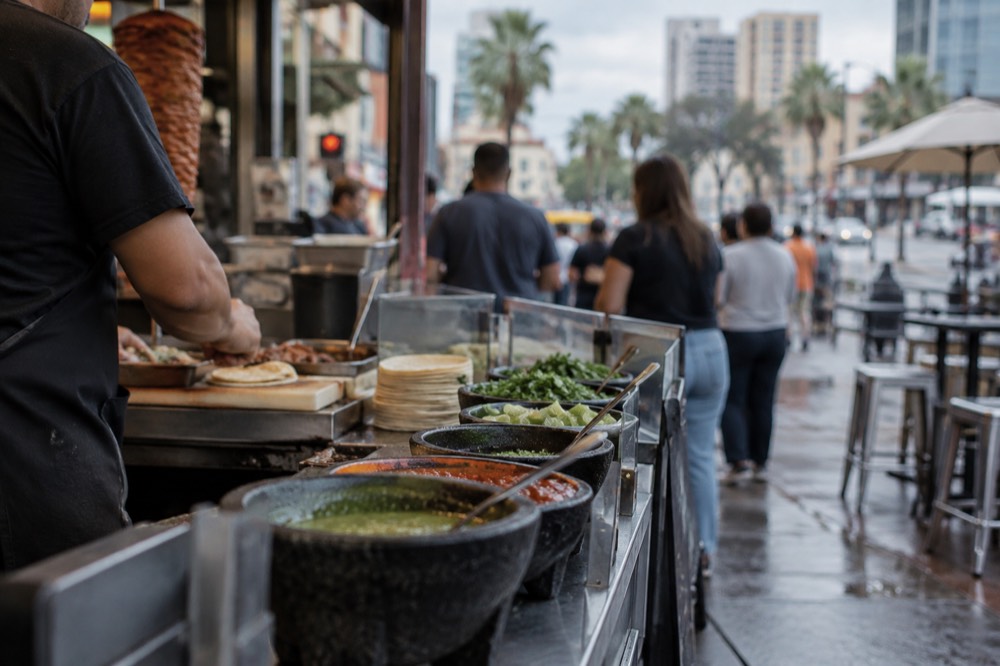
Where Did Guy Fieri Go in San Diego?
The honest answer is that the trail runs through San Diego's most walkable food neighborhoods rather than one single address, and the fuller episode-by-episode breakdown lives on this site's dedicated tracking pages. When a food-TV host sweeps through a city the size of San Diego, the filming tends to cluster where the independent kitchens actually are: Little Italy, North Park, Old Town, the Gaslamp Quarter and the taco corridors further south. This page is the practical companion to that question. It tells you how to turn the answer into an actual day of eating, block by block, without inventing details the listings do not confirm.
For the specific stops themselves, this site keeps two separate pages, and they answer the question more precisely than a summary can. Where Guy Fieri has gone in San Diego tracks the places the shows have visited, and where he has eaten in San Diego collects the dining spots named on air. Read those for the names. Read this page for the plan, because knowing the list of restaurants is only half the job. The other half is figuring out how to get between four neighborhoods in one afternoon when each one is worth an hour of your appetite.
Which San Diego Neighborhoods Keep Turning Up on the food-TV Map?
Four neighborhoods carry most of the weight: Little Italy for the sit-down Italian kitchens, North Park for the brewery-and-taco axis, Old Town for the historic Mexican cooking, and the Gaslamp Quarter for the loud, sauced, late-night plates the cameras love. Each one is compact enough to walk, and each one sits on or near a transit line, which is why a food-TV production can film five kitchens in two days here without ever fighting for a parking spot more than twice. That density is the real reason San Diego keeps earning segments.
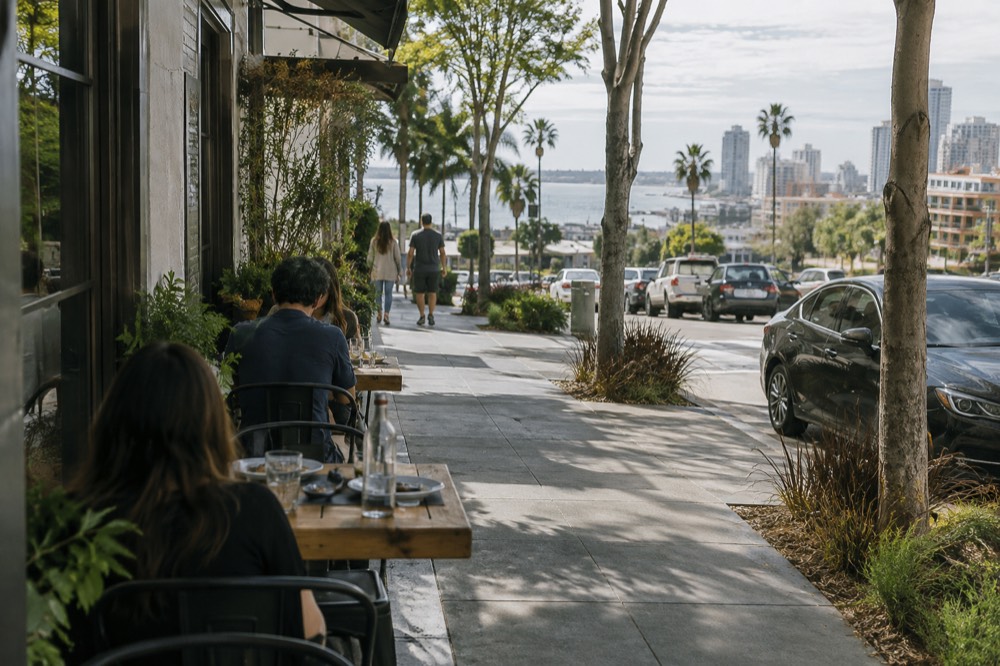
Little Italy is the smallest of the four and the easiest to clear in a single pass. The neighborhood runs along India Street, a few blocks long, and its restaurant row is dense enough that you can compare two kitchens in the time a bigger neighborhood would eat just getting you out of the car. The Little Italy guide covers the full picture, including the weekly farmers market that turns the whole street into a food event on its own.
North Park is the different animal. It is the city's beer-education capital, and the kitchens here grew up around the taprooms, which means the food skews toward things that pair with a pint: tacos, smoked meats, aggressive condiments. The North Park Beerucation Tour is built exactly around that pairing, and it is the single most efficient way to eat and drink your way through the neighborhood's core in one guided sweep.
Old Town and the Gaslamp round out the map at opposite ends of the historic downtown. Old Town holds the city's Mexican and early-Californian cooking tradition, with a cluster of kitchens around the state park. The Gaslamp is the loud one: a sixteen-block historic district of neon, patios and late plates, mapped in full in the Gaslamp Quarter guide.
| Neighborhood | What the kitchens do best | Time you need | Getting there without a car |
|---|---|---|---|
| Little Italy | Italian, pastry counters, market-driven plates | 1 to 2 hours | Trolley to Little Italy station, then walk India Street |
| North Park | Tacos, smoked meats, brewery food | Half a day | Bus or rideshare; it sits off the Trolley lines |
| Old Town | Mexican and early-Californian cooking | 1 to 2 hours | Trolley to Old Town Transit Center |
| Gaslamp Quarter | Late-night plates, patios, big flavors | An evening | Trolley to Gaslamp Quarter station |
How Do You Plan a Food Crawl Across Those Neighborhoods?
Plan it as a loop, not a list: start in Little Italy in the late morning, work south through the Gaslamp or north into Old Town by early afternoon, and save North Park for a separate day, because it is the only one of the four that the Trolley does not reach. The mistake most visitors make is treating all four as one continuous walk. They are not. Three of them sit on the same Trolley spine, which is what makes the loop possible at all, and the fourth is its own trip.
The Hop-on Hop-off Narrated Trolley Tour is the tool built for exactly this loop. It runs for two days, which means you can do Little Italy and the Gaslamp on day one, keep the ticket, and finish Old Town the next morning without paying again. The narration fills the gaps between kitchens, and the stops land within walking distance of every Trolley-served neighborhood on the list above. The wider set of guides lives on Things to Do in San Diego.
The transit option costs less if you are willing to give up the narration. The MTS fare chart publishes a $2.50 one-way fare with two-hour transfers and a $6.00 day pass, and the PRONTO card caps automatically, so you never need to buy a day pass up front: the fare chart literally reads "Day Pass Earned" once your rides total the day-pass value. The official chart is at the MTS fare chart. Load a card, tap on, and the same Blue Line that serves Old Town runs south to the border crossing at San Ysidro if you want to extend the crawl into Tijuana on a second day.
If you would rather drive yourself between stops but not actually drive, the GoCar option covers downtown, Old Town or the beaches on a self-guided GPS route, and the USS Midway ticket makes a natural non-food anchor at the Embarcadero end of the Gaslamp, a five-minute walk from the Seaport Village shops. The Seaport Village guide covers that stretch of the waterfront.
What Should You Actually Order at Each Stop?
Order the thing the kitchen is known for, one plate per stop, and treat the crawl as a tasting menu across neighborhoods instead of a full meal at any single address. This is how the television crews actually eat when they sweep a city: small portions, many kitchens, and a hard rule against sitting down for anything that takes forty minutes. You should steal the method even if you cannot steal the camera crew, because it is the difference between eating four good plates and eating one good plate and then going home full.
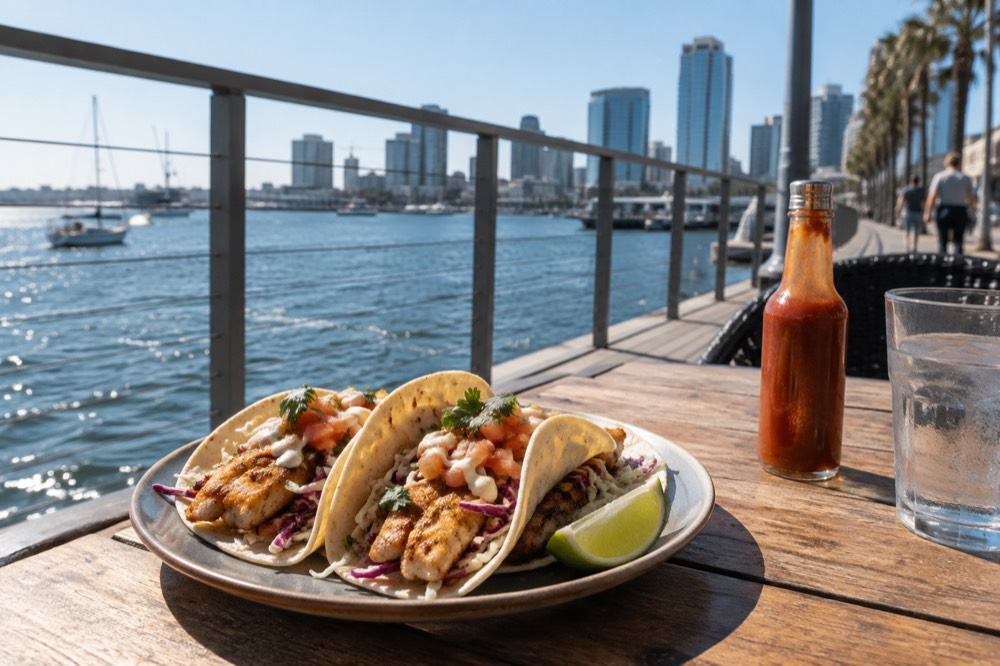
In Old Town and along the southern taco corridors, that means the city's signature plate: the fish taco. San Diego's fish taco tradition is the single most documented food story in the city, and this site's best fish tacos guide ranks the kitchens worth crossing town for. Pair it with the broader best tacos in San Diego list and you have the full spectrum, from battered and fried to the birria-style plates that dominate the late-night conversation.
In Little Italy, order the pasta and skip anything that reads like a hotel menu. In North Park, order whatever the brewery next door is pouring alongside it. In the Gaslamp, order the loud thing: the kitchen that put itself on television in a neighborhood like this did it with a plate that looks like a dare, and that is the point. If you want a guided version of the Gaslamp half, the Gaslamp Quarter Food and Drink walking tour runs two and a half hours and hits a string of kitchens with a local leading, which solves the ordering problem entirely.
One practical warning that has nothing to do with food: parking. Downtown meters run $2.50 per hour with enforcement generally Monday to Saturday, and Sunday is no longer free everywhere in the commercial zones, a change under the city's recent parking reforms. The city's own parking FAQ at sandiego.gov/parking/faqs is the honest source, and posted signs always win. This is the strongest argument for doing the crawl on the Trolley or the hop-on hop-off loop: every kitchen on the list is reachable without moving a car, and the parking you avoid in the Gaslamp on a Saturday night is worth more than the ticket costs.
Do You Need a Car to Retrace the Trail?
No, and that is the best thing about it: three of the four core neighborhoods sit on the Trolley, the fourth is a short bus or rideshare hop, and the only reasons to rent a car in San Diego are the inland day trips like Julian or Temecula, none of which are on this trail. The food-TV map of San Diego is, almost by accident, a transit-friendly map. The kitchens cluster where the walkable blocks are, and the walkable blocks cluster where the Trolley runs.
The two-day validity of the trolley tour matters here more than it first appears. A crawl done properly leaves no room for a second sitting in one afternoon, so the natural shape of the trip is a split day: Little Italy and the Gaslamp on day one, Old Town on day two, North Park by bus whenever it fits. The narrated loop covers all of the Trolley-served stops, and the Old Town Transit Center that anchors the historic end of the loop is also where the free San Diego Flyer shuttle from the airport lands, so a visitor arriving at SAN can start the crawl within an hour of landing without a car at all.
For the North Park leg, the honest options are the bus, a rideshare, or one of the brewery tours that picks up downtown. The San Diego brewery tour with tastings and food pairings runs three hours and pairs the beer with food, which is the entire point of the neighborhood. If you would rather walk Old Town on a plate-by-plate basis, the Old Town Tequila and Tacos walking food tour does exactly that for two and a half hours.
The wider context is worth knowing too. San Diego County received 32.5 million visitors in 2024, per the San Diego Tourism Authority, and the food scene is a growing share of why. A trail that a television host can film in two days is a trail you can eat in two days, and that is the whole pitch of this page. Whether you follow the hop-on hop-off loop or ride the Trolley on a $6.00 capped day pass, the plan is the same: one neighborhood at a time, one plate per kitchen, and a hard stop before you are too full for the next one.
Common Questions About Where Guy Fieri Went in San Diego
where did guy fieri go in san diego?
The trail runs through San Diego's walkable food neighborhoods, above all Little Italy, North Park, Old Town and the Gaslamp Quarter. For the specific kitchens named on air, see this site's pages tracking where he has gone and where he has eaten in San Diego; this page covers how to build the crawl itself.
Which neighborhood should I start a San Diego food crawl in?
Start in Little Italy in the late morning, when India Street is quiet and the pastry counters are stocked. It is the smallest of the four core neighborhoods, it sits on the Trolley, and it leaves your appetite intact for the bigger stops later in the day.
Can I do the food trail without a car?
Yes. Three of the four core neighborhoods, Little Italy, Old Town and the Gaslamp Quarter, sit on the Trolley, and a $6.00 capped day pass covers unlimited rides. North Park is the exception and is best reached by bus, rideshare or a guided brewery tour.
How long does the full crawl take?
Plan on two half-days rather than one long day. Day one covers Little Italy and the Gaslamp, day two covers Old Town, and North Park fits wherever your schedule allows. The two-day hop-on hop-off trolley ticket matches that shape exactly.
Is parking a problem on this route?
It can be, especially in the Gaslamp on weekend evenings. Downtown meters run $2.50 per hour and Sunday enforcement now applies in commercial zones. Riding the Trolley or the narrated trolley loop avoids the problem entirely.