What Are the Top Rated Coffee Shops in San Diego?
Where to find San Diego's top rated coffee, neighborhood by neighborhood, with the roasters locals actually queue for and how to string them together in one day.
What Are the Top Rated Coffee Shops in San Diego?
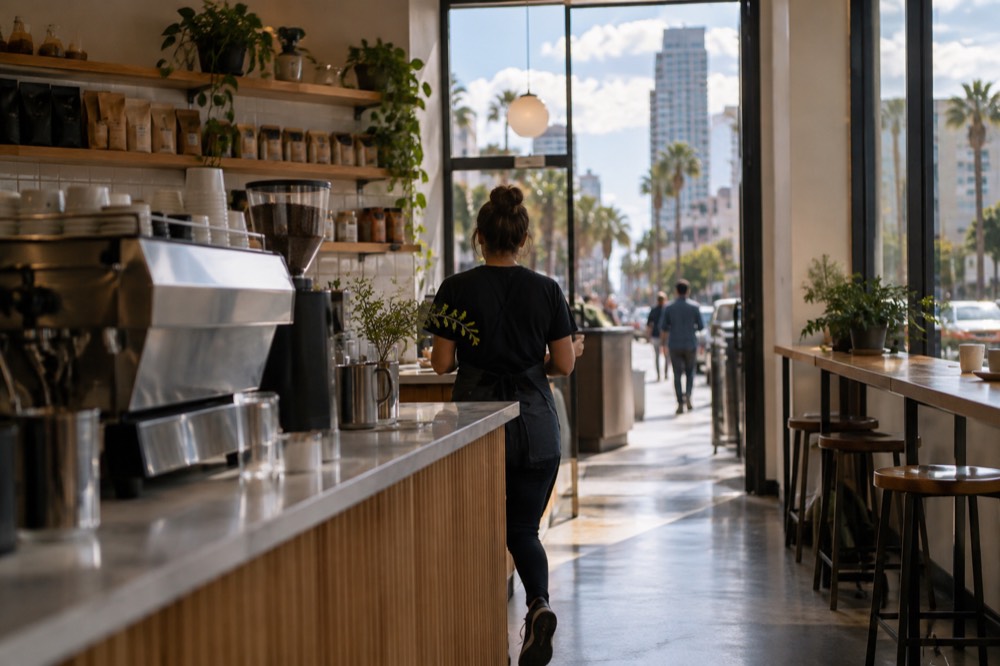
The top rated coffee shops in San Diego cluster in a few walkable neighborhoods rather than one downtown block. The names that come up again and again in local roundups are James Coffee Co. in Little Italy, Bird Rock Coffee Roasters with its La Jolla roots, Dark Horse Coffee Roasters in North Park, Lofty Coffee near the beach communities, and Communal Coffee, which pairs a cup with fresh flowers. Each sits in a neighborhood worth visiting on its own, so the coffee stop doubles as the sightseeing.
That last point matters more than any single ranking. San Diego is a city of villages, and its coffee culture follows the same pattern. You will not find one street where every shop competes side by side, the way you might in Portland or Melbourne. Instead, each neighborhood grew its own scene, usually around one or two anchor roasters and a rotating cast of independents.
The practical consequence is that a coffee trip here is really a neighborhood trip. Pick the wrong base and you will spend your morning in the car. Pick the right one and three excellent shops sit within a fifteen minute walk of each other, with a park, a beach or a waterfront between them.
Before the neighborhood breakdown, one honest note on rankings. Review scores on any single platform swing with the season, the crowd and one grumpy morning, and this site does not reprint them. What follows is the stable picture: the shops and streets that consistently appear across local coffee roundups and neighbor recommendations, described by what they actually are rather than by a number. For a deeper dive into one specific cup, our piece on the best coffee in San Diego goes shop by shop.
Which Neighborhoods Have the Best Coffee Scene?
North Park, Little Italy, Hillcrest, Ocean Beach and La Jolla are the five neighborhoods where San Diego's top rated coffee shops cluster. North Park is the roaster heartland, Little Italy pairs espresso with waterfront walks, Hillcrest is compact and easy, Ocean Beach is the laid-back surf counter, and La Jolla mixes a famous roaster with a village stroll. Most visitors can cover two of these in a morning without rushing.
North Park deserves the first mention because it functions as the city's coffee capital. The neighborhood's blocks around 30th Street and University Avenue hold multiple independent roasters and cafes, plus the breweries the area is better known for, which makes it the rare San Diego district where a morning coffee crawl and an evening beer crawl use the same sidewalks. Dark Horse Coffee Roasters is the anchor name here, a local roaster whose North Park presence helped put the neighborhood on the coffee map. Our North Park guide covers the full picture.
Little Italy takes a different approach. It is compact, flat and walkable, sitting on the harbor edge downtown, which means a coffee stop fits neatly into a waterfront morning. James Coffee Co., a roaster with a devoted local following, is the name most associated with the area, and the surrounding India Street blocks are dense with cafes and pastry counters. The neighborhood also hosts one of the region's best farmers markets, so weekend mornings here carry a festival energy that coffee shops alone would never produce.
| Neighborhood | Coffee character | Best paired with |
|---|---|---|
| North Park | Roaster heartland, most independent shops per block | Breweries and 30th Street dining |
| Little Italy | Espresso bars near the waterfront | Harbor walk and the farmers market |
| Hillcrest | Compact, easy, brunch-adjacent | Vintage shops and University Avenue |
| Ocean Beach | Laid-back surf-town counters | The pier, the beach, the sunset |
| La Jolla | Village stroll with a famous roaster | The Cove and coastal bluffs |
Ocean Beach and La Jolla bookend the coast. Ocean Beach runs on a slower clock: the shops here are unhurried, dog-friendly in spirit if not always in policy, and geared to people who have already been in the water once today. La Jolla is more polished, and it is home turf for Bird Rock Coffee Roasters, one of the region's most decorated roasting names, whose reputation was built in the village before it spread across the county. Pair either stop with the coast itself; our La Jolla guide maps the walk from the village to the Cove.
Hillcrest, between North Park and Balboa Park, is the quiet overperformer. It is small enough to cross on foot in twenty minutes, it sits on the park's doorstep, and its cafes fill a useful niche: the serious morning stop before a museum day rather than a destination in themselves.
If you are basing yourself downtown and want to see the city between caffeine stops, a narrated hop-on hop-off trolley ticket covers two days and loops past Balboa Park, the Embarcadero and the Gaslamp, which lets you treat the coffee shops as stations on a wider circuit.
How Do You String the Shops Together in One Day?
The most efficient coffee crawl pairs one downtown-adjacent neighborhood with one coastal one, using the trolley or a short rideshare between them. Start in Little Italy or Hillcrest in the morning, walk to Balboa Park or the Embarcadero midday, then finish in La Jolla or Ocean Beach for the afternoon. Driving between all five neighborhoods in one day is possible but punishing, since each has its own parking reality.
The order matters less than the pacing. Roasters pull their best shots in the morning, when the bars are quiet and the staff have time to talk, so put the shop you care most about first. By mid-afternoon many of the best counters have sold out of single-origin pour-overs and the pastry cases look picked over, which is a sign to switch from drinking coffee to walking it off. Other pages covering the same trip are gathered on Things to Do in San Diego.
Transit makes the downtown half easy. The MTS trolley and bus network charges $2.50 one-way with two-hour transfers, or a $6.00 day pass, and the fare system caps automatically once your rides total the day-pass value, so there is no reason to buy a pass up front. The official fare chart at sdmts.com has the current numbers. Little Italy, Hillcrest's edge and the Gaslamp all sit within a short walk or ride of the downtown interchange at Santa Fe Depot.
Parking is the honest catch. Downtown meters run $2.50 per hour with enforcement generally Monday to Saturday, and Sunday is no longer free everywhere in the commercial zones, so the city's parking FAQ at sandiego.gov is worth a glance before you commit to driving between stops. The coastal neighborhoods are the opposite problem: parking is generally free in the surrounding streets but genuinely scarce in summer, which is the real argument for going early.
The two-day trolley ticket solves the parking question entirely for the downtown half of the crawl. You park once, ride between the neighborhoods that sit on the loop, and spend your walking time inside the coffee shops instead of circling blocks looking for a space. It is not the right tool for La Jolla or Ocean Beach, which sit outside the core loop, but for a Little Italy to Hillcrest to Gaslamp morning it is hard to beat.
What Should You Order at a San Diego Coffee Shop?
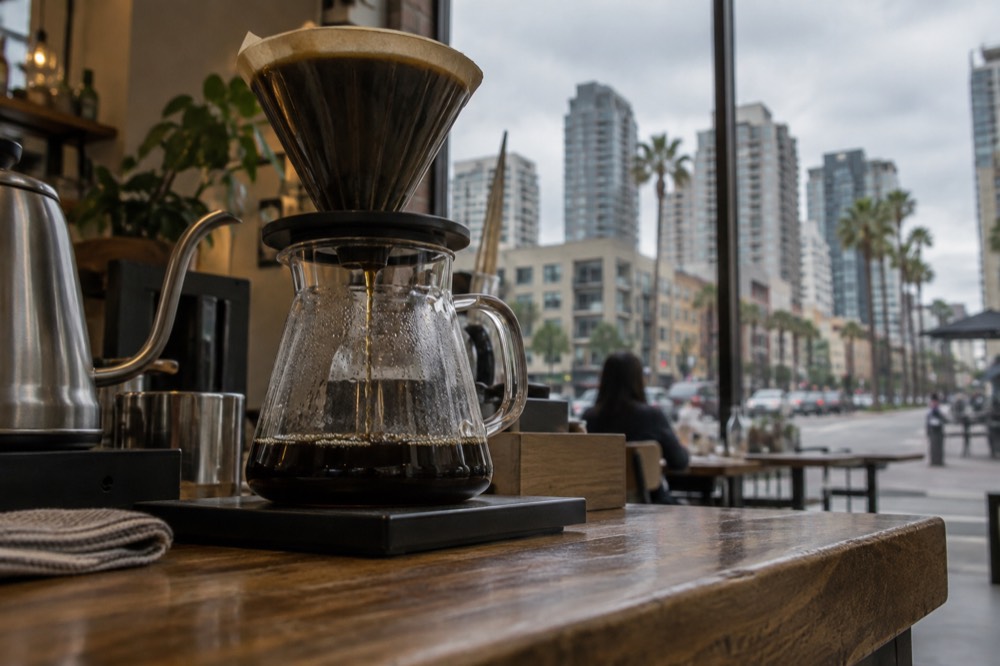
Order what the local roasting culture is actually good at: single-origin pour-overs, well-pulled espresso and cold brew, which San Diego drinks year round. The city's mild climate means iced coffee never goes out of season, and the marine layer keeps cool grey mornings common enough that hot drinks hold their own even in summer. Ask the barista what is on the bar that day rather than defaulting to a latte.
That last suggestion is not coffee snobbery, it is local economics. San Diego's roasters tend to be small operations that rotate beans weekly, so the single origin on the bar today may not exist next month. The shops that built the city's reputation did it on pour-over bars and direct-trade relationships, and the menu board is usually a better guide than anything printed permanently.
The climate shapes the cup more than visitors expect. San Diego's summer is genuinely late: September's normal high of 77.2F actually beats July's 75.3F, and June's normal high of 71.7F is lower than October's, because the marine layer locals call May Gray and June Gloom holds the coast cool while inland areas warm up. That means a hot flat white in June does not feel ridiculous the way it would in Phoenix, and the grey-morning espresso run is a real local ritual rather than a tourist habit.
Milk drinks are the growth area. Oat milk is near-universal across the independent shops, and the city's brunch culture means most counters do a steady trade in cortados and cappuccinos through late morning. If a shop offers a house-made syrup or a seasonal special, that is usually where its personality shows; the default drinks are table stakes everywhere worth visiting.
If the crawl plan is starting to sound like a full day of logistics, the narrated trolley takes the routing out of your hands entirely, and the operator's listing carries a free-cancellation window so you can lock it in before your trip and adjust later if the marine layer has other ideas.
Where Do You Find Coffee Near the Big Sights?
The sights with the best coffee within walking distance are Balboa Park, the Embarcadero and the Gaslamp Quarter. Balboa Park's coffee sits inside and around the park's village edge rather than in the museum core, the Embarcadero's cafes line the harbor walk near the USS Midway, and the Gaslamp's counters open early for the convention and office crowd before the nightlife takes over at night. None of the three requires a detour.
Balboa Park is the most useful pairing because the park itself is enormous and mostly caffeine-free inside the museum core. The practical move is coffee first in Hillcrest or along the park's north edge, then in through the gardens. The park grounds, gardens and trails carry no admission at all, and the Botanical Building is free too, so a coffee-and-gardens morning costs nothing beyond the cup. Our Balboa Park museums guide explains which venues need tickets and which are always open.
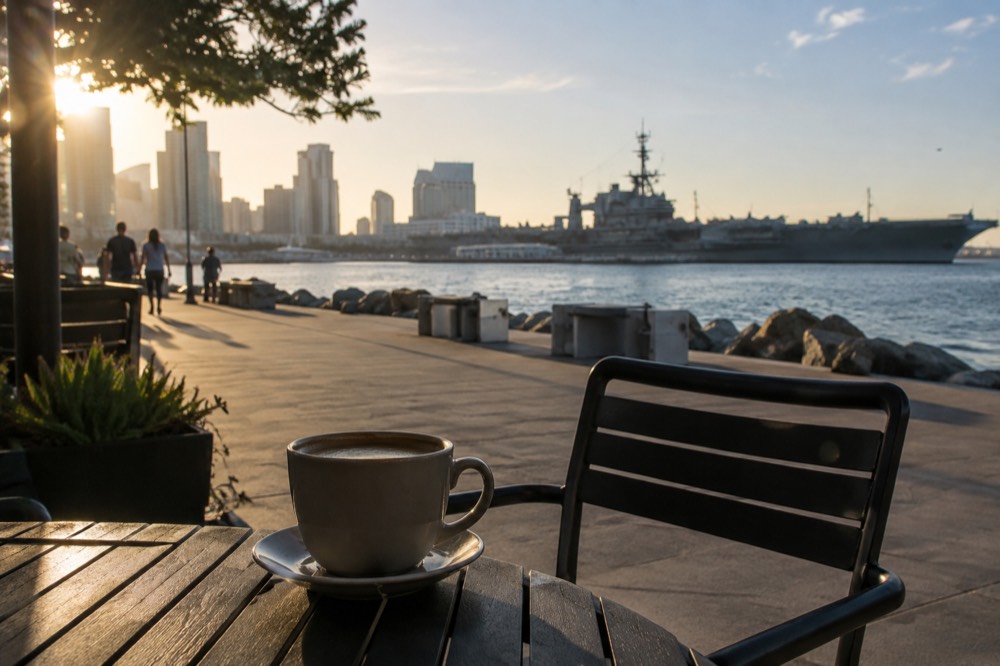
The Embarcadero stretch works the opposite way. The harbor walk from Seaport Village toward the USS Midway passes cafe counters along the water, and the Midway itself sits at the north end, so the classic move is a harbor-side coffee, then the ship. The museum is open 10:00 am to 5:00 pm with last admission at 4:00 pm, and buying the entry ticket online runs a few dollars cheaper than at the door, so plan the coffee stop before opening rather than after.
The Gaslamp's coffee scene lives a double life. The same blocks that fill with the nightlife crowds our Gaslamp Quarter guide covers after dark are office and convention territory before noon, and the cafes here open early and empty out by mid-afternoon. That makes the Gaslamp the best downtown neighborhood for a pre-9am stop, and the worst for a 4pm one, which is worth knowing before you plan an afternoon crawl around it.
For visitors who want the sights and the coffee with zero logistics, a small-group driving or riding tour covers the downtown core in a couple of hours and leaves the evening free, while a self-guided option like a GoCar lets you set your own pace between the neighborhoods. Either way, the coffee stops are where you choose to make them; the tours just handle the distance.
Common Questions About Coffee in San Diego
what are the top rated coffee shops in san diego?
The names that repeat across local roundups are James Coffee Co. in Little Italy, Bird Rock Coffee Roasters in La Jolla, Dark Horse Coffee Roasters in North Park, Lofty Coffee near the beach communities and Communal Coffee. They sit in different neighborhoods, so plan around the district you want to explore rather than chasing a single ranking.
Which San Diego neighborhood has the most coffee shops?
North Park, around 30th Street and University Avenue, has the densest cluster of independent roasters and cafes in the city. Little Italy is the most compact and walkable alternative, and Hillcrest is the easiest to pair with a Balboa Park visit.
Is San Diego coffee expensive?
Independent shop prices sit in the range typical of any major US city, and this site does not print specific menu figures since they change often. The bigger cost consideration is parking: the downtown meters and the coastal street-parking scramble cost more in time than the coffee does in dollars.
Can you walk between the best coffee shops?
Within each neighborhood, yes, easily. Between neighborhoods, no: North Park, Little Italy, La Jolla, Ocean Beach and Hillcrest are miles apart. The trolley and bus network handles the downtown pairs cheaply, and a two-day hop-on hop-off trolley ticket covers the core loop without parking.
Do San Diego coffee shops open early?
The downtown and Gaslamp counters open earliest, serving the office and convention crowds before 8am. Beach-neighborhood shops open later and close earlier, matching the surf-and-sunset rhythm of places like Ocean Beach, so sequence your crawl from downtown outward.