What Is the Coldest Month in San Diego?
December is the coldest month in San Diego by both air measures, with a normal high of 66.0°F and a normal low of 49.8°F. Here is what winter actually feels like on the ground.
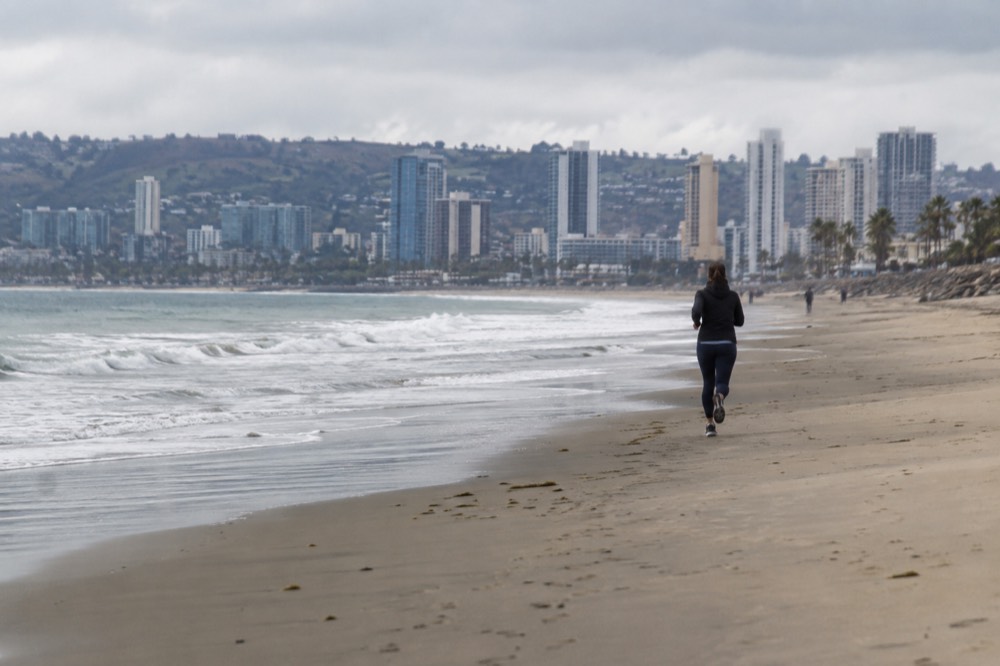
What Is the Coldest Month in San Diego?
December is the coldest month in San Diego, and it holds that title on both measures that matter. Its normal high of 66.0°F is the lowest of the year, edging out February at 66.2°F and January at 66.4°F, and its normal low of 49.8°F is also the year's floor. That still makes December in San Diego warmer than a typical spring afternoon in Chicago, which is exactly why the question surprises people who expect a beach city to have a real winter.
The numbers come from the 30-year climate normals recorded at the San Diego International Airport station, the official record the National Centers for Environmental Information publishes for the city. A "normal" is not a forecast. It is the average of three decades of readings, 1991 through 2020, and it smooths out the odd heat wave and the odd cold snap into the shape of a typical year.
That shape is remarkably flat. San Diego's coldest month and its warmest month sit barely eleven degrees apart on the high side, 66.0°F in December against 77.3°F in August. Most American cities swing thirty or forty degrees between their extremes. San Diego's position on a peninsula, with cold Pacific water upwind of it for most of the year, keeps the thermostat from moving much in either direction.
So if you are packing for a December trip, you are not packing for winter in any meaningful sense. You are packing for what the rest of the country would call a pleasant October. The catch, and it is a real one, is that the cold San Diego does have arrives in two specific forms that the monthly average hides, and both are worth understanding before you plan anything around them.
| Month | Normal high °F | Normal low °F | Rainfall (in) |
|---|---|---|---|
| December | 66.0 | 49.8 | 1.67 |
| January | 66.4 | 50.3 | 1.98 |
| February | 66.2 | 51.8 | 2.20 |
| March | 67.0 | 54.5 | 1.46 |
| August | 77.3 | 67.5 | 0.01 |
The table makes the honest answer a little more interesting than the one-liner. December is the coldest by air temperature, but January is wetter and February is wetter still, and for a visitor the rain matters more than a two-degree difference nobody can feel. The coldest-feeling month and the coldest-measuring month are not quite the same thing.
How Cold Does San Diego Actually Get in Winter?
San Diego's winter cold is a marine layer and an evening chill, not snow or frost in any normal year. Daytime highs from December through February sit in the mid-60s, overnight lows run around 50°F, and the city records essentially all of its annual rain between December and March, when 7.3 of the year's inches fall. What locals call cold is a gray morning that burns off by noon, followed by an evening where a jacket stops being optional.
The marine layer is the mechanism behind almost everything strange about San Diego's calendar. It is the same onshore cloud deck that produces the famous May Gray and June Gloom, and while the temperature normals show it clearly, June's normal high of 71.7°F is lower than October's 74.6°F, it also shapes winter. The difference is that in winter the layer comes with rain fronts rolling in off the Pacific rather than just with gloom.
Rain, when it arrives, is concentrated and brief. December averages 1.67 inches spread over about three days with measurable precipitation. When a storm does come through, it can dump most of a month's total in one afternoon, and then the sky goes clear again for a week. Planning around San Diego winter rain means having one indoor fallback, not a contingency for every day.
The evenings are the part that genuinely surprises visitors. A December day that peaks at 66°F can drop to 50°F after sunset, and the city's outdoor-oriented design, with its patios, piers and open-air malls, offers less shelter than a typical downtown. Locals treat a winter sunset as a change of wardrobe. You can see the whole city comfortably in December, but you want to do the outdoor things in the middle of the day.
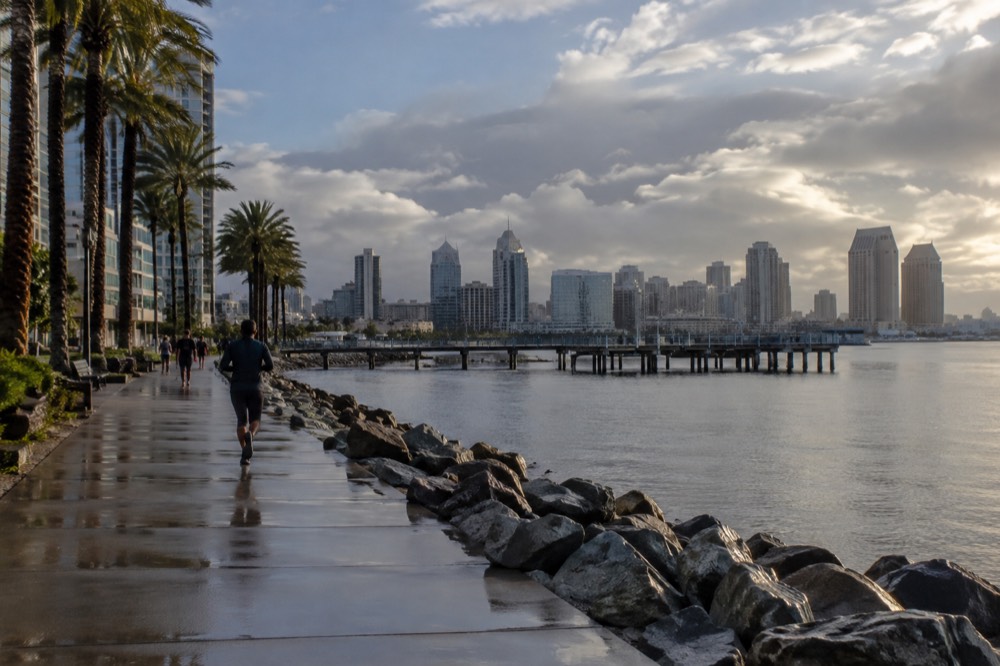
The practical version of all this: December and January are excellent months for the USS Midway Museum, the Gaslamp Quarter and any of the city's indoor attractions, and perfectly fine months for the Zoo or Balboa Park if you go between about 10 am and 3 pm. The San Diego weather guide breaks the whole year down month by month if you are choosing between seasons rather than dodging one.
The hop-on hop-off trolley deserves a specific mention for winter visitors, because it solves the December problem neatly. The tour is valid for two days, the vehicles are covered, and the narration means you are not standing at a viewpoint waiting for something to happen. When the marine layer is thick at 9 am, you ride. When it burns off at noon, you hop off at the Embarcadero and walk.
Is the Ocean Colder Than the Air in Winter?
Yes, and by a wider margin than most visitors expect: the Pacific off San Diego bottoms out at a mean of 58.0°F in February, nearly two months after the air reaches its own minimum in December. The ocean at the Scripps Pier station averages 60.8°F in December, 58.1°F in January and 58.0°F in February, then climbs steadily to a peak of 68.7°F in August. Water holds its winter far longer than air does.
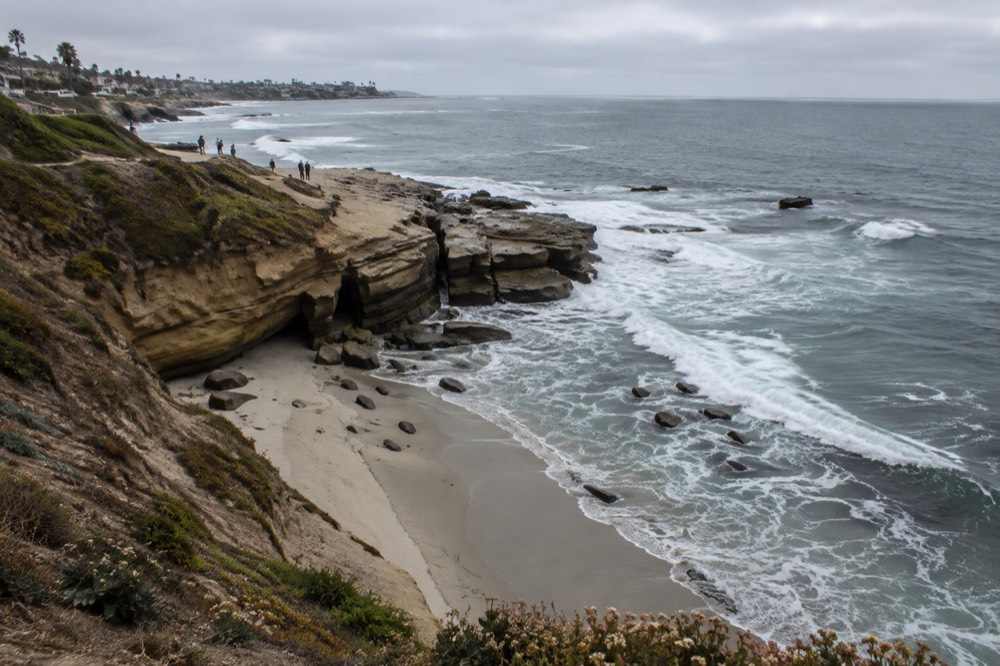
The figures come from the NOAA tide and current station at La Jolla's Scripps Pier, where hourly sea-surface readings are recorded year round. The lag is simple physics: water heats and cools slowly, so the ocean keeps getting colder for weeks after the shortest day, and keeps warming for weeks after the air has peaked. Swimmers notice this every spring, when the beaches are full of people standing knee-deep in water that is colder than it was in February. Everything else covered here is indexed on Things to Do in San Diego.
For a winter trip, the practical reading is that swimming is off the table for most people, but everything on top of the water is at its best. Gray whales pass San Diego in late December, January and February, with more than 20,000 animals migrating past each season, and the viewing from Cabrillo National Monument and from whale watch boats is a winter activity specifically because the cold season is the whale season. The Cabrillo National Monument guide covers where in the park to stand.
Surfers wear wetsuits year round in San Diego, and in February they wear the thick ones. If watching them is more your speed than joining them, the bluffs above La Jolla Shores and the seawall at Windansea are the classic vantage points, and both are better with a thermos than a towel.
Is December a Good Month to Visit Despite the Cold?
December is a genuinely good month to visit San Diego, and the crowd data suggests it is quietly one of the smartest picks on the calendar. The marine layer is real but the rain averages under two inches across the month, hotel rates sit below the summer peak, and the city runs a dense events calendar, from December Nights in Balboa Park to the harbor's holiday sail parade. The cold that defines the month statistically is a jacket, not an obstacle.
The signature counterintuitive fact about San Diego's calendar actually points the other way. September, with a normal high of 77.2°F and the warmest inshore water of the year, is one of the lowest visitation months at Cabrillo National Monument, roughly 56,876 recreation visits against July's 83,999 in the same recent period. Visitors chase the summer label and miss the actual warmth. December works the same logic in reverse: the label says winter, the thermometer says otherwise.
What December does demand is a little scheduling discipline. The things that depend on clear skies and long daylight, the tide pools at Cabrillo, the Sunset Cliffs walk, a kayak session in La Jolla, all want the 10 am to 3 pm window. The evenings want indoor plans, and San Diego has plenty: the USS Midway's flight deck closes but its hangar deck does not, the museums of Balboa Park run on their normal hours, and the Gaslamp's restaurant scene is at full tilt through the holidays. The December in San Diego guide lists the events in order.
One honest caveat: the weeks around the holidays reverse the quiet-December logic. The period between Christmas and New Year's is peak family travel, and the Zoo, the Midway and the hotel district all feel it. Early December, before about the 15th, is the sweet spot, with the full events calendar, thin crowds and the same 66-degree afternoons.
What Should You Pack for San Diego's Coldest Month?
Pack layers, not a parka: a light jacket or fleece for mornings and evenings, short sleeves for midday, and something rain-proof for the two or three wet days December averages. The daily swing of roughly 16 degrees between the afternoon high and the overnight low is bigger than the swing between December and August, so the wardrobe problem is within the day, not across the trip.
Footwear matters more than outerwear. If rain is in the forecast, the city's older sidewalks and the Embarcadero boardwalk get slick, and the hill neighborhoods from Hillcrest down to Little Italy turn their staircases into small waterfalls. Nothing about this is severe. It is just a city built for dryness discovering water twice a week.
The one thing not to pack is the assumption of a swim. Between the 60.8°F December water and the marine layer, beach days in December are for walking, whale watching and sunset photographs, not for getting in. If a warm-water swim is the point of the trip, the honest answer is to come between August and early October, when the Scripps Pier station averages 68.7°F and 67.6°F, the warmest readings of the year.
For getting around in the cool months, the trolley and bus system is a winter asset, and the getting around San Diego guide explains the fare system, including the pay-as-you-go capping that makes the day pass unnecessary. Riding instead of driving also removes the one genuinely unpleasant winter experience in San Diego, which is hunting for parking in the rain.
Common Questions About the Coldest Month in San Diego
what is the coldest month in san diego?
December is the coldest month in San Diego, with a normal high of 66.0°F and a normal low of 49.8°F, both the lowest readings of the year. The ocean, however, keeps cooling after the air stops and bottoms out at 58.0°F in February.
Does it ever freeze in San Diego?
Freezing temperatures are effectively unknown at the official airport station. The coldest normal low of the year, December's 49.8°F, is more than sixteen degrees above freezing, and the moderating effect of the Pacific keeps the city well clear of frost in a typical winter.
Is January colder than December in San Diego?
No. January's normal high of 66.4°F and normal low of 50.3°F are both slightly warmer than December's readings. January is wetter, averaging 1.98 inches of rain against December's 1.67, so it can feel rawer even though the thermometer says otherwise.
What is the coldest the ocean gets in San Diego?
The mean sea-surface temperature at the Scricks Pier station bottoms out at 58.0°F in February, with January essentially tied at 58.1°F. Swimmers who want warm water should target August, when the mean reaches 68.7°F.
Is December a bad time to visit San Diego?
No, and for many travelers it is a smart pick. Afternoon highs in the mid-60s, thin crowds in early December, a full holiday events calendar and the start of the gray whale migration make it one of the city's better value months. Pack a jacket for evenings and a rain layer for the occasional storm.
What should I wear in San Diego in winter?
Layers. A light jacket or fleece covers mornings and evenings, short sleeves handle midday, and something water-resistant handles the two or three rainy days a winter month averages. The temperature swing within a single December day is larger than the swing between December and August.