Getting Around San Diego: Trolley, Bus, Car and Airport Guide
San Diego is easier to cross than most visitors expect, and the mistakes people make are almost always the same two: renting a car for a downtown stay, and paying for transit the wrong way. Here is how the Trolley, the buses, the airport shuttles and the parking rules actually work.
Short answer
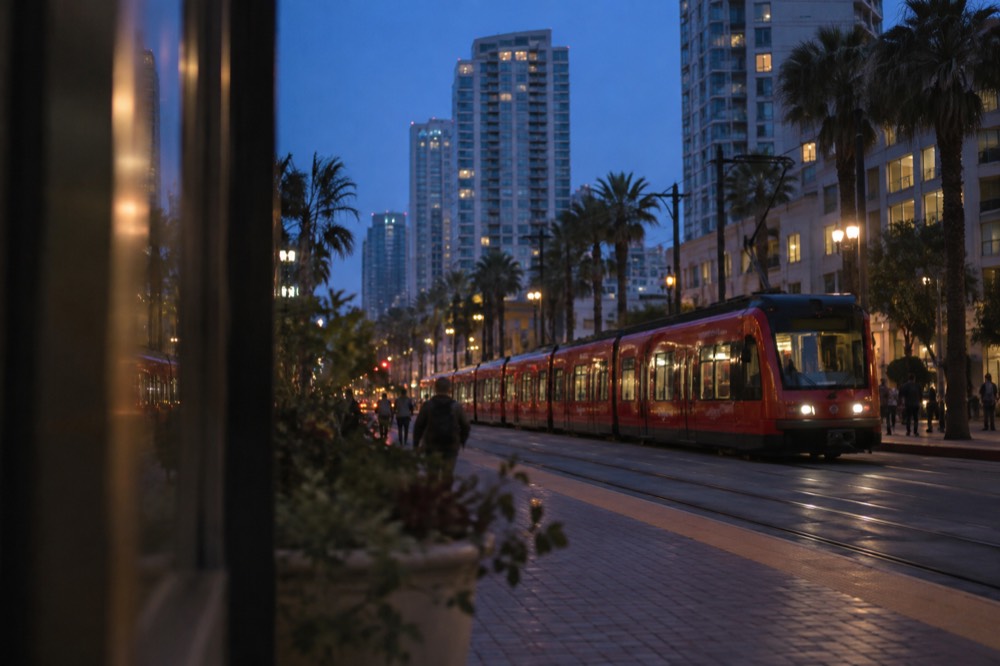
A $2.50 one-way MTS fare or a $6 day pass covers the Trolley and every city bus, and the PRONTO system caps your rides automatically so you never need to buy a day pass up front. There is no Trolley station at the airport, but the free San Diego Flyer shuttle connects the terminals to Old Town in about 15 minutes. Rent a car only for day trips.
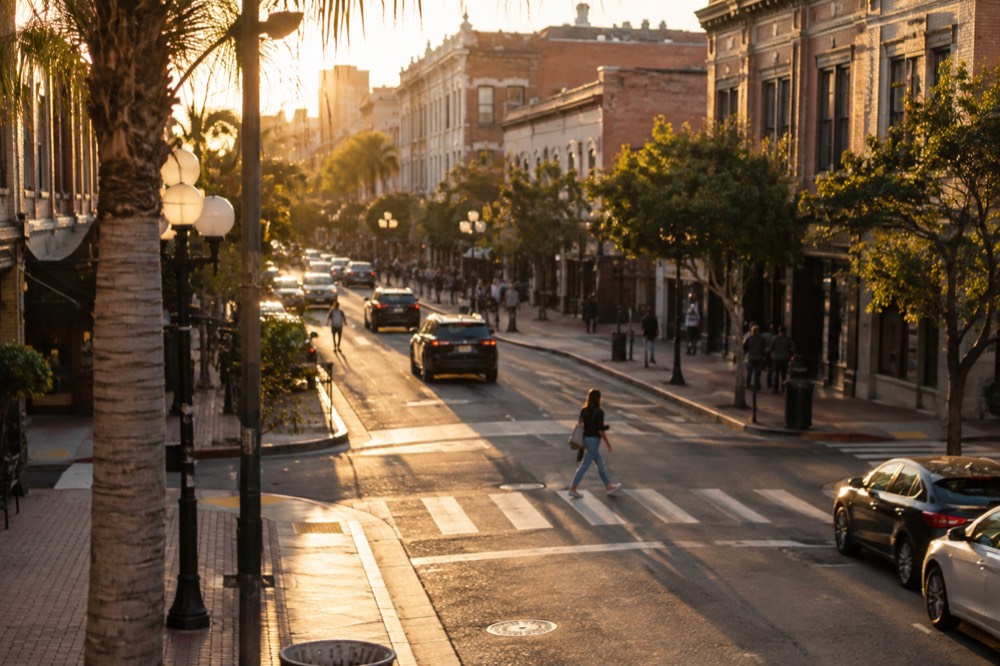
San Diego spreads about 20 miles from downtown to La Jolla and much further if you count the day-trip country, yet the parts most visitors come for sit close together. The Gaslamp Quarter, the Embarcadero, Balboa Park and Old Town form a rough triangle you can walk between on a good day. The Trolley stitches the rest together, and the single biggest mistake a first-timer makes is paying for a car to sit in a parking space.
This guide covers the transit system in full: what the three Trolley lines actually connect, how PRONTO fare capping works, how to get from the airport into the city, when a rental car earns its keep, and how to ride the Blue Line all the way to the Mexican border. Everything here comes from the official fare charts and agency pages, and where something is genuinely unknowable, like a beach parking rate nobody publishes, this site says so plainly rather than inventing a number.
What Are the Main Ways to Get Around San Diego?
Getting around San Diego splits into four realistic options: the MTS Trolley and bus network for the central corridor, rideshare and taxis for short hops, a rental car for the far-flung spots like La Jolla's bluffs and the North County beaches, and your own feet once you are inside a walkable district. Most visitors end up using two or three of these in combination, not one exclusively. The Trolley's three lines cover downtown, Old Town, Mission Valley, the South Bay border and the UC San Diego area, but they do not reach the beach neighborhoods or Balboa Park's museum core, so a purely Trolley-based trip leaves real gaps.
The honest starting point is that San Diego's transit is good for a California city and incomplete by East Coast standards. The Trolley is frequent, clean and cheap, and the Blue Line now runs all the way from the border to UC San Diego and the UTC area, a published end-to-end time of 1 hour 23 minutes. But there is no rail to the beaches, no rail into Balboa Park and no Trolley station at the airport, so the system rewards you for knowing its edges.
Here is the honest shape of the choice, mode by mode, before the detail sections below:
| Mode | Best for | Where it falls short |
|---|---|---|
| MTS Trolley and bus | Downtown, Old Town, Mission Valley, the border, Balboa Park via connecting bus | No service to the beaches or the airport |
| Rideshare and taxi | Short hops, evening returns, luggage-heavy trips | Costs add up fast across a week |
| Rental car | Day trips, North County beaches, multi-stop days | Downtown parking fees, hotel parking fees |
| Walking | The Gaslamp, Embarcadero, Old Town, La Jolla village | Distances between districts are real |
That is why the geography matters more than the mode. If you base yourself downtown or in the Gaslamp, which this site compares directly in its Gaslamp Quarter neighborhood guide, nearly everything on a first visit is reachable without a car. If you base yourself in La Jolla or Pacific Beach, you will want wheels at least some of the time. Our first time in San Diego guide walks through that choice in more depth.
How Does the San Diego Trolley Work?
The San Diego Trolley runs three light-rail lines, the Blue, Orange and Green, with fares paid through the PRONTO card or app at $2.50 one-way including two hours of transfers, and it connects downtown, Old Town, Mission Valley, the South Bay and the border at San Ysidro. The Blue Line is the one most visitors will ride, running from San Ysidro north through downtown to UC San Diego and UTC. The Orange Line runs east through the South Bay and Lemon Grove, and the Green Line runs east-west through Mission Valley and Old Town, which is the handiest line for the Fashion Valley shopping area.
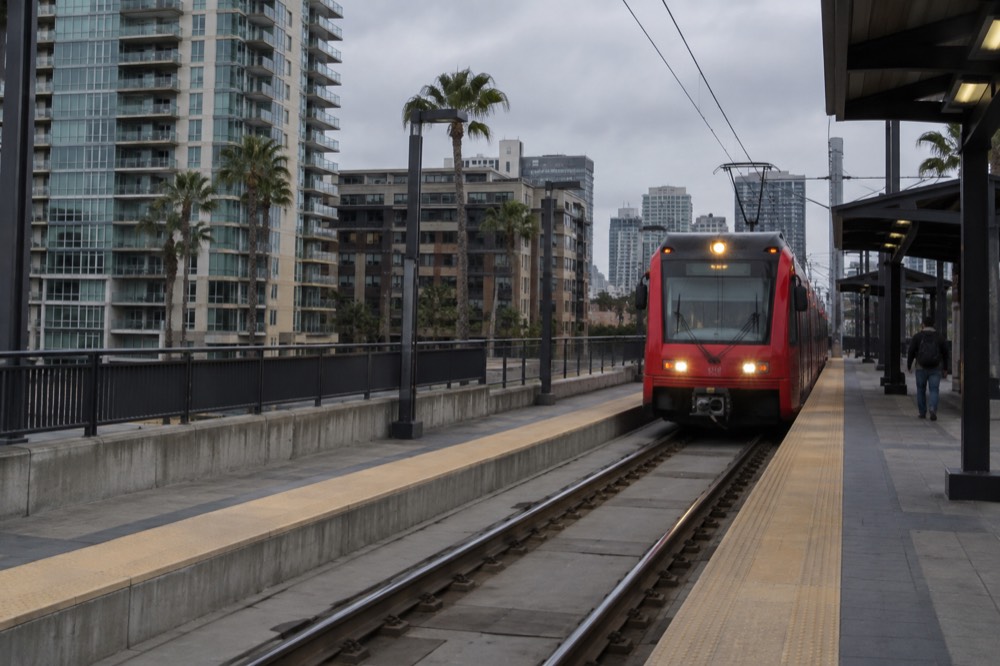
The three lines share a downtown spine, so transferring between them is usually a matter of stepping off one car and waiting on the same platform. The main downtown interchange points are around the American Quarter and Santa Fe Depot, where the Trolley meets the Coaster commuter rail that runs up the coast to Solana Beach, Carlsbad and Oceanside. If you are staying downtown, you are rarely more than a few blocks from a station.
| Line | Route | What it connects for visitors |
|---|---|---|
| Blue Line | San Ysidro to UTC via downtown | The border crossing, downtown core, Old Town, UC San Diego |
| Orange Line | Downtown to the East Bay corridor | Lemon Grove, El Cajon, the eastern suburbs |
| Green Line | Old Town to Santee via Mission Valley | Old Town, Fashion Valley, Mission Valley, Snapdragon Stadium area |
Two things the Trolley does not do are worth stating plainly. It does not reach Balboa Park's museum core, though the Route 7 bus runs up Park Boulevard from downtown, and it does not reach the beaches at all. For La Jolla, Pacific Beach or Coronado you transfer to a bus, a rideshare or the ferry. The getting around basics in our one day in San Diego itinerary account for this by keeping a single-day plan inside the walkable core.
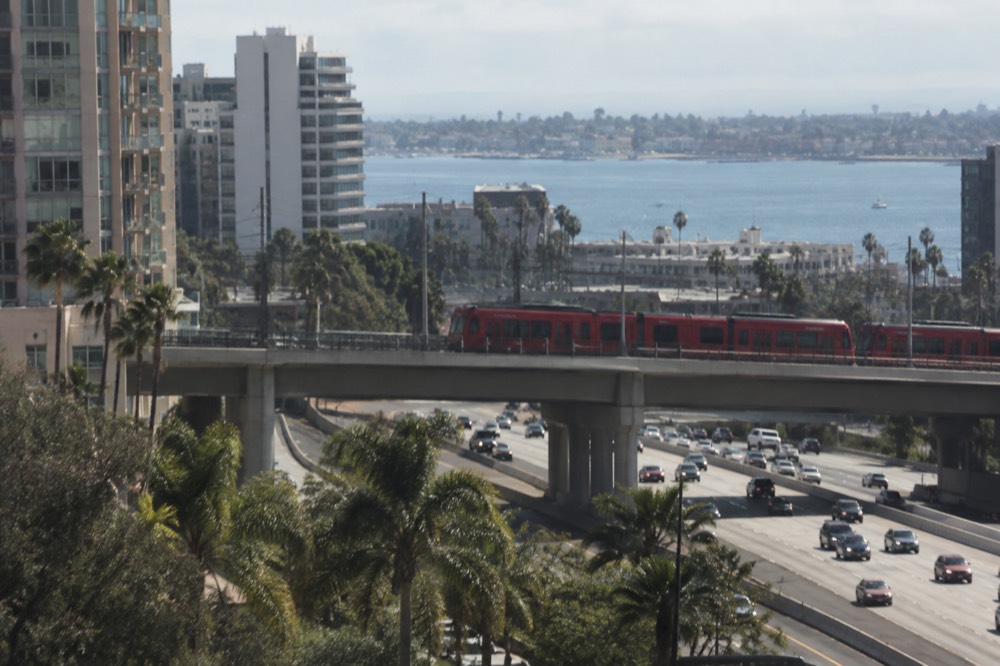
Frequency is the Trolley's quiet strength. Trains run often enough through the day that checking a schedule feels unnecessary in the core, and the system runs late enough to cover an evening in the Gaslamp. Service thins out late at night, so if you are coming back from a Padres night game or a dinner reservation far from downtown, it is worth glancing at the last train before you commit.
How Much Does the Trolley and Bus Cost, and How Does PRONTO Work?
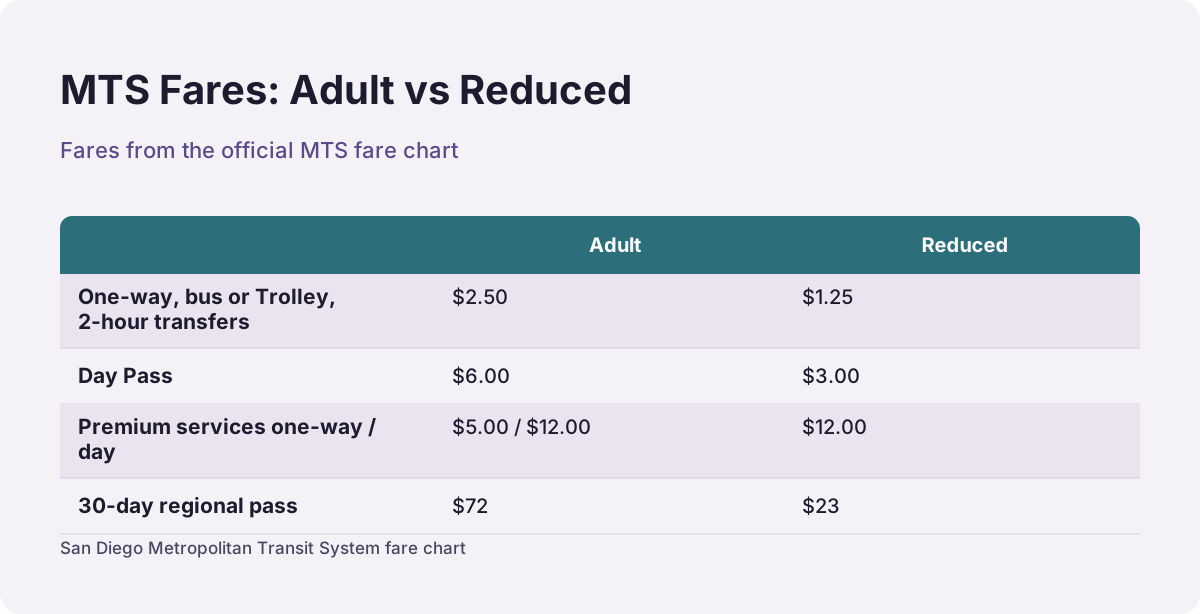
A one-way MTS fare is $2.50 for adults and $1.25 for reduced-fare riders, and a day pass is $6.00, but PRONTO fare capping means you should never buy a day pass up front: load money, ride, and the system stops charging you once your rides reach the day-pass value. That single detail is the most useful transit fact in San Diego. The official fare chart from the San Diego Metropolitan Transit System lists the day pass as "Day Pass Earned" once your tap-to-ride total hits it, so a two-ride day costs $5.00 and a five-ride day costs the same $6.00 as a three-ride day.
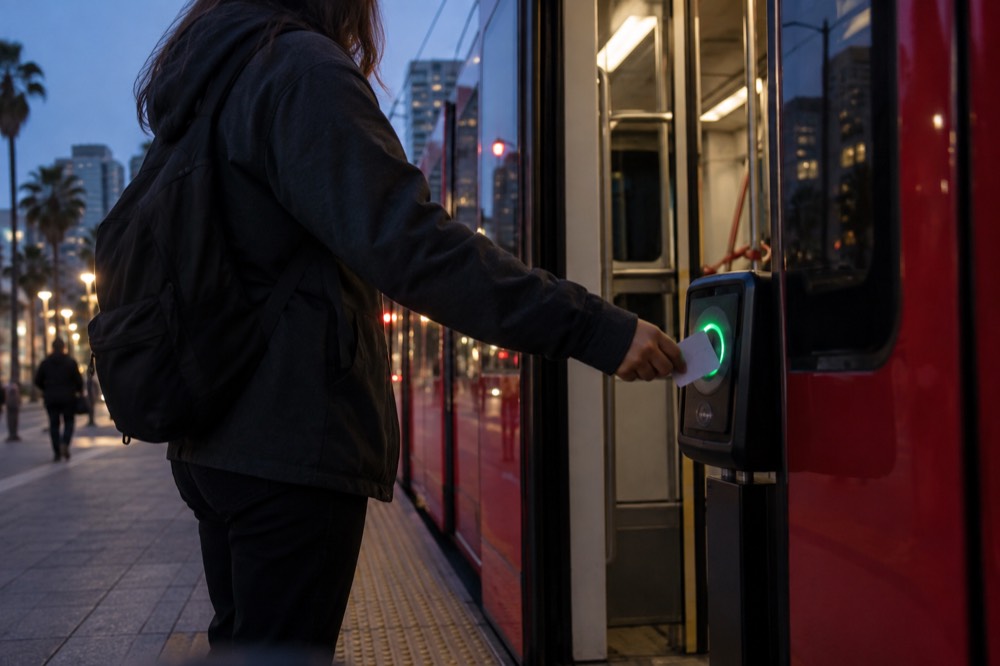
PRONTO comes as a $2 physical card or as a free app, and the app is the better choice for a short visit. Contactless credit and debit cards are also accepted at validators, but they are one-way only and do not cap, so a day of sightseeing on a bank card can cost more than the same day on PRONTO. The full fare structure, straight from the MTS fare chart, looks like this:
| Fare type | Adult | Reduced (senior 65+, disabled, Medicare, youth with ID) |
|---|---|---|
| One-way, bus or Trolley, 2-hour transfers | $2.50 | $1.25 |
| Day Pass | $6.00 | $3.00 |
| Premium services one-way / day | $5.00 / $12.00 | $12.00 |
Two riders ride free in ways most visitors miss. Youth 18 and under ride free on the Youth Opportunity Pass, so a family with teenagers pays nothing for the kids on MTS. And up to two children aged 5 and under travel free with a paying adult, which covers most stroller-age trips. A 30-day regional pass exists at $72 adult and $23 reduced, but it only makes sense for a long stay.
The two-hour transfer window is generous and it resets on each paid ride, not each day. Tap in when you board, and any bus or Trolley you board within two hours is included. Chain your trips sensibly, a Trolley to Old Town, a bus up to Balboa Park, and a single fare can cover an entire afternoon of movement.
How Do You Get from San Diego Airport to Downtown?
There is no Trolley station at San Diego International Airport, so the two best options into downtown are the free San Diego Flyer shuttle to Old Town Transit Center, where the Blue and Green lines meet, or MTS Route 992, a $2.50 bus that runs every 15 minutes from about 4:30 am to 1:00 am directly into the downtown core. The airport sits absurdly close to downtown, barely three miles from the Gaslamp, so even a rideshare is a short, relatively cheap hop compared with most American cities.
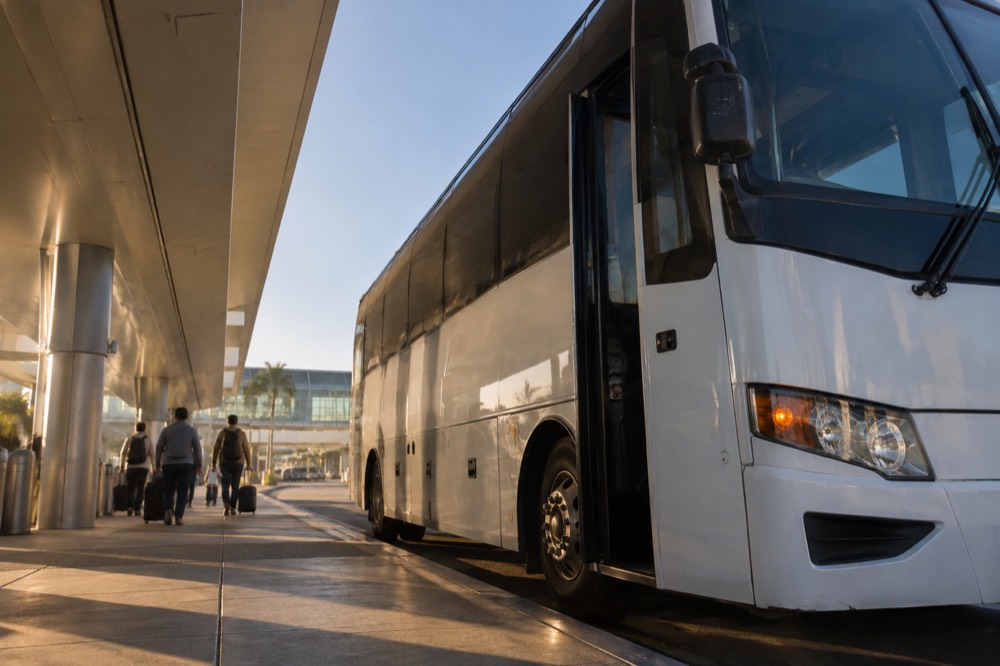
The San Diego Flyer is the trick worth knowing. It is free, runs roughly every 20 to 30 minutes from about 4:45 am to 12:30 am, and drops you at Old Town Transit Center, where you can pick up the Blue or Green Line or connect to buses. From Old Town, the Trolley into downtown is a few minutes. Route 992 is the alternative if you want to skip the transfer: it serves the elevated departures level at both Terminal 1 and Terminal 2 and runs to Broadway and Kettner, America Plaza and Santa Fe Depot, the Trolley interchange, for the standard $2.50 fare. The airport's own page on courtesy shuttles confirms the Flyer's schedule, and the MTS airport page covers Route 992. Our full San Diego airport guide goes deeper on terminals, pickup points and timing.
| Airport option | Cost | Where it takes you |
|---|---|---|
| San Diego Flyer shuttle | Free | Old Town Transit Center, every 20 to 30 minutes |
| MTS Route 992 bus | $2.50 | Broadway and Kettner, America Plaza, Santa Fe Depot |
| Rideshare | Varies by demand | Curbside drop-off anywhere downtown |
| Rental car shuttle | Free | Rental Car Center, from both terminals |
Rideshare pickup has moved at both terminals, and the airport publishes the current walking routes: at Terminal 1 you exit baggage claim and cross at the pedestrian crosswalk, and at Terminal 2 you exit and use the main crosswalk to the Transportation Plaza, second lane. Free inter-terminal and [Rental Car Center](https://economybookings.tpk.ro/SOfY7WRc) shuttles run from the Ground Transportation Plazas outside both terminals, so collecting a car does not require a long walk with luggage.
One pairing worth considering: if your flight lands in the morning and your hotel check-in is in the afternoon, the narrated hop-on hop-off trolley doubles as luggage-free sightseeing. The two-day validity means you can ride the full loop on day one to scope the city, then use day two to hop off at the stops that earned a longer look.
Should You Rent a Car in San Diego?
Rent a car in San Diego only if your itinerary reaches places the Trolley does not, such as La Jolla's coastline, the North County beaches, or day trips to Julian, Anza-Borrego or Temecula, because downtown parking costs real money and a car parked at a hotel is pure expense. Downtown meters run $2.50 per hour with enforcement generally Monday to Saturday, 8:00 am to 6:00 pm, and some zones, including the downtown Hospitality Zone, run to 8:00 pm. Sunday is no longer reliably free either, since enforcement was extended into commercial areas of Downtown, Uptown, Mid-City and Pacific Beach. Posted signs always win over any summary, including this one.
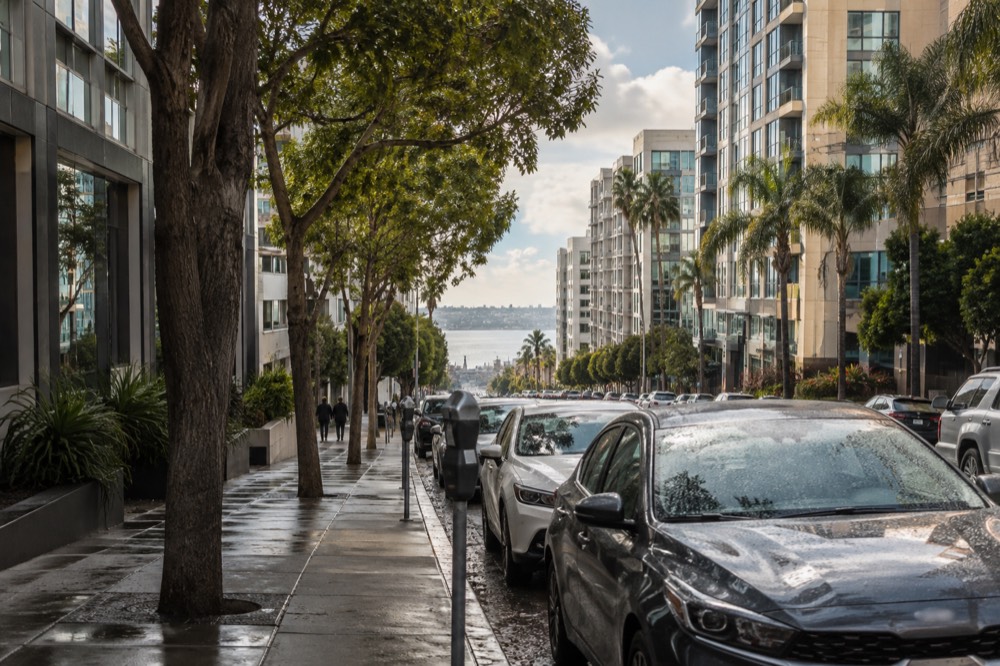
The parking situation at the big attractions is the part that surprises people. The San Diego Zoo now charges $16 per vehicle per day, paid parking that began in January 2026, and the Safari Park charges $20 for general parking with no in-and-out privileges. Balboa Park's lots are paid now at $8 to $16 a day depending on the lot and residency, though City Council has approved removing paid parking there entirely on 1 January 2027, so any flat statement either way has a short shelf life. This site keeps a whole parking in San Diego guide current on exactly this.
Beach parking is the honest gap: there is no published rate table for Mission Beach, Ocean Beach, La Jolla or Coronado, and any site quoting you a firm price is guessing. The truthful line is that these are street-and-lot neighborhoods where parking is free but scarce in summer, so arriving early matters more than budgeting a figure. The full index of guides sits on Things to Do in San Diego.
A car earns its cost on the day trips. Julian's gold mine country, the Anza-Borrego desert and Temecula's wine country all sit beyond any practical transit ride, and our Julian guide and Temecula wine country guide both assume you drove or joined a tour. For everything inside the city, the Trolley plus PRONTO plus occasional rideshares will almost always undercut a rental plus parking.
Can You Take the Trolley to the Border at San Ysidro?
Yes, the Blue Line Trolley runs directly to San Ysidro, the busiest land border crossing in the western hemisphere, in a published end-to-end time of 1 hour 23 minutes from UTC, and the crossing itself is a short walk from the San Ysidro station via the PedEast crossing, which is open 24 hours a day, 7 days a week. For US citizens, re-entry by land requires a passport book, a passport card, an enhanced driver's license from a participating state, or a Trusted Traveler card such as SENTRI, NEXUS or Global Entry. Visa Waiver visitors need a valid approved ESTA before land entry, a requirement at land borders since October 2022.
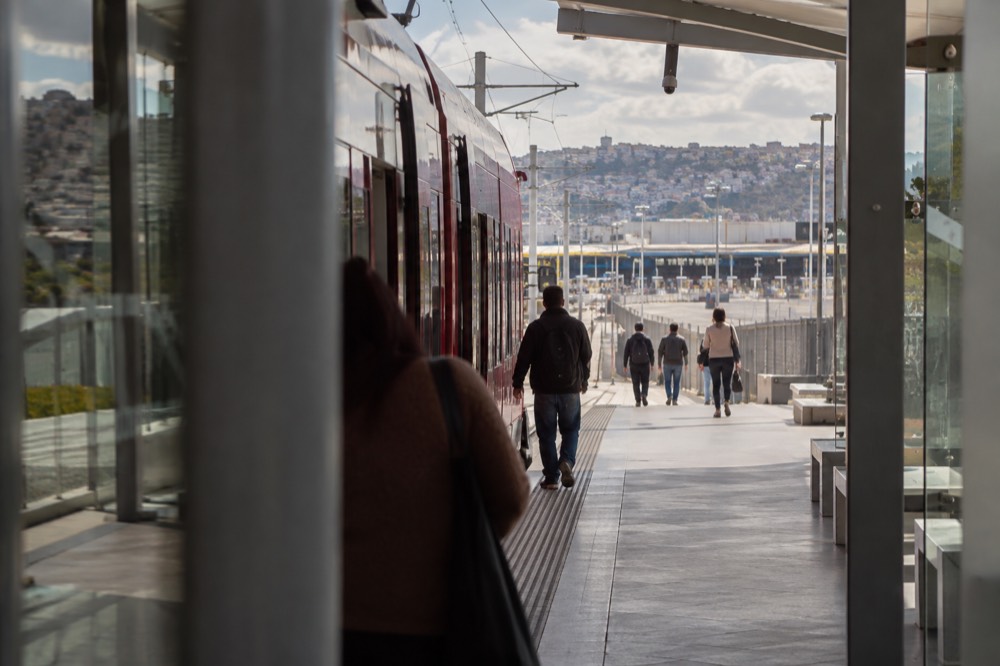
The one thing nobody can honestly promise is a wait time. CBP publishes live border wait times hourly, and no official historical table of typical waits exists, so this site's Tijuana guide points readers at the live feed rather than quoting a "usual" number. What can be said is structural: the Ready Lane, reserved for travelers carrying RFID-enabled documents like a passport card or SENTRI card, moves meaningfully faster than the standard lane, and PedWest runs only limited weekday hours, 6:00 am to 2:00 pm, while PedEast never closes.
If the border logistics sound like more planning than you want, a guided day trip handles the crossing, the lunch and the return in one booked package, and that option is covered in the Tijuana guide alongside the DIY trolley route.
What About Guided Transport: Trolley Tours, GoCars and the Harbor?
Guided transport in San Diego is not a replacement for MTS, it is a sightseeing layer on top of it: the narrated hop-on hop-off trolley covers the visitor corridor in two-day passes, a two-hour GoCar tour lets you drive a small story-telling car through downtown and Old Town or the beaches, and the harbor cruises and bay tours cover the waterfront you cannot see from land. None of these use the MTS fare system, so they are tickets, not transit, and each earns its price only if you actually want the commentary or the route.
The narrated hop-on hop-off trolley is the most useful of the three for a first visit, because it solves the Balboa Park problem: the MTS Trolley does not reach the museum core, but the hop-on hop-off loop does, along with the Embarcadero, Coronado, the Gaslamp and Old Town. The GoCar is the opposite experience, a small open vehicle you drive yourself while it narrates, best for travelers who want the freedom to detour. And the one-hour harbor cruise is the cheapest way to see the bay's working waterfront, the Navy ships and the Coronado Bridge from the water.
| Guided option | Format | Best fit |
|---|---|---|
| Hop-on hop-off narrated trolley | 2-day pass, unlimited hopping | First visit, downtown base, Balboa Park and Coronado in one loop |
| GoCar tour | 2 hours, you drive, it narrates | Independent travelers who want to detour |
| Harbor cruise | 1 hour on the bay | Waterfront sightseeing, Navy ships, the Coronado Bridge |
Choosing between them is mostly a pacing question. A traveler with two full days and a downtown hotel gets the most from the hop-on hop-off pass, riding the loop once and hopping the second day. A traveler with half a day and a sense of adventure gets more from the GoCar. A traveler with an evening free gets the harbor cruise at sunset, which pairs well with the Gaslamp's dinner scene afterward.
How Do You Reach La Jolla and the Beaches Without a Car?
Reaching the beaches without a car means a bus from downtown or a rideshare, since no Trolley line serves La Jolla, Pacific Beach, Mission Beach or Ocean Beach, and the honest trade-off is that the bus is cheap but slow while the rideshare is fast but adds up across a week. La Jolla is the furthest of the bunch, roughly 14 miles north of downtown, and its coastline, the Cove, the sea caves and the village, is worth the trip regardless of how you get there. Our La Jolla guide and best beaches in San Diego guide cover what to do once you arrive.
The pattern that works for most car-free visitors is a hybrid. Use the Trolley and PRONTO for everything in the central corridor, downtown, Old Town, the South Bay, Balboa Park by connecting bus, and take a rideshare out to the coast on the days the beach is the plan. Budget the rideshare as part of the beach day, the way you would budget parking if you had driven, and the arithmetic usually comes out similar without the parking hunt.
If even that feels like logistics, the guided options close the gap. The GoCar's beach route reaches the coast with the navigation handled, the hop-on hop-off loop touches the beach-adjacent stops, and the water tours, from kayaking the La Jolla sea caves to sailing the bay, put you in the places no road reaches at all. The through-line of this whole guide holds: San Diego rewards travelers who match the mode to the day instead of committing to one.
Common Questions About Getting Around San Diego
How much does the San Diego Trolley cost?
A one-way adult fare is $2.50 and includes two hours of transfers across buses and Trolleys. The day pass is $6.00, but PRONTO fare capping earns it automatically once your rides reach that value, so you should load money and ride rather than buying a day pass in advance.
Does the San Diego Trolley go to the airport?
No, there is no Trolley station at San Diego International Airport. The free San Diego Flyer shuttle connects the terminals to Old Town Transit Center, and MTS Route 992 runs directly downtown for the standard $2.50 fare, every 15 minutes through most of the day.
Can you take the Trolley to Tijuana?
The Blue Line runs to San Ysidro, the last station on the US side, and the PedEast crossing is a short walk away and open 24 hours. US citizens need a passport book, passport card, enhanced driver's license or Trusted Traveler card to re-enter by land, and ESTA visitors need a valid approved ESTA before land entry.
Should I rent a car in San Diego?
Only if you are heading beyond the Trolley's reach, such as the North County beaches or day trips to Julian, Anza-Borrego or Temecula. Downtown parking runs $2.50 per hour at meters, the Zoo charges $16 per vehicle per day, and Balboa Park's lots are paid now though that is scheduled to end on 1 January 2027.
Is the San Diego Trolley good for tourists?
Yes, for the central corridor. The Blue, Orange and Green lines connect downtown, Old Town, Mission Valley, the South Bay and the border, and PRONTO keeps a heavy sightseeing day capped at $6.00. It does not reach Balboa Park's museum core or any beach, so pair it with buses, rideshares or a guided tour for those.
Do kids ride free on San Diego transit?
Youth 18 and under ride free on the Youth Opportunity Pass, and up to two children aged 5 and under travel free with a paying adult. Reduced fares of $1.25 one-way and $3.00 for a day pass apply to seniors 65 and over, disabled riders, Medicare cardholders and youth with ID.