Things to Do in Coronado: A Complete Guide to the Island
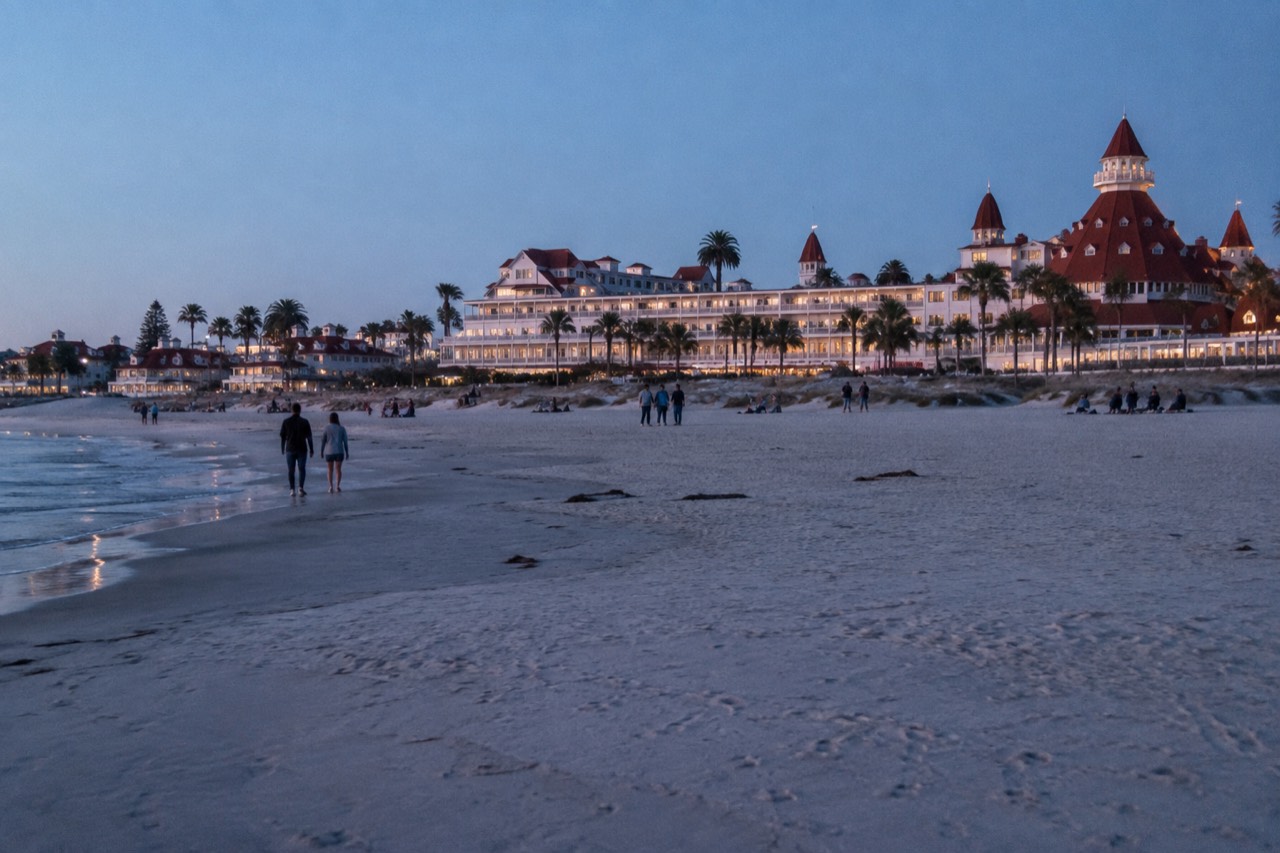
Coronado sits across the bay from downtown San Diego, wrapped in flat white sand and anchored by the red-turreted Hotel del Coronado. It is the calm counterweight to the city, and it deserves a full day.
Short answer
Coronado's essentials are Coronado Beach and the Hotel del Coronado, the ferry landing and bayside path along Glorietta Bay, Orange Avenue's low-key shopping and eating, and the view back at the downtown skyline. The MTS day pass is $6.00, the beach is free, and most visitors do the whole island on foot or by bike.
Coronado is the quiet half of San Diego. The bridge arcs over the bay from downtown, the land flattens into a peninsula of wide streets and wider beaches, and the pace drops the moment you cross the water. Locals call it an island, and it behaves like one even though a narrow strand called the Silver Strand connects it to the mainland down toward Imperial Beach.
The reason most people come is the combination: a genuinely excellent beach, a genuinely famous hotel, and one of the best city-skyline views in California, seen from the wrong side of the bay. This guide lays out how to get there without a car, what to do once you are off the ferry, which stretch of sand suits you, and how to fold Coronado into a wider San Diego trip.
What Makes Coronado Worth a Full Day?
Coronado packs a famous beach, a National Historic Landmark hotel, a walkable main street and a postcard view of downtown San Diego into roughly two square miles of flat, bikeable ground. You do not need a car once you arrive, the island's core sits within a 20 minute walk of nearly everything, and the contrast with the Gaslamp's energy is the whole point. Treat it as a half-day and you will leave mid-sentence.
The geography explains the appeal. Coronado is bounded by the Pacific on one side and San Diego Bay on the other, so the island offers two completely different waters: open-ocean surf at Coronado Beach, and glassy, shallow, kayak-friendly water in Glorietta Bay. Between them runs Orange Avenue, a palm-lined main street with low buildings, independent shops and the kind of restaurants where breakfast stretches to noon.
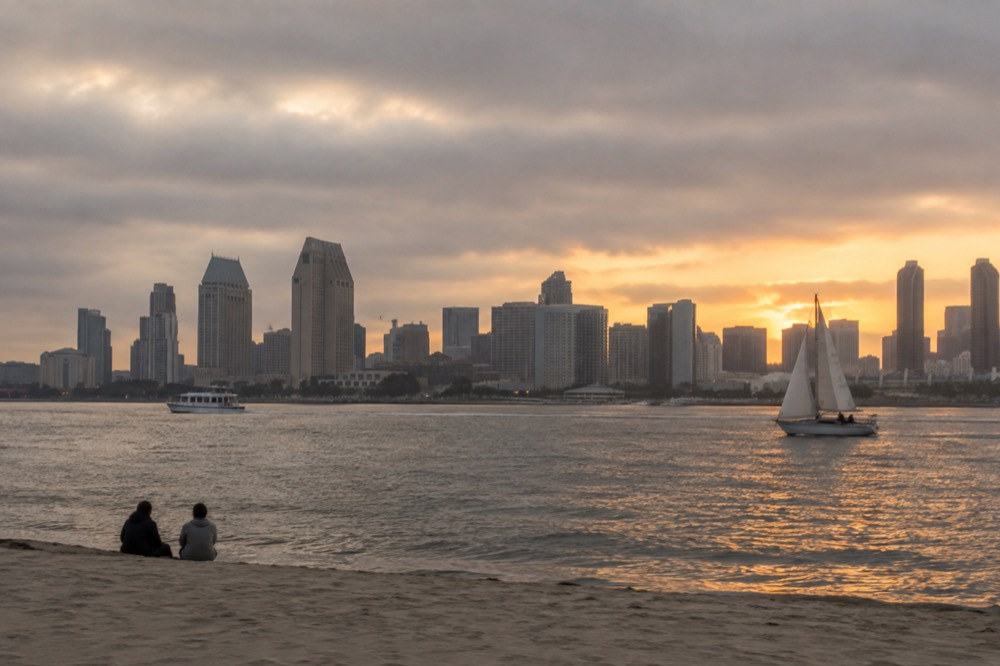
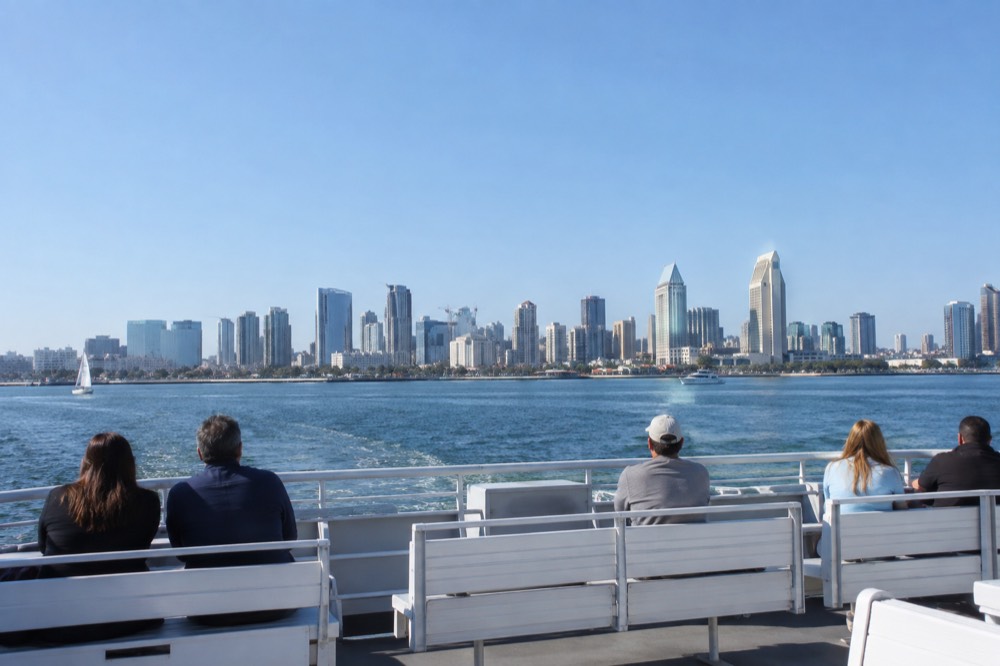
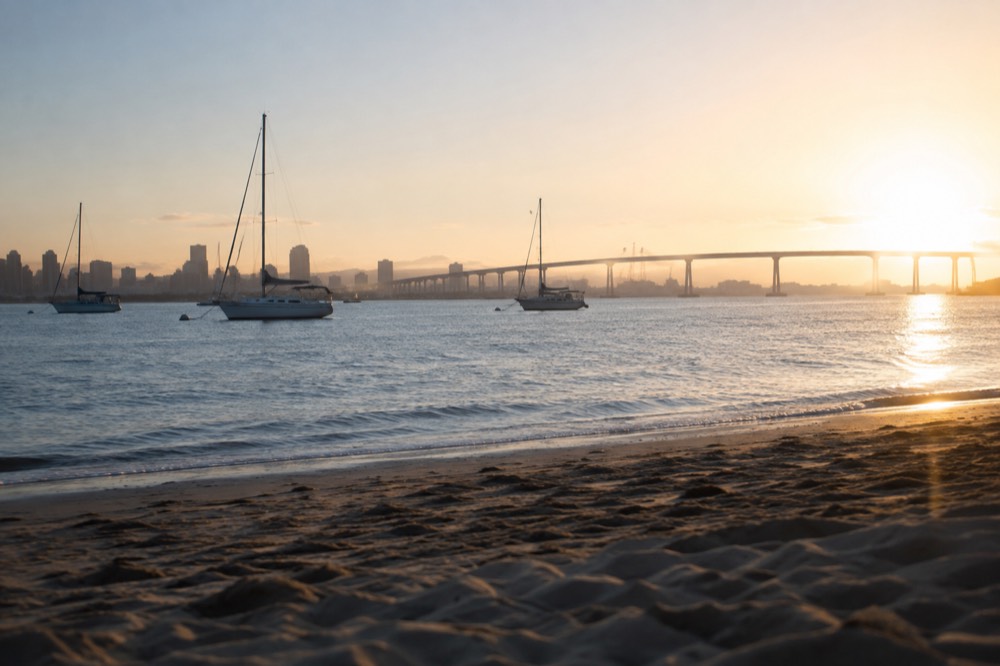
Then there is the view. From the bayside path near the Coronado Ferry Landing, downtown San Diego stacks up across the water: the skyscrapers, the historic County Administration Building, the masts of the Embarcadero, and, if a carrier is in port, the grey slab of a Navy ship. Sunset from this side is a local ritual, because the light hits the city while you stand in the calm.
Coronado is also a working Navy town. Naval Base Coronado occupies the northern end of the peninsula, which is why some beach areas carry restrictions and why you will see personnel jogging the same paths as tourists. It keeps the island grounded. For more on how Coronado compares with the other famous peninsula across town, see our La Jolla versus Coronado comparison.
How Do You Get to Coronado Without a Car?
Most visitors arrive three ways: the ferry from downtown's Embarcadero, the MTS bus across the San Diego-Coronado Bay Bridge, or a car over the same bridge. There is no Trolley station on the island, so the last leg is always bus, ferry, bike or foot. An adult MTS day pass costs $6.00 and covers the bus both ways, and the ferry ride itself is a five minute crossing that doubles as a sightseeing trip.
The bridge is the visual icon: a 200-plus-foot-high arc built so ships could pass beneath it, and a drive that delivers one of the great arrival views in Southern California. Pedestrians and cyclists cannot use the bridge, which surprises people, so the water crossing is your car-free option. The ferry runs between the Embarcadero and the Coronado Ferry Landing, a small shops-and-restaurants complex right where the bayside path begins.
The bus is the budget workhorse. MTS runs routes across the bridge from downtown, and the fare structure is simple: $2.50 one-way or $6.00 for a day pass on the PRONTO card or app, with fare capping that earns the day pass automatically once your rides total it. Youth 18 and under ride free. If you are planning a wider car-free trip, our getting around San Diego guide covers the whole network, and the San Diego airport guide explains the free San Diego Flyer shuttle that connects the terminals to Old Town.
| Method | Where it starts | Best for | Car-free? |
|---|---|---|---|
| Ferry | Embarcadero, downtown | The scenic arrival, walkers, sunset return | Yes |
| MTS bus | Downtown San Diego | Budget travel, day pass users | Yes |
| Car | Via the Bay Bridge | Families, beach gear, Silver Strand trips | No |
| Bike | Ferry landing | The flat bayside loop | Yes |
If you do drive, be honest with yourself about parking: Coronado is street-and-lot parking that is free to park in and very hard to find in summer. There is no published rate table, so do not plan around one. Our parking in San Diego guide covers downtown's $2.50-per-hour meters if you park on the city side and take the ferry instead, which is the move most locals recommend.
Once you are on the island, everything is flat. [Renting a bike](https://bikesbooking.tpk.ro/PFNQlfDq) or a segway turns the whole peninsula into a two-hour loop, and the bayside path from the ferry landing toward the Hotel del Coronado is one of the easiest, prettiest walks in the county.
What Are the Best Things to Do in Coronado?
The short list is Coronado Beach and the Hotel del Coronado, the bayside path and Glorietta Bay, Orange Avenue's shops and restaurants, the Ferry Landing viewpoint, and a guided loop by segway or bike if you want the island explained rather than just walked. Almost all of it is free to access, and the paid add-ons are tours rather than tickets, because the island itself charges nothing to wander.
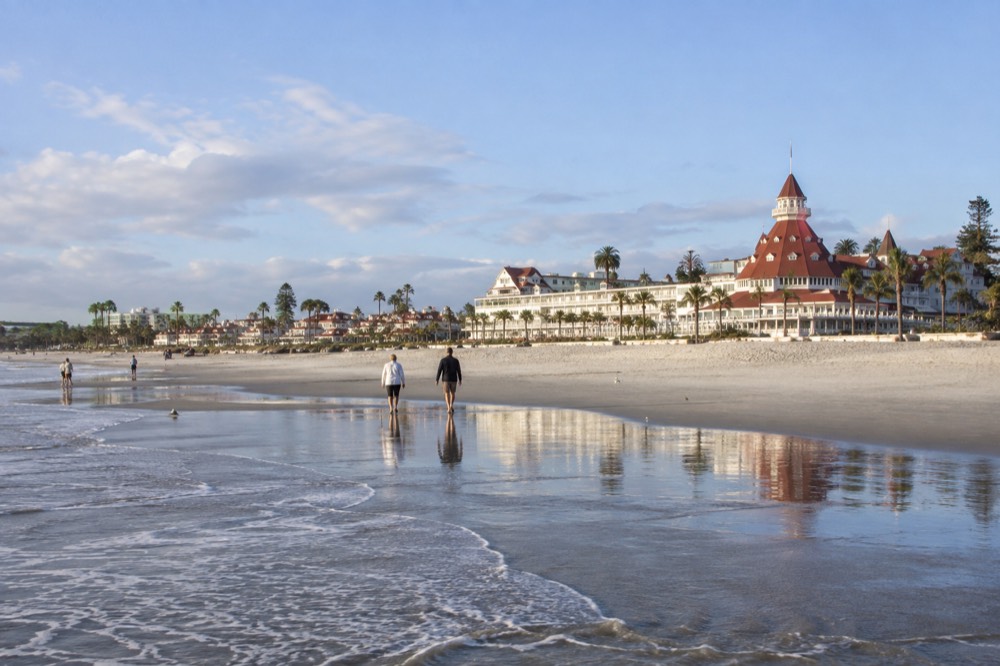
Start at the Hotel del Coronado, known simply as the Del. It is a wooden Victorian beach resort opened in the late 1880s, instantly recognizable by its red conical turrets, and it is a National Historic Landmark. You can walk the grounds, browse the shops, and step into the wood-paneled lobby even if you are not a guest, which most people do. The hotel's beachfront setting means the Del and Coronado Beach are really one destination. Our full Hotel del Coronado guide covers the history, the dining and whether it is worth staying overnight.
The beach itself, covered in detail below, runs from the hotel south toward the Silver Strand. Mica in the sand makes it sparkle at certain angles, which is not marketing copy, it is geology. Lifeguards staff the main beach towers, and the surf is gentler than the beaches farther north, which is why families dominate here. The City of San Diego's beach regulations page lists the standing rules that apply citywide, including the prohibitions on alcohol and glass containers, and Coronado's beaches follow the same framework.
The bayside is the other Coronado. Glorietta Bay, the calm inlet beside the ferry landing, is where paddleboards, kayaks and families with toddlers go, because the water is shallow and protected. Centennial Park, just south of the landing, has the classic skyline view and grass for picnics. The path continues down the Silver Strand toward Imperial Beach if you want a long flat ride with the bay on one side and the ocean on the other.
For structure, consider a guided loop. The Coronado Island Segway Tour covers the island in about three hours, gliding between the Del, Orange Avenue and the bayfront, and it suits travelers who want the stories without the walking. If you prefer two wheels and leg power, the bike-hire option below pairs with the bayside path perfectly.
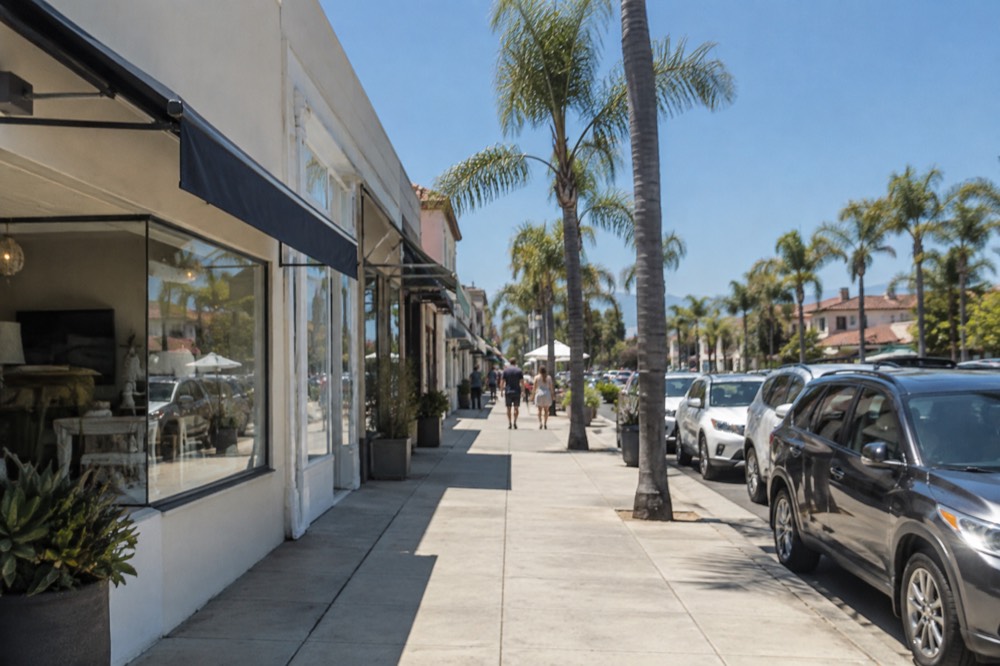
Orange Avenue is the social spine. It runs the length of the commercial core, lined with low storefronts, a 1940s movie theater, taquerias, ice cream and a Sunday farmers market. It is the kind of main street where the island's residents actually shop, so prices are saner than a resort strip. For the wider food picture across the water, our best restaurants in San Diego guide includes the downtown options you will see from the ferry landing.
One more angle: Coronado is the best place from which to look at San Diego. The downtown skyline, the Embarcadero and the Navy's carrier berths all line up across the bay, and the light in the late afternoon makes photographs look planned. Our San Diego photography spots guide ranks this stretch among the city's best frames.
Which Coronado Beach Should You Pick?
Coronado Beach, the wide open-ocean stretch in front of the Hotel del Coronado, is the island's main beach and the right pick for most visitors: soft sand, gentler surf and lifeguard towers. Glorietta Bay on the bayside is the calm alternative for small children and paddleboarding. If you want solitude, the Silver Strand's beaches run south toward Imperial Beach with a fraction of the crowds.
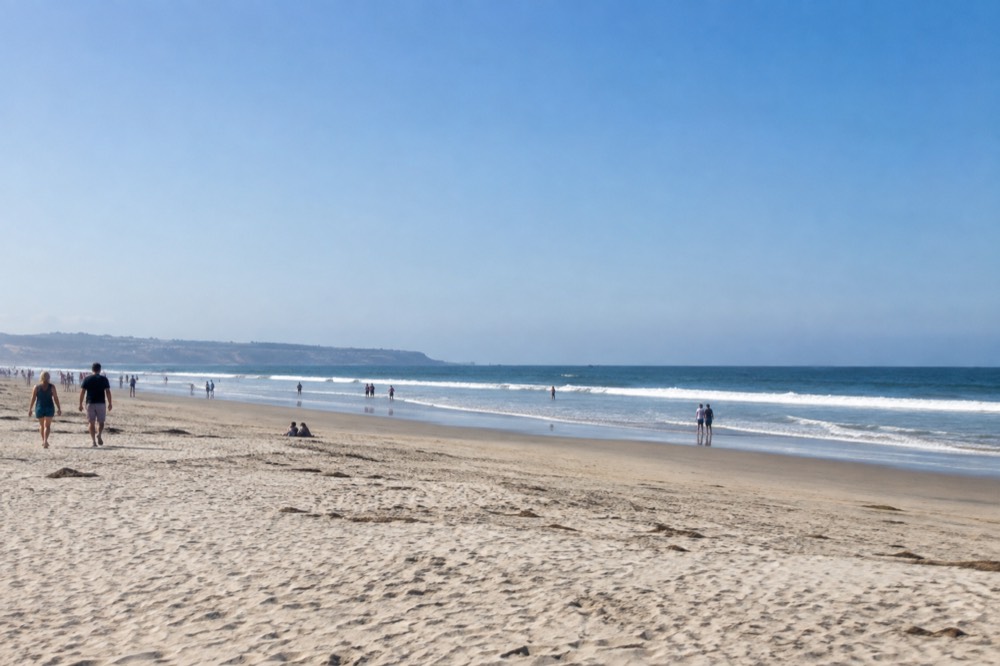
Coronado Beach runs for about a mile and a half in front of the Del and the mansions north of it. The sand is famously soft and, because of the mica, famously sparkly. Waves here are typically smaller and more consistent than at Pacific Beach or Ocean Beach, which makes it a beginner-friendly surf and body-board spot. Lifeguards staff the towers, and the City of San Diego's lifeguard division covers roughly 24 miles of coastline with nine permanent oceanfront stations, staffed generally from 9:00 am to dusk. The standard rip-current advice applies everywhere in the city: if you are caught, swim parallel to the shore until the pull relaxes, then swim in.
Glorietta Bay is the sheltered counterpoint. It faces the city, the water is calm, and paddleboard and kayak rentals cluster near the ferry landing. Families with very small children often prefer it because there is no surf to fight. It is also where you will see the local side of the island: sailors, dog walkers and residents doing the evening loop.
| Beach | Water | Best for | Crowds |
|---|---|---|---|
| Coronado Beach | Open ocean, gentler surf | Families, first-time surfers, sunbathing | Busy in summer |
| Glorietta Bay | Sheltered bay, flat | Toddlers, paddleboarding, kayaking | Moderate |
| Silver Strand beaches | Open ocean, quieter | Long walks, solitude, fishing | Light |
| North Beach (dog area) | Open ocean | Off-leash dog time | Moderate |
Alcohol is prohibited on San Diego's city beaches and boardwalks, and Coronado's sands follow the same rule set. Glass containers are banned too, and posted signs at each beach always win over any guide, including this one. If your trip is built around sand, our best beaches in San Diego guide and the family beaches roundup place Coronado in the wider context.
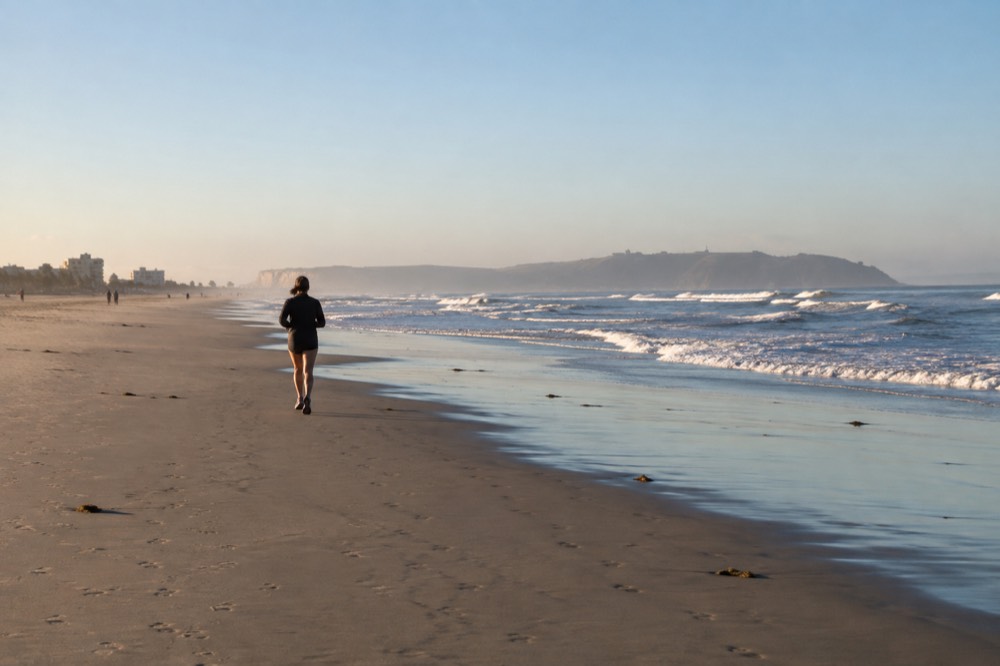
One honest caveat: parking near the beach is the bottleneck, not the beach itself. There is no published rate table for Coronado's lots, and in summer the free street parking fills by mid-morning. The ferry-plus-foot combination sidesteps the entire problem, which is a large part of why we recommend it.
Is the Hotel Del Coronado Worth Visiting If You Are Not a Guest?
Yes, and most visitors experience it exactly that way. The Del is a National Historic Landmark wooden Victorian resort, and its grounds, shops, lobby and beachfront boardwalk are open to the public. You can spend an hour here for free, eat at one of its restaurants, or book an afternoon of the beach in front of it. Staying overnight is a splurge, but visiting is not.
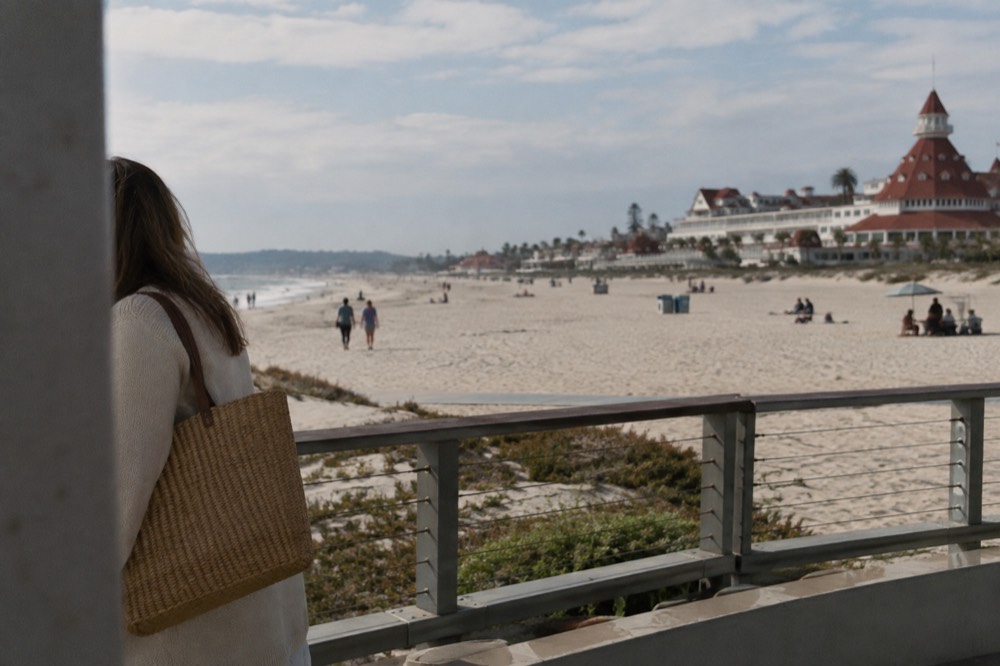
The hotel opened in the late 1880s and has been the island's anchor ever since: a white wooden building with red turrets that has appeared in films and on postcards for well over a century. The lobby, with its original woodwork and crown-shaped bar area, is worth walking into even in beach clothes. The grounds slope down to Coronado Beach, and the boardwalk in front is public, so the classic photo of the turrets over the sand costs nothing.
Practically, treat the Del as the northern anchor of your day. Arrive at the ferry landing, walk or ride south along the bay to Centennial Park, cut across to Orange Avenue for lunch, then continue to the hotel and the beach. That is a loop of roughly two to three flat miles, doable for almost anyone. Our dedicated Hotel del Coronado guide goes deeper on the history and the stay-versus-visit decision.
What Does a Perfect Day in Coronado Look Like?
A classic Coronado day is: ferry over in the morning, coffee and a walk at the Ferry Landing, the bayside path to Centennial Park for the skyline photos, lunch on Orange Avenue, the afternoon on Coronado Beach or at the Del, and the sunset ferry back with the city lighting up behind you. It is a loop, not a list, and it works because the island is small and flat.
Timing matters more than the order. The beach is best from late morning to mid-afternoon, the skyline view gets better as the day ends, and the ferry landing area is at its calmest before about 11:00 am. If you are combining Coronado with downtown, do the city in the morning and the island in the afternoon, because the return ferry at sunset is the single best commute in the region.
| Time | Stop | Why |
|---|---|---|
| 9:00 am | Ferry from the Embarcadero | The crossing is the first sightseeing stop |
| 10:00 am | Ferry Landing and bayside path | Coffee, calm water, first skyline views |
| 12:00 pm | Orange Avenue | Lunch, shops, the island's social core |
| 2:00 pm | Coronado Beach and the Del | The main event, warmest hours |
| 5:30 pm | Centennial Park | Golden hour on the skyline |
| 7:00 pm | Ferry back | Sunset over the city, not the ocean |
If a guided structure appeals, there are two good fits. The City and Beaches Guided Highlights Tour is a five-and-a-half-hour loop that includes Coronado alongside downtown, Balboa Park and La Jolla, which suits visitors who want the whole city's shape in one day. And if you want the downtown-and-waterfront context before you cross, the San Diego Free Walking Tour covers historic downtown and the Embarcadero in about two and a half hours on a pay-what-you-want basis. It is listed on GuruWalk, which matters here because it is genuinely free to join and you tip the guide at the end, so budget accordingly rather than expecting a ticket price.
For a longer itinerary that slots Coronado into a multi-day plan, our one day in San Diego and San Diego 3 day itinerary pages both use the island as the afternoon anchor on a downtown day.
How Much Does a Coronado Day Cost?
The island itself is nearly free: the beach, the bayside path, the Del's grounds and the skyline views cost nothing, and an adult MTS day pass is $6.00 if you arrive by bus. The real variables are food, rentals and any guided tour. A careful car-free day can come in around $30 to $50 per person before tours, while a day with a bike rental, lunch and a segway or sailing add-on runs well past $100.
The fare math is simple and verified. The MTS fare chart lists $2.50 one-way and $6.00 for a day pass, with reduced fares of $1.25 and $3.00 for seniors 65 and over, and youth 18 and under ride free. PRONTO, the fare system, caps automatically: once your one-way rides total the day-pass value, the rest of the day is free, so there is no reason to buy a day pass up front. Contactless bank cards work for single rides but do not cap.
| Item | Typical cost | Notes |
|---|---|---|
| MTS bus, one-way | $2.50 | Day pass $6.00, caps automatically |
| Ferry crossing | Check the operator's live listing | No published fare table confirmed here |
| Coronado Beach | Free | Lifeguard-staffed main towers |
| Bike or segway rental | Varies by operator | The flat island makes it worthwhile |
| Hotel del Coronado visit | Free to walk the grounds | Dining and tours cost extra |
For the wider budget picture, our San Diego trip cost guide and the cheap things to do in San Diego page both treat Coronado as one of the best value days in the city, because the headline attractions are free and the transport is a couple of bus fares.
When Is the Best Time to Visit Coronado?
September is the sweet spot, and the data backs what locals know: September's normal high of 77.2F actually beats July's 75.3F, the ocean is near its warmest at a monthly mean of 67.6F, and the summer crowds have gone home. May and June are the gamble months, when the marine layer locals call May Gray and June Gloom can grey the coast while inland stays clear.
The 30-year climate normals for San Diego tell the story plainly. June's normal high, 71.7F, is lower than October's 74.6F, which surprises most visitors: the coastal overcast suppresses early-summer beach days even though the calendar says summer. August is the warmest month on average at 77.3F, with essentially zero rain, and September sits just a tenth of a degree behind with warmer ocean water than July. Rain is a winter phenomenon here, with December through March carrying most of the year's inches.
For beach days, aim late June through October, with September the insider pick. For walking, biking and photography, winter is underrated: January's normal high is still 66.4F, and the light on the skyline is sharper. Our San Diego weather and best time to visit guide has the full month-by-month breakdown, and the things to do in San Diego in September page leans into the same counterintuitive fact.
Can You See Coronado from the Water?
Yes, and it is one of the best ways to see it. The one-hour San Diego Harbor Cruise and the longer Best of the Bay scenic tours both trace the downtown waterfront and cross toward Coronado's bayside, giving you the skyline, the Navy ships and the Del's turrets from the water. Kayaks and paddleboards in Glorietta Bay offer the same view at human speed.
The harbor cruise is the classic add-on to a Coronado day, and it pairs naturally: do the island on foot in the morning, then take the afternoon cruise from the Embarcadero and watch Coronado slide past from the deck. The basic harbor cruise runs about an hour, the Best of the Bay scenic version about 90 minutes, and both stay inside the bay, which matters if anyone in your group is wary of open water. The Port of San Diego's own cruise schedule page lists the visiting ships if you want to time your visit against a big arrival.
If you would rather be on the water than watching it, Glorietta Bay's rentals put you a five minute paddle from the skyline view. And if your appetite for the bay runs bigger, our San Diego bucket list rounds up the sailing, jet boat and dinner cruise options that all pass this stretch of water. For a romantic angle, the romantic things to do in San Diego guide starts with sunset on this exact side of the bay.
One planning note: the USS Midway Museum, berthed across the bay on the Embarcadero, is the natural pre- or post-Coronado stop, and its official page lists adult tickets at $39 online against $41 at the door, with free entry for active duty military and children 3 and under. The museum closes at 5:00 pm with last admission at 4:00 pm, so morning island, afternoon Midway is the order that works. Things to Do in San Diego covers the Midway in depth if you want the full picture.
Common Questions About Coronado
Do you need a car in Coronado?
No. The island is flat and compact, the ferry and MTS bus both connect it to downtown, and a day pass is $6.00. A car helps only if you plan to drive the Silver Strand or haul a lot of beach gear, and even then the parking search in summer can cost more time than the shuttle-and-ferry combination.
How do you get to Coronado from downtown San Diego?
Take the ferry from the Embarcadero for the scenic crossing, or the MTS bus over the San Diego-Coronado Bay Bridge for $2.50 one-way. There is no Trolley station on the island, and pedestrians and cyclists cannot use the bridge, so the water or the bus is your car-free route.
Is Coronado Beach good for swimming?
Yes. The surf is typically gentler than at Pacific Beach or Ocean Beach, the main towers are lifeguard staffed, and the sand shelves gradually. Rip currents remain the primary hazard on any San Diego beach, so swim near a lifeguard and parallel to the shore if you feel a pull.
Can you visit the Hotel del Coronado without staying there?
Yes. The grounds, shops, lobby and the public boardwalk in front are open to visitors. It is a National Historic Landmark and most people experience it as a walk-through stop on the way to the beach rather than as a guest.
What is the best time of day for the skyline view from Coronado?
Late afternoon into sunset. From the bayside path and Centennial Park the downtown skyline sits across the water, and the low light hits the buildings while the bay stays calm. The sunset ferry back is the best seat in the house.
Is one day enough for Coronado?
For the classic loop, ferry, bayside path, Orange Avenue, the Del and the beach, yes, one full day covers it comfortably. Add a second half-day if you want the Silver Strand, a segway tour or a long beach afternoon without rushing the ferry schedule.