San Diego 3 Day Itinerary: The Perfect First Visit Plan
Three days is the sweet spot for San Diego: enough for the harbor, Balboa Park, the Zoo and a full day on the coast, without the long drives a fourth day would push you toward.
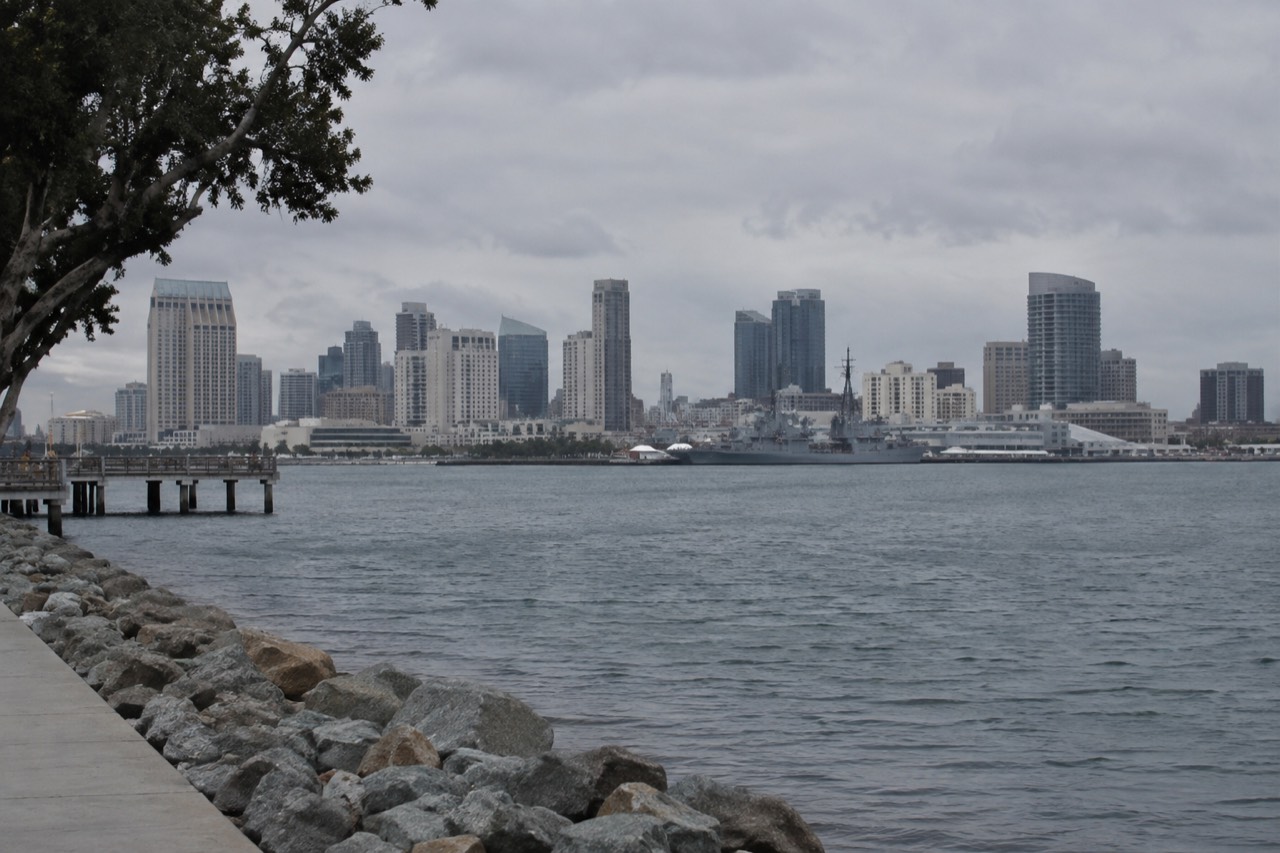
Short answer
Spend Day 1 downtown and on the waterfront, Day 2 in Balboa Park with the San Diego Zoo, and Day 3 in La Jolla. Budget roughly $76 for Zoo admission, $39 for the USS Midway Museum online, and $6 a day for unlimited MTS rides. September is the warmest month on the coast, not July, so late summer is the best-value window.
Three days in San Diego is the length most first visits settle on, and it maps cleanly onto the city's geography. Downtown and the bay hold one day, Balboa Park and the Zoo swallow a second almost entirely, and the coast from La Jolla to Sunset Cliffs fills a third without a single wasted hour. This itinerary keeps driving to a minimum, because the neighborhoods worth seeing cluster along a short stretch of coastline and a compact downtown core.
The plan below assumes no car for Days 1 and 2. San Diego's trolley and bus network covers both, and parking downtown runs $2.50 an hour at meters with enforcement that now reaches into Sunday in commercial areas. If you do drive, the parking guide for San Diego covers the lots and the rules by neighborhood.
How Should You Split 3 Days Across San Diego?
Split the city into three zones and give each a full day: the downtown waterfront and Gaslamp Quarter, Balboa Park with the San Diego Zoo, and the La Jolla coast. Trying to mix zones daily wastes an hour or more in transit each time. The zones sit close together on the map, but San Diego's street grid and hillside geography make cross-town hops slower than they look, so one zone per day is the rule that keeps this plan relaxed rather than rushed.
The downtown day comes first for a practical reason: it is the flattest walking day, and jet lag or a red-eye arrival is easier to absorb on the Embarcadero than on a cliff trail. Balboa Park lands on Day 2 because the Zoo alone runs five or six hours at a comfortable pace, and you will want the legs fresh. La Jolla closes the trip because it is the most weather-dependent of the three, and by Day 3 you have seen the forecast.
Here is the shape of the whole plan at a glance, before the day-by-day detail:
| Day | Zone | Anchor stop | Time needed | Car needed |
|---|---|---|---|---|
| Day 1 | Downtown and waterfront | USS Midway Museum | Full day, walkable | No |
| Day 2 | Balboa Park | San Diego Zoo | 4-6 hours at the Zoo, plus gardens | No, but parking is $16 if you drive |
| Day 3 | La Jolla and the coast | La Jolla Cove and sea caves | Full day, morning to sunset | Optional |
One decision shapes everything else: whether to buy a multi-attraction pass. The San Diego CityPASS review and pass comparison covers the arithmetic in detail, but the short version is that a pass pays off if your three days include at least two of the big-ticket parks, and it does not if your days lean toward free attractions like the coast and the park grounds.
If you want structure on the downtown day without planning every stop, three products cover most of this itinerary's first-day route:
Each one takes a different shape: the trolley is a sit-back narrated loop, the GoCar is a self-drive option for travelers who want to steer, and the CityPASS bundles the paid attractions. You can read the full breakdown of each in the guide to getting around San Diego, but none of them is mandatory. Every stop in this itinerary works on foot and by trolley.
Day 1: Downtown, the USS Midway and the Gaslamp Quarter
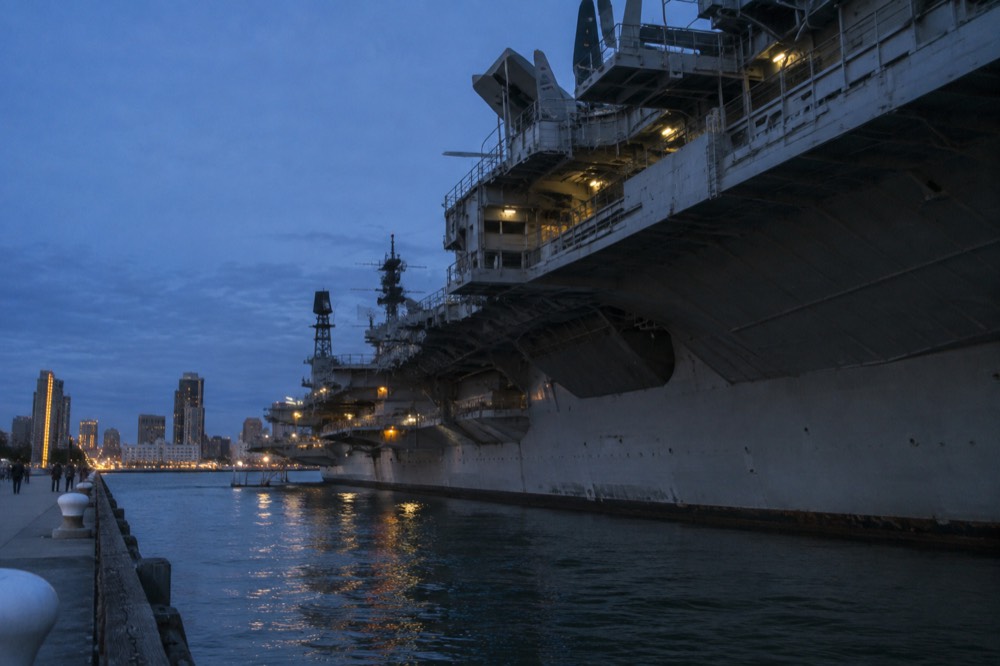
Start at the Embarcadero around 9:30 am, board the USS Midway Museum by 10:00 am when it opens, spend two hours aboard, then walk south to Seaport Village for lunch. Give the afternoon to the Gaslamp Quarter and Petco Park, and finish with sunset over the bay. This day is entirely walkable, roughly two miles end to end, and every stop sits within a ten minute walk of a trolley station.
The USS Midway is the anchor, and it deserves the full two hours. Admission is $39 online for adults and $41 at the door, with youth ages 4 to 12 at $29 online, and the museum's own know-before-you-go page lists the full price table including free entry for active duty military with ID. The audio tour is included, and the flight deck alone holds an hour of viewing. Last admission is 4:00 pm, but a morning visit beats the afternoon crowds that arrive after lunch.

From the Midway, the walk south passes the Maritime Museum of San Diego, where adult admission is $28 at the walk-up window, and the historic ships moored along the quay. Seaport Village follows, which is touristy in the way waterfront retail always is, but it is the natural lunch stop and the bay views are real. If you would rather eat where the city eats, the Little Italy neighborhood is one trolley stop north and holds a denser concentration of good restaurants than anywhere else on this walk.
The Gaslamp Quarter afternoon is flexible. The Gaslamp Quarter guide covers the architecture and the bar scene; the Petco Park stadium guide is worth reading if the Padres are home, because a game evening is the single best atmosphere downtown offers. A 1h 20m guided stadium tour runs on non-game days for visitors who want the behind-the-scenes version.
Dinner belongs in the Gaslamp or on the water. The harbor cruise option is the classic Day 1 finish: a 1 hour narrated loop of the bay that departs from the Embarcadero a short walk from the Gaslamp, and it puts the skyline behind you right as the light turns. Book the last departure of the day if you want the sunset version.
Day 2: Balboa Park and the San Diego Zoo
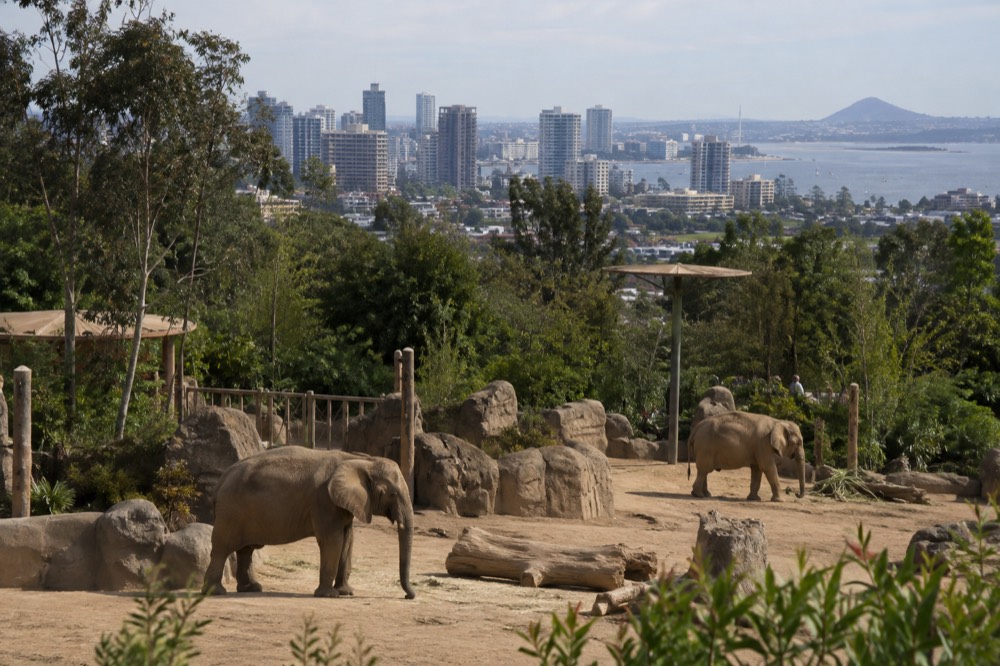
Arrive at Balboa Park by 9:00 am and go straight to the Zoo, which opens at 9:00 am and needs four to six hours. Spend the late afternoon in the park's free gardens and the Botanical Building once your legs recover, and save the museums for the evening or a return trip. Zoo admission is $76 for a 1-day adult Any Day ticket, $73 on Value Days, and children 3 to 11 pay $66 or $63.
The Zoo is the reason most visitors book Day 2 at all, and it rewards an early start. There is no timed entry and no reservation required, so you can buy at the gate, but the online price is a few dollars lower. The park's own plan-your-visit page carries the current hours, which run 9:00 am to 6:00 pm, and the parking details below. The layout is hilly, so plan the route around the guided bus tour loop first and the walking trails after.
Parking at the Zoo is $16 per vehicle per day, a charge that began January 5, 2026, and oversized vehicles pay $44. The lots are first come first served, managed by ACE Parking. That fee is separate from the Balboa Park lots, which have their own tiered rates.
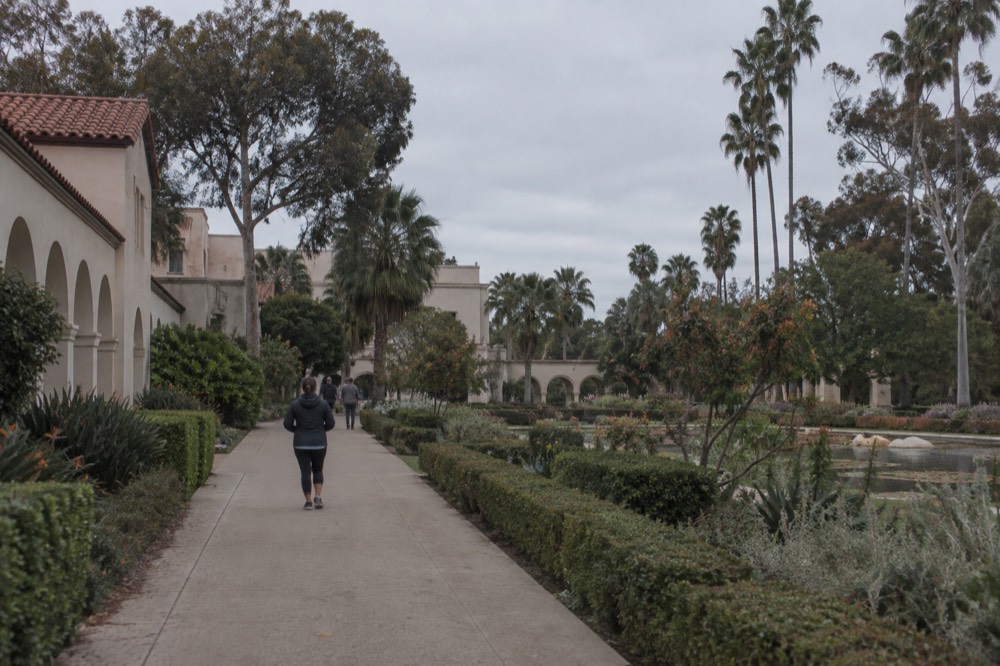
After the Zoo, the park itself is free. The grounds, gardens and trails carry no admission, and the Botanical Building and Lily Pond, reopened after restoration, is free and open roughly 10:00 am to 4:00 pm daily except city holidays. The Timken Museum of Art is also free. Sunday afternoons add free one-hour concerts at the Spreckels Organ Pavilion from 2:00 to 3:00 pm, year round, rain or shine.
The museum cluster needs honesty: the Balboa Park museums are mostly not bookable through this site. Fleet Science Center, the Air and Space Museum, the San Diego Museum of Art, the Museum of Us and theNAT all sell official-only tickets, so buy at the gate. If museums are the priority rather than the Zoo, the Balboa Park museums guide ranks them and the Balboa Park overview covers the gardens and the free-day rotation, which is a residency benefit for San Diego City and County residents plus active military, not a visitor perk.
Balboa Park parking is the one genuinely perishable fact in this itinerary. Paid parking is live now at $8 to $16 a day depending on the lot and residency, but City Council has approved removing it entirely on January 1, 2027. The city's Balboa Park parking page is the source of record, and it also explains that residents must register online in advance for the discounted rate, since it is not available at the kiosk. The free park tram runs 8:00 am to 8:00 pm if you land in a far lot.
The current lot tiers are worth knowing before you circle the park:
| Balboa Park lot level | Examples | City of San Diego resident | Non-resident |
|---|---|---|---|
| Level 1, premium | Space Theater, Casa de Balboa, Alcazar, Organ Pavilion | $8/day; $5 per 4 hours | $16/day; $10 per 4 hours |
| Level 2, general | Pepper Grove, Federal, Upper Inspiration Point, Marston Point | Free | $10/day |
| Level 3, general | Lower Inspiration Point | Free | $10/day, first 3 hours free |
If a second day in the park appeals more than a coast day, the Safari Park in Escondido is the swap. It is a separate 40 minute drive inland, adult admission is $73 on Value Days online, and general parking is $20 per vehicle. The San Diego Zoo vs Safari Park comparison works through the tradeoff: the Zoo is walkable from downtown transit, the Safari Park is not, and the two parks suit different itineraries.
Day 3: La Jolla, the Coast and the Sunsets
Drive or ride to La Jolla in the morning, spend the middle of the day at the Cove and the sea caves, and work back south along the coast through Pacific Beach and Sunset Cliffs for the evening. La Jolla needs no tickets for its best parts: the Cove, the coastal walk and the viewpoint at Mount Soledad are all free. The paid options are on the water, and a guided kayak tour of the sea caves runs about 2 hours.
La Jolla is the payoff day. The La Jolla Cove guide covers the shoreline, the seals and sea lions, and the swimming; the La Jolla sea caves guide covers the kayak and snorkel access. The honest note for any La Jolla page: the Children's Pool seal pupping closure runs on annual dates that shift, and the Cove's sea lion rules are enforced on site, so check posted signage on the day rather than relying on any published window.
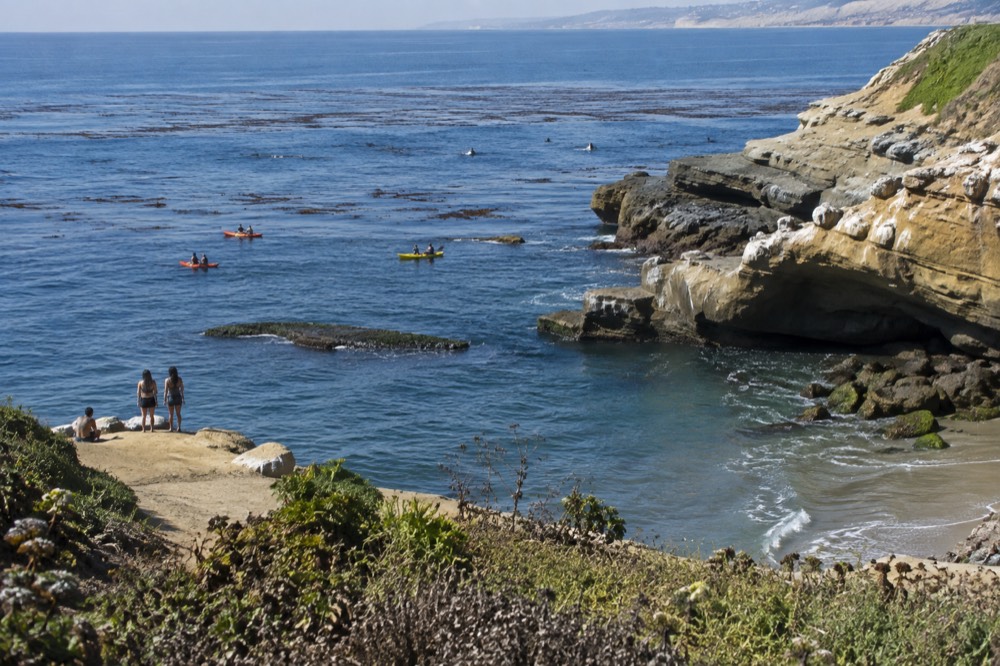
The water is the draw. Ocean temperature at La Jolla averages 68.7°F in August and 67.6°F in September, the warmest readings of the year, against 58.1°F in January. That makes late summer the swimming and snorkeling window, and it is the quietest too: September is the single lowest visitation month at Cabrillo National Monument across recent years despite being statistically the warmest month on the coast. The crowds thin the moment schools go back, and the water stays warm. The rest of the planning pages sit on Things to Do in San Diego.
The guided kayak tour is the structured way onto the water, a 2 hour paddle through the caves with a guide, and no experience is needed. The self-guided alternatives are swimming at the Cove and the free walk along the bluff trail, both excellent. If you would rather learn the surf, a 1.5-hour lesson in La Jolla covers the basics at a beach built for beginners.
Afternoon belongs to the coast drive south. Pacific Beach and Mission Beach hold the boardwalk energy, and Sunset Cliffs Natural Park is the finish: a bluff-top walk with an unobstructed western horizon. The San Diego sunset spots guide ranks the viewing options, but Sunset Cliffs is the one that fits this itinerary's geography without backtracking.
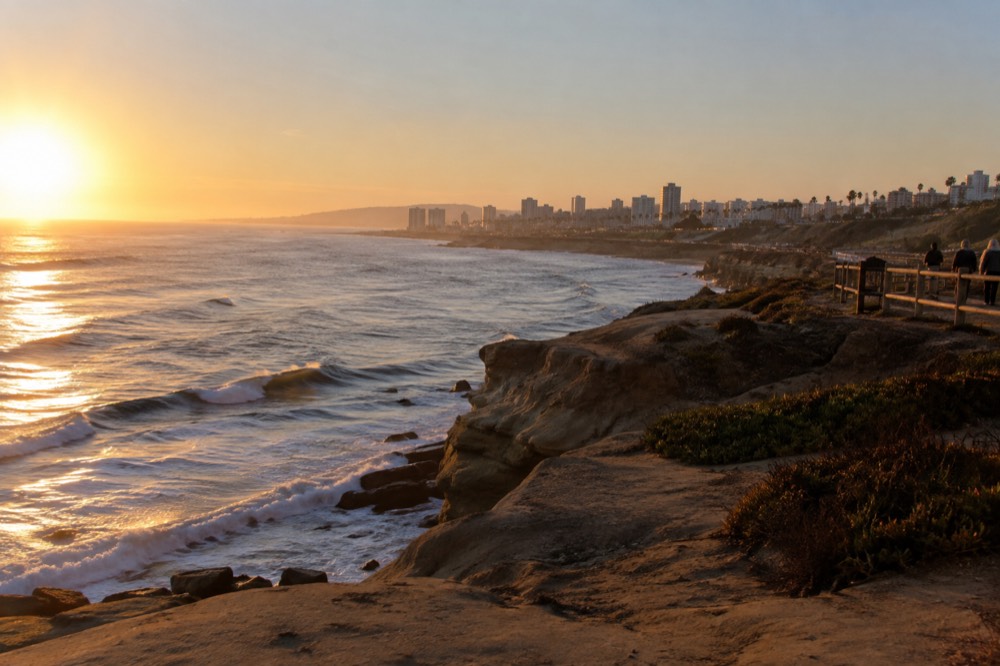
If the day is gray rather than gold, and in May and June it often is, the marine layer is why. The coastal fog locals call May Gray and June Gloom is visible in the 30-year temperature normals themselves: June's normal high of 71.7°F sits below October's 74.6°F, which is backwards from almost every other American city. The pattern burns off inland hours before it clears the beaches, so a gray La Jolla morning is often a clear Balboa Park afternoon. The San Diego weather and best time to visit guide works through the full calendar.
How Much Does 3 Days in San Diego Cost?
Budget for lodging as the dominant line and attraction tickets as the known one, with the two anchor purchases being $76 for the Zoo and $39 for the USS Midway online. Transport is cheap: $6 buys an all-day MTS pass, and the free attractions in this itinerary, the coast, the park grounds and the sunsets, offset the ticket prices. A couple doing everything in this plan pays under $300 total in attraction admissions.
The table below prices the core of the itinerary. Every figure is a published rate from the venue's own page; dynamic prices at the theme parks are shown as starting points only.
| Itinerary item | Adult price | Notes |
|---|---|---|
| USS Midway Museum | $39 online, $41 at door | Youth 4-12 $29 online; active military free with ID |
| San Diego Zoo, 1-day | $76 Any Day, $73 Value Day | Child 3-11 $66 / $63; no reservation needed |
| Zoo parking | $16 per vehicle | Began January 5, 2026; oversized $44 |
| La Jolla sea cave kayak tour | On the listing | 2 hours, guided, all gear included |
| MTS day pass | $6.00 | $2.50 one-way; fare capping via PRONTO |
| Balboa Park gardens, Botanical Building, Timken | Free | Grounds always free; museums ticketed at the gate |
| Cabrillo National Monument | $20 per vehicle | Valid 7 days; tidepools close at 4:30 pm |
Lodging is the variable that swamps everything else. The [where to stay](https://booking.tpk.ro/737WL7iF) in San Diego guide breaks the neighborhoods down; the short version for this itinerary is that downtown puts you on the Day 1 route and a trolley ride from everything else, while La Jolla or Pacific Beach reverse the calculus and make the Zoo the long trip. There is no central location that makes all three days short.
The pass question comes back here. The CityPASS SeaWorld-plus-three-choices package runs $169 adult and the LEGOLAND-plus-three version $186, with a $2 processing fee per ticket, valid 9 consecutive days. That only makes sense if your three days include a theme park. If your itinerary looks like this one, Zoo, Midway, coast and free attractions, the pass saves little and the individual tickets win.
Do You Need a Car for This Itinerary?
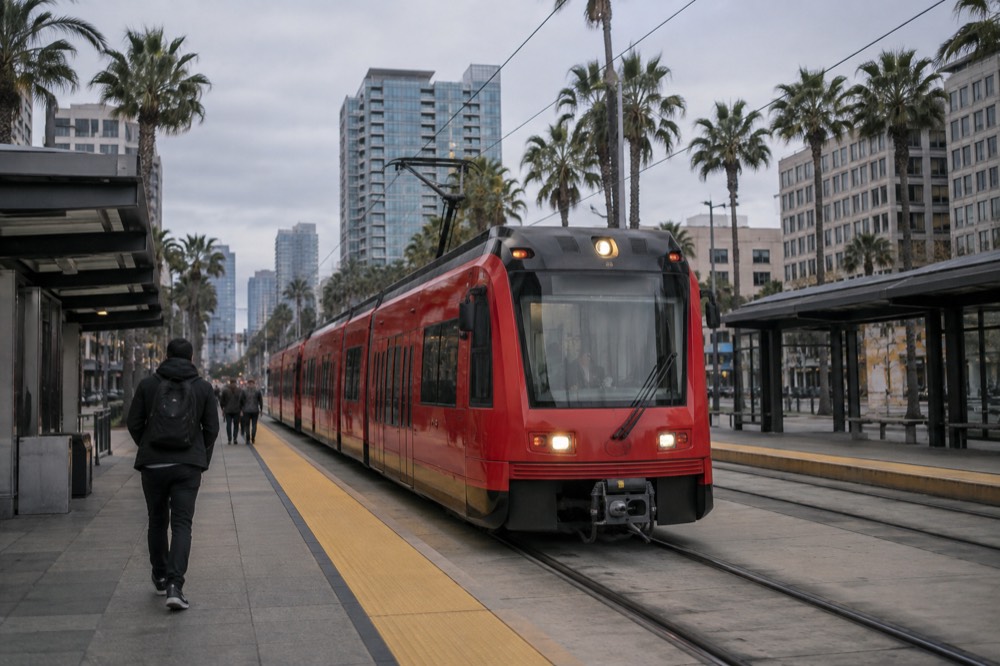
No, not for the core plan. Days 1 and 2 sit on the trolley network and Day 3 reaches La Jolla by bus or a short rideshare, so a car is an expense and a parking problem rather than a necessity. Rent one only if you are extending the trip toward Julian, Anza-Borrego or Temecula, which are outside this itinerary's range. The MTS day pass is $6.00 and the one-way fare is $2.50, with fare capping through the PRONTO card.
The transit details are in the getting around San Diego guide, but the itinerary-specific version is simple. The Orange and Blue trolley lines bracket downtown, the Blue Line runs south to San Ysidro and north to UC San Diego, and the fare chart on the MTS fare page confirms $2.50 one-way with 2-hour transfers and $6.00 for a day pass. PRONTO applies fare capping automatically, so there is no reason to buy a day pass up front: ride twice and the system stops charging you.
The full fare picture for planning purposes:
| MTS fare | Adult | Reduced (senior 65+, disabled, Medicare, youth with ID) |
|---|---|---|
| One-way, bus or Trolley, 2-hour transfers | $2.50 | $1.25 |
| Day Pass | $6.00 | $3.00 |
| Premium services one-way | $5.00 | $12.00 day pass |
The hop-on hop-off trolley is the tourist overlay on this network, and for Day 1 it genuinely works.
The narrated version is valid for 2 days, which covers the downtown loop on Day 1 and gives you a second day of hop-on freedom, and the narration fills in history that a city bus will not. It is a loop rather than a transit system, so treat it as a moving tour with stops at the attractions rather than a way to reach dinner.
Two cautions if you do drive. First, beach parking in La Jolla, Pacific Beach and Coronado has no published rate table: it is street-and-lot parking that is free to park in and very hard to find in summer, and any source quoting a firm beach rate is guessing. Second, downtown meters run $2.50 per hour with enforcement Monday to Saturday 8:00 am to 6:00 pm, some zones to 8:00 pm, and Sunday enforcement now reaches commercial areas of downtown, Uptown, Mid-City and Pacific Beach. Sunday is no longer free everywhere. Posted signs always win.
What Should You Book in Advance and What Can Wait?
Book the USS Midway online rather than at the door, because the online price is $2 lower per ticket, and book any guided water activity, the kayak tour or a whale watch, a few days out because small-group departures sell down on weekends. The Zoo needs no advance purchase at all: there is no timed entry and no reservation. Everything else in this itinerary, the beaches, the park grounds and the sunsets, is free and unticketed.
The booking rule of thumb: anything with a boat or a small group ratio books ahead, anything with a turnstile does not. The harbor cruise and the dinner cruises sell out on summer weekends; the Midway does not, but the online discount is real money for a family. The trolley pass is worth locking in early on a summer trip for the same reason, and most dates carry free cancellation so the commitment is soft.
Museums are the exception to every booking instinct, as covered in the Day 2 section: the Balboa Park cluster sells official-only tickets at the gate. That is not a gap in this guide, it is how those venues sell, and the honest line is to budget cash or card at the door and skip anything promising a museum booking shortcut.
For the extenders, the Julian day trip guide and the Temecula wine country guide both need a car or a guided tour, and the Tijuana guide needs a passport check before anything else: US citizens re-entering by land need a passport book, passport card, enhanced driver's license or Trusted Traveler card, and ESTA visitors need a valid approved ESTA before land entry. Never plan the border around a guessed wait time; the live feed is the only honest number.
If you are stretching the trip rather than reshaping it, the San Diego 4 day itinerary adds a Coronado day, and the one day in San Diego plan strips this one down if your calendar shrinks. The San Diego bucket list is the longer menu if three days is a floor rather than a ceiling.
For a final look at the three structured options that fit this plan, the trolley, the GoCar and the pass bundle:
Whichever of those you choose, the Zoo ticket is the one booking that can wait until you are standing at the gate, but buying online saves a few dollars per ticket and skips the ticket window line on a summer morning.
Whichever way you buy it, go at 9:00 am, when the animals are active and the parking lots still have space near the entrance.
Common Questions About a San Diego 3 Day Itinerary
Is 3 days in San Diego enough?
Three days covers the core city well: the downtown waterfront, Balboa Park and the Zoo, and the La Jolla coast, each with a full day. It is not enough for the inland day trips like Julian, Temecula or Anza-Borrego, which each need a separate day and a car. Travelers who want the theme parks as well as the city should plan four or five days.
What is the best month for a 3 day San Diego trip?
September is the statistical sweet spot: the normal high of 77.2°F is the second warmest of the year, the ocean near La Jolla averages 67.6°F, and visitation drops sharply once schools return, so the beaches and attractions thin out. August is marginally warmer and much busier. May and June carry the coastal marine layer, which can gray the beaches while inland stays clear.
Do you need a car for 3 days in San Diego?
No. Days 1 and 2 of this itinerary sit on the trolley network, and La Jolla is reachable by bus or a short rideshare from downtown. The MTS day pass is $6.00. A car becomes useful only for the inland day trips, and downtown parking at $2.50 per hour with Sunday enforcement in commercial areas makes a car a cost rather than a convenience for the core plan.
How much money do you need for 3 days in San Diego?
Attraction tickets for the full itinerary run under $300 per couple: the Zoo at $76 per adult, the USS Midway at $39 online, and a kayak tour priced on the live listing. Transit is $6.00 per person per day at most. Lodging is the biggest variable and depends entirely on neighborhood, so the honest planning range is wide.
What order should you do the San Diego attractions in?
Downtown and the waterfront first, Balboa Park and the Zoo second, the coast third. The flattest walking day absorbs arrival fatigue best, the Zoo needs the freshest legs, and the coast day is the most weather-flexible, so it sits where you have seen the forecast. Avoid splitting a day between zones; cross-town hops cost more time than the map suggests.
Can you do Balboa Park and the Zoo on the same day?
Yes, and this itinerary plans it that way. The Zoo needs four to six hours and opens at 9:00 am, so arrive at opening, finish by mid-afternoon, and spend the rest of the day in the park's free gardens, the Botanical Building and the grounds. The museums are a separate visit, and their tickets are sold at the gate rather than through this site.