Things to Do in Mission Beach, San Diego: Boardwalk, Bay and Beyond
Mission Beach is the two miles of San Diego where the city stops pretending to be sophisticated: a boardwalk, an amusement park, a bay full of rentals, and a beach that lifeguards staff year round. Here is what is actually worth your time.
Short answer
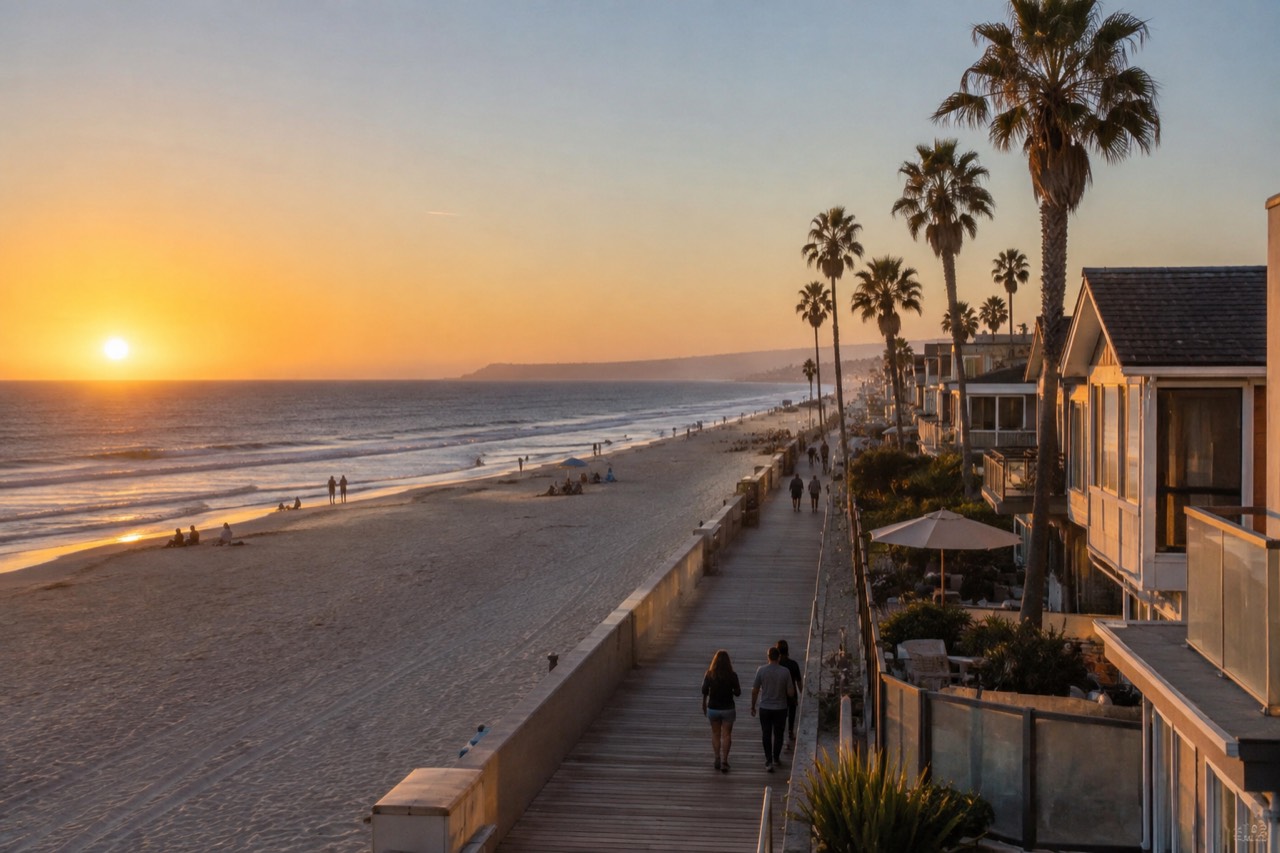
Mission Beach is a narrow peninsula between the Pacific Ocean and Mission Bay, built around a concrete boardwalk that runs from South Mission to Pacific Beach. The main draws are the beach itself, the Belmont Park amusement park at the south end, the bay side with its kayak and jet ski rentals, and the walkable strip of taco shops and bars along Mission Boulevard. The MTS day pass is $6.00 and the area is flat, so most visits need no car at all.
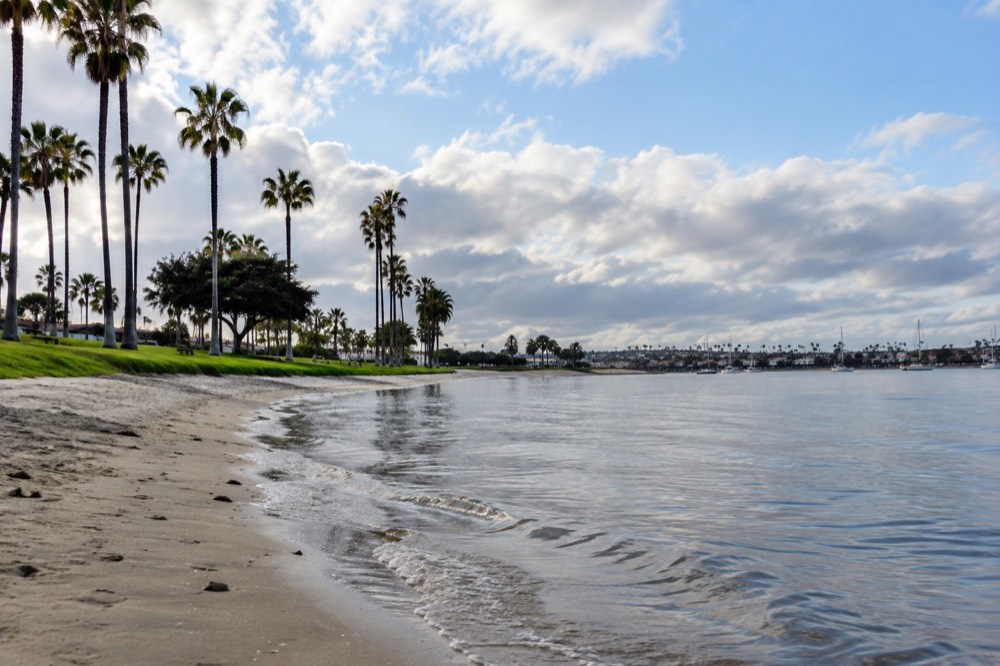
Mission Beach occupies a stretch of sand so narrow you can walk from ocean to bay in about five minutes. On one side there is the open Pacific, staffed year round by city lifeguards. On the other there is the calm, shallow water of Mission Bay, where the rentals live. Down the middle runs Mission Boulevard, lined with taco shops, surf rentals and bars, and along the ocean edge runs the boardwalk, a concrete path that carries rollerbladers, cyclists and families from South Mission to the edge of Pacific Beach.
This is the most deliberately fun square mile in the city. It is not subtle and it is not quiet, and that is the point. Below is what to do here, how to do it cheaply, and where the honest traps are.
What Is Mission Beach and How Does It Work as a Place?
Mission Beach is a barrier peninsula between the Pacific Ocean and Mission Bay, roughly two miles long and a few blocks wide, with a continuous boardwalk along its ocean side and a calm, rental-friendly bay side behind it. The neighborhood splits into two halves at the Belmont Park amusement area: South Mission, which is quieter and has more sand, and North Mission, which blends into the busier Pacific Beach strip. Everything is flat and walkable, the whole peninsula is crisscrossed by bike lanes, and the two sides of the neighborhood suit completely different days. The ocean side is for waves, sunbathing and people-watching. The bay side is where you go with small children, or when the surf is up and you still want to be on the water. If you understand that split before you arrive, you will pick the right block to park on and the right half of the day for whatever you came to do.
The geography matters more here than in most San Diego neighborhoods. Because the peninsula is so narrow, the wind, the fog and the crowds can differ sharply between the two water edges while staying within a five minute walk of each other. A grey, windy morning on the ocean side is often a still, pleasant morning on the bay side. Locals exploit this constantly. Visitors tend to pick one side, find it disappointing, and never check the other.
What Are the Best Things to Do in Mission Beach?
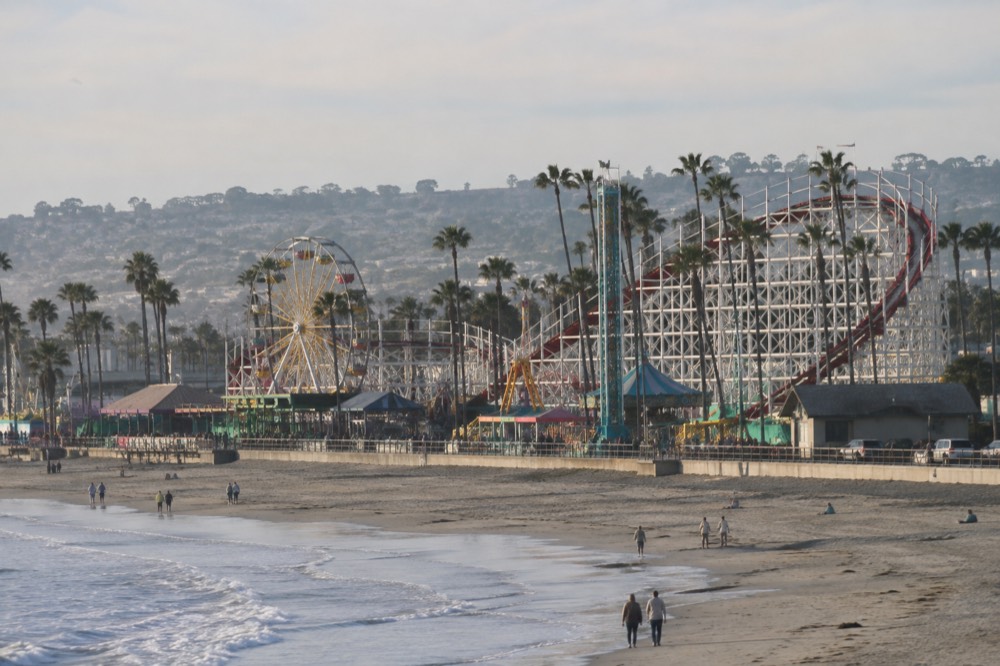
The best things to do in Mission Beach are walking or cycling the boardwalk, swimming at the lifeguarded ocean beaches, riding the attractions at Belmont Park, renting a kayak or paddleboard on the bay side, and finishing the day with fish tacos and a sunset from the sand. None of these needs a reservation, and all of them are within a fifteen minute walk of each other. The boardwalk itself is the spine of the visit: it runs the full length of the neighborhood, it is completely free, and it is the single best people-watching platform in San Diego. From South Mission you can walk or ride north the whole way into Pacific Beach without ever leaving the path. The amusement park at the south end gives the area its landmark silhouette, and the bay gives it a second, calmer personality that most first-time visitors never bother to meet.
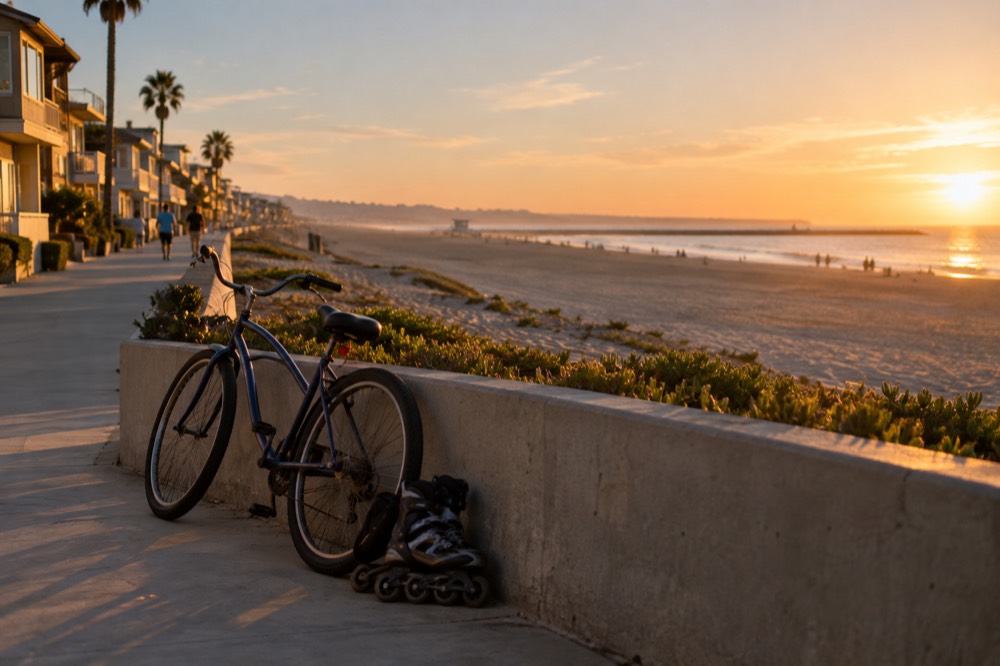
Start with the walk. The boardwalk is a concrete path, wide enough for two-way bike and pedestrian traffic, and it passes volleyball courts, rental shops, beach bars and the sand the entire way. Walking it end to end at a relaxed pace takes under an hour. Renting a bike or a surrey makes it a family activity rather than a commute, and the rental shops along Mission Boulevard price by the hour, so check the board rather than assuming. The Belmont Park area at the south end is the natural turnaround point if you start from the north.
The beach itself needs no selling, but it deserves a safety note that matters. City of San Diego lifeguards staff nine permanent oceanfront stations year round, covering roughly 24 miles of coastline, with hours generally running 9:00 am to dusk, and rip currents are the primary hazard on this coast. The official advice from the city's lifeguard division is to stay calm, swim parallel to the shore until the pull relaxes, then angle back in, and to swim near a staffed tower rather than alone. That advice is published at the city's rip current safety page, and it is worth sixty seconds of reading before you get in the water anywhere in San Diego.
If you want a break from self-guiding, a couple of options cover this stretch of coast well. A guided highlights tour that pairs the city with the beaches gives you the whole waterfront in one loop, and if you would rather have someone else handle the route, the City and Beaches Highlights Tour spends a full morning on exactly this kind of shoreline. For a different pace, the hop-on hop-off trolley runs a narrated loop of the city that is valid for two days, which pairs well with a beach day you do not want to plan minute by minute.
What Can You Do on the Mission Bay Side?
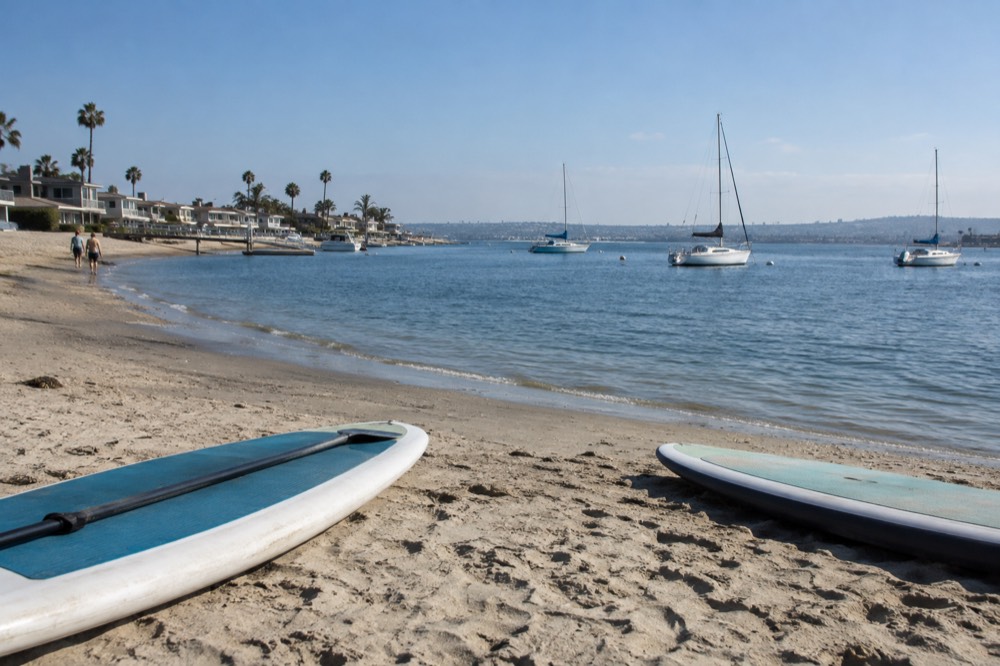
The Mission Bay side offers calm, shallow water for kayaking, paddleboarding, jet skiing and sailing, with rentals concentrated around the bayfront parks, and it is the right choice for families, beginners and anyone the ocean side is too rough for. Because the bay is protected, there are no waves and almost no rip current risk, the water is warmer than the ocean on the same day, and the rental operators cluster where the parking and the launch spots meet. This is where the peninsula quietly outdoes its louder ocean half. A family with a six year old can spend an entire afternoon on the bay side for the cost of a couple of hourly rentals, while the ocean side would give them maybe an hour of supervised swimming before someone got cold or knocked over.
The bay is a genuine, city-scale water park in the administrative sense: Mission Bay is one of the largest man-made aquatic parks of its kind, and its calm coves are the reason so many San Diego families learn to paddleboard here rather than in the open ocean. Rentals along the bayfront include kayaks, stand-up paddleboards and jet skis by the hour. The Coronado Bay jet ski rental sits across the water on the Coronado side of the bay if you want the same experience with a skyline view back toward downtown. Closer to home, a sailing experience on the bay turns the same calm water into a two-hour sunset or daytime cruise, which is one of the better ways to end a beach day without much effort.
For a full afternoon on the water rather than a single rental, the bay is also where guided experiences launch. Harbor cruises leave from the Embarcadero a short drive or trolley ride away, running from a one-hour loop to a ninety-minute scenic tour of the bay. Neither is a Mission Beach activity in the strict sense, but both pair naturally with a beach morning, and the calm bay water you have been paddling all day is the same water those boats cross on their way out to the harbor.
Where Should You Eat in Mission Beach?
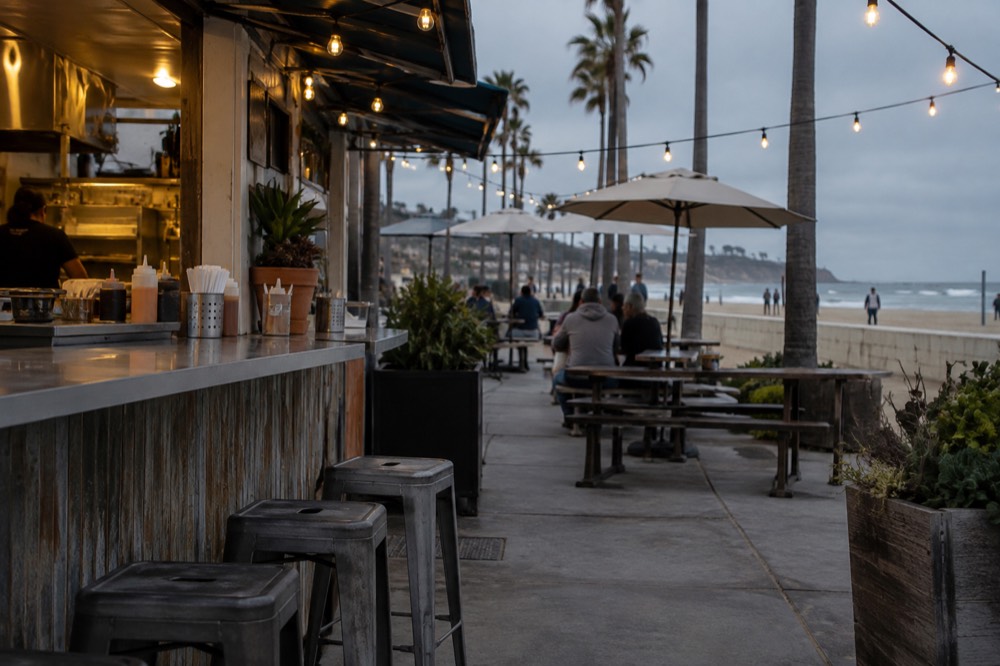
Eat along Mission Boulevard and the boardwalk: the strip carries the classic San Diego beach diet of fish taco shops, burger stands, acai bowls and beach bars, with the densest cluster between the amusement park and the Pacific Beach border. You are not coming here for fine dining, and pretending otherwise leads to disappointment. What the strip does well is fast, casual, salt-adjacent food you can eat in a swimsuit, and it does that better than almost any other beach neighborhood in the county. The fish taco is the local signature, and the best fish tacos in San Diego guide covers the places worth driving across town for, several of which are within a short ride of this peninsula.
The honest structure of eating here is that the best food is not on the beach itself. The sand-adjacent options trade on convenience and view, and the prices reflect that. Walk two blocks inland, off Mission Boulevard onto the side streets, and the same meal drops in price and rises in quality. That pattern holds for tacos, coffee and dinner alike. If you are here on a weekend, the breakfast spots fill by mid-morning in summer, so either eat early or treat the wait as part of the day. The rest of the planning pages sit on Things to Do in San Diego.
| Meal | Where to look | What to expect |
|---|---|---|
| Breakfast and coffee | Mission Boulevard side streets, north end | Acai bowls, breakfast burritos, counter service, lines after 9:00 am in summer |
| Fish tacos | Mission Boulevard and the boardwalk | Walk-up windows, paper plates, eat-on-the-wall seating |
| Burgers and boardwalk food | Around the amusement park | Convenience food aimed at families mid-ride-queue |
| Dinner and drinks | North Mission toward Pacific Beach | Beach bars, patios, live music on weekends |
| Something quieter | A short drive or rideshare inland | Better kitchens, no view, half the wait |
One rule worth repeating: alcohol is prohibited on San Diego city beaches, boardwalks and parks, and that prohibition is enforced. The city's summer safety guidance states it plainly. Drinking happens on the patios and in the bars, not on the sand, and planning around that saves an awkward conversation with a lifeguard or an officer.
What Is Mission Beach Like at Night?
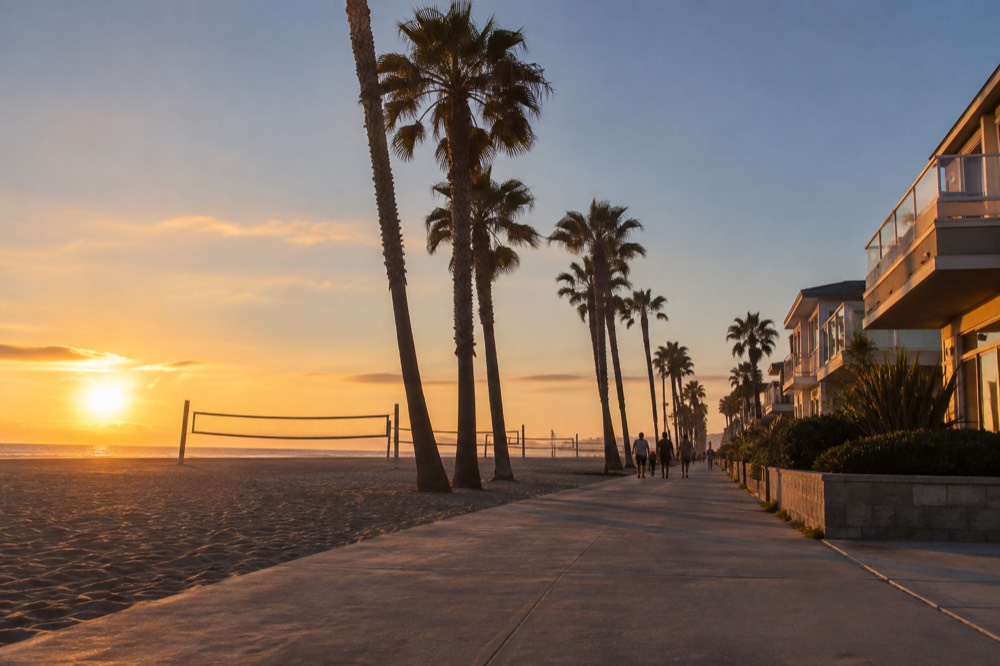
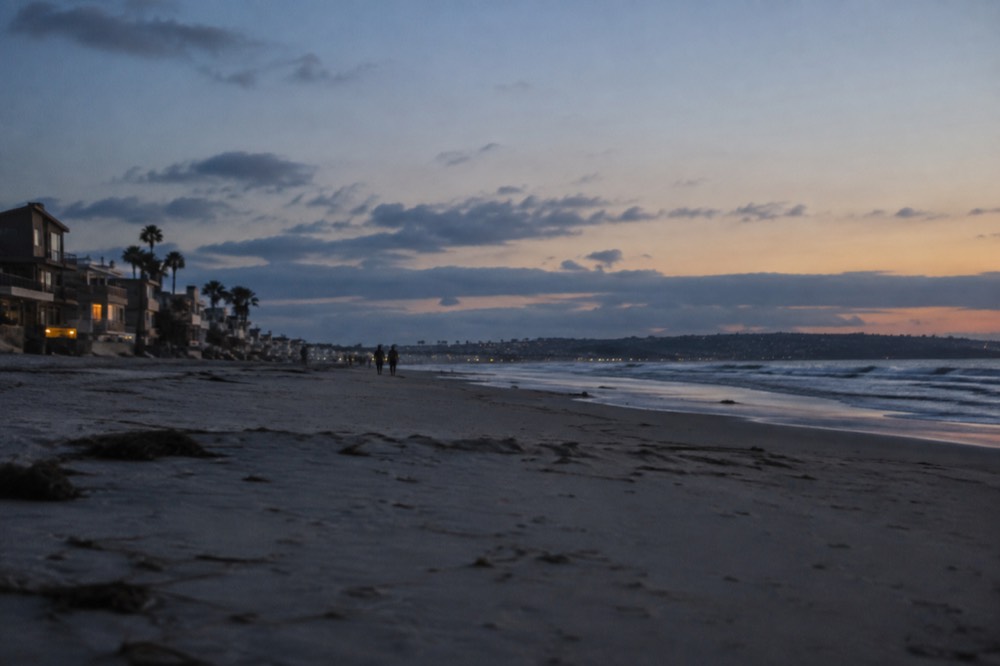
At night Mission Beach quiets down on the sand and stays loud in the bars, with the boardwalk emptying after dark, the amusement park lit up at the south end, and the drinking crowd concentrated in the north-end beach bars. The sunset itself is the main event, and the west-facing sand means the whole peninsula gets a full, unobstructed view of it, which is why the boardwalk fills up in the last hour before the sun goes down and clears out within twenty minutes of it dropping. If your day here has a scheduled moment, make it that one. The sunset spots guide ranks where to watch it across the city, and this stretch of coast holds its own against the more famous La Jolla viewpoints.
After dark the options narrow. The amusement park keeps its lights on and its rides running into the evening in peak season, which makes it a genuinely pleasant nighttime walk even if you do not ride anything. The bars along the north end carry the nightlife, and the scene spills over the invisible border into Pacific Beach, which has the louder and longer-running nightlife strip of the two.
If you want nightlife with a spine-chilling theme rather than a DJ, San Diego has a small but real ghost-tour scene, and one entry in it stands apart. The Haunted San Diego tour is the only ghost tour in the city with exclusive entry to a site no other tour can take you inside, and it runs about 55 minutes, short enough to pair with a dinner in the Gaslamp rather than replace your whole evening. It sits downtown, so it is a trolley or rideshare trip from the beach, but as an after-dark activity that is not a bar, it is hard to beat. Check availability on the live listing before you commit an evening to it.
The other nighttime option worth the trip inland is the City Lights Night Trolley Tour, a 90-minute narrated loop of downtown's lit-up landmarks that gives you the city at its most photogenic without a single driving decision. Between the ghost tour and the lights tour, an evening in San Diego can be far more interesting than the beach bars suggest.
How Do You Get to Mission Beach and Get Around Once There?
You reach Mission Beach by MTS bus for $2.50 one way or $6.00 for a day pass, by car into the surrounding streets, or by bike along the boardwalk, and once you are on the peninsula you walk or ride everywhere because the whole neighborhood is flat and under two miles long. The transit option is better than most visitors expect. The MTS fare chart confirms the $2.50 one-way fare with two-hour transfers and the $6.00 day pass, and the PRONTO card or app applies fare capping, so once your rides total the day-pass value the rest of the day rides free. There is no reason to buy a day pass up front; just tap and let the cap do the work.
The car question is the one that needs honesty rather than optimism. Beach parking in Mission Beach is street-and-lot parking that is free to park in and very hard to find in summer, and no published rate table exists for the beach lots, so treat any confident-sounding price you read elsewhere with suspicion. The practical advice is unglamorous: arrive before mid-morning in summer, or after the late-afternoon crowd thins, or resign yourself to circling. The surrounding residential streets have permit zones, so read the posted signs rather than assuming a free curb is a legal curb. Posted signs always win. The city's parking FAQ covers the enforcement hours and the general rules, and it is the source worth checking before your trip: sandiego.gov parking FAQ.
| Option | Cost | Notes |
|---|---|---|
| MTS bus, one-way | $2.50 | Two-hour transfers included, per the official fare chart |
| MTS day pass | $6.00 | Earned automatically through PRONTO fare capping, no need to buy up front |
| Bike or scooter rental | Hourly, check the shop board | The boardwalk runs the full length of the peninsula |
| Car | Free street parking, scarce in summer | No published lot rate table exists, so do not trust flat prices quoted elsewhere |
| On foot | Free | The whole neighborhood is flat and walkable end to end |
One thing that surprises visitors: there is no trolley station at the beach. The San Diego Trolley's Blue Line and its airport connections run elsewhere, and the beach neighborhoods are served by bus rather than rail. If you are staying downtown without a car, budget a bus ride of roughly half an hour each way, and use the day-pass capping so the return trip is effectively free.
When Is the Best Time to Visit Mission Beach?
The best time to visit Mission Beach is September, when the normal high of 77.2F is nearly two degrees above July's, the ocean is close to its annual peak of 68.7F, and the summer crowds have gone home, followed by late spring and early October. That September claim sounds wrong and is not. The 30-year climate normals for San Diego show August at 77.3F and September a tenth of a degree behind it, both ahead of July's 75.3F, and the ocean temperature data from the La Jolla station shows the water peaking in August at 68.7F and holding at 67.6F through September, well above July's 66.5F. In other words, the warmest air and the warmest water of the entire year arrive after the peak season ends.
The counterweight is the marine layer. The locals' names for it, May Gray and June Gloom, describe a real pattern that is visible in the climate data itself without needing any cloud statistic: June's normal high of 71.7F is lower than October's 74.6F, which is not how a summer month is supposed to behave. The grey mornings typically burn off by midday, but if you book a June beach trip expecting relentless sunshine, you will spend your mornings inland or waiting. The pattern is written up properly in the weather and best time to visit guide, along with the month-by-month breakdown.
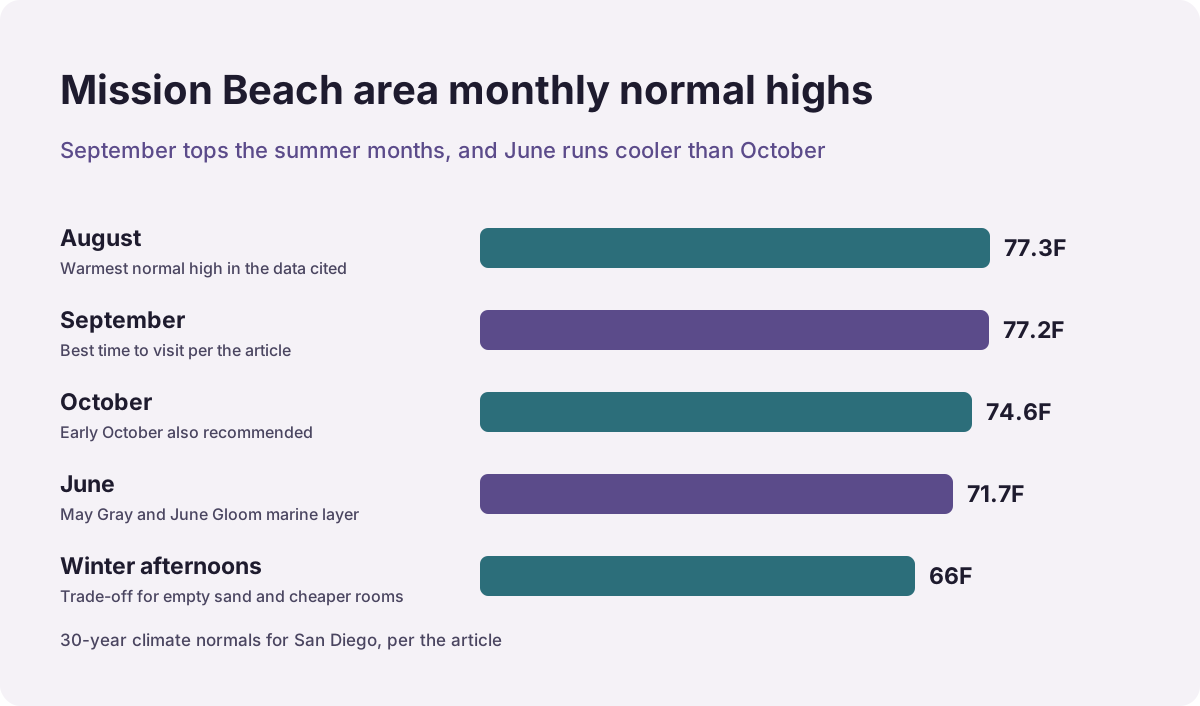
Rain barely figures into the planning. August's normal precipitation rounds to one hundredth of an inch with zero days of measurable rain, and December through March carry the vast majority of the year's rainfall. A winter visit trades warm water for empty sand, cheaper rooms and 66F afternoons, which is a genuinely good deal if swimming is not the point. Check the water quality before any ocean day: the County of San Diego posts beach closures and advisory results at sdbeachinfo.com, updated same day or next business day, and it is the only official source for that information.
What Can You Do Near Mission Beach When You Want a Change?
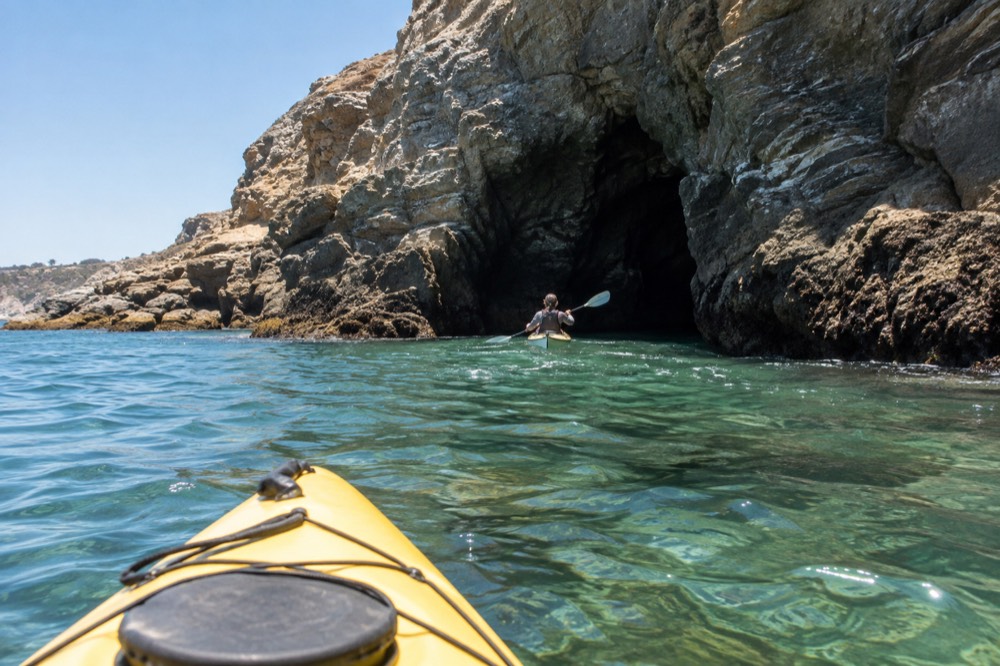
Within a short drive or bus ride of Mission Beach you can reach SeaWorld on the bay side, the Ocean Beach pier and sunset cliffs to the south, La Jolla's coves and kayaking to the north, and Old Town or Balboa Park inland, all of which pair naturally with a beach day. The peninsula sits at the center of the coastal playground, which is why so many visitors base themselves here and day-trip outward. Mission Bay wraps around the east side and holds SeaWorld and its own network of waterfront parks. Ocean Beach is a few minutes south with a completely different, dog-and-hippie personality. La Jolla is twenty minutes up the coast and offers the two best on-the-water activities in the county: the La Jolla sea cave kayak tour puts you in the water with caves and sea lions rather than beside them.
Inland, the options mature quickly. Balboa Park is the city's cultural center, and a guided walking tour of Balboa Park with a local guide is the efficient way to absorb it in two hours rather than wandering for a day. Old Town holds the state's historic core and a food scene built around tacos and tequila, and the Old Town tequila and tacos walking food tour covers both in one 2.5-hour walk. For families weighing the big-ticket options, the family beaches guide compares this stretch of coast against the calmer alternatives.
Is Mission Beach Good for Families and Kids?
Mission Beach is one of the best family neighborhoods in San Diego because the bay side gives small children calm, wave-free water, the boardwalk is a contained and car-free place to ride bikes, and the amusement park anchors the south end with rides aimed at younger kids. The bay side is the underrated half for this. Toddlers can wade in Mission Bay's shallow water without waves or rip currents, parents can sit within arm's reach on the sand, and the ocean side is a short walk away when the older kids want real surf. The peninsula's flatness means strollers and training wheels both work everywhere, and the boardwalk's bike rental shops stock kids' bikes, tag-alongs and surreys that carry the whole family in one vehicle.
Two safety notes matter for families. First, swim near a staffed lifeguard tower: the city staffs its permanent oceanfront stations year round, generally from 9:00 am to dusk, and the tower is the safest place on any San Diego beach for a child. Second, the beach rules the city publishes apply here as everywhere: no glass containers, no alcohol, no smoking, and the general prohibitions listed in the city's beach regulations. The glass rule is the one families break most often by accident, so transfer drinks into plastic before you cross the sand.
What Should You Not Miss If You Only Have One Day?
If you only have one day in Mission Beach, walk the boardwalk from South Mission to Pacific Beach in the morning, swim or rent a paddleboard on the bay side through midday, eat fish tacos off Mission Boulevard in the afternoon, watch the sunset from the sand, and finish with the lit-up amusement park or a drink at a north-end beach bar. That single loop uses the peninsula the way it was built to be used: the ocean for the view and the walk, the bay for the water, the boulevard for the food, and the park for the evening. It needs no car, no reservation and no tickets bought in advance, and it compresses everything above into one honest day.
The order matters. The marine layer makes mornings the grey part of the day in May and June, so put the walk first and the swim second. The wind tends to pick up in the afternoon, which is why locals surf and paddle in the morning and switch to the sand or the boardwalk later. And the sunset is non-negotiable: this is a west-facing beach, the whole peninsula is one long sunset platform, and skipping it to beat the parking rush is a bad trade. If a second day opens up, the one day in San Diego itinerary shows how to fold the beach into a wider city plan.
| Time of day | Where to be | Why |
|---|---|---|
| Early morning | South Mission end of the boardwalk | Quietest sand, easiest parking, flattest light for photos |
| Mid-morning | Bay side rentals | Calm water before the afternoon wind picks up |
| Midday | Mission Boulevard, two blocks inland | Lunch away from the sand-adjacent price premium |
| Afternoon | The sand near a staffed lifeguard tower | Sunbathing and swimming with the safest supervision |
| Last hour of daylight | The west-facing beach | The sunset is the peninsula's single best free show |
| After dark | The lit-up amusement park or a north-end bar | The two evening personalities, pick your volume |
Common Questions About Mission Beach
Is Mission Beach free to visit?
The beach, the boardwalk and the bayfront parks are all free and open to the public. You pay only for rentals, food and the amusement park rides. Lifeguard service is free, and there is no entrance fee of any kind for the sand or the boardwalk.
Can you drink alcohol on Mission Beach?
No. Alcohol is prohibited on San Diego city beaches, boardwalks and parks, and the rule is enforced. Drinking happens in the bars and on licensed patios along Mission Boulevard, not on the sand.
Is Mission Beach or Pacific Beach better?
Mission Beach is narrower, more family-oriented and centered on the boardwalk and the amusement park. Pacific Beach is louder, younger and has the stronger nightlife and dining strip. The two run into each other along the same boardwalk, so you can walk between them and sample both in one day.
Do you need a car at Mission Beach?
No. The peninsula is flat, under two miles long, and fully walkable or bikeable, and the MTS bus connects it to the rest of the city for $2.50 one way or $6.00 for a capped day pass. A car helps mainly for day trips to La Jolla or inland, and for arriving with gear.
When is the water warmest at Mission Beach?
The ocean off San Diego peaks at an average of 68.7F in August and holds near 67.6F through September, compared with 66.5F in July and around 58F in winter. September gives you the warm water without the summer crowds, which is why locals rate it the best beach month of the year.
Is Mission Beach safe for swimming?
Yes, when you swim near a staffed lifeguard tower, which are staffed year round from 9:00 am to dusk. Rip currents are the main hazard on this coast: if caught, swim parallel to the shore until the pull relaxes, then angle back in. Check the county's water quality page at sdbeachinfo.com before swimming after rain.