Belmont Park San Diego: The Complete Visitor Guide
Belmont Park sits right on the sand at Mission Beach, a compact amusement park where a classic wooden coaster, an arcade and a boardwalk meet one of the busiest swim beaches in California.
Short answer
Belmont Park is a free-to-enter amusement park on the Mission Beach boardwalk, open to walk around without paying anything, with rides and the historic Giant Dipper coaster sold per ride or by wristband. It sits directly on the sand, next to a year-round lifeguarded beach, and the MTS trolley and bus reach it for $2.50 each way.
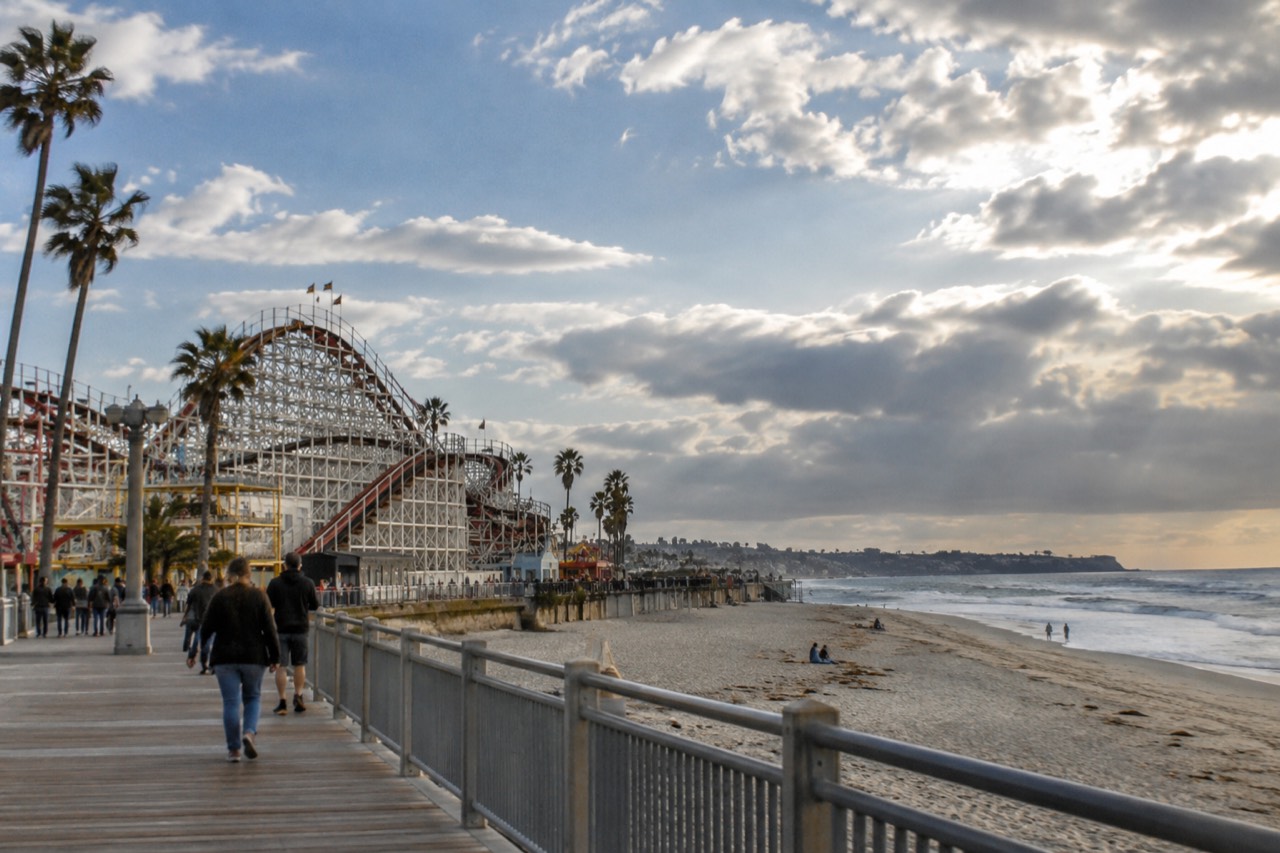
Belmont Park occupies the oceanfront tip of Mission Beach, where the boardwalk, the sand and a classic wooden roller coaster share the same few acres. Entry costs nothing. You pay only for the rides you take, which makes it one of the few amusement parks in California you can wander for the price of a walk. That single fact shapes everything about how locals use it: as a beach amenity that happens to have a coaster, not a theme park that happens to have a beach.
The park's anchor is the Giant Dipper, a wooden coaster that has defined the Mission Beach skyline for generations of San Diegans. Around it sit a collection of flat rides, an arcade, a mini golf course, a sky rope course and a zip line, plus a plaza of food stands and shops facing the boardwalk. Step off the property in any direction and you are on the sand or on the Mission Beach boardwalk, the concrete path that runs the length of the peninsula and is arguably the real attraction here.
This guide covers what is actually at the park, what a visit costs, how to get there without a car, when to go, and how Belmont Park fits into a bigger San Diego day. Prices for rides and wristbands change seasonally, so where a figure is not fixed we say so plainly and point you to the park's own channels rather than printing a number that may be stale by the time you read this.
What Is Belmont Park, and What Is Actually There?
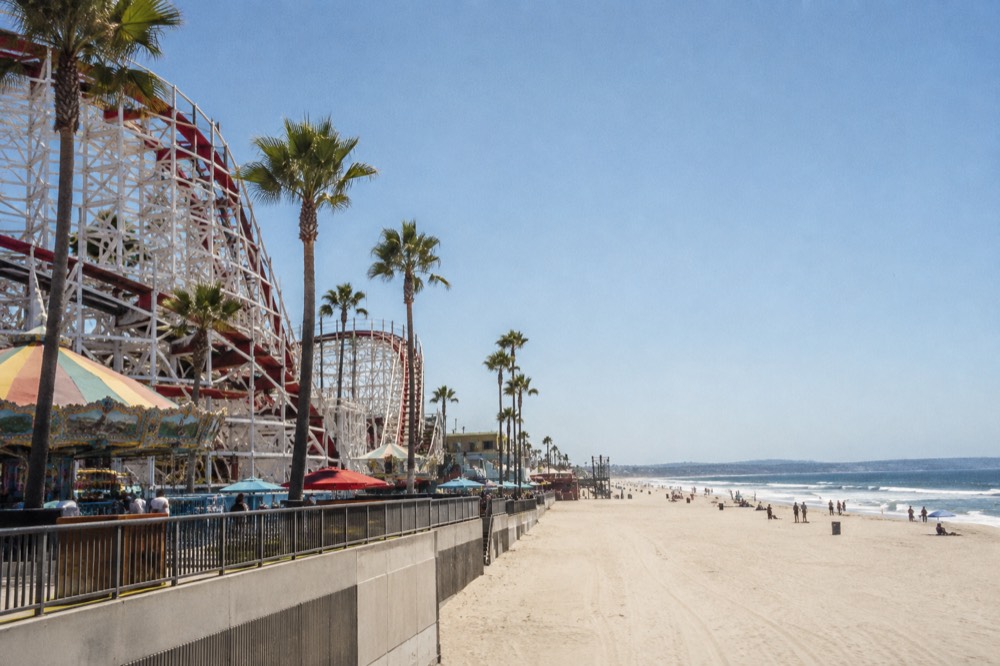
Belmont Park is a free-entry, oceanfront amusement park at Mission Beach containing a historic wooden roller coaster, roughly a dozen rides, an arcade, mini golf, a zip line and a sky ropes course, wrapped in a boardwalk plaza of restaurants and shops, with the sand of Mission Beach immediately behind it. The park is small by theme-park standards. You can walk its full footprint in under ten minutes, and that compactness is the point: it is a two-hour stop on a beach day, not an all-day destination like the Zoo or SeaWorld. The mix is deliberately classic: coaster, drop tower, carousel-style flats, bumper cars and midway games, the kind of lineup that rewards a first visit and a nostalgic return more than a marathon session.
The Giant Dipper is the reason most visitors come. Wooden coasters are increasingly rare in the American park landscape, and this one sits directly on the beachfront, which gives it a ride experience few coasters anywhere can match: ocean air, a view out over the water from the lift hill, and the dense, rattling character of a structure built from lumber rather than steel. The coaster has its own queue and its own ticketing, and it is the one ride here that people line up for on summer evenings even when everything else is quiet.
Around the Dipper, the ride lineup splits into two tiers. There is a set of family flats suited to younger kids and cautious riders, and a handful of more intense attractions, including the drop tower and the beachfront thrill rides that face the boardwalk. The arcade, the laser maze and the mini golf course give non-riders something to do, which matters if your group includes someone who does not ride coasters but was outvoted anyway. The plaza in front of the park holds the food and drink: boardwalk standards, plus sit-down options with patios that look at the coaster and the ocean.
What the park is not matters too. It is not a gated park with a single admission price. It is not a full-day destination on its own. And it is not separate from the beach: the boundary between Belmont Park and Mission Beach is a line you cross without noticing, which is exactly why the two are best planned together. Our Mission Beach neighborhood guide covers the beach, the boardwalk and the wider peninsula in detail.
What Are the Best Things to Do at Belmont Park?
The best things to do at Belmont Park are riding the Giant Dipper coaster, walking the Mission Beach boardwalk, playing the arcade and mini golf, taking the zip line and sky ropes course, eating on the oceanfront patios, and finishing with the beach itself, in roughly that order for a first visit. The park rewards a loose plan rather than a tight itinerary. Most visitors spend between ninety minutes and three hours inside the park proper, then drift onto the sand or the boardwalk, and the strongest single piece of advice is to treat the coaster as the anchor: do it first or last, when the queue is shortest, and fill the middle with the smaller attractions.
Ride the Giant Dipper first if you arrive before midday. The coaster is the one attraction here with a queue that genuinely moves, and it is shortest in the first hour the park is open and in the last hour before close. Evening rides are the local favorite: the coaster's lighting and the sunset over the ocean make the same track feel like a different ride. If you only do one thing at Belmont Park, this is it.
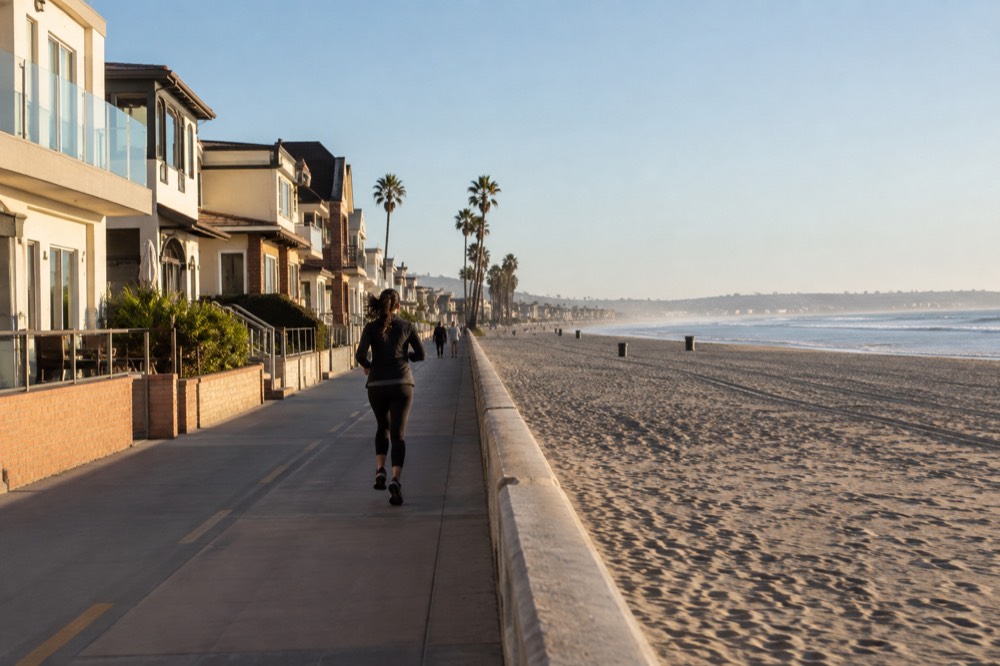
The boardwalk is the second essential, and it is free. The concrete path runs the length of Mission Beach, past rental shops, beach houses and volleyball courts, and it is one of the best people-watching walks in San Diego. Cyclists, skaters, families and street performers share it, and the pace is slow by design. If your group splits between riders and non-riders, the boardwalk is where the non-riders will want to be, and it loops right back to the park.
The zip line and the sky ropes course are the two attractions visitors most often do not know about in advance. Both sit above the plaza, both are ticketed separately from the coaster, and both give you a view of the beach from an angle the ground-level rides cannot. The arcade and mini golf fill the gaps: low-commitment, air-conditioned where the arcade is concerned, and genuinely useful during a marine-layer morning when the beach is grey and nobody wants to sit on cold sand yet.
If you are building Belmont Park into a wider city day, the two natural pairings are the beach itself and a harbor-side sight. The USS Midway Museum sits on the Embarcadero about fifteen minutes up the coast by car, and the two make a good contrast: a floating aircraft carrier in the morning, a beachfront coaster in the late afternoon. Families planning a multi-stop day should look at our San Diego with kids itinerary, which sequences the beachfront stops against the Zoo and Balboa Park.
How Much Does a Day at Belmont Park Cost?
Entry to Belmont Park is free; you pay per ride or per attraction, with the Giant Dipper as the single most expensive item, and wristbands covering unlimited rides are sold on a seasonal pricing model, so a realistic budget runs from nothing at all, if you only walk the boardwalk, to a full wristband plus food for the classic family visit. The honest answer depends entirely on how much of the park you use. A couple who walks the boardwalk, watches the coaster and eats a boardwalk snack spends almost nothing beyond food. A family of four that rides everything, plays the arcade and buys lunch on the patio is spending real money, and the figure moves with the season.
Because ride and wristband prices are dynamic, we do not print them here. The park publishes current pricing on its own site and at the ticket windows in the plaza, and the gap between a single-ride ticket and a wristband is the decision that actually matters: if you plan to ride three or more attractions, the wristband almost always wins, and if you are here mainly for the Dipper and the view, single tickets cost less. Do the arithmetic at the window, not at home.
The table below is a planning frame, not a price list. Treat every line as a range to check on the day.
| Spending pattern | What you get | Realistic cost shape |
|---|---|---|
| Boardwalk only | Free entry, walk the park, watch the coaster, beach access | $0 beyond food |
| Coaster visitor | One Giant Dipper ride, boardwalk, a snack | Single-ride ticket plus food |
| Half-day family | Wristband for riders, arcade money, lunch on the patio | Wristband price times riders, plus food |
| Full beach day | Wristband, rentals on the boardwalk, all-day parking-free transit visit | Wristband plus rental and food budget |
Two costs sit outside the park and matter more than the rides. Food on the Mission Beach boardwalk is priced for the location, and a short walk a block or two inland finds the same meal for noticeably less. And getting there: the trolley-and-bus combination costs $2.50 each way per adult, or caps at a $6.00 day pass on the PRONTO system, which is almost always cheaper than driving once you factor in beach-district parking, which we cover honestly in the next section.
If Belmont Park is one stop on a bigger route, a hop-on hop-off trolley ticket changes the math again: it bundles the narrated loop past the major sights with the flexibility to jump off near the beach and rejoin later. Check availability on the live listing, and read our hop-on hop-off trolley tour page for what the two-day ticket covers.
How Do You Get to Belmont Park, and What About Parking?
Belmont Park is reached by the MTS Blue Line trolley plus a short bus or bike connection, or by car to the Mission Beach district, where parking is unmetered street and lot parking that is free to use and genuinely hard to find in summer, so transit or an early arrival is the honest advice. The park sits at the west end of West Mission Bay Drive, at the ocean side of the Mission Beach peninsula. There is no trolley station at the beach itself, but the trolley-and-bus combination is simple, and the fare is $2.50 one way per adult with a $6.00 day-pass cap on PRONTO, per the official MTS fare chart. Youth 18 and under ride free on the Youth Opportunity Pass, and up to two children aged 5 and under travel free with a paying adult.
By transit, the usual route is the Blue Line to its Old Town or downtown stops, then a connecting bus toward Mission Beach, or the Blue Line to a Mission Bay-adjacent stop and a short rideshare hop. The full pattern is laid out in our getting around San Diego guide, including how PRONTO's fare capping works and why you never need to buy a day pass up front. Cyclists have the best option of all: the Mission Beach boardwalk and the paths around Mission Bay make the approach by bike genuinely pleasant, and bike rentals line the boardwalk a few steps from the park.
By car, the honest answer about parking is the one most guides dodge. There is no published rate table for beach-district parking in San Diego, and we will not invent one. The truth is simpler: the Mission Beach street grid and adjacent lots are free to park in and very hard to find between late morning and sunset in summer. Arrive before ten in the peak season or after four in the afternoon, or plan on circling. Our parking in San Diego guide covers the citywide picture, including downtown meter rules and where enforcement runs late.
The one parking figure we can state with a source is the citywide context: downtown meters run $2.50 per hour with enforcement generally Monday to Saturday, and Sunday is no longer free everywhere in the beach-adjacent commercial zones, so the old advice of "free Sunday parking" should be retired. Posted signs at the space always win over any guide, including this one.
When Is the Best Time to Visit Belmont Park?
The best time to visit Belmont Park is a weekday evening between June and September for warm sand and lit-up rides, or a September weekday for the best combination of warm ocean, thin crowds and full park hours, while May and June mornings often start grey under the marine layer before clearing. The seasonal logic here is the same as the rest of coastal San Diego, and it runs counter to what visitors expect: the coast's warmest, clearest stretch is late August and September, not the school-vacation peak of July.
The marine layer is the thing to understand. On many spring and early-summer mornings, a grey cloud deck sits over the beaches while inland areas stay clear, the pattern locals call May Gray and June Gloom. It burns off by midday more often than not, but a 9 am arrival at Belmont Park can find the coaster wrapped in grey and the beach empty. Plan beach mornings for the afternoon in those months, or plan the arcade and the plaza for the morning and the sand for after.
September is the sleeper. The mean ocean temperature at La Jolla, from NOAA's Scripps Pier station, peaks in August at 68.7F and holds 67.6F through September, warmer than July's 66.5F, and the air temperatures hold too: September's normal high of 77.2F beats July's 75.3F. Yet September is one of the quietest visitor months on the whole San Diego coast, so the sand is warm, the water is at its year's best, and the queues are short. The trade-off is that park hours and ride availability can narrow after the summer staffing peak, so check the park's published hours for your date.
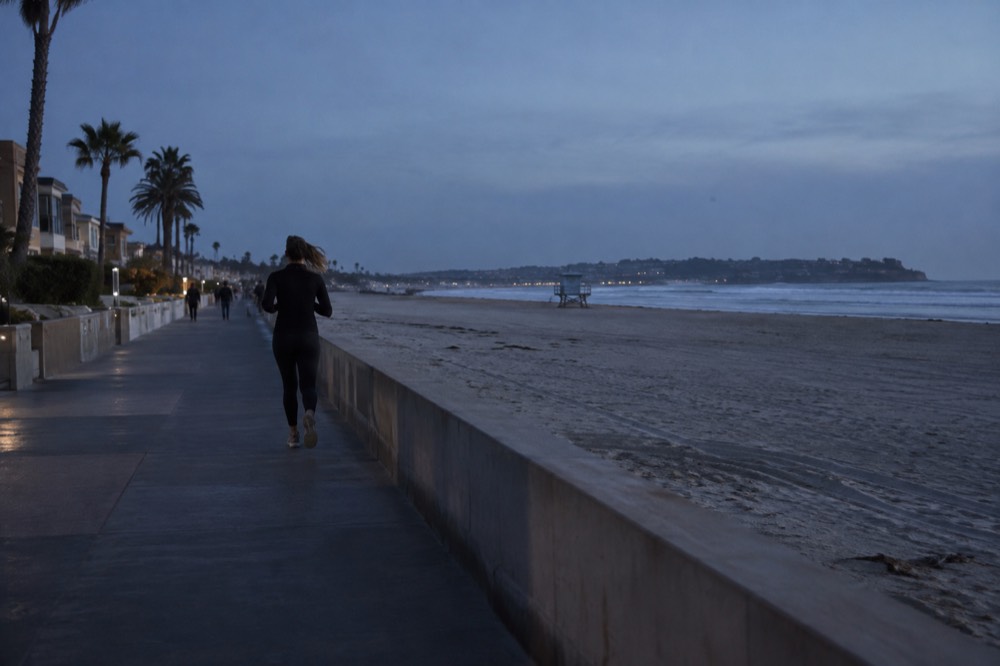
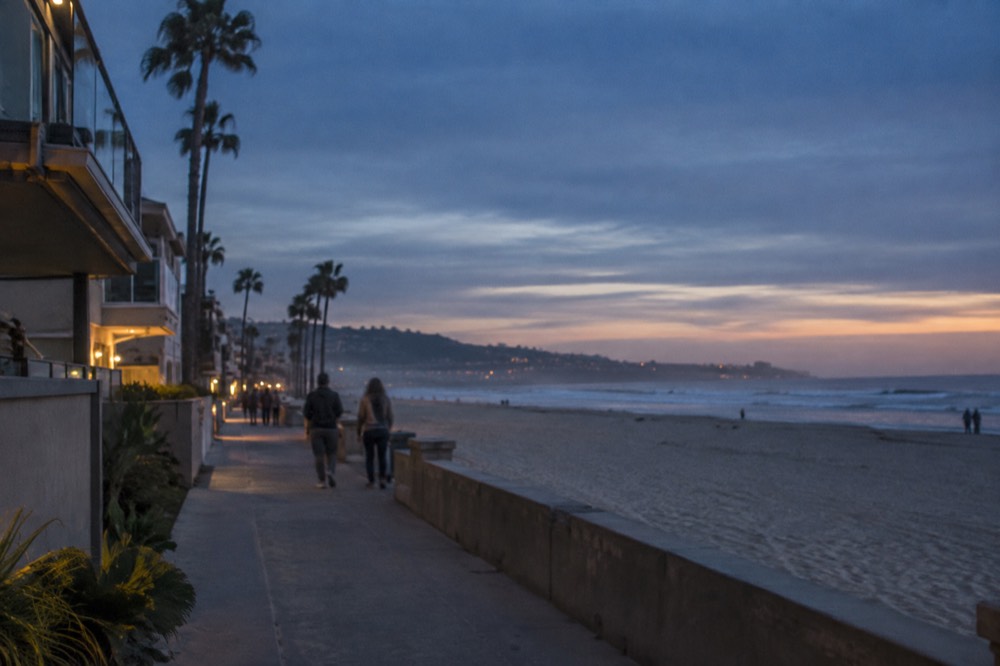
Evenings are the local's slot in any season. The coaster and the plaza light up, the day-trippers have gone, and the boardwalk takes on the atmosphere that makes the place feel like a postcard of itself. Weekends year-round are busier than weekdays at every hour, and holiday weekends pack the whole peninsula.
Is Belmont Park Good for Kids and Families?
Belmont Park is one of the most kid-friendly stops in San Diego, with a genuine split between a family flat-ride tier for younger children, the Giant Dipper and thrill rides for height-qualified older kids, and free beach and boardwalk time in between, which makes it work for mixed-age groups better than almost any gated park. The free entry is the family advantage: parents who do not ride do not pay for a wristband they will not use, and a family can spend an hour, watch the coaster, eat on the patio and leave having spent very little.
Height requirements govern the day. The Giant Dipper and the thrill rides carry minimum-height rules, as every coaster does, and the family flats are aimed at the under-48-inch crowd. The practical pattern for a family with a span of ages is to split the visit: one adult takes the older kids to the coaster queue while the other stays on the flats with the younger ones, then swap. The arcade and mini golf are the all-ages glue, and the beach behind the park is a free, unfenced timeout space whenever a child needs a break from stimulation.
The beach itself is a full half of the family visit. Mission Beach sits between the ocean and Mission Bay, so you can choose between surf on one side and the calm, shallow bay water on the other, which is the difference between a nervous four-year-old's first swim and a bad morning. Our family beaches in San Diego guide ranks the bay-side options, and the kids itinerary places Belmont Park in a full multi-day plan alongside the Zoo and the Embarcadero.
Two safety notes worth stating plainly. City of San Diego lifeguards staff the permanent oceanfront stations year round, generally from 9:00 am to dusk, and rip currents are the primary hazard at every city beach: the official advice is to stay calm and swim parallel to the shore until the pull relaxes, then swim in, per the city's lifeguard division. And alcohol is prohibited on San Diego's beaches, boardwalks and parks, so the boardwalk drink has to happen on a licensed patio, not on the sand.
What Else Is Near Belmont Park?
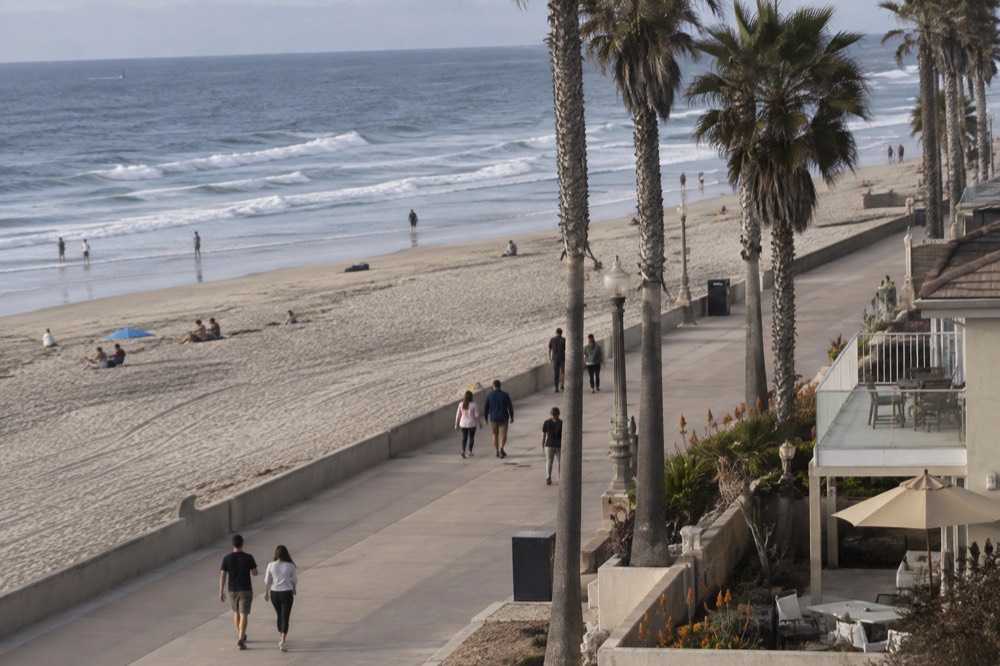
The immediate surroundings are Mission Beach's boardwalk, the calm waters of Mission Bay, the ocean surf, and a short drive or bike ride to Pacific Beach, Ocean Beach and SeaWorld, so the park works best as the anchor of a half-day beachfront block rather than a standalone destination. The peninsula gives you two waterfronts for the price of one, and the bay side, with its calm water, rental docks and grass, is where families with small children and anyone learning a water sport should head.
The boardwalk runs north toward Pacific Beach, a continuous oceanfront path that takes in the whole rental-and-volleyball culture of the coast, covered in our Pacific Beach guide. South and around the bay, Mission Bay holds the water-sports rentals, and Mission Bay is the guide for that. SeaWorld sits on the bay's shore a few minutes away by car, and if you are pairing a marine park with the beach, our SeaWorld San Diego page covers its date-based ticket pricing and why you should never print a flat number for it.
For a same-day contrast, the harbor is closer than it looks. A one-hour harbor cruise from the Embarcadero puts the city skyline, the naval fleet and the Coronado Bridge on the water, and it pairs naturally with a beach afternoon: boats in the morning, coaster at sunset. The cruise route and what you actually see from the deck are worth checking on the operator's live listing before you commit a morning to it.
How Does Belmont Park Compare with San Diego's Bigger Attractions?
Belmont Park is the smallest and cheapest of San Diego's paid-ride attractions, best for two to three hours of beachfront nostalgia, while the Zoo, Safari Park, SeaWorld and LEGOLAND are full-day gated parks at full-day prices, so the comparison is not which is better but which kind of day you are planning. If your group wants animals, Belmont Park cannot compete. If your group wants sand, salt air and a coaster between swims, none of the gated parks can compete with it.
| Attraction | Entry model | Time needed | Best for |
|---|---|---|---|
| Belmont Park | Free entry, pay per ride or wristband | 2-3 hours | Beach days, coaster fans, budget stops |
| San Diego Zoo | Gated, timed tickets, 1-day adult $76 Any Day | Full day | Animals, gardens, first-time visitors |
| SeaWorld San Diego | Gated, date-based dynamic tickets from $59.99 | Full day | Marine shows, rides, families |
| LEGOLAND California | Gated, dynamic tickets, from-price only | Full day | Kids roughly 2-12, Carlsbad day trip |
| USS Midway Museum | Gated, $39 adult online | 2-4 hours | History, aviation, Embarcadero mornings |
The Zoo figure and the Midway figure come from the venues' own ticket pages, and SeaWorld and LEGOLAND prices move by date, which is why they are written as "from" prices rather than flat numbers. The Zoo's adult 1-day admission is $76 on Any Day tickets and $73 on Value Days bought online, with children 3-11 at $66 and $63 respectively, and no timed entry or reservation is required. The Midway charges $39 online for adults 13 and up, $29 for youth 4-12, with veterans at $26 and active duty military free with ID collected on the day.
The pass question follows from the comparison. The San Diego CityPASS and the Go City pass bundle the big gated attractions, and Go City's standard tier includes Belmont Park among its headliners alongside the Midway, the Old Town Trolley and the harbor cruise. If you are planning three or more of the gated parks anyway, a pass changes the arithmetic, and our Go City San Diego pass guide works through which tier includes what, including the critical detail that the standard Go City tier does not include the Zoo, Safari Park, SeaWorld or LEGOLAND.
For a different angle on the same coast, the best beaches in San Diego guide ranks the whole shoreline, and cheap things to do in San Diego lists the free-entry stops, Belmont Park's boardwalk among them.
What Should You Not Miss, and What Should You Skip?
Do not miss the Giant Dipper, the boardwalk walk, and an evening on the beach after the rides; skip the midway games if you are budget-conscious, skip the in-park food if you can walk a block, and skip Belmont Park entirely on a packed summer weekend afternoon if your tolerance for crowds is low. The park's small footprint makes the skip list easy to write, because everything is visible from the plaza and you can make the call in person rather than from a guide.
The coaster at dusk is the single non-negotiable item. Wooden coasters on the beachfront are rare, and this one is at its best when the sky is doing something. The boardwalk loop, out along the ocean and back along the bay side, is the second, and it costs nothing. The third is the beach itself, which first-time visitors chronically under-schedule: the park is the appetizer, the sand is the meal.
What to skip is mostly about money. Midway games are priced like midway games everywhere, with the odds to match. In-park food carries the location premium, and the same boardwalk classics exist a short walk off the plaza for less. And if your visit lands on a summer weekend, the park's small plaza gets genuinely packed between noon and five; the same day at nine in the morning or after six in the evening feels like a different place.
A Sample Half-day at Belmont Park
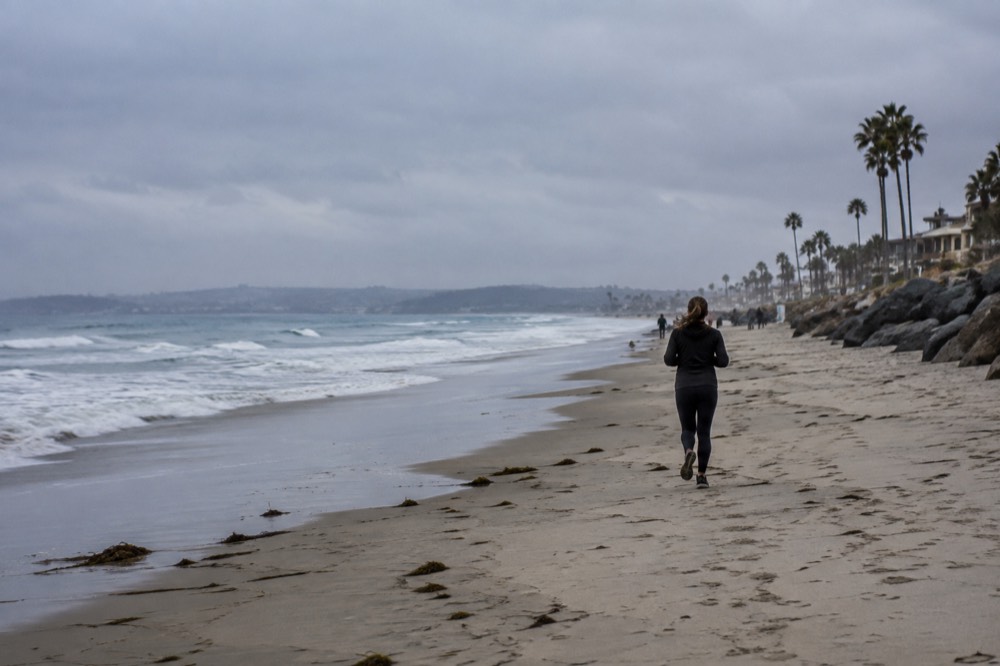
A strong half-day runs: arrive by transit or early car before ten, ride the Giant Dipper first while the queue is short, do the flats and the arcade through the morning, eat on the patio or walk a block inland for lunch, then give the afternoon to the beach and the boardwalk, finishing with a second coaster ride after the lights come on. It is a loose frame, and the park's size means you can compress it to ninety minutes or stretch it to a full day by letting the beach absorb the extra hours.
| Time | Stop | Notes |
|---|---|---|
| Before 10:00 am | Arrive, park or lock the bike | Parking is free and scarce; early arrival solves it |
| 10:00 am | Giant Dipper, first ride | Shortest queue of the day |
| 10:30 am | Flats, arcade, mini golf | Non-riders walk the boardwalk |
| 12:00 pm | Lunch on the patio or a block inland | Inland is cheaper, same food |
| 1:00 pm | Beach and bay, swim or rent | Lifeguards generally on duty from 9:00 am |
| After 5:00 pm | Boardwalk walk, second coaster ride | Lit-up park, thinning crowd |
The frame flexes by season. In May and June, flip it: grey marine-layer morning in the arcade, beach in the cleared afternoon. In September, keep it as written and enjoy the warm water. And if the half-day grows into a full one, the one day in San Diego guide shows how a beachfront block fits with Balboa Park or the Embarcadero in a single, ambitious day.
Belmont Park, Honestly: Who It Is For
Belmont Park is for coaster fans, families with mixed-age kids, budget travelers who want a free-entry classic, and anyone whose ideal San Diego afternoon is a boardwalk and a swim; it is not for visitors who want a full-day theme park experience, and it should never be the only reason you drive across the city. The park earns its place in a San Diego trip as a flavor stop, the kind of attraction that gives a beach day a spine, and it is at its best when it is not the headline.
Coaster enthusiasts should treat the Giant Dipper as a destination ride in its own right. Wooden coasters with an ocean view are a short list worldwide, and the beachfront setting does real work here. Families get the free-entry model, which removes the sunk-cost pressure that makes a $100 gated-park day feel like an obligation to have fun. Budget travelers get a genuinely free experience, boardwalk and beach, with the option to spend only on the one ride that matters. And anyone on a first visit to the city gets the most concentrated dose of the San Diego beach-culture atmosphere that what San Diego is known for talks about: surf, sand, boardwalk, and a coaster that has watched over all of it for generations.
The honest caution is the flip side of the small footprint. If your trip is short and your list is long, the Zoo, the Midway, Balboa Park and La Jolla all outrank Belmont Park for a first-time visitor with no beach day planned. Come for the beach, and the park is a bonus. Come only for the park, and you may leave wondering what the fuss was. The fuss, as locals could tell you, was never only about the rides. If you are mapping the whole city around this stop, the Things to Do in San Diego homepage is the place to start.
Planning the rest of the trip around this stop is where a hop-on hop-off ticket or a [multi-attraction pass](https://gocity.tpk.ro/A7HbJDBw) starts to earn its price, and the three options below are the ones that pair most naturally with a Mission Beach afternoon.
Common Questions About Belmont Park
Is Belmont Park free to enter?
Yes. Entry to the park and the boardwalk plaza costs nothing. You pay only for rides and attractions, per ride or by wristband, so walking through, watching the Giant Dipper and using the beach behind the park is entirely free.
How much are Belmont Park rides and wristbands?
Ride and wristband prices are seasonal and dynamic, so we do not print them. Check the park's own published pricing before you go or at the ticket windows in the plaza. As a rule, if you plan to ride three or more attractions, a wristband usually beats single tickets.
Can you get to Belmont Park without a car?
Yes. The MTS trolley and connecting buses reach Mission Beach for $2.50 one way per adult, with PRONTO fare capping at a $6.00 day pass, and youth 18 and under ride free. The approach by bike along the Mission Beach boardwalk and Mission Bay paths is also excellent, with rentals lining the boardwalk.
Is parking free at Belmont Park and Mission Beach?
Mission Beach parking is free street-and-lot parking that is very hard to find in summer, especially from late morning to sunset. There is no published rate table, so treat any specific figure you read elsewhere with suspicion. Arrive before ten, arrive after four, or take transit.
When is the best time of year to visit Belmont Park?
June through September for warm beach weather, with September the sleeper pick: the ocean averages 67.6F at Scripps Pier that month, warmer than July, and the crowds are thinner. May and June mornings often start grey under the marine layer before clearing by midday, so plan the beach for the afternoon in those months.
Is Belmont Park good for young kids?
Yes, and the free-entry model is why. Younger kids get a tier of family flat rides, the arcade and mini golf, plus the calm bay water a short walk away, while height requirements gate the Giant Dipper and thrill rides for older siblings. Parents who do not ride pay nothing to walk in.
How long should you spend at Belmont Park?
Two to three hours covers the park itself, with the Giant Dipper first while the queue is short. Most visitors then drift onto the beach and boardwalk, and the strongest version of the visit is a half-day: rides in the morning, sand in the afternoon, and a second coaster ride after the lights come on.