What Is the Best Month to Go to San Diego?
September is the best month to visit San Diego: the warmest air and water of the year with the smallest crowds. Here is the month-by-month breakdown.
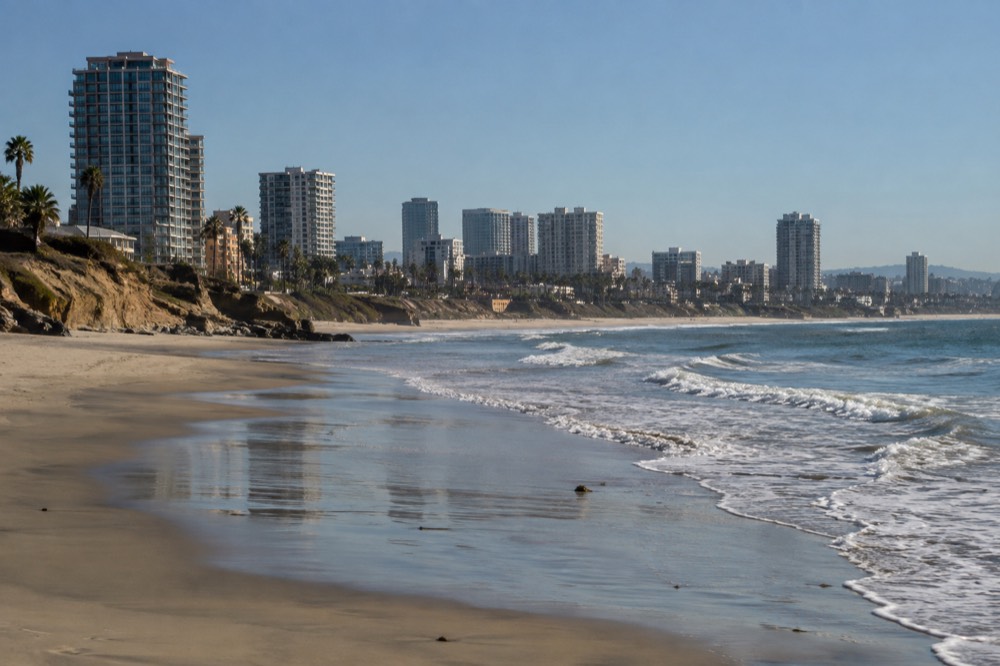
What Is the Best Month to Go to San Diego?
September is the best month to visit San Diego. Its normal high of 77.2°F beats July's 75.3°F, the ocean is warmer than it is in July, and the summer crowds have largely gone home: Cabrillo National Monument logged 56,876 recreation visits in September against 83,999 in July across 2022 to 2024, a gap of roughly 48 percent. You get the best weather of the year at the quietest time.
That answer surprises people, because most travel advice about San Diego assumes July and August are the peak of everything. The climate record says otherwise. The 30-year normals from the NOAA station at San Diego International Airport put August at 77.3°F and September at 77.2°F for normal daily highs, with July trailing at 75.3°F. September's normal low of 66.2°F is also more comfortable for sleeping than August's 67.5°F if your hotel lacks good air conditioning.
The ocean follows the same pattern with a lag. Mean sea-surface temperature at the Scripps Pier station in La Jolla peaks in August at 68.7°F and holds 67.6°F through September, well above July's 66.5°F. For swimming, snorkeling at La Jolla Cove, or just standing in the surf without wincing, late summer and early fall are the best water of the year.
The crowd data is the part nobody expects. The National Park Service counted about 845,000 recreation visits at Cabrillo National Monument in 2024, and the monthly pattern is heavily skewed toward July. September, with better weather, draws barely half of July's traffic. The same shape holds across the city: once school restarts, hotel demand softens and the coastline gets noticeably easier to use.
For a deeper dive into the whole year, our San Diego weather and best time to visit guide breaks down every month in detail, and our September in San Diego guide covers what is actually open and running that month.
Why Does September Beat July on the Numbers?
San Diego's real summer arrives late because the ocean warms slowly and the marine layer weakens by late August. July sits under the thickest coastal grey of the year, so its normal high is a full 1.9°F cooler than September's, while September combines peak-season warmth with a settled atmosphere and the year's warmest surf.
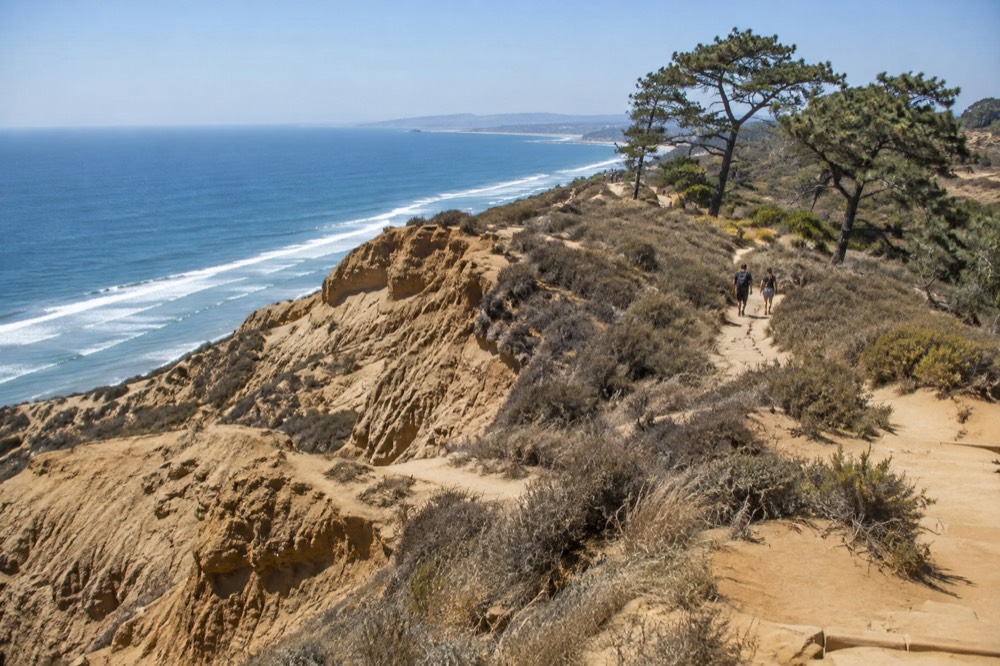
The mechanism is the marine layer, the coastal cloud deck locals nickname May Gray and June Gloom. It is strongest in late spring and early summer, when the ocean is still cool from winter and the atmosphere above is stable. You can see its fingerprint directly in the 30-year temperature normals: June's normal high of 71.7°F is actually lower than October's 74.6°F. A month everyone associates with summer is, on average, cooler than a month everyone associates with fall.
By August and September the ocean has absorbed months of sun, the marine layer has thinned, and the coast clears earlier in the day. Rain is effectively absent: August's normal precipitation is one hundredth of an inch with zero days of measurable rain, and September's is 0.12 inches. Meanwhile the desert heat that bakes the inland West has usually begun to break, so San Diego's beaches get warm days without the furnace next door.
The practical payoff is that a September morning at the beach, a sunset at Sunset Cliffs, or a kayak trip through the La Jolla sea caves all happen under clearer skies than the same trip in July, with roughly half the company. If you want the month that locals would pick for themselves, it is this one.
If you are doing the classic sightseeing circuit, Balboa Park, the Embarcadero, the Gaslamp Quarter and Coronado, the narrated trolley is the easiest way to cover all of it, and the two-day validity suits the relaxed pace a September visit allows.
Is June a Bad Month to Visit San Diego?
June is not bad, but it is the most oversold month in American travel. Its normal high of 71.7°F is lower than October's, its ocean temperature of 64.0°F is cooler than September's 67.6°F, and the marine layer can keep beaches grey until afternoon. It is a pleasant month that many visitors expect to be better than it is.
The trick with June is to plan around the coast-inland split. The marine layer burns off first inland, so a grey morning in La Jolla or Pacific Beach often turns clear over Balboa Park, and inland areas like North Park or the Safari Park in Escondido sit under blue sky while the beaches wait. Locals treat a June morning as museum weather and a June afternoon as beach weather.
The other honest note about June: it is dry. Normal precipitation is 0.05 inches with 0.1 days of measurable rain, so you will not lose a trip to storms. You will just want a light layer for mornings and evenings, when normal lows sit at 62.6°F, and you should not book a trip around guaranteed beach sunshine.
If your dates are locked to June, our June in San Diego guide has the full playbook, and the July guide covers the busier month that follows, when the marine layer thins but the crowds arrive in force.
What Is the Cheapest or Quietest Month to Visit San Diego?
Late September through early November is the quietest stretch, with September offering the best weather-to-crowd ratio of the year. Mid-December through February is the low season for prices, with normal highs still in the mid-60s°F, but it is also the rainy stretch: December through March carry 7.3 of the year's roughly ten inches of rain.

Here is how the shape of the year reads for a visitor trying to dodge crowds and save money:
| Stretch | Weather | Crowds | Best for |
|---|---|---|---|
| January to February | Highs 66.4°F and 66.2°F, rainiest months | Low, except holiday weekends | Gray whales from Point Loma, low rates |
| March to April | Highs 67.0°F to 68.8°F, rain tapering | Moderate, spring break bumps | Wildflowers, hiking |
| May to June | Highs 69.5°F to 71.7°F, marine layer | High on weekends | Museums, inland mornings |
| July to August | Highs 75.3°F to 77.3°F, dry | Peak, the busiest of the year | Full beach season, everything open |
| September to October | Highs 77.2°F and 74.6°F, dry | Low to moderate | The best overall combination |
| November to December | Highs 70.7°F and 66.0°F, rain returning | Low except holidays | Quiet beaches, December Nights |
The value argument for September and October is straightforward: the weather is at or near its annual best while the school-year calendar pulls families out of the market. October's normal high of 74.6°F is still warmer than June's, and the ocean at 64.0°F is no colder than it was in early summer. The rest of the planning pages sit on Things to Do in San Diego.
Winter has its own case. A normal February day sits at 66.2°F, which is warmer than plenty of cities in high summer, and it is the heart of the gray whale migration: the National Park Service says more than 20,000 gray whales pass offshore each year, with most passing San Diego in late December, January and February, and mid-January the peak. The trade-off is that this is when the rain falls, roughly 7.3 inches across December through March, so a winter trip needs indoor backup plans more than a fall one does.
If you are weighing the quiet months, our budget itinerary for San Diego and the free things to do guide both work best in the shoulder seasons, when the free stuff, beaches, parks, Balboa Park's gardens, is also at its least crowded.
Should You Avoid Any Month in San Diego?
No month in San Diego is genuinely bad, but two deserve caution. July and August bring peak crowds to every beach and attraction, and late July overlaps Comic-Con, when downtown hotel rates spike and the Gaslamp is at its most congested. Late December through February is the only stretch where rain is a realistic planning factor, with four days of 0.10 inches or more in a normal January.
Comic-Con International is scheduled for July 22 to 25 in 2027, with Preview Night on July 21, and it transforms the downtown core. If you are not attending, the convention center and Gaslamp area are best avoided that week, and hotel pricing across the whole city reflects the demand. Our Comic-Con visitor guide covers the logistics if you are going, and our downtown San Diego guide explains which neighborhoods stay calm during it.
The other honest caution is about expectations rather than avoidance: do not book a June beach holiday expecting guaranteed sunshine. The marine layer is the defining feature of the local early summer, and the temperature normals show it plainly. Plan a June trip around the city's indoor and inland strengths and you will enjoy it; plan it purely around the beach and you may spend your mornings waiting for the grey to lift.
One more note for anyone driving: parking is the biggest practical headache in San Diego in any month, and it is worst in summer. Balboa Park runs paid lots at $8 to $16 a day for non-residents right now, though City Council has approved removing paid parking entirely on 1 January 2027, and the San Diego Zoo charges $16 per vehicle. In September and October, the same lots are simply easier to get into. Our parking in San Diego guide has the full picture.
Which Month Is Best for What You Actually Want to Do?
Match the month to the activity. September wins for beaches and swimming, with the year's warmest surf at 67.6°F. Mid-January to February is the window for gray whales. October is the best hiking month, warmer than June and dry. December suits the zoo and Balboa Park's December Nights, and any month works for the USS Midway Museum, which is open daily from 10:00 am to 5:00 pm.
For whale watching, the timing is well documented: gray whales are visible from mid-to-late December through March, with mid-January the peak, and the park service notes viewing odds are best on calm mornings before the wind picks up. A three-hour whale watch cruise out of the bay or a morning at the Old Point Loma Lighthouse both fit that window. Our Cabrillo National Monument guide covers the land-based option, where the Kelp Forest Overlook is a named viewing point.
For the classic city hits, the USS Midway Museum, the Zoo, Balboa Park, Seaport Village, almost nothing in San Diego closes seasonally, so the month matters less than the crowd level. The Midway is open every day except Thanksgiving and Christmas, with last admission at 4:00 pm, and the Zoo runs 9:00 am to 6:00 pm. What changes by month is how early you need to arrive to beat the line, and in September the answer is: less early.
For a first visit in any month, the narrated trolley remains the simplest way to orient yourself, since the two-day ticket lets you jump off at whatever stop the weather and your energy favor.
That flexibility matters more than people expect in a city where the marine layer can change the plan by 11:00 am. A grey coastal morning becomes a Balboa Park morning, and a clear afternoon becomes a Coronado afternoon. The one day in San Diego itinerary is built around exactly that kind of swap.
Common Questions About the Best Month to Visit San Diego
What is the best month to go to San Diego?
September. It has the year's second-warmest normal high at 77.2°F, warmer ocean water than July, almost no rain, and roughly half of July's crowd levels at the major attractions.
Is September really warmer than July in San Diego?
Yes. The 30-year climate normals put September's average daily high at 77.2°F against July's 75.3°F, a 1.9°F gap. The marine layer that cools early summer weakens by late August, and the ocean has had all summer to warm.
What is the rainy season in San Diego?
December through March, which together carry about 7.3 inches of the year's roughly ten inches of rain. August is effectively dry, with a normal of one hundredth of an inch and zero days of measurable rain.
When is whale watching season in San Diego?
Gray whales pass San Diego from mid-to-late December through March, with mid-January the peak of the migration. More than 20,000 gray whales pass offshore each year, and calm January and February mornings offer the best viewing odds.
What is the cheapest month to visit San Diego?
Mid-December through February is the low season for hotel rates, with normal highs still in the mid-60s°F. September and October offer the best value overall, though, combining near-peak weather with shoulder-season crowds.
Is June Gloom a reason to avoid June?
No, but plan for it. June's normal high of 71.7°F is lower than October's 74.6°F because of the coastal marine layer. Mornings are often grey at the beaches while inland areas sit in sunshine, so treat June mornings as museum time and afternoons as beach time.