Things to Do in Del Mar: Beaches, Bluffs and a Slow Village Pace
Del Mar is the quiet end of the San Diego coast: a compact village of low buildings, a broad flat beach, and some of the best sunset viewing in the county, twenty minutes north of downtown by car or train.
Short answer
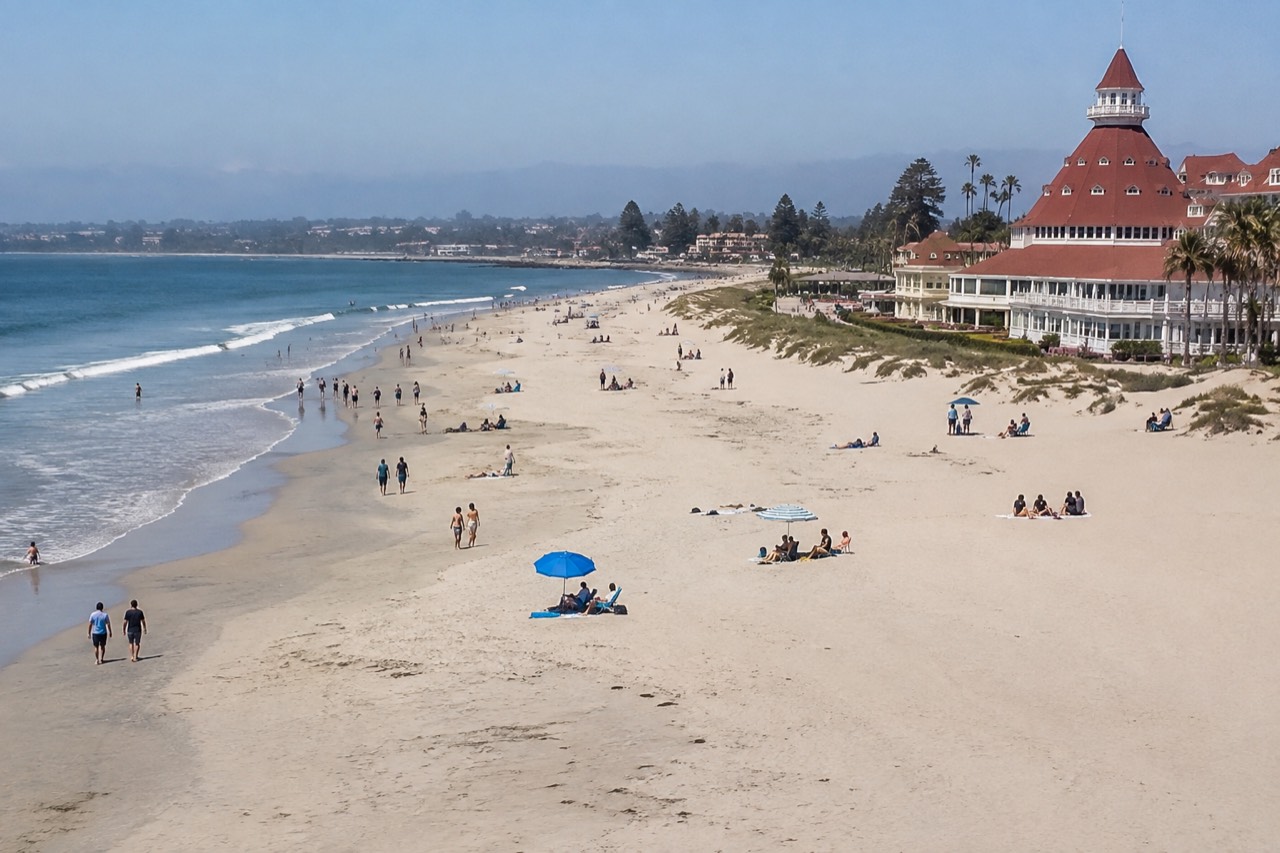
Del Mar is a small coastal village about 20 miles north of downtown San Diego, known for its wide flat beach, bluff-top walks, the summer horse racing meet at the Del Mar Fairgrounds, and a walkable main street of restaurants and shops. Most visitors come for a beach day, a coastal walk, or a slow afternoon, and pair it with nearby La Jolla or Torrey Pines.
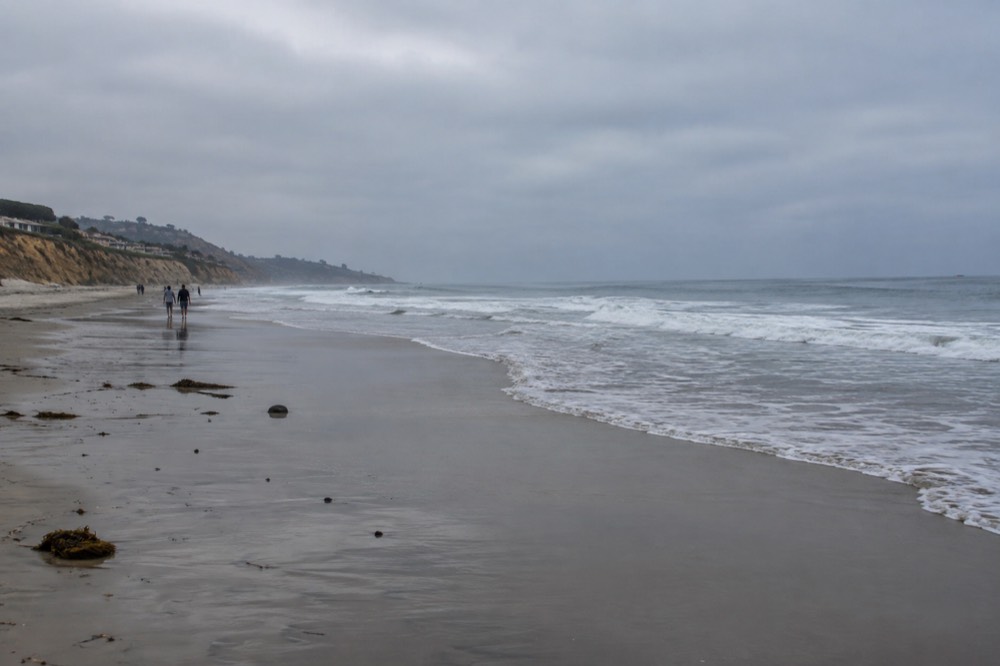
Del Mar sits where the San Diego coast straightens out and slows down. The name is Spanish for "of the sea," and the village earns it: one long, wide beach, a line of grassy bluffs, and a compact downtown of a few walkable blocks. It is the smallest of San Diego's coastal neighborhoods by reputation, the one locals mean when they say they are escaping the crowd. If your trip is built around Gaslamp energy, Del Mar is the counterweight, and it pairs naturally with the bigger sights you came for.
What Is Del Mar Known For?
Del Mar is known for three things: a broad, flat, family-friendly beach; the summer thoroughbred racing meet at the Del Mar Fairgrounds, which has made the village a seasonal destination for racing fans since the sport's golden age; and a low-key, walkable village core that feels deliberately untouched by high-rise development. It is also the gateway to some of the county's best coastal walking, with bluffs to the south and the trails of Torrey Pines just up the road. Visitors who want a quiet beach morning and a good dinner, without an itinerary of attractions, base themselves here on purpose.
The village is genuinely small. You can walk its main street end to end in fifteen minutes, and nearly everything of interest sits within a few blocks of the coast highway or the train station. That compactness is the appeal. Where Pacific Beach runs on energy and Mission Beach runs on rides, Del Mar runs on pace: coffee, sand, a walk, a long lunch, sunset.
It is worth being honest about what Del Mar is not. It is not a nightlife district, and it does not have a museum cluster or a theme park. People who rank it among their favorite parts of the region rank it for exactly the things it lacks: noise, traffic density, and the sense of being processed through an attraction. For a first visit to the region, it works best as a half-day or full-day excursion, not as the whole trip.
What Are the Best Things to Do in Del Mar?
The best things to do in Del Mar are the beach itself, the bluff-top walk along the coast, an afternoon in the village shops and restaurants, a race day at the Del Mar racetrack if your visit lands in the summer meet, and a short drive or bus ride up to Torrey Pines State Natural Reserve for the hiking. None of these need a ticket in advance except the racetrack on its biggest days, and most can be done in whatever order the weather and your appetite suggest.
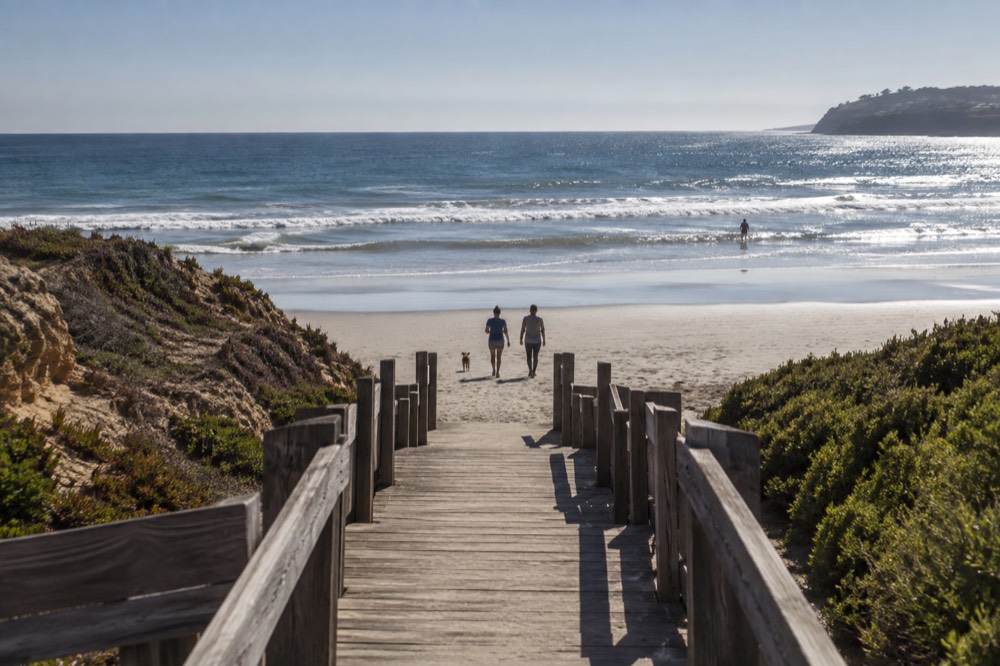
Start with the beach. Del Mar's main beach is wide, flat and gently sloping, which makes it one of the more comfortable swimming and bodysurfing beaches in the county for families. Lifeguard service matters here as it does everywhere on this coast: the City of San Diego staffs nine permanent oceanfront stations year round, and the standing hazard on every Southern California beach is the rip current. The official advice from the city's lifeguards is to stay calm, swim parallel to the shore until the pull relaxes, then angle in, and to swim near a lifeguard rather than alone. That advice applies to Del Mar as much as to Mission Beach.
| Activity | What it involves | Time to allow |
|---|---|---|
| Main beach | Swimming, bodysurfing, sand games on a wide flat strand | Half day or more |
| Bluff-top walk | Free coastal path with sunset views over the cliffs | 1 to 2 hours |
| Village stroll | Walkable blocks of shops, cafés and restaurants | 1 to 2 hours |
| Racetrack day | Thoroughbred racing at the Del Mar Fairgrounds, summer meet | A full afternoon |
| Torrey Pines hike | Rare pine landscape and bluff trails just up the coast | 2 to 3 hours |
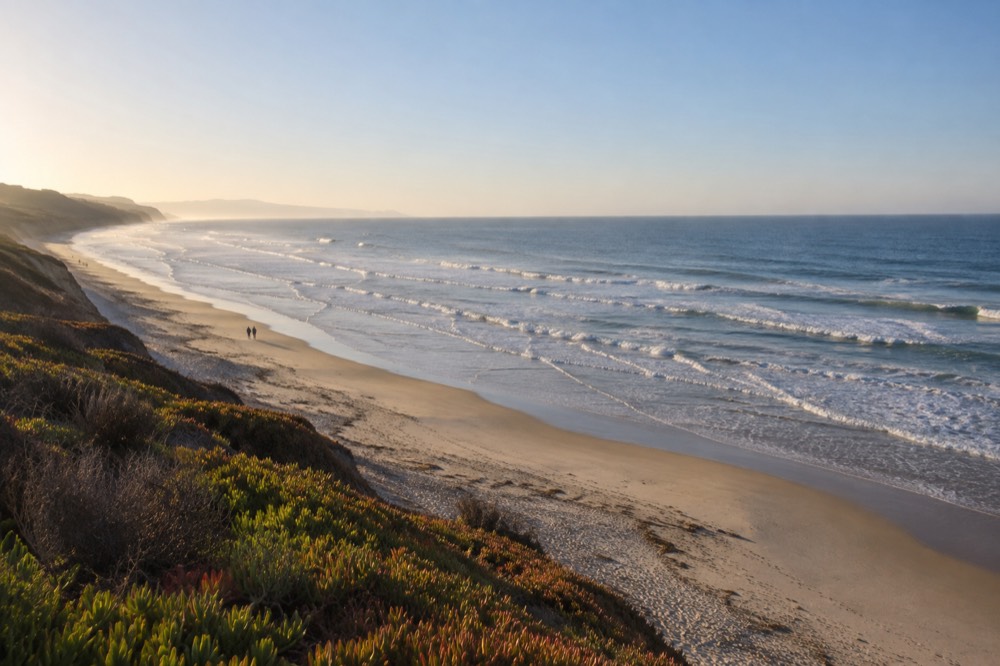
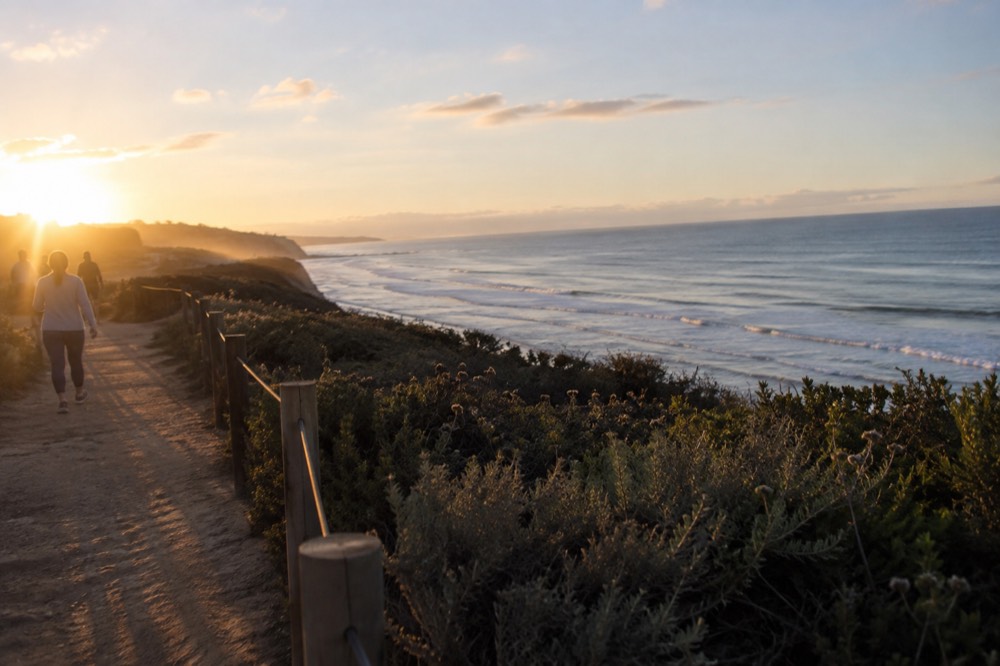
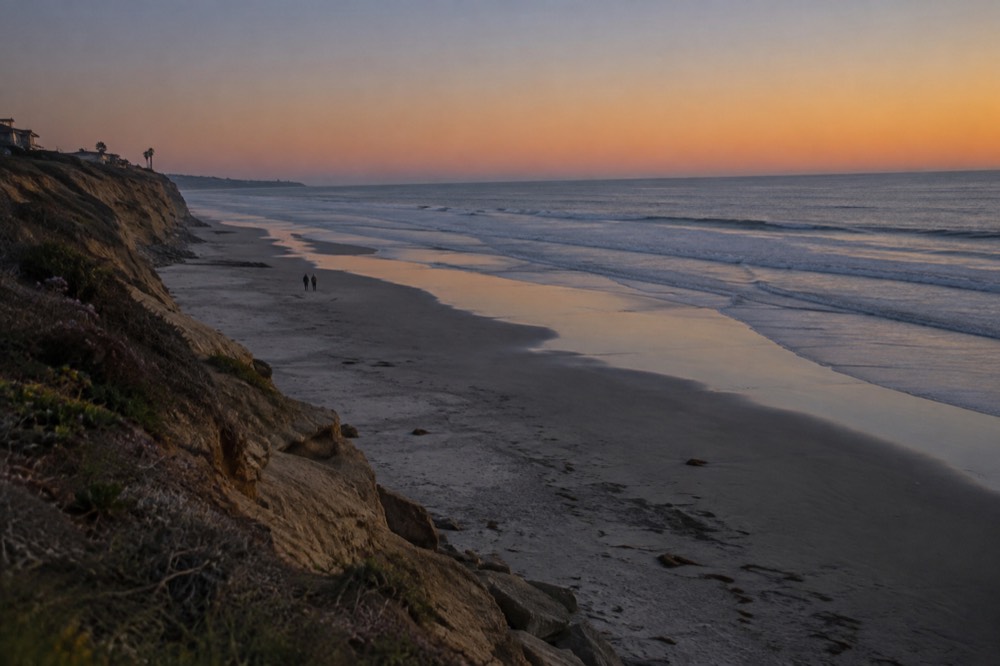
The bluff walk is the free pleasure most visitors underuse. From the village you can walk the bluff-top parkland south toward the edge of Torrey Pines, with the whole coastline unrolling below: sandstone cliffs, the kelp beds offshore, and on a clear day the curve of the coast all the way to Point Loma. Sunset here is a genuine event, and it costs nothing. Our guide to San Diego's best sunset spots covers where else in the region to catch the same light.
The racetrack is Del Mar's one big-ticket seasonal draw. The summer meet at the Del Mar Thoroughbred Club runs through the warmer months and turns the village into the center of West Coast racing for its duration. On race days the fairgrounds fill, the village restaurants fill after the last race, and hotel rooms get tight. If your trip overlaps the meet, a day at the track is one of the more distinctive afternoons available anywhere in the county. Check the track's own site for the current season's dates and opening-day details, and buy tickets ahead for the marquee days.
Is Del Mar Beach Good for Swimming and Families?
Yes: Del Mar's main beach is one of the better family beaches in the county, with a wide flat strand, a gentle slope into the water, seasonal lifeguard staffing, and enough room that it never feels packed except on peak summer weekends. The waves are typically modest and forgiving, the sand is broad enough for games and shade tents, and the village amenities, restrooms and food, sit right behind the sand rather than a long walk away.
The honest caveats are the ones that apply to every San Diego beach. The Pacific here is cool even in summer: the mean sea-surface temperature off La Jolla, measured at the Scripps Pier station, averages about 66.5°F in July and peaks at 68.7°F in August before easing to 67.6°F in September. Swimmers used to Gulf or Atlantic temperatures notice. A wetsuit top or a shorty makes a real difference for kids planning to stay in past the first ten minutes.
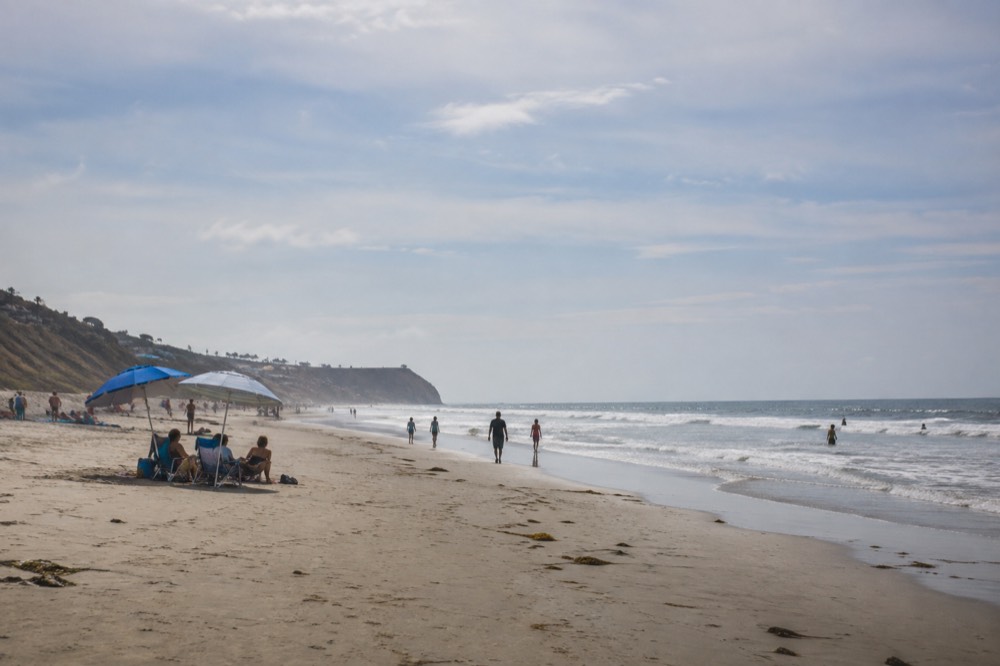
The other caveat is the marine layer. The coast of San Diego greys out in late spring: locals call it May Gray and June Gloom, and it is visible in the 30-year temperature normals themselves, with June's normal high of 71.7°F actually sitting below October's 74.6°F. A June beach morning in Del Mar can start overcast and cool and still burn off into a fine afternoon. Plan the beach for after lunch in those months and you will usually get the better end of the day. Our San Diego weather and best time to visit guide has the full picture.
Alcohol is prohibited on San Diego's beaches, boardwalks and parks, and glass containers are banned with it, so pack the cooler accordingly. Water quality closures, when they happen after rain, are posted by the County of San Diego's Department of Environmental Health on its beach status page, and results go up the same day or the next business day. After a storm, check the county page before you swim; it is the single authoritative source.
How Do You Get to Del Mar Without a Car?
Del Mar is one of the easier coastal villages to reach without a car: the Coaster commuter train and the region's bus network both serve the area, the ride from downtown San Diego takes roughly half an hour by rail, and the village and beach are walkable from the station area. A car is convenient for reaching the trailheads at Torrey Pines, but a car-free beach day in Del Mar is entirely practical, and the transit fare is a fraction of any parking worry.
The region's fare system is called PRONTO, and it rewards you for not thinking about it. An adult one-way ride on any bus or Trolley is $2.50 with two hours of transfers, and the day pass is $6.00. The trick is that PRONTO applies fare capping automatically: keep tapping the same card or app and once your rides total the day-pass value, the system literally registers a day pass earned and stops charging you. There is no reason to buy a day pass up front. Reduced fares of $1.25 one-way and $3.00 for the day apply to seniors 65 and over, eligible disabled riders and youth with ID, and riders 18 and under travel free on the region's youth pass. The wider set of guides lives on Things to Do in San Diego.
| Transit option | Best for | What to know |
|---|---|---|
| Coaster train from downtown | Beach days from the city center | Regional rail along the coast; check the schedule, service is less frequent than the Trolley |
| Regional bus routes | Budget travel, flexible stops | $2.50 adult one-way with 2-hour transfers on PRONTO |
| Rideshare | Door-to-door, small groups | Drop-off near the beach is easiest outside peak weekends |
| Rental car | Combining Del Mar with Torrey Pines hikes | Most useful if your day includes trailheads away from the village |
Parking, where you do drive, follows the honest pattern of the whole coast: Del Mar is street-and-lot parking that is free or cheap to park in and genuinely hard to find on summer weekends. Arrive before mid-morning or plan to circle. We keep the region's full picture, including the rules that changed in 2025 and 2026, in our parking in San Diego guide, and we do not quote beach lot rates because no official rate table exists for them.
Where Does Del Mar Fit in a San Diego Itinerary?
Del Mar works best as a half-day or full-day coastal excursion on day three or four of a San Diego trip, after you have covered the downtown core, and it pairs naturally with La Jolla to the south and Torrey Pines to the north for a full coastal day. It is not a base for a first visit: the region's headline attractions, the Zoo, Balboa Park, USS Midway and the harbor, all sit in and around downtown, and commuting from Del Mar to them daily adds an hour of travel to every day.
A common and sensible pattern is a northern-coast day: morning hike at Torrey Pines, late lunch in Del Mar's village, afternoon on the beach, sunset from the bluffs. Another is to slot Del Mar in as the recovery day, the quiet one between two busy ones. If you are building a longer trip, our San Diego 3-day itinerary and San Diego 5-day itinerary both show where a coastal half-day slots in without wrecking the flow.
For travelers who like a structure to hang the day on, the sightseeing products are worth knowing about even though none of them run to Del Mar itself. A two-day hop-on hop-off narrated trolley ticket covers downtown, Balboa Park and the harbor, and a GoCar tour of downtown and the beaches puts you behind the wheel of a narrated three-wheeled car on routes that include the coast. Use them for the city days, then come north under your own steam.
When Is the Best Time of Year to Visit Del Mar?
The best time to visit Del Mar is September: the ocean is near its warmest, the normal high of 77.2°F sits just a tenth of a degree behind August's peak, the summer crowds have gone home, and the racing meet is still running, making it the region's genuine high season in everything but visitor numbers. Late spring is beautiful but grey on the coast, midsummer is busy, and winter is mild, quiet and occasionally rainy.
The climate record backs this up in a way most visitors never hear. San Diego's real summer is September, not July. September's normal high of 77.2°F beats July's 75.3°F by nearly two full degrees, and the sea-surface temperature off La Jolla averages 67.6°F in September against 66.5°F in July. Yet September is the single lowest-visitation month of the year at nearby Cabrillo National Monument, which counted 56,876 recreation visits that month against July's 83,999 across the most recent three years on record, a gap of roughly 48 percent. The weather is at its best precisely when the crowds thin.
| Month | Normal high | Ocean temp off La Jolla | What it means for Del Mar |
|---|---|---|---|
| May | 69.5°F | 63.4°F | Pleasant but often grey under the marine layer |
| June | 71.7°F | 64.0°F | Coolest-feeling summer month on the coast |
| July | 75.3°F | 66.5°F | Warm and busy; peak family-travel season |
| August | 77.3°F | 68.7°F | Warmest air and water of the year |
| September | 77.2°F | 67.6°F | Best combination of warmth, water and thin crowds |
| October | 74.6°F | 64.0°F | Warm afternoons, quiet beaches, earlier sunsets |
Winter deserves a fair word. December through March carry the rain, but the rain comes in short bursts: even January, the wettest month, averages only about four days with a tenth of an inch or more. A winter Del Mar day is more likely to be crisp, clear and empty than wet, and the gray whale migration is passing offshore, with more than 20,000 whales traveling the coast and mid-January the peak of the run. The National Park Service, which tracks the migration from Cabrillo National Monument to the south, notes that viewing odds are best on calm mornings in January and February.
What Is Near Del Mar Worth Combining Into One Day?
The three best combinations are Torrey Pines State Natural Reserve directly up the coast for hiking, La Jolla twenty minutes south for sea caves, snorkeling and the Cove, and the racetrack and fairgrounds complex in Del Mar itself during the racing meet. All three sit within a short drive or a manageable transit ride of the village, and any two of them fill a full, varied day without backtracking.
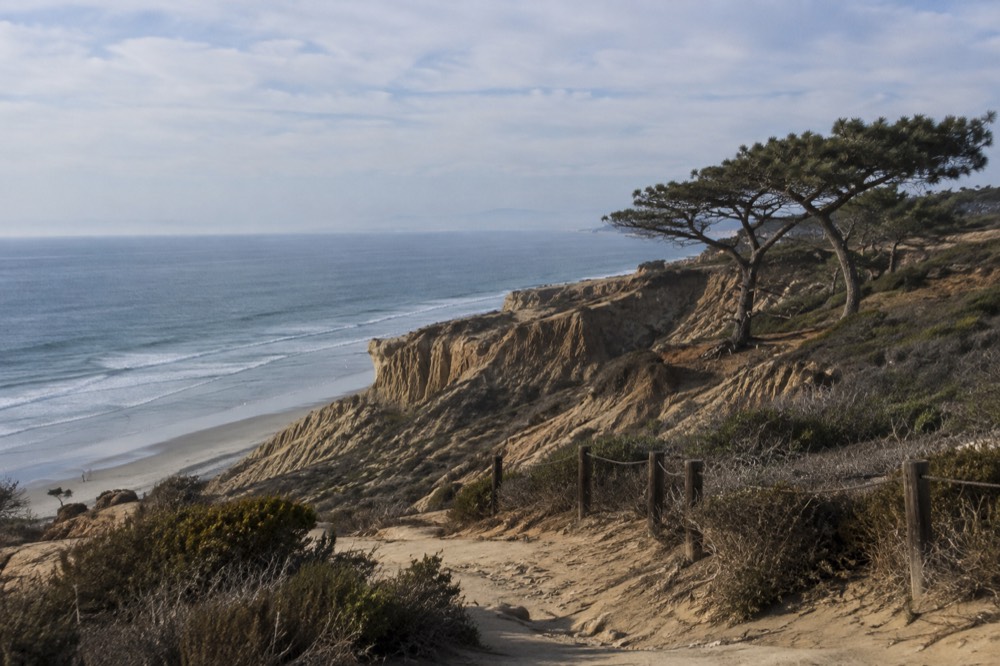
Torrey Pines is the strongest pairing. The reserve's trails run through one of the rarest pine landscapes on the continent, and the walk down to the beach below the bluffs connects to Del Mar's sand at low tide, so a determined walker can link the two on foot. The trail system is day-use, and the crowds concentrate in late morning, so go early. Our Torrey Pines State Natural Reserve guide covers the trails and the parking reality in detail.
La Jolla is the other natural partner. If your Del Mar morning was quiet, La Jolla gives you the opposite register: sea lions on the rocks at the Cove, kayak tours through the sea caves, and a village of galleries and lunch spots. The La Jolla sea caves and La Jolla Cove guides lay out what each stretch of that coast actually offers, and the drive between the two villages is a scenic few minutes along the coast highway.
For travelers with a full week, Del Mar also marks the northern gateway to the rest of the region's day-trip country: the beaches of Encinitas and Carlsbad further up the coast, and inland, the mountain town of Julian and the desert of Anza-Borrego, both of which we cover in their own guides. A car makes those inland trips easy; the coast you can do by train.
Where Should You Eat and Stay in Del Mar?
Del Mar's dining concentrates in a few walkable blocks near the coast highway, leaning toward ocean-view seafood, long-lunch cafés and upscale Californian rooms, and its lodging skews small, independent and expensive relative to the rest of the county, which is why many visitors day-trip in and stay elsewhere. There is no resort strip here, and that is a deliberate part of the village's character.
The honest planning advice is to treat Del Mar as a dining destination and a sleeping question mark. Lunch after the beach and dinner after a race day are the two meals the village does best, and the walkable core means you never have to decide on a restaurant before you arrive. Race-day evenings are the exception: the village fills after the last race, and a table without a reservation gets hard. Book ahead on race days and opening weekend especially.

For lodging, the trade-off is real. Rooms in Del Mar carry a premium for the quiet and the address, and the value alternatives sit inland in the hotel districts around the freeways or south in La Jolla and Pacific Beach. Our where to stay in San Diego guide compares the neighborhoods honestly, including which ones trade charm for convenience. If a Del Mar address is the point of the trip, book early for the summer meet; if it is not, sleep elsewhere and come up for the day.
Is Del Mar Worth Visiting for a First-time San Diego Traveler?
Del Mar is worth visiting if your trip is five days or longer, or if quiet coast and good food rank high on your list, but first-time visitors on a short trip should spend their days on the unmissable core first: Balboa Park, the Zoo, USS Midway and the harbor, then come north to Del Mar as the deliberate slow day. It is a place that rewards a unhurried visit and repays a rushed one with very little.
The city's headline attractions are not near Del Mar, and that is the whole calculation. A first-timer with two days should follow the downtown-and-park pattern, and a good way to cover it is the narrated structure of a hop-on hop-off trolley ticket, which runs for two days across the downtown loop. Del Mar enters the picture on day three or four, when you have earned a morning with no schedule.
For the attractions that anchor the rest of the trip, tickets are simple: the USS Midway Museum sells timed entry online at a small discount to the door price, and the ship is open daily from 10:00 am to 5:00 pm with last admission at 4:00 pm. Midway sits on the downtown Embarcadero, which makes it an easy pairing with the harbor cruises and the Gaslamp. Our full USS Midway Museum guide covers the flight deck, the audio tour and what to skip.
The one-sentence verdict: come to Del Mar for the beach, the bluffs and the pace, and let the rest of the region supply the spectacle. Travelers who do it in that order tend to leave with the strongest impression of both.
Common Questions About Things to Do in Del Mar San Diego
What is Del Mar known for?
A wide, flat family beach, bluff-top coastal walks, a walkable village of restaurants and shops, and the summer thoroughbred racing meet at the Del Mar Fairgrounds. It is the quiet, low-rise end of the San Diego coast.
Is Del Mar beach good for swimming?
Yes. The beach is broad with a gentle slope and typically modest waves, and lifeguards cover San Diego's coastline year round. The water is cool even in summer, peaking at a monthly mean of 68.7°F off La Jolla in August, so a wetsuit top helps kids stay in longer.
How do I get to Del Mar from downtown San Diego without a car?
The Coaster commuter train and regional bus routes serve the Del Mar area, and the ride from downtown takes roughly half an hour by rail. Fares run $2.50 one-way with two hours of transfers on the PRONTO card, which caps automatically at the $6.00 day-pass value.
When is the best time of year to visit Del Mar?
September. The normal high of 77.2°F nearly matches August's peak, the ocean is warmer than July's, the racing meet is still running, and the summer crowds have gone, making it the region's best-kept seasonal secret.
Is Del Mar worth visiting on a first trip to San Diego?
On a trip of five days or more, yes, as the deliberate slow day. On a short first visit, cover the downtown core, Balboa Park, the Zoo and USS Midway first, then come north to Del Mar for a beach and village afternoon.
What should I combine with a Del Mar visit?
Torrey Pines State Natural Reserve up the coast for hiking, and La Jolla twenty minutes south for the Cove, sea caves and snorkeling. Any two of the three make a full and varied coastal day without backtracking.