La Jolla Shores Beach: A Complete Visitor Guide
La Jolla Shores is the mile-long sandy beach at the base of La Jolla's hills, and it is the calmest, most family-friendly stretch of sand in the village. Here is how to plan a day there, from swimming and surfing to kayaking out to the sea caves.
Short answer
La Jolla Shores is a roughly one-mile sandy beach backed by Kellogg Park, with some of the gentlest surf in San Diego and a lifeguard tower staffed year round. It is the launch point for kayaking to the seven sea caves, one of the best beginner surf spots in California, and the summer home of harmless leopard sharks in the shallows.
La Jolla Shores is the beach people picture when they picture San Diego: a wide, flat, pale-golden mile of sand that runs from the cliffs below Scripps Pier down toward the village, with waves that break slowly enough for a first surfing lesson and water shallow enough that toddlers can sit in it. It is also the working heart of the neighborhood, the place where kayak tours launch toward the sea caves, where surf schools set up their flags every morning, and where the marine layer burns off latest of anywhere in the city.
This guide covers the practical questions: where the beach is and how to reach it without a car, whether it is safe for swimming, how the kayak and snorkel trips work, what the sand and facilities are actually like, and when to go. If you are building a wider trip around it, our La Jolla neighborhood guide and the best beaches in San Diego round out the picture.
What Is La Jolla Shores Beach?
La Jolla Shores is a roughly one-mile stretch of sandy beach at the foot of La Jolla's western hillside, backed by Kellogg Park's wide grass strip and fronted by some of the gentlest, most beginner-friendly surf in San Diego. It sits at the north end of the La Jolla Underwater Park, a protected marine zone that stretches south past the Cove, which is why the water holds leopard sharks, garibaldi and, in season, gray whales offshore.
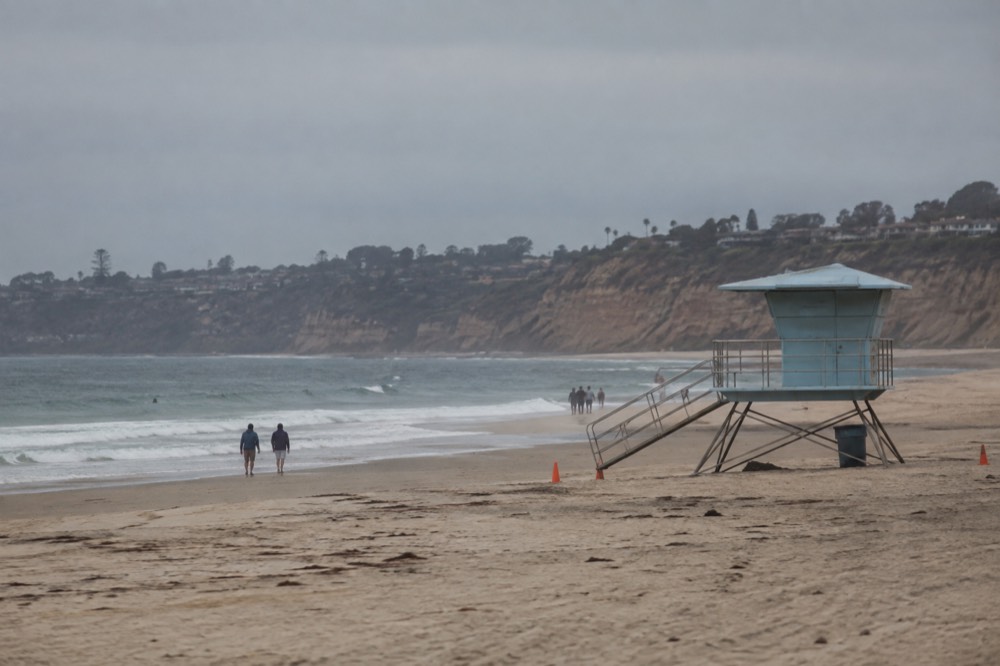
A permanent lifeguard tower stands mid-beach, and the sand is one of the widest and flattest in the city.
The beach is divided informally into zones, and knowing them saves a first-timer real confusion. The south end, closest to the cliffs and the Marine Room restaurant, is the swim zone: no surfboards, no kayaks, just people in the water. The middle and north end, in front of the lifeguard tower and the main boardwalk access, is the surf and boogie board zone. The very north end, near Scripps Pier, is where the kayak tours launch and land, and where the waves are usually smallest of all. On a summer Saturday all three zones are busy, but they rarely collide.
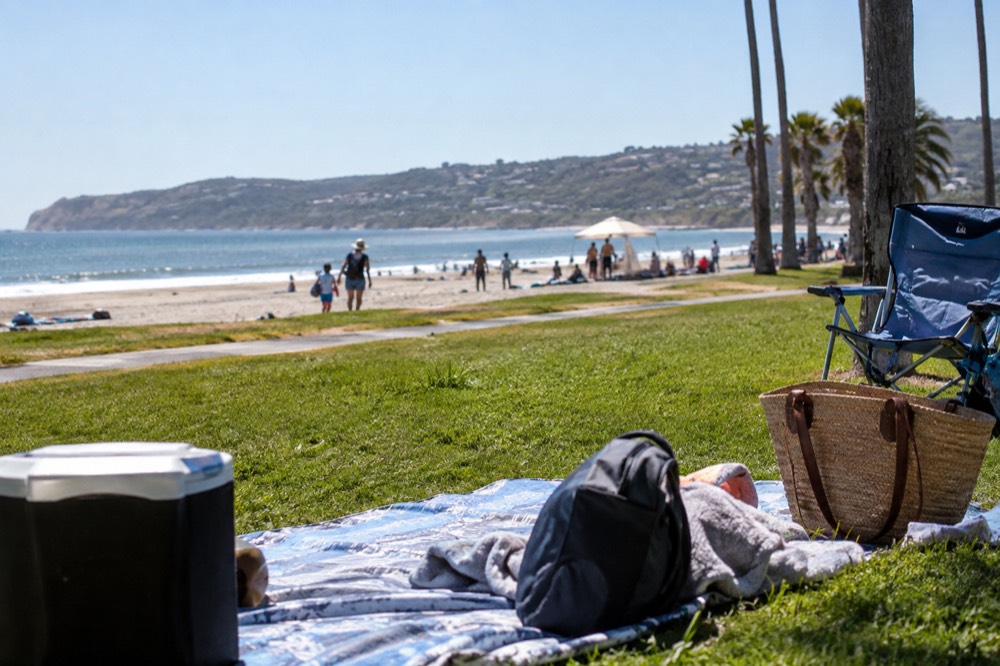
The whole beach faces almost due west, so it gets full afternoon sun and the long, slow sunsets that La Jolla sunset spots are known for. Behind the sand, Kellogg Park runs the length of the beach with a broad grass lawn, a playground, picnic tables and a long boardwalk, so even when the sand is packed there is usually space on the grass. The park is also what makes the Shores work for families with non-swimmers: one adult can stay on the lawn with a book and a toddler while the rest of the group is fifty yards away in the water.
One thing the Shores is not: it is not the Cove, and it is not the Children's Pool. Those two sit a mile south over the headland. The Shores is the sandy, open, easy one, and if your group includes small children or nervous swimmers, it is the right one to pick. The La Jolla Cove guide covers the rocky, snorkel-heavy southern end if that is more your speed.
Where Is La Jolla Shores and How Do You Get There?
La Jolla Shores sits at the bottom of La Jolla Parkway at the west end of Avenida de la Playa, about 15 minutes north of downtown San Diego by car and about 25 minutes from the airport outside rush hour. There is no Trolley line to La Jolla, so the realistic car-free options are the MTS bus routes that stop at the top of the Shores, a rideshare, or a bike.
Once you are there everything is walkable: the kayak launch, the restaurants, and the grass park are all within a five-minute walk of the sand.
Driving, the address to aim for is the intersection of Camino del Oro and Avenida de la Playa, at the south end of the beach. Parking is the honest catch: the lots and the surrounding residential streets are free to park in, which is genuinely rare for a California beach this good, and that is exactly why they fill. In summer the closest streets are gone by mid-morning and people end up walking ten minutes from the hillside blocks above. There is no published rate table because there is no charge, and the practical advice is simply to arrive before 10 am in June through August or after 4 pm, or to budget the walk. Our parking in San Diego guide covers the wider downtown situation if the Shores is one stop on a driving day.
By transit, the fare is $2.50 one-way or a $6.00 day pass on MTS, with the PRONTO card or app capping your rides at the day-pass value automatically, so there is no reason to buy a pass up front. The bus that serves La Jolla drops at the top of the hill above the Shores, and the walk down is short but real, ten minutes of downhill that becomes a longer uphill on the way back. Many visitors combine it differently: take transit or a rideshare to the village, walk the coast, and treat the Shores as the northern turnaround.
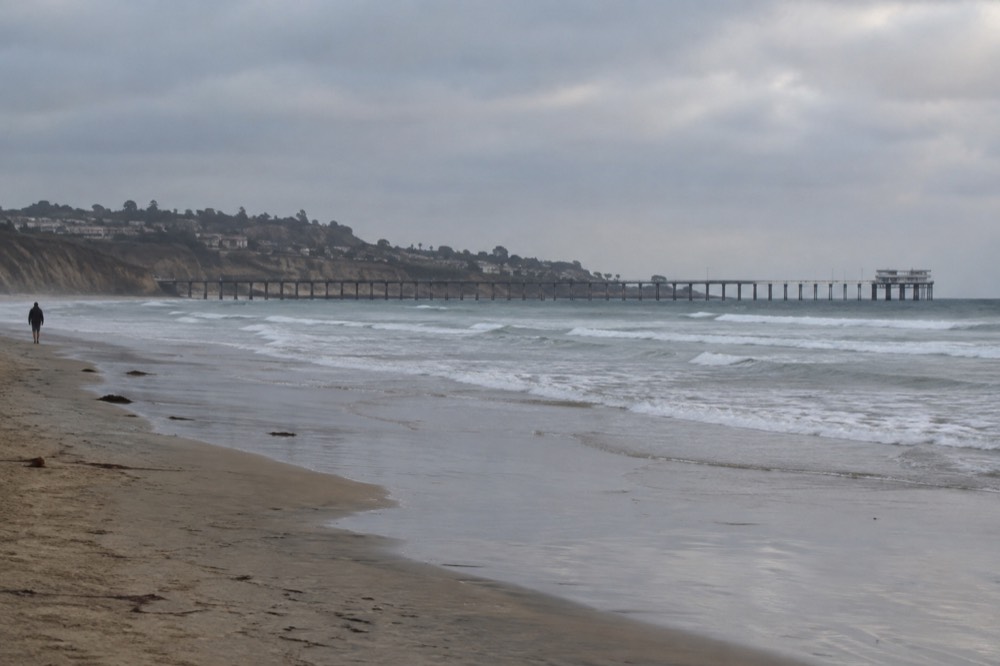
The other honest note: the hillside above the beach is where UC San Diego's Scripps Institution of Oceanography sits, and Scripps Pier at the north end of the beach is a working research pier, not a public one. You cannot walk on it, but it is one of the most photographed objects on the San Diego coast and it marks the boundary between the Shores and the more rugged Blacks Beach access beyond. The pier is also the reason the water temperature data below comes from this exact spot.
If your day at the Shores is going to include the water, and it should, the three guided options that launch from this beach are the kayak tour to the sea caves, a combined kayak-and-snorkel trip, and a snorkeling tour that works the Cove end of the Underwater Park. All three are worth comparing before you go.
Is La Jolla Shores Good for Swimming?
Yes, and it is arguably the best swimming beach in San Diego for families and cautious swimmers. The beach slopes so gradually that you can walk out fifty yards and still be only waist deep, the summer surf at the south end is typically small and slow, and the south swim zone is reserved from boards and boats.
The City of San Diego staffs this beach with a permanent, year-round lifeguard station, one of nine permanent oceanfront stations covering roughly 24 miles of coastline, with seasonal towers added in summer.
The swim zone distinction matters more here than at most beaches. Because the south end is board-free, it is where parents take kids and where lap swimmers do their routes along the buoy line. The middle of the beach, in front of the tower, is where the surf schools operate, and it gets busy but organized: the schools cluster predictably and the lifeguards keep the zones honest. If you want quiet water, walk south toward the Marine Room end; if you want waves to play in, stay central.
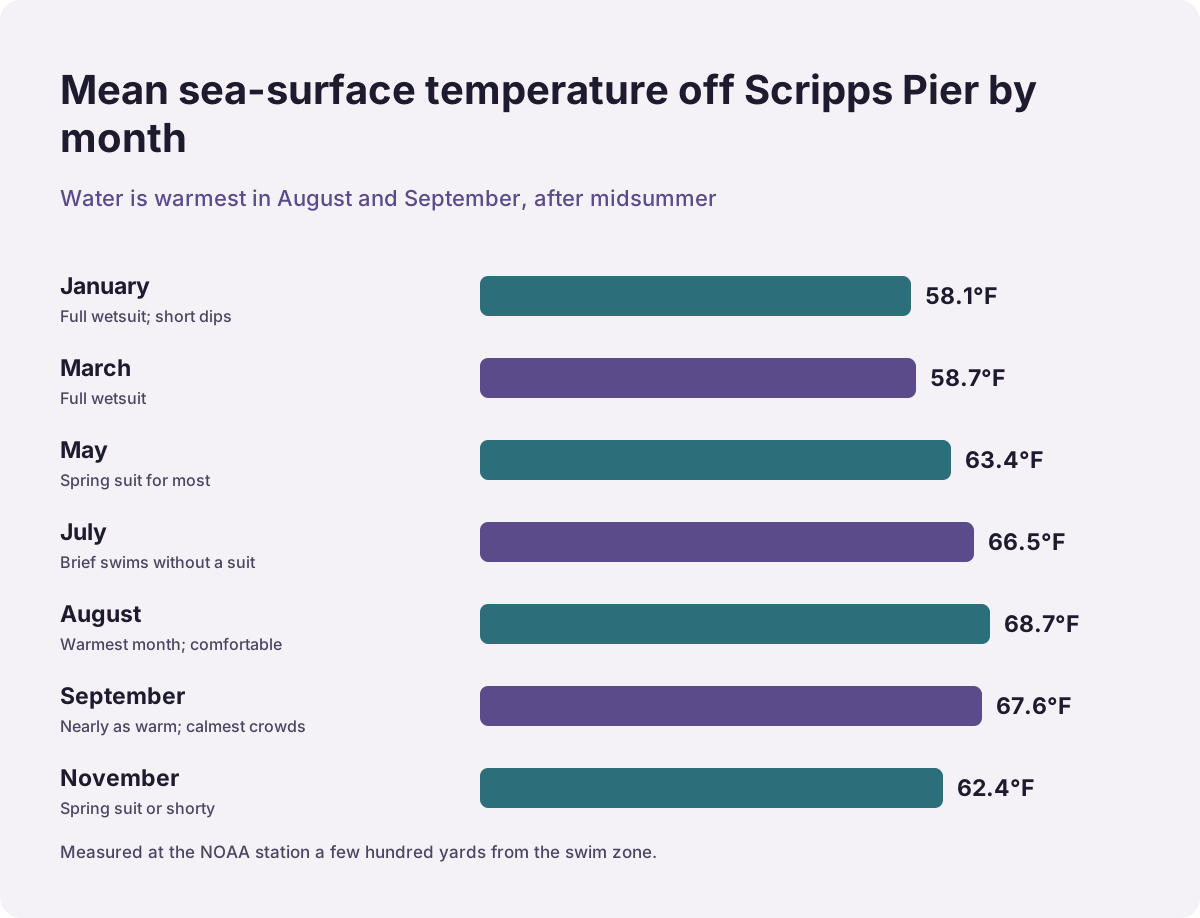
Water temperature is the thing that surprises visitors. The mean sea-surface temperature off Scripps Pier, measured at the NOAA station a few hundred yards from the swim zone, runs from about 58°F in January and February to a peak of 68.7°F in August, with July at 66.5°F and September at 67.6°F. That August-and-September peak is the real swim window: the ocean is warmer after midsummer than during it, which catches people who assume July is the warm-water month. Most swimmers wear a wetsuit top or a spring suit outside of August through October, and surf schools include wetsuits in the lesson price.
| Month | Mean sea-surface temp off Scripps Pier | What it feels like for swimming |
|---|---|---|
| January | 58.1°F | Full wetsuit; short dips |
| March | 58.7°F | Full wetsuit |
| May | 63.4°F | Spring suit for most |
| July | 66.5°F | Brief swims without a suit |
| August | 68.7°F | Warmest month; comfortable |
| September | 67.6°F | Nearly as warm; calmest crowds |
| November | 62.4°F | Spring suit or shorty |
Rip currents deserve one plain paragraph because they are the primary hazard on this coast, per the City's own lifeguard guidance: if you feel yourself being pulled out, stay calm, swim parallel to the shore until the pull relaxes, then swim in, and float and wave for help if you cannot make progress. Never swim alone, and swim near a lifeguard. The tower here is staffed, use it. Also know the standing rules: alcohol is prohibited on San Diego city beaches, boardwalks and parks, glass containers are banned, and the same citywide beach regulations apply here as everywhere in the city. Check the county's water quality page at sdbeachinfo.com after any rain event, since results are posted same day or next business day.
One caution that is specific to this coastline: do not plan on touching or approaching the seals and sea lions. The closure rules around the rookeries south of here change year to year and are enforced, so give hauled-out animals a wide berth on any walk toward the village, and treat the signage as the current truth rather than anything you read before your trip.
How Does Kayaking to the La Jolla Sea Caves Work?
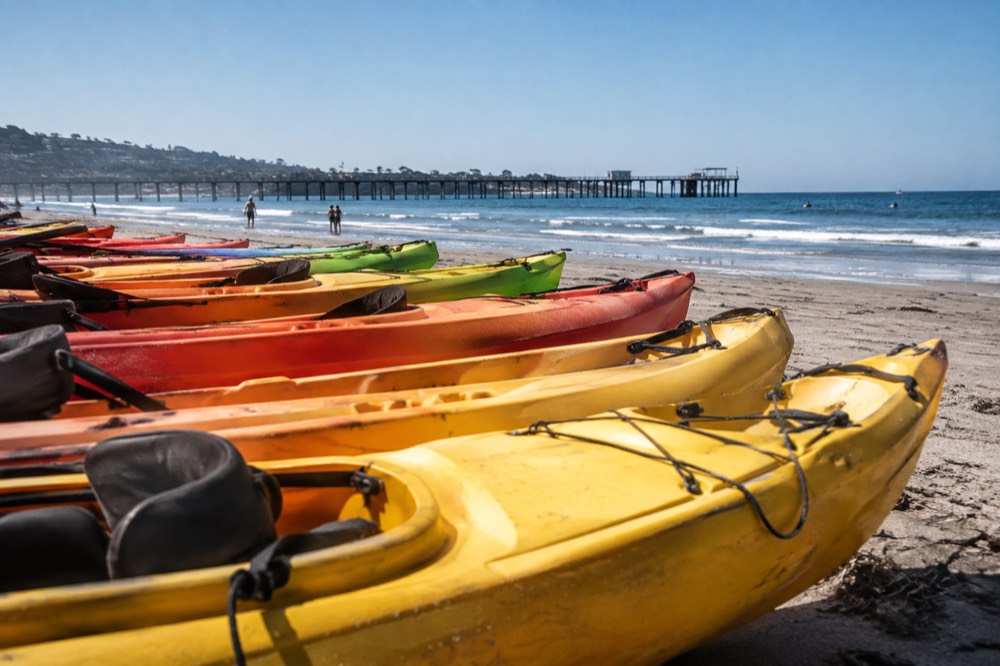
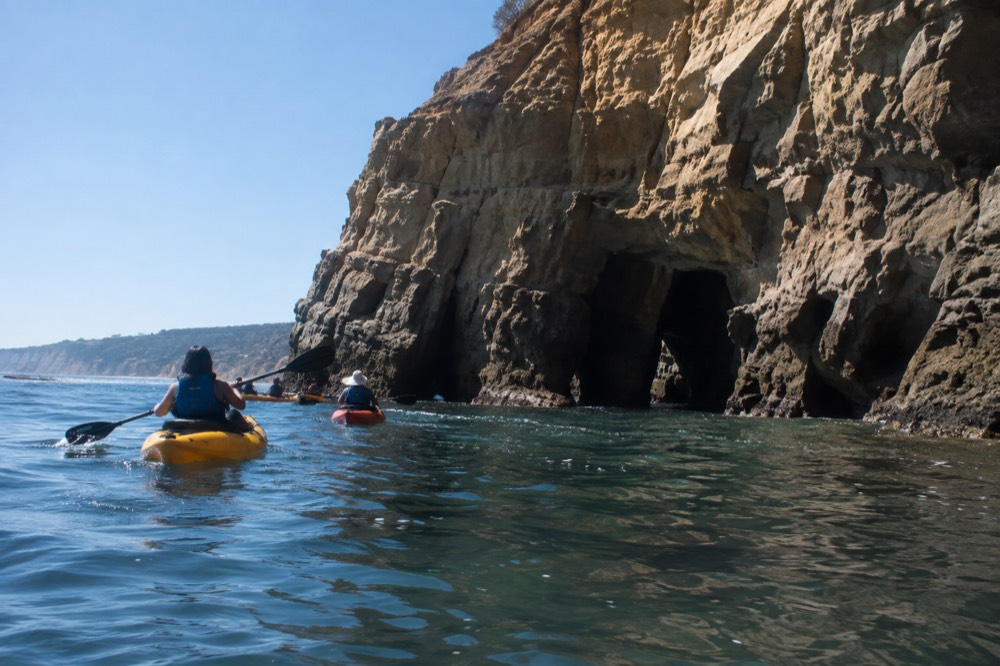
The kayak launch is at the north end of La Jolla Shores, and the guided tours paddle from there along the cliff base toward the seven sea caves at the south end of the Underwater Park, roughly a mile each way. The classic tour is a two-hour guided trip, with a shorter 90-minute version also available, and no experience is needed: the beach's gradual slope means an easy launch, and the guides brief you on the swell before anyone gets wet.
Whether you can enter a cave depends entirely on the day's conditions.
The honest framing is this: the paddle itself is the product. Even on days when the swell closes the caves, the trip along the cliff face passes over kelp forests thick with orange garibaldi, leopard sharks in the shallows, and, in the gray whale season from mid-to-late December through March, a real chance of seeing whales spouting further offshore. More than 20,000 gray whales pass San Diego each year, with mid-January the peak of the migration, per the National Park Service, and kayak groups out of the Shores regularly report distant sightings without promising them.
The two-hour guided tour is the one we point most visitors at, because it includes the full cave stretch with time to float and look rather than sprint. It launches from this beach, so you can walk to it from anywhere in La Jolla Shores, and the operator handles wetsuits, kayaks and the safety briefing. Book the morning departures if you can: the wind picks up in the afternoon and the marine layer usually lifts by late morning, which is the combination of calm water and good visibility.
The tour has a strong track record with first-timers and families, and reviewers repeatedly mention the guides' patience with nervous paddlers. If you want to compare it against the alternatives before booking, the kayaking the La Jolla sea caves guide breaks down the launch logistics, the cave-by-cave geography and what a closed-cave day still gives you. If you would rather combine paddling with time in the water, the kayak-and-snorkel tour in the band above does both in one 2.5-hour trip.
Is La Jolla Shores a Good Place to Learn to Surf?
It is one of the best beginner surf beaches in California, and it is the spot where a large share of San Diego's surf lessons happen. The north-to-middle beach catches slow, crumbling waves rather than fast hollow ones, the sand bottom has no rocks to worry about, and the gradual depth means beginners spend their falls in shallow water.
Multiple surf schools operate here daily, with a 1.5-hour lesson being the standard format, wetsuit and board included, and first-timers standing up within the first hour is the norm.
The lesson format is simple and consistent across operators: beach briefing, a few minutes of prone paddling practice, then into the water with the instructor pushing you into already-breaking waves. The 1.5-hour lesson is the sweet spot for most people, long enough to get genuinely tired and genuinely better. There is also a shorter 30-minute quick-lesson format aimed at people who just want to say they tried it, which works for kids with short attention spans but leaves adults wanting more.
Why the Shores over other San Diego breaks? Compare it with the alternatives in our surfing in San Diego guide: Pacific Beach is steeper and faster, Ocean Beach is heavier and localized, and Blacks is a long hike down a cliff with a powerful break. The Shores is the gentle one, and that is a fact the surf school flags planted on the sand every morning confirm by their sheer number.
The one thing to plan around is the morning marine layer. June's normal high temperature at the airport is 71.7°F, lower than October's 74.6°F, and that inversion is the local pattern people call May Gray and June Gloom: grey mornings on the coast while inland stays clear, burning off by late morning. It does not stop the surf, and the water is at its calmest then, but book the second lesson slot if you want to see the beach while you learn.
Can You Snorkel at La Jolla Shores?
Yes, and the snorkeling here is some of the most accessible in California because the La Jolla Underwater Park starts essentially at the water's edge. In summer, the sandy shallows of the Shores itself fill with leopard sharks, harmless bottom-dwellers that come in to warm water over the sand, and you can float above them in waist-deep water.
The richer snorkeling is a short swim or walk south toward the Cove end of the park, where the rocky reef holds garibaldi, kelp bass and, on lucky days, sea turtles.
The leopard shark phenomenon is the Shores' quiet signature. From roughly June through September, sometimes earlier, the females come into the warmest, shallowest water over the sand flats, and on a calm day you can see dozens from the surface without going more than a few yards out. They are docile, they are uninterested in people, and they are the single most reliable wildlife encounter on this beach. Bring or rent a mask even if you came for the sand.
For the reef, the guided 90-minute snorkeling tour that works the Cove and caves stretch is the easy way in: it includes the wetsuit, mask, fins and a guide who knows where the turtles and the sea lions are. Sea lions are the wildcard encounter on this coast, curious and fast, and the tour's route is built around the spots where they reliably appear. Our snorkeling in La Jolla guide covers the gear, the entry points and the seasonality in more depth if you want to go independently.
What Are the Tide Pools and Wildlife Like Around La Jolla Shores?
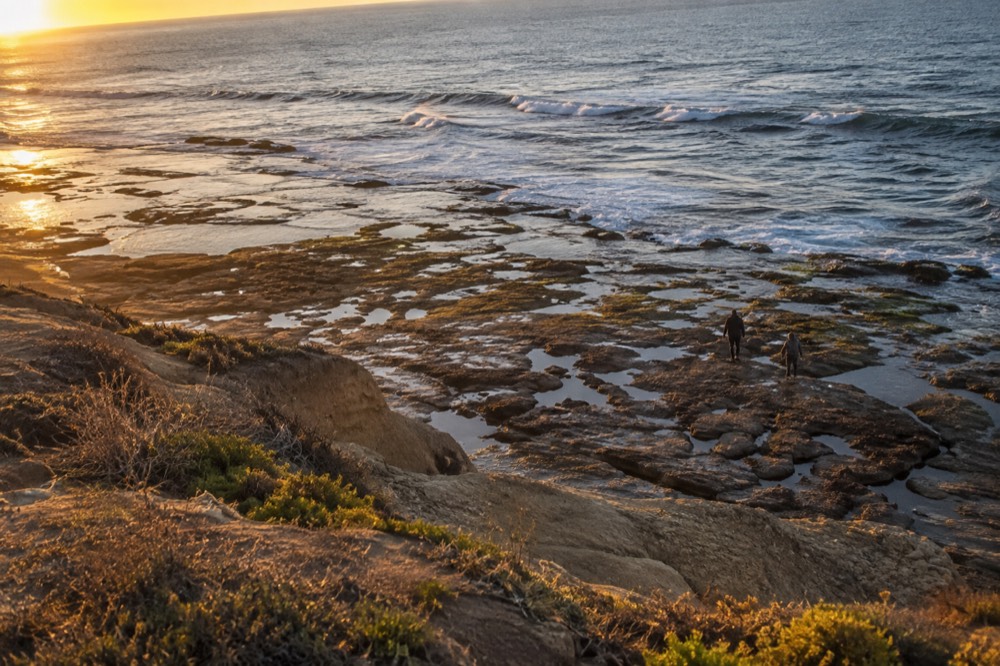
At the south end of the Shores and along the cliff base toward the village, low tide exposes rocky shelves that hold hermit crabs, anemones, sea hares and small fish in the pools, one of the better walk-in tide pool stretches in the city.
The bigger, more famous tide pools are at Cabrillo National Monument in Point Loma, where the coastal area closes at 4:30 pm and the entrance fee is $20 per vehicle, but the La Jolla pools are free, minutes from the sand, and easier to combine with a beach day.
The practical sequence for a good tide pool day: check the tide chart the night before, get to the south end of the Shores about an hour before the stated low, and work the exposed shelves as the water drops. Wear shoes you do not mind getting wet, because the rock is slick and covered in barnacles. The golden rule everywhere on this coast is look, do not touch, and do not pry animals off the rocks; the anemones you see closed will open if you leave them alone.
The wildlife above water is just as much of the draw. Brown pelicans work the surf line at dawn, dolphins arc through the outer sets on many mornings, and the cliff ledges south of the beach hold cormorants and, in season, harbor seals and sea lions hauled out on the rocks. Give the marine mammals real distance, they are protected and the rules around the rookeries are enforced. Our San Diego tide pools guide maps the full set of locations and the best months if you want to make tide pooling the whole day rather than an add-on.
What Facilities Does La Jolla Shores Have?
The beach is one of the best-equipped in the city: Kellogg Park's grass strip and boardwalk run the full length of the sand, with public restrooms and outdoor showers at the main access points, a large children's playground on the park lawn, picnic tables in designated spots, volleyball standards on the sand, and the restaurant row of Avenida de la Playa a block inland.
The beach and park are wheelchair accessible via paved paths, and there is no hotel on the sand itself, which is why the beach reads as public and neighborly rather than resort-backed.
The layout rewards knowing what you came for. Families with small children should aim for the grass park behind the central lifeguard tower: lawn, playground, restrooms and the calmest sand all in one spot. Groups with a picnic should claim a table early, because they go fast on weekends. Surfers and kayakers want the north end. And anyone who wants the beach's quietest, most photogenic stretch should walk south past the Marine Room, where the crowds thin and the cliffs rise.
The food situation is genuinely good for a beach. Avenida de la Playa, the street that dead-ends at the south end of the beach, holds a dense little strip of restaurants and coffee spots, and the Shores is a ten-minute walk from the heart of the village if you want the fuller La Jolla restaurant scene. The Marine Room, at the very south end, is the famous one, its dining room sitting close enough to the sand that winter storms have famously crashed against its windows. For a casual day, the taquerias and market on Avenida de la Playa do the job without a reservation.
| Facility | Location on the beach | Notes |
|---|---|---|
| Restrooms and showers | Main central access, plus north end | Open daylight hours |
| Playground | Kellogg Park lawn, central | Fenced, toddler-friendly |
| Picnic tables and lawn | Kellogg Park, full length | First come, first served |
| Lifeguard tower | Central beach | Staffed year round |
| Kayak launch | North end near the pier | Tour operators stage here |
| Restaurants | Avenida de la Playa | One block inland, south end |
| Volleyball | Central sand | Bring your own ball and net setup |
When Is the Best Time of Year to Visit La Jolla Shores?
For warm water and warm air together, September is the best-kept secret: the ocean off Scripps Pier averages 67.6°F, barely below August's 68.7°F peak, while the normal air high of 77.2°F actually beats July's 75.3°F. For crowds, September is also the quietest good-weather month, because the school year restarts and the beach thins out dramatically.
June is the month to be cautious about if you want sunshine: the marine layer keeps coastal mornings grey, and June's normal high of 71.7°F is lower than October's 74.6°F.
The seasonal pattern is worth internalizing because it inverts what most visitors assume. The San Diego coast is not at its best in early summer; it is at its best at the end of it. The marine layer that locals call May Gray and June Gloom is visible in the 30-year temperature normals themselves, with June's high sitting below October's, and it burns off latest right over this beach. July and August are warm and sunny but crowded, with the closest parking gone by mid-morning. September gives you August's water, July's warmth and June's crowds, all at once.
| Season | Water off Scripps Pier | Air (normal high) | Best for |
|---|---|---|---|
| Dec-Feb | 58.0-60.8°F | 66.0-66.4°F | Gray whales, tide pools, empty sand |
| Mar-May | 58.7-63.4°F | 67.0-69.5°F | Surf lessons, leopard sharks begin |
| Jun-Aug | 64.0-68.7°F | 71.7-77.3°F | Swimming, kayaking, full beach scene |
| Sep-Nov | 62.4-67.6°F | 70.7-77.2°F | Warm water, thin crowds, best all-round |
How Does La Jolla Shores Compare with the Other La Jolla Beaches?
The Shores is the sandy, gentle, all-ages option; the Cove, a mile south over the headland, is the rocky, snorkeling-first option with the sea lion colonies; the Children's Pool is the small, protected pocket beach famous for its harbor seals; and La Jolla's bluff-backed beaches to the south, like Windansea, are for surfers and sunbathers rather than swimmers. If your group wants one beach where everyone from a toddler to a strong swimmer is happy, it is the Shores, and it is not a close call.
The pairing that works best is the Shores in the morning and the Cove after lunch. Launch a kayak or a surf lesson from the Shores while the wind is calm, dry off, walk or drive south, and spend the afternoon on the coast walk between the Cove and the Children's Pool, where the wildlife viewing is concentrated. That single day covers the whole personality range of La Jolla, from beginner surf to sea lions. Families planning a wider trip should also read our family beaches in San Diego guide, which places the Shores in the citywide context against Mission Bay and Coronado.
If you are staying several days and choosing a base, the Shores end of La Jolla is the calmer, more residential choice, while the village end puts you walking distance from the shops and galleries. The trade-offs are laid out in where to stay in San Diego, and the short version is that the Shores is the pick for beach-first trips and the village is the pick for evenings-out trips.
What Should You Know Before You Go?
Bring what every San Diego beach day needs and a few things specific to this one: reef shoes or water shoes if you plan to walk the tide pools, a wetsuit or at least a rash guard outside of August through October, and more sun protection than the morning grey suggests, because the marine layer burns off into full sun.
Alcohol and glass are banned on the sand and the boardwalk, dogs are not allowed on the beach itself, and the free street parking means arriving early in summer or accepting a walk. Check the live water quality page after any rain.
A few things people regularly get wrong. First, they assume the marine layer means a ruined day; it almost always lifts by late morning in summer, and the grey hours are the calmest water of the day for kayaking. Second, they drive straight to the closest lot, find it full, and leave; the hillside streets above the beach almost always have space within a ten-minute walk. Third, they skip the walk south along the cliff base at low tide, which is the beach's best free hour. And fourth, they underestimate the walk back up the hill from the village if they arrive by transit, so plan the return before you are tired.
If the Shores is one stop on a bigger San Diego plan, the one day in San Diego itinerary and the San Diego bucket list both fold it in, and the first time in San Diego guide covers the airport-to-beach logistics this guide assumes. The border, the Zoo and Balboa Park are all covered elsewhere on Things to Do in San Diego, so this page stays what it should be: the deep, practical answer to one beach.
Common Questions About La Jolla Shores Beach
Is La Jolla Shores good for families with small children?
Yes, it is one of the best family beaches in San Diego. The sand slopes so gradually that shallow water extends far out, the south swim zone keeps boards and boats away from swimmers, Kellogg Park behind the sand has a playground, restrooms and a grass lawn, and the lifeguard tower is staffed year round.
Can you swim at La Jolla Shores?
Yes. The south end is a designated swim zone with no surfboards or kayaks, the bottom is sandy and shallow, and the lifeguards are permanent. Watch for rip currents as on any open-coast beach: swim parallel to shore if caught in one, and swim near the tower.
How cold is the water at La Jolla Shores?
Measured at the NOAA station off Scripps Pier at the north end of the beach, the mean sea-surface temperature runs from about 58°F in winter to 68.7°F in August. Most swimmers want a wetsuit top or spring suit outside of August through October, and surf lessons include wetsuits.
Where do you park for La Jolla Shores?
Parking is free in the lots and surrounding residential streets, which means it fills early. In summer the closest streets are gone by mid-morning, so arrive before 10 am, come after 4 pm, or budget a ten-minute walk from the hillside blocks above the beach.
Can you see leopard sharks at La Jolla Shores?
Yes, in summer. Leopard sharks come into the warm, shallow water over the sand flats, roughly June through September, and they are harmless to people. You can often see them from the surface in waist-deep water without swimming out.
How far is La Jolla Shores from the Cove?
About a mile, over the headland on foot or a short drive. Many visitors do the Shores in the morning for the sand, surf or kayaking, then walk or drive to the Cove in the afternoon for the snorkeling reef, the sea lions and the coast walk.