Kayaking the La Jolla Sea Caves: A Practical Guide
The seven sea caves below the cliffs between La Jolla Cove and La Jolla Shores are the most kayaked stretch of coastline in San Diego, and almost everyone sees them the same way: from a rented or guided kayak launched from the sand at La Jolla Shores.
Short answer
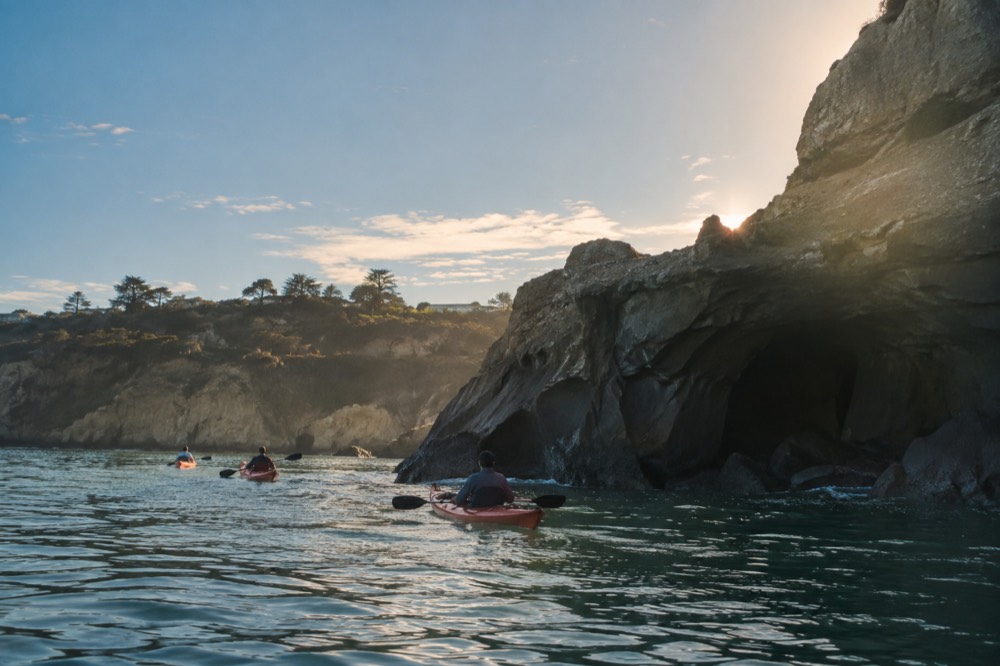
Most visitors kayak the La Jolla sea caves on a guided tour of about 1.5 to 2 hours that launches from La Jolla Shores beach and paddles out to the cave arches and the kelp forest. You need no experience, the water is warmest in August at a monthly average of 68.7F, and tours run year round when conditions allow.
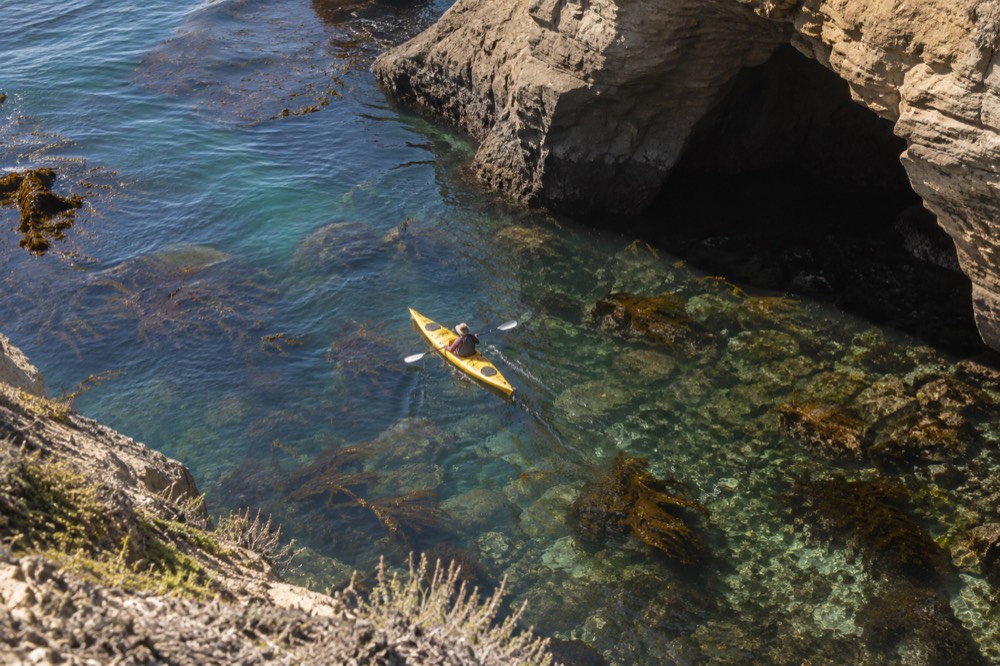
The cliffs between La Jolla Cove and La Jolla Shores hide seven sea caves, carved into the sandstone by the same Pacific that surges through them twice a day. Kayakers are the one group of visitors who can get close: the caves sit below a protected shoreline where the approach from the water is the practical approach, and the sand at La Jolla Shores is the natural launch point. On a calm morning the water over the nearshore kelp forest is glassy and green, leopard sharks drift below the boats, and sea lions surface a paddle length away.
This guide lays out what the paddle is actually like, which tour fits which traveler, when the water is warm, what to bring, and how to stay safe. Everything here comes from the operators' own listings, the City of San Diego's lifeguard and beach pages, and the tide and temperature records kept at Scripps Pier. Prices sit on the live listings rather than in this article, because they move with the season.
What Is Kayaking the La Jolla Sea Caves Actually Like?
The standard experience is a guided group paddle of about 1.5 to 2 hours from La Jolla Shores beach, out along the cliffs to the cave openings, with a stop on the sand or in the shallows partway through. You launch from the beach through small surf, which is the only technically awkward moment of the whole trip and the reason most first-timers book a guide rather than a bare rental. From there the water flattens over the ecological reserve, and the boats bunch up at the two or three cave mouths that conditions allow on the day.
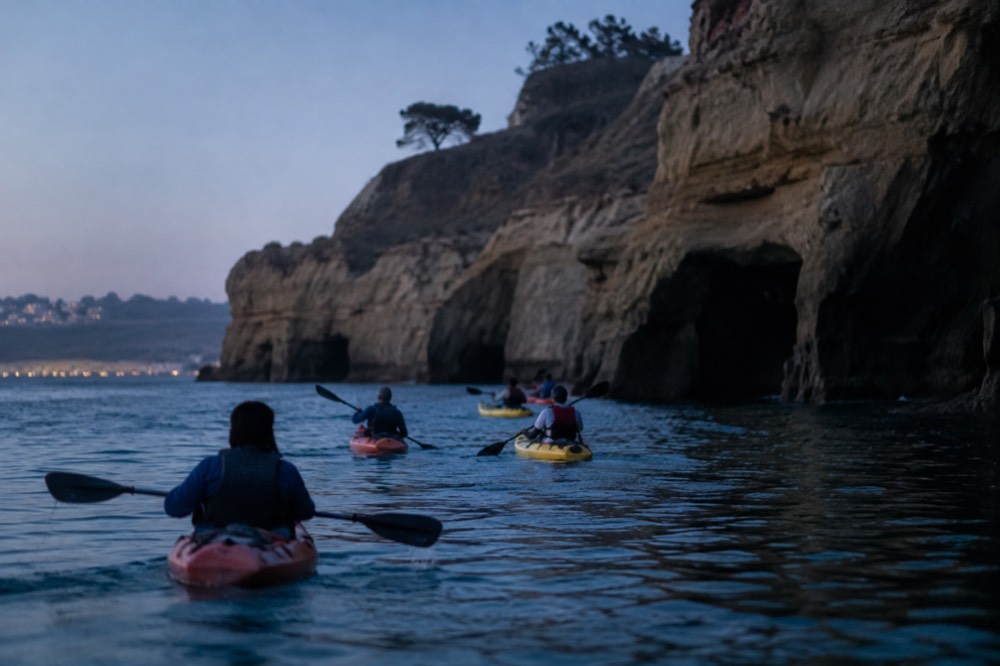
What you actually see, in order of how reliably you see it: garibaldi, the bright orange state marine fish, hanging over the reef; leopard sharks and shovelnose guitarfish in the shallows in late summer; the kelp forest surface, which from a kayak looks like a floating meadow; and the sea lions, which have hauled out on the rocks around the Cove in growing numbers and treat passing boats as a curiosity. The caves themselves are the headline. Most tours enter one cave, usually Clam's Cave, the largest of the seven, whose mouth is tall enough for a kayak to pass inside when the swell is small. The others are viewed from outside, because their openings are low, narrow, or blocked by the reserve's rules.
The guides matter more here than at most attractions. The paddle distance is short, under a mile each way, but reading the swell at the cave mouth is a skill, and a guide who says "not today" at the wrong arch is the difference between a story and an incident. Reviews of the guided trips repeatedly mention exactly this: the guide watching the water, waiting for a lull, and calling the group through two at a time. If you want the full picture of the shoreline before you commit, our guide to the La Jolla sea caves covers all seven caves from land, and the La Jolla Cove guide explains why the whole stretch is a protected marine reserve.
Which La Jolla Kayak Tour Should You Book?
For most first-time visitors the right choice is the 1.5-hour guided sea cave kayak tour, which includes the cave passage when conditions allow, a professional guide, and all equipment in one price. Travelers who want more time in the water should take the 2.5-hour combined kayak-and-snorkel tour, and confident swimmers who would rather be under the water than on it should take the 1.5-hour La Jolla Cove snorkeling tour with the sea lions and caves instead. All three launch from the same stretch of sand.
The guided sea cave kayaking tour is the workhorse option: a 1 hour 30 minute guided paddle built around the caves, with equipment included and a guide making the surf launch and the cave calls. It suits families with school-age kids, nervous first-timers, and anyone who wants the cave entry without having to judge the swell personally. You can Check availability on the operator's live listing, where the current price and the calendar live.
The longer 2 hour sea cave kayak tour covers the same coastline with more time in the reserve, which matters in late summer when the leopard sharks and guitarfish gather in the shallows and the extra half hour is mostly spent floating over them. The combined kayak and snorkel tour, about 2.5 hours door to door, splits the time between the boats and the water: you paddle out, anchor up in the shallows, and snorkel over the reef with the same guide. It is the best single answer for a traveler doing La Jolla once, and it costs less than booking a kayak tour and a separate snorkel trip.
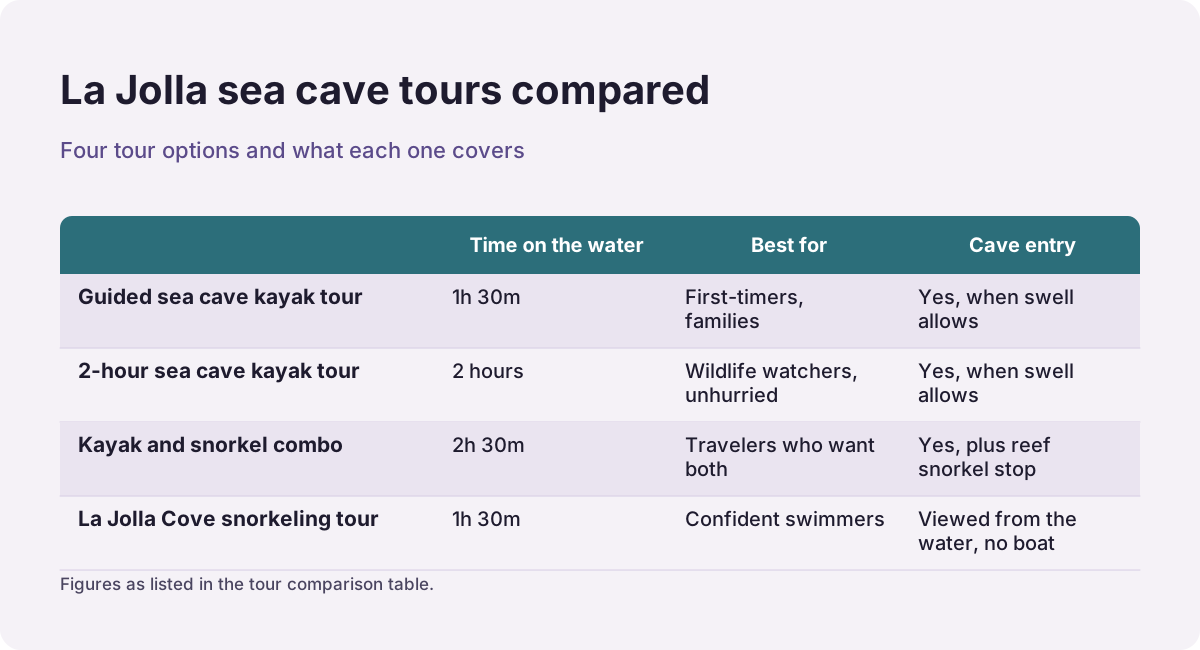
Here is how the main options stack up against each other:
| Tour | Time on the water | Best for | Cave entry |
|---|---|---|---|
| Guided sea cave kayak tour | 1h 30m | First-timers, families | Yes, when swell allows |
| 2-hour sea cave kayak tour | 2 hours | Wildlife watchers, unhurried groups | Yes, when swell allows |
| Kayak and snorkel combo | 2h 30m | One-trip travelers who want both | Yes, plus reef snorkel stop |
| La Jolla Cove snorkeling tour | 1h 30m | Confident swimmers | Viewed from the water, no boat |
One honest note on the comparison: the tours overlap heavily, and the differences are duration and whether you snorkel, not the route. Every one of them paddles or swims the same reserve, sees the same caves, and depends on the same swell forecast. Pick on time and format, not on promises about wildlife, because the leopard sharks show up on their own schedule.
Do You Need Experience or a Guide to Kayak the Caves?
You do not need kayaking experience, and almost nobody on the water out there has any: the tours are built for beginners, with a short safety briefing, stable sit-on-top boats, and a guide who handles the surf launch. What you do need is a reasonable comfort with being in the ocean, the ability to swim a little, and a willingness to accept that you may get wet. The launch through the shore break is where beginners get soaked, not the open water.
Going without a guide is legal and common. Several rental outfits on Avenida de la Playa, the street that dead-ends at the Shores, rent kayaks by the hour to anyone, and on a flat summer day the route is a busy, self-organizing procession. The tradeoffs are real, though. A renter has to judge the surf on the way out and, harder, on the way back in, which is when loaded kayaks broach in the shore break and people get folded over their own boats. A renter also has no one making the call at the cave mouth, and the cave entry is genuinely conditional: on a south swell the same arch that was a highlight on Tuesday is closed on Wednesday. Guided tours also carry the reserve's practical knowledge, like which areas are closed to landing and where the sea lions are hauled out that week.
The honest dividing line is this. If you have paddled in surf before, or you swim in the ocean regularly, a rental is a fine day out and the coastline is hard to get lost on. If neither of those describes you, the guide is not a luxury, it is the service you are actually buying. The snorkeling side of the same reserve has the same calculus, and our first-timers' guide to San Diego frames where La Jolla sits in a first visit overall.
When Is the Best Time of Year to Kayak La Jolla?
The water is warmest in August and September, with monthly average sea-surface temperatures of 68.7F and 67.6F at Scripps Pier, and September combines that warmth with thinner crowds and calmer typical mornings, making it the single best month to paddle. Winter paddling is perfectly possible, and gray whales pass offshore from mid-to-late December through March, but the water sits near 58F from January through March and you will want a wetsuit.
The month-by-month picture, from hourly observations averaged over three years at the NOAA station on Scripps Pier:
| Month | Average sea temperature (F) |
|---|---|
| January | 58.1 |
| March | 58.7 |
| May | 63.4 |
| July | 66.5 |
| August | 68.7 |
| September | 67.6 |
| October | 64.0 |
| December | 60.8 |
The counterintuitive part, and the thing most out-of-state visitors get backwards, is the summer itself. June's normal air high, 71.7F, is lower than October's, 74.6F, because the marine layer that locals call May Gray and June Gloom sits on the coast in early summer and burns off late, if at all. A June morning paddle can be grey, flat and beautiful, and the water in June, at a monthly average of 64F, is cooler than August's by almost five degrees. September flips it: the marine layer relaxes, the air high averages 77.2F, and the ocean is still near its annual peak. September is also the quietest stretch of the year on this coast relative to the weather on offer, which is the single most useful scheduling fact in this guide. Our weather and best-time-to-visit guide unpacks the marine layer in full.
Within any given day, morning wins. The wind picks up in the afternoon along this stretch, and the swell that was flat at 9 am is choppy at 2 pm. Tours run all day, but the first departures get the glassy water and the easier cave entries, and in July and August the earliest slots are the ones that sell out first. Book the morning.
What Should You Bring and Wear for a La Jolla Kayak Tour?
Bring what you would wear into the ocean: a swimsuit, a rash guard or wetsuit top, reef-safe sunscreen applied before you arrive, and a strap for your glasses; everything else stays in the car, and the tour provides boat, paddle and life jacket. Water shoes that can get wet beat flip-flops, and a dry bag for keys is worth ten times its weight if you capsize on the launch.
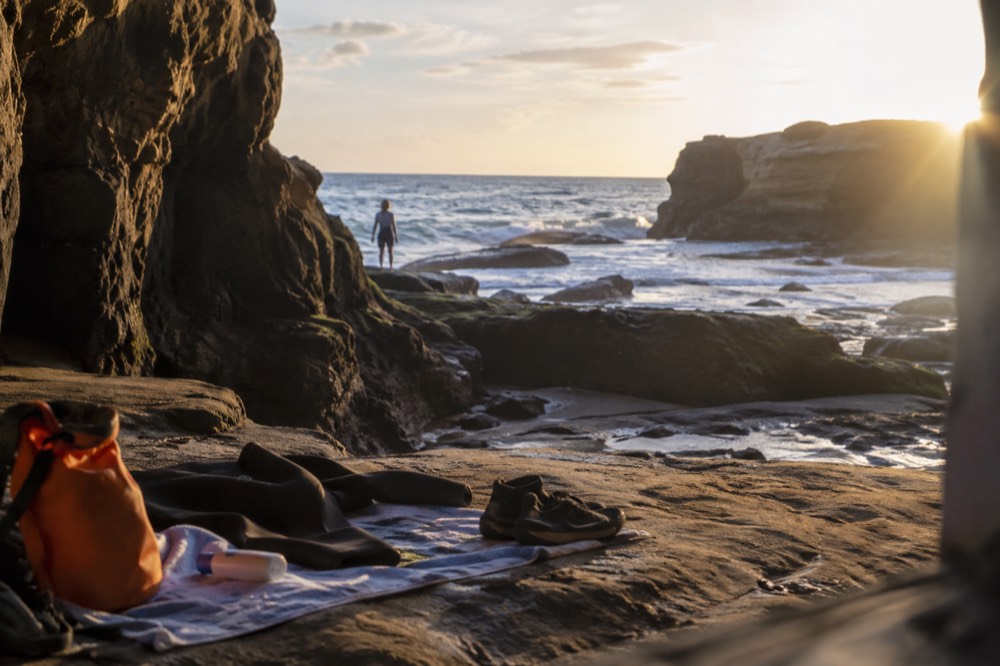
The wetsuit question is a temperature question, and the table above answers it. From July through September, most people are comfortable in a swimsuit and a rash guard for a 90-minute paddle. From November through April, the water is in the high 50s and a wetsuit is the difference between a good trip and a short one; the rental shops on Avenida de la Playa rent them cheaply, and some tours include them on request. May and June sit in between, and the honest answer is that a shorty wetsuit never hurts.
On phones and cameras: the guides on the cave tours will carry a group camera or shoot photos from a dry position, and a phone in a pocket is a phone with a short life expectancy. A lanyard case works if you must. The light is best in the first two hours after the marine layer burns off, which is another quiet argument for the morning slot.
A short packing list, sorted by what actually ruins a trip when forgotten:
| Item | Why it matters | Rental available nearby |
|---|---|---|
| Swimsuit and rash guard | You will get wet at the launch | Rash guards yes |
| Wetsuit (Nov-Apr) | Water sits near 58F in winter | Yes, cheaply |
| Water shoes | Barefoot on sand, wet rock at stops | Yes |
| Strap for glasses | The surf launch takes the unwary | No |
| Dry bag for keys | Pockets empty into the ocean | Sometimes |
| Reef-safe sunscreen | It is the law of the reserve, and decency | No |
One thing you should not bring is alcohol. It is prohibited on San Diego's beaches, boardwalks and parks, and a kayak launch is not a loophole. The City's beach regulations page carries the full list of standing prohibitions, which also include glass containers and smoking on the sand.
Where Do You Launch, and What Will You See Along the Way?
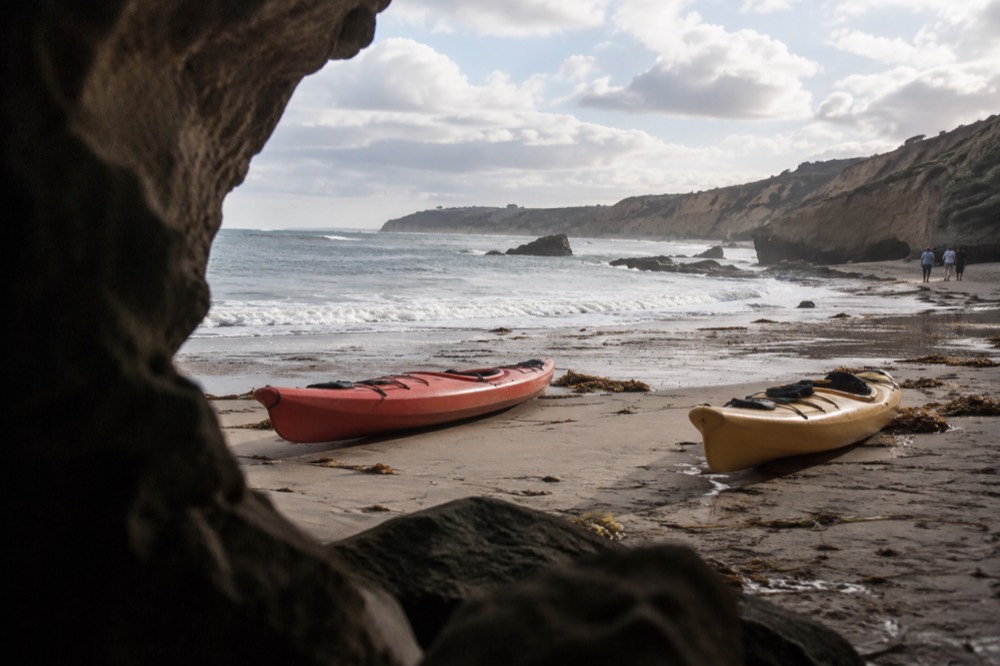
Tours and rentals launch from La Jolla Shores beach, the wide, flat, lifeguarded stretch of sand at the bottom of Avenida de la Playa, and paddle south along the cliffs to the cave mouths, a round trip of under two miles. The launch itself is through small surf, and the whole route hugs a coastline you can read the whole way: the Shores, the half-mile of ecological reserve, the cave arches, and the sea lion haul-outs below the Cove.
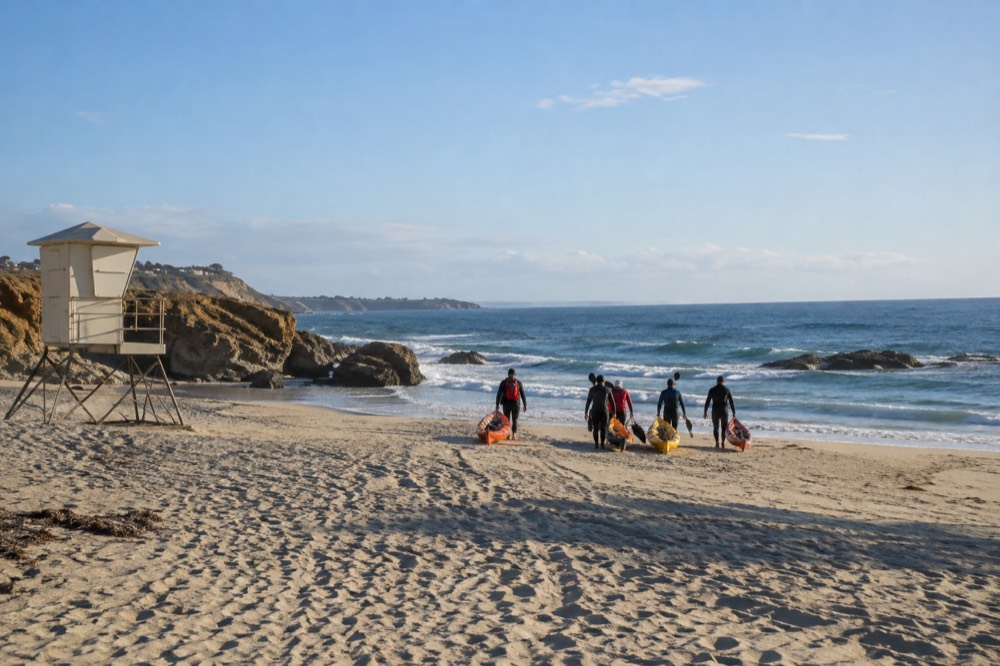
The geography rewards a little orientation. La Jolla Shores is the north end: a gently sloping beach with a lifeguard tower, which is why it is the launch, because it is the only forgiving piece of sand in the area. Paddling south, the sandstone cliffs rise and the seven caves appear in order, with Clam's Cave, the big double-arched one, sitting roughly in the middle of the set. Past the caves the water opens toward the Cove and the sea wall, where the sea lions have taken over the rocks. The whole southern stretch is inside the San Diego-La Jolla Underwater Park, a no-take ecological reserve, which is why the water is as full of life as it is.
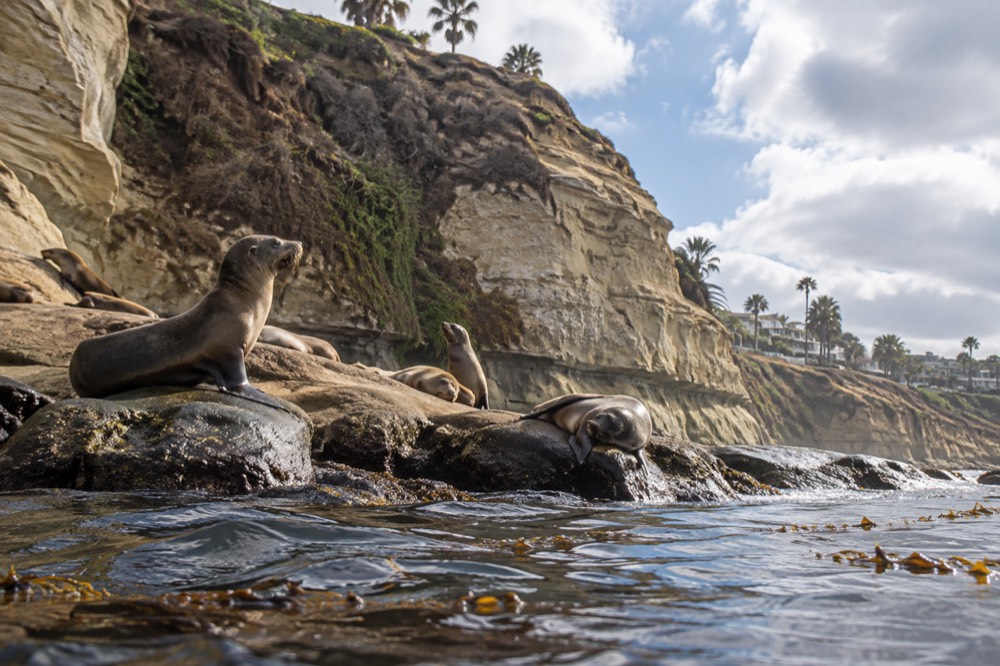
The wildlife is the part people write reviews about. Leopard sharks, harmless and common, school in the shallow water off the Shores in late summer in numbers that make the shallows look striped. Garibaldi hold territory over the reef all year. Sea lions and harbor seals are resident, and their numbers around the Cove have grown enough that the City has had to manage the haul-outs; the guidance for kayakers is simple, keep a boat's length of distance and let them approach you, because they will. The tide pools guide covers the same shoreline at low water, when the reserve's fourth dimension opens up.
If the swell is running, the cave entry closes and the tour becomes a cliff-side paddle, which is still a good trip. Operators are explicit about this on their listings: the cave passage is conditional on conditions, and no honest operator guarantees it. If entering a cave is the whole point of the day for you, book a morning slot in the flat season and check the swell forecast the night before.
Is Kayaking La Jolla Safe? Rip Currents, Surf and the Sea Lions
Yes, for a beginner activity on the open ocean: the route is short, lifeguarded at both ends, and run by operators whose entire business depends on not losing people, but the launch surf, the rip currents along the cliffs and the swell at the cave mouths are real hazards that the tours manage rather than remove. The safety margin you buy with a guide is the cave call and the surf judgment, and it is worth exactly what it costs.
The City of San Diego staffs nine permanent oceanfront lifeguard stations year round, covering roughly 24 miles of coastline, and the towers at the Shores and the Cove bracket this route. Their published rip-current advice is the standard drill and worth repeating: if you feel a pull seaward, stay calm, swim parallel to the shore until the pull relaxes, then swim in; float and wave if you cannot. Rips along this coast run strongest near the cliffs and the reef gaps, and kayakers mostly notice them as a current that keeps pushing the group sideways toward the Cove. Guides compensate without mentioning it, which is part of the service.
The sea lions deserve their own paragraph, because the situation has changed in recent years and old advice is stale. The population around the Cove has grown, the animals are protected under federal marine-mammal law, and the rules of engagement are distance: do not approach, do not corner, do not reach out, and if one comes to investigate your boat, let it. They are curious, fast in the water, and much heavier than they look. A kayak is a large unfamiliar shape they mostly ignore; a swimmer chasing one with a camera is a different story. The snorkeling tours that share this water operate on the same principle, and their guides brief it before anyone gets wet.
Water quality is the last piece. The County of San Diego posts beach water-quality results and closures at its beach advisory page, updated same day or next business day, and the La Jolla stretch occasionally closes after rain events when runoff reaches the outfalls. A winter storm is the one weather event that cancels tours outright, and checking the county page the morning of your trip takes ten seconds. Between the swell forecast, the county's water page and the lifeguard tower flags, you have three official signals, and honest operators read all three before launching.
Can You Kayak the La Jolla Caves Without a Tour?
Yes: the beach is public, the reserve is open to unguided paddlers, and several shops on Avenida de la Playa rent kayaks by the hour, but you take on the surf launch, the cave call and the weather judgment yourself, which is why the split between guided and rental traffic out there is roughly even on flat days and heavily guided on marginal ones. The rental route is the same water for less money, with the risk transferred to you.
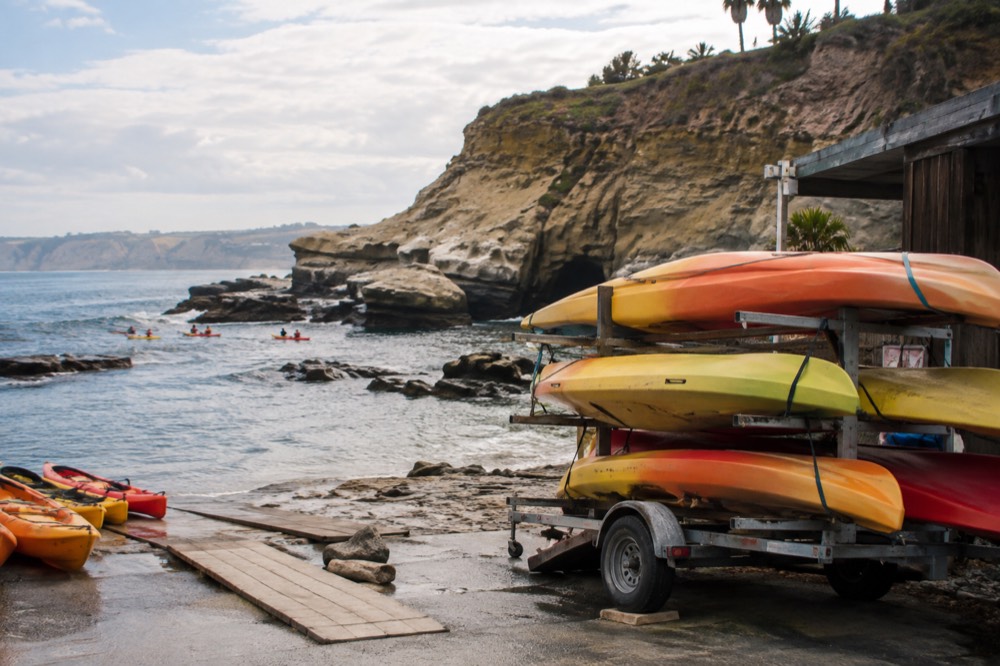
The practicalities: rentals run from the shops nearest the Shores, most open early and close by late afternoon, and prices are quoted at the counter rather than published in a citywide table, so call ahead. You will get a brief orientation, a life jacket, and a suggestion to stay inside the buoy line. The buoy line is good advice. Outside it you meet the swell, the boat traffic and, on the wrong day, a current that carries you toward Pacific Beach faster than you can paddle back against it.
The honest case for the rental is confidence and cost. The honest case against it is the launch and the landing, which are the two moments that generate nearly all the minor injuries on this beach, and the cave entry, which is the one moment that generates the stories. If you rent, go in the morning, watch the break for five minutes before committing, land parallel to the surf rather than nose-first, and skip the cave if the mouth is working. The guided option, for comparison, is the 1.5-hour sea cave kayaking tour with a guide who does all of that thinking for you.
There is also a middle path worth naming: the free walking tours of the coast, including the historic downtown and waterfront walks listed on GuruWalk, cost nothing up front and cover the land side of the same geology. They are not a substitute for the water, but they are a fine companion for a day when the swell says no. For the broader picture of what else this corner of the city offers, from the Cove to the Shores to the village above, the La Jolla neighborhood guide is the right next read, and this site's San Diego bucket list places the caves among the essentials. That is the honest frame for a first visit to Things to Do in San Diego: the caves are a half-day, and the coast around them is the rest of the day.
Common Questions About Kayaking the La Jolla Sea Caves
Do you need experience to kayak the La Jolla sea caves?
No. The guided tours are built for first-timers, using stable sit-on-top kayaks, a short briefing, and a guide who manages the surf launch and decides whether the cave can be entered. Basic swimming ability and a tolerance for getting wet are the only real prerequisites.
Can you actually go inside the sea caves in a kayak?
Sometimes. Most tours enter one cave, usually the largest, when the swell is small enough for a safe passage. Cave entry is always conditional on conditions on the day, and no honest operator guarantees it. Morning tours in late summer have the best odds.
When is the water warmest for kayaking in La Jolla?
August, at a monthly average of 68.7F, with September close behind at 67.6F. From November through April the water sits in the high 50s to low 60s and most paddlers want a wetsuit, which the shops near La Jolla Shores rent.
Is kayaking La Jolla safe for kids?
The guided tours take children, typically in a double kayak with an adult, and the route inside the reserve is sheltered. The surf launch is the demanding part, and operators brief families on it first. Check the minimum age on the tour's live listing before booking, since it varies by operator.
What is the difference between the kayak tour and the kayak-and-snorkel tour?
The standard guided kayak tour runs about 1 hour 30 minutes on the water. The combined kayak-and-snorkel tour runs about 2.5 hours and adds a snorkel stop over the reef with the same guide, which is the better pick if you are doing La Jolla only once.
Can you rent a kayak and go without a guide?
Yes. Shops on Avenida de la Playa rent kayaks by the hour and the route is a short, obvious paddle. You take on the surf launch, the landing and the cave-entry judgment yourself, so the rental route suits experienced paddlers more than first-timers.