Things to Do in Liberty Station, San Diego: Waterfront, Market and Museums
Liberty Station is the former Naval Training Center turned into a waterfront district of parks, galleries, a food market and wide promenades on San Diego Bay, ten minutes from the airport.
Short answer
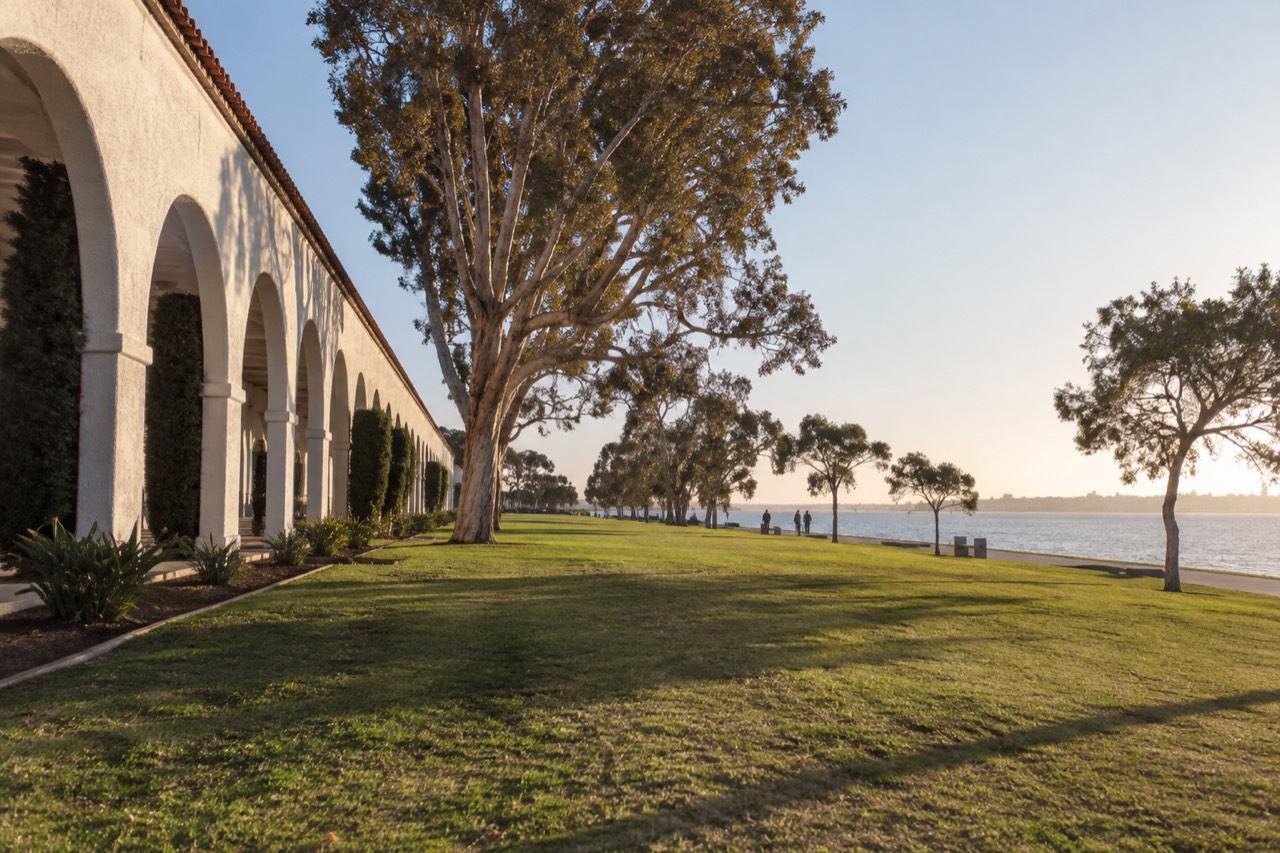
Liberty Station packs a public market, waterfront lawns, an art district, a golf course and bay-front walking paths into one walkable neighborhood. Plan on half a day, arrive by MTS bus or rideshare, eat at Liberty Public Market, and walk the promenade toward the airport-side shoreline. Entry to the grounds is free.
Liberty Station occupies the grounds of the old Naval Training Center, a spread of low white buildings and drill grounds that the Navy left and the city turned into something else entirely. Today it is one of the most relaxed corners of San Diego: lawns that run down to the bay, a food market inside a former mess hall, theaters and galleries in converted barracks, and a promenade where the biggest decision is whether to walk, bike or sit. It sits close to the airport, close to Point Loma, and far from the traffic of the Gaslamp, which is exactly why locals keep it on their own weekend lists. This page covers what to actually do here, how to get in without a car headache, and how to fold it into a wider San Diego trip.
What Is Liberty Station, and Why Do Visitors Go?
Liberty Station is a mixed waterfront district on San Diego Bay built from the decommissioned Naval Training Center, and its appeal is that it puts a food market, parks, an arts cluster, a golf course and shoreline paths within a flat, walkable loop. The grounds themselves are free to enter and free to wander. Visitors come for the market, for the open space, and for the contrast with downtown: same bay, calmer pace. You can spend an hour here between other stops or give it a half day and still not cover everything, because the district spreads across more ground than it first looks on a map.
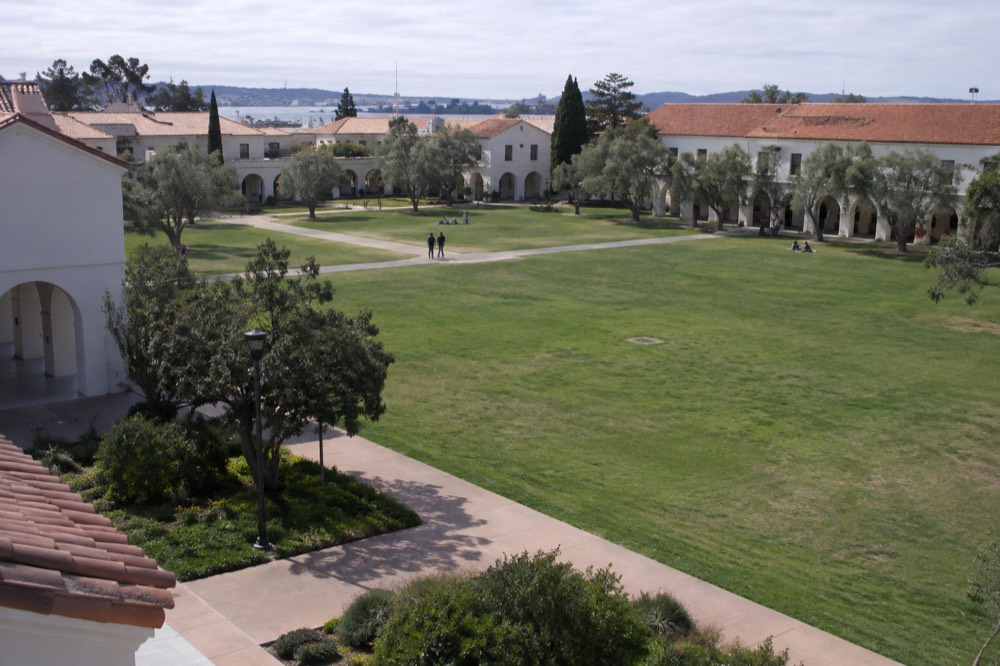
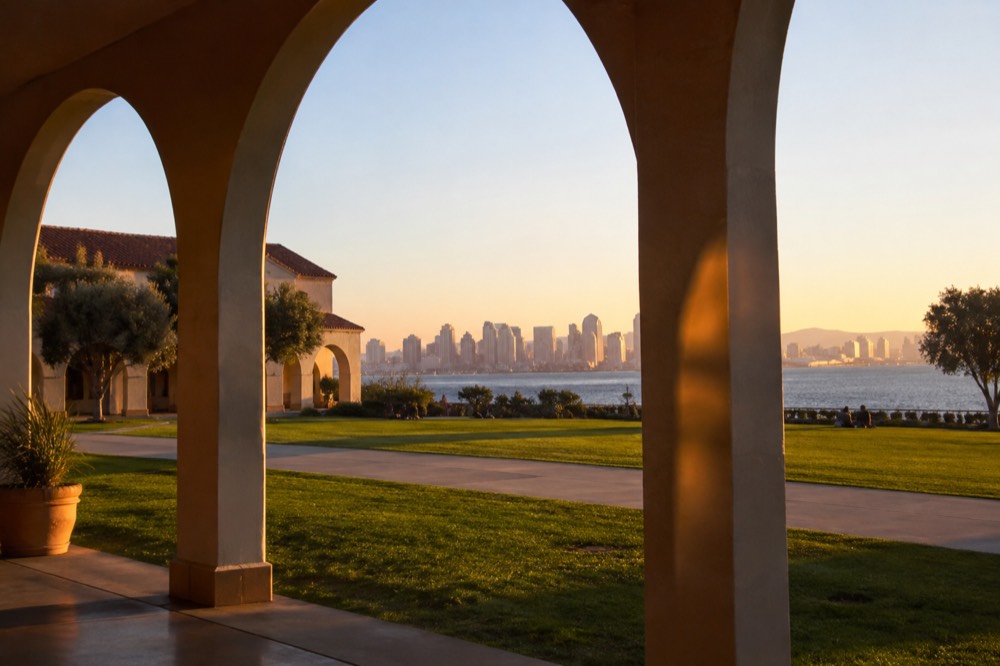
The layout rewards aimlessness. The historic core is a grid of two-story buildings around former parade grounds, now used for events, farmers markets and open-air movie nights. To the west the land reaches the bay, where a waterfront promenade runs past picnic lawns and a small boat channel. To the north sits a golf course and open parkland. Nothing here requires a ticket, which makes it a natural pairing with a morning elsewhere and an afternoon of grazing. For more free-first ideas across the city, see our free things to do in San Diego guide.
The Best Things to Do in Liberty Station
The four anchors of a visit are Liberty Public Market for food, the waterfront promenade for walking and biking, the arts district for galleries and theaters, and the open lawns for picnics, playgrounds and events, and you can hit all four in a single flat loop without ever crossing heavy traffic. Do the market first while the stalls are fully stocked, then walk it off along the bay. Families should note the playgrounds and wide car-free paths, and anyone with a camera should save time for late afternoon, when the light comes across the water. Two to three hours covers the core loop comfortably at a stroll.
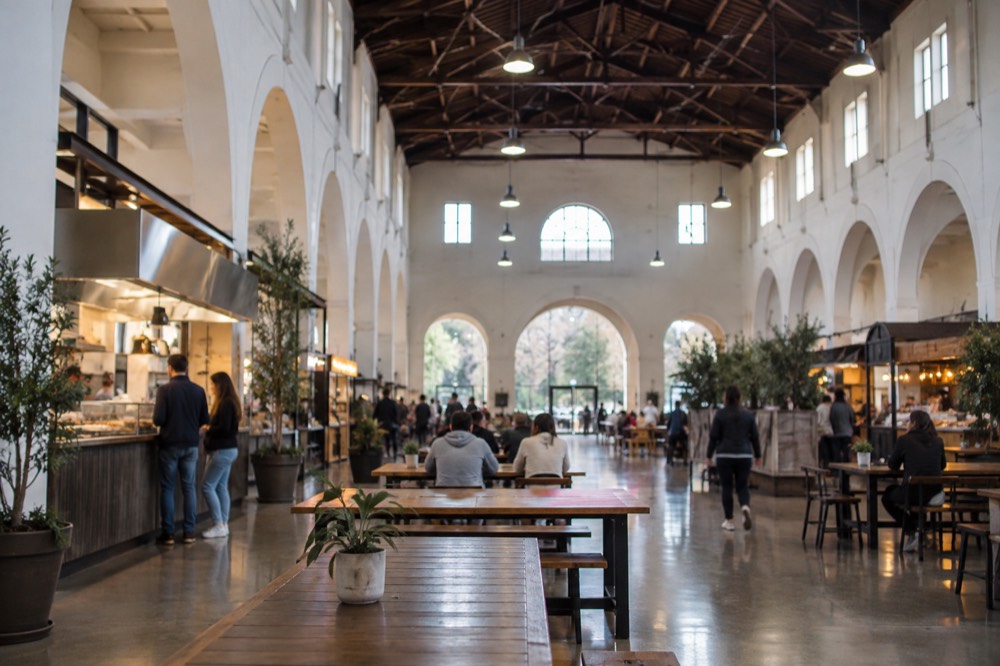
Liberty Public Market is the reason most first-time visitors come. It is an indoor hall of independent food and drink stalls, from tacos and pizza to coffee, beer and sweets, with communal tables in the middle and a patio out front. It works equally well for a quick lunch or a long grazing session, and it removes the hardest part of group travel, which is agreeing on one restaurant. Expect lines at the popular stalls on weekends, and expect to eat better than the food-court comparison suggests.
The arts cluster spreads through the converted buildings nearby: small galleries, working artist studios, a print center and live theater spaces. Hours vary by venue and by day, so treat the studios as a discovery walk rather than a checklist, and check the district's own event calendar before you go if a performance matters to you. Between the market and the studios you have effectively filled an afternoon without spending much beyond lunch.
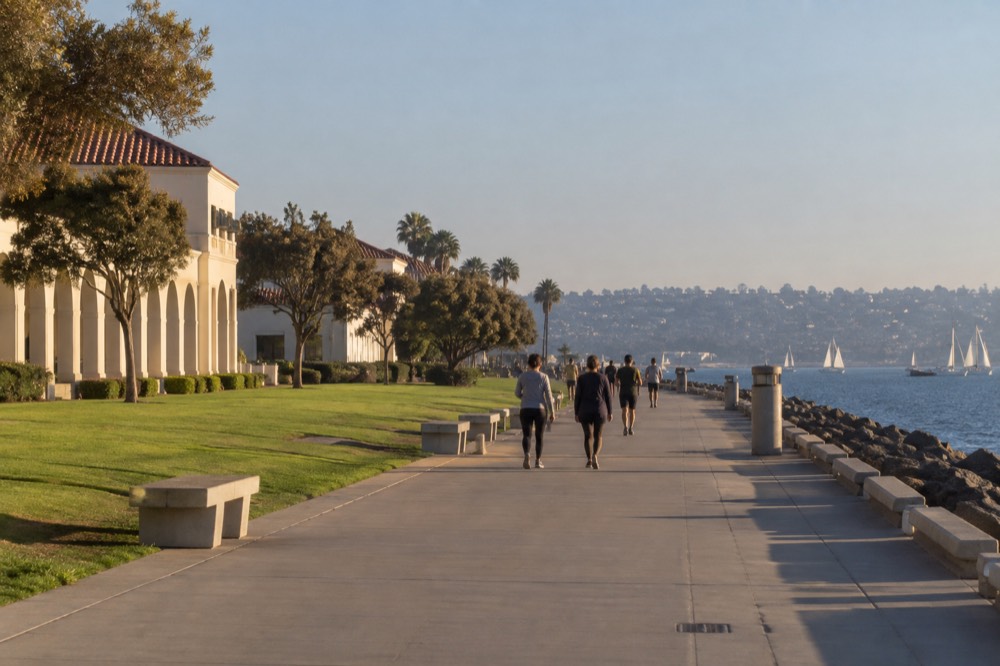
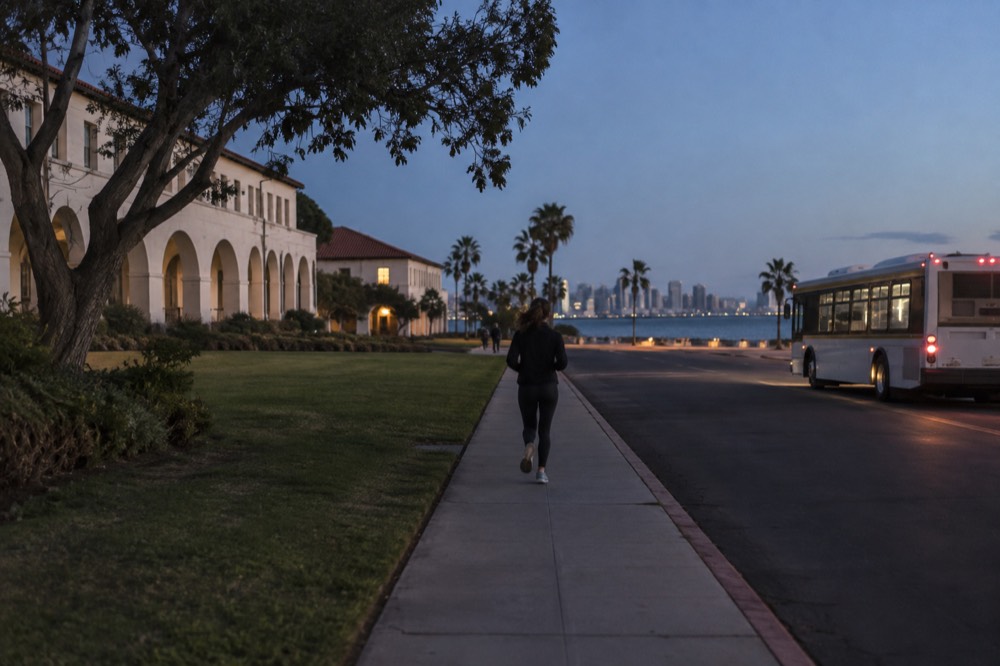
If you would rather build the day around the water, the promenade is the other half of the district. It is flat, paved and stroller-friendly, and it connects the lawns to the boat channel and shoreline. Rent a bike if you want to extend the ride toward the Point Loma side of the peninsula, or stay on foot and let the path do the work. The bay here faces the runway side of the airport, so you get planes overhead and sailboats on the water in the same frame, a very San Diego combination.
Here is how the main stops compare, so you can order a visit around your own priorities:
| Stop | What it is | Best for | Time to allow |
|---|---|---|---|
| Liberty Public Market | Indoor hall of independent food and drink stalls | Lunch, coffee, grazing | 45-90 minutes |
| Waterfront promenade | Flat paved path along the bay | Walking, biking, sunsets | 30-60 minutes |
| Arts district | Galleries, studios and theater spaces in historic buildings | Culture, browsing, performances | 45-90 minutes |
| Central lawns | Open parkland and picnic space | Families, picnics, events | As long as you like |
| Golf course | Public course on the district's north side | Golfers | Half a day |
How Do You Get to Liberty Station Without a Car?
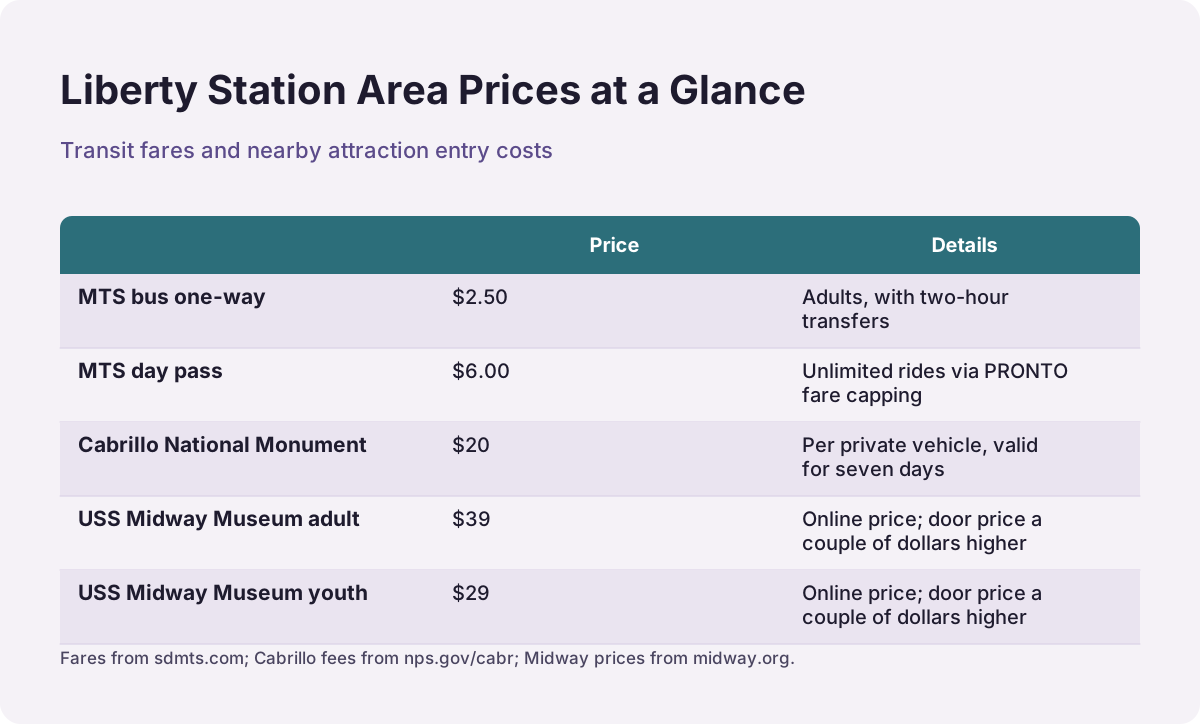
Liberty Station sits on the Point Loma peninsula about ten minutes from the airport and fifteen from downtown, and MTS buses serve the area for $2.50 one-way, with a $6.00 day pass covering unlimited rides through fare capping on the PRONTO card or app. Rideshare from downtown is short and cheap by big-city standards. There is no Trolley station at the district itself, so bus, bike or car is the practical choice, and the flat terrain makes arriving by bike genuinely pleasant rather than a stunt.
The fare details come straight from the MTS fare chart at sdmts.com: adults pay $2.50 one-way with two-hour transfers, and the day pass is $6.00. The smart move is to load money on PRONTO and let fare capping earn the day pass for you automatically, rather than buying one up front. Youth 18 and under ride free, and up to two children aged 5 and under travel free with a paying adult. Our getting around San Diego guide covers the whole system in more depth.
If you are staying downtown and want to combine Liberty Station with the city's headline sights, a narrated trolley tour is the connective tissue. The hop-on hop-off trolley runs for two days of validity, which is enough to do Balboa Park and the Embarcadero on day one and the bay-front neighborhoods on day two, hopping off where the mood strikes.
Drivers should know the honest version of the parking situation, because this is the question every San Diego visitor actually asks. Liberty Station has its own surface lots, which are free to park in and genuinely busy on weekends and market-peak hours, so arrive before noon if you want a spot near the market. That is the honest line for beach and bay parking across the city: free to park, hard to find in summer, and no published rate table exists because there is no rate. Our parking in San Diego guide goes deeper, including the downtown meter rules at $2.50 per hour, enforced Monday to Saturday with Sunday no longer free everywhere.
Where Should You Eat at Liberty Station?
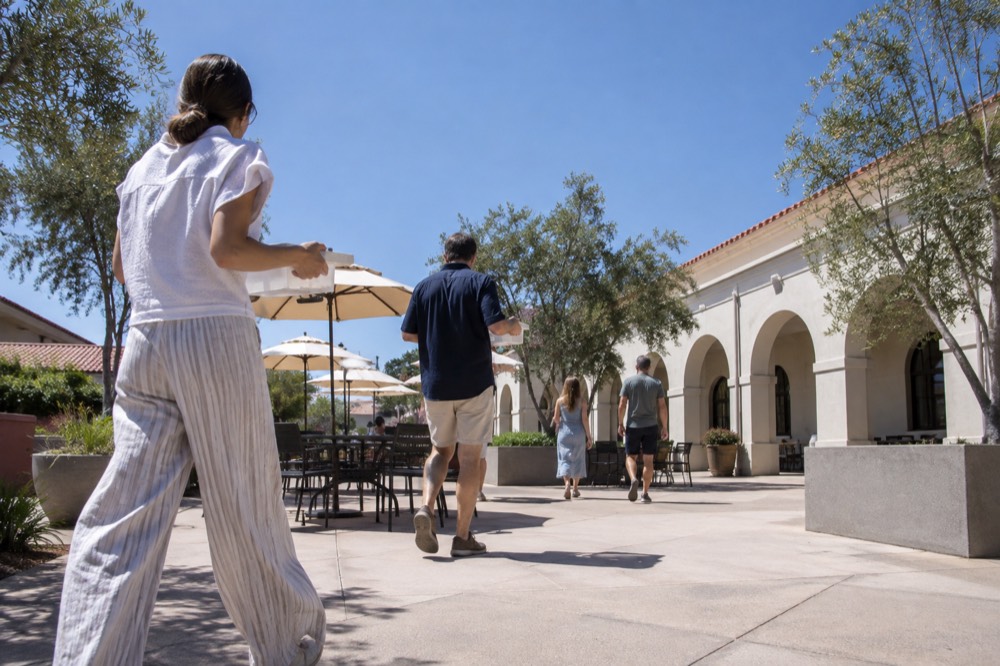
Liberty Public Market is the district's dining engine, with a dozen-plus independent stalls covering tacos, pizza, barbecue, coffee, beer and dessert under one roof, and the surrounding buildings add breweries, restaurants and ice cream within a short walk of the main hall. The market solves the group-disagreement problem better than any single restaurant can: everyone orders from a different counter and you all meet at the communal tables. Go at opening for the quietest experience, or after 1:00 pm to dodge the lunch rush.
The stall lineup changes over time, so treat any specific list as a snapshot rather than a promise, and let the market surprise you. What stays constant is the format and the quality bar: local operators, real kitchens, and prices that sit at normal San Diego restaurant levels rather than stadium levels. For a deeper food tour of the city, our best tacos in San Diego and best fish tacos in San Diego guides point to the dishes worth crossing town for.
If you would rather have someone else lead you to the good stuff, a guided food walk is the efficient version. The Gaslamp Quarter and Old Town both have strong options, and the Old Town tequila-and-tacos walk pairs well with a Liberty Station morning since the two areas sit fifteen minutes apart.
Is Liberty Station Good for Families and Kids?
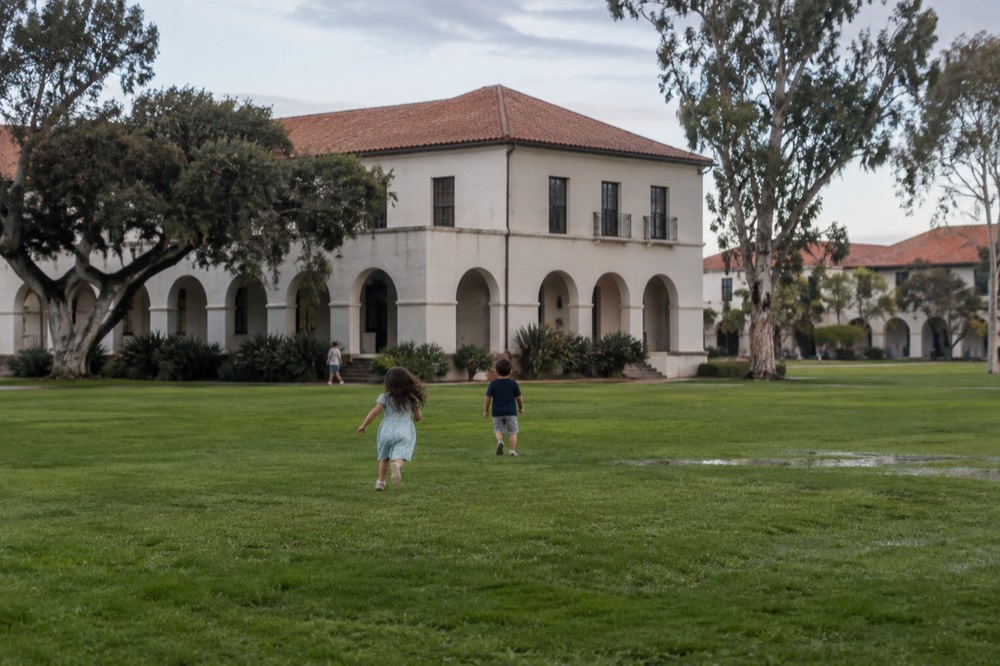
Yes, and it is one of the easier family half-days in the city: flat car-free paths, multiple playgrounds, open lawns for ball games, and a food market where picky eaters and adventurous ones can each find a corner. The promenade is fully stroller-friendly, restrooms are spread through the district, and the scale means you are never more than a few minutes from the car or the bus stop if someone melts down. Add ice cream and the planes overhead and most kids are sold.
The practical family pattern is simple: park or arrive by bus, hit the playground first to burn energy, eat at the market, then walk the promenade as the wind-down. Weekday mornings are the calm version; weekends bring farmers markets and events, which are more fun for older kids and more crowded for parents of toddlers. If you are building a wider trip, our San Diego with kids itinerary places Liberty Station alongside the Zoo, the beaches and Belmont Park.
For a bigger family day on the water, the bay itself offers the upgrade. A harbor cruise is a one-hour loop that keeps even restless kids engaged, and the amphibious SEAL bus tour, which drives into the bay, is the novelty version. Both leave from the Embarcadero side of town, a short drive or rideshare from the market.
What Else Is Near Liberty Station for a Fuller Day?
Point Loma wraps around the district, so Cabrillo National Monument, sunset viewpoints on the bay, and the Sportfishing Landings are all within a short drive, while downtown, the USS Midway and the Embarcadero sit fifteen to twenty minutes east, which makes the district a natural hinge between the peninsula and the city. The smart pairing is Liberty Station in the morning, Cabrillo or a harbor cruise in the afternoon, and dinner back at the market or in Little Italy. You could also run it the other way and end here, because the district is at its best in the late-afternoon light.
Cabrillo National Monument is the headline neighbor. Entry is $20 per private vehicle, valid for seven days, and the park closes in stages, with the tidepools and coastal area closing at 4:30 pm and the main gate at 5:00 pm, so morning is the safe plan. The National Park Service publishes the full fee and hours detail at nps.gov/cabr. From the monument's overlooks you can see the whole bay you just walked beside, which is a satisfying way to close the loop. Our Cabrillo National Monument guide covers the tidepools, the lighthouse and the gray whale season in full.
The USS Midway Museum is the other natural pairing, sitting on the downtown waterfront where the Embarcadero begins. The official entry prices are $39 online for adults and $29 online for youth, with the door price a couple of dollars higher, and the museum is open 10:00 am to 5:00 pm with last admission at 4:00 pm, per the official visit page at midway.org. Children 3 and under and active duty military with ID enter free. Our USS Midway Museum guide has the full deck-by-deck rundown.
What Is the Best Time of Day and Year to Visit?
Late afternoon is the best time of day, when the market thins out, the light comes across the bay, and the lawns fill with locals; and September is the best-kept month, because it is statistically among the warmest, driest times of year while carrying the lowest visitor pressure of the whole summer. Mornings suit families and anyone who wants quiet paths and first-run stalls. Weekend midday is the one window to avoid if crowds bother you, because that is when the market and lots both fill.
The seasonal logic comes straight from the climate record. August and September are the warm months in San Diego, not July, and June is cooler than October because of the marine layer. Winter brings the rain, concentrated December through March, though even then a gray day at Liberty Station is a coffee-and-market day rather than a washout. Our San Diego weather and best time to visit guide unpacks the full month-by-month picture, and our things to do in San Diego in September page is built around exactly this quiet-warm-month effect.
Here is the quick planning view:
| Time | Conditions at Liberty Station | Best plan |
|---|---|---|
| Weekday morning | Quiet paths, full market stalls | Playground, coffee, promenade walk |
| Weekend midday | Busiest window, events and farmers markets | Arrive before noon or after 2:00 pm |
| Late afternoon | Soft light across the bay, market winding down | Promenade, dinner at the market |
| September | Warmest-tier weather, lowest visitor pressure of summer | Any time of day |
| June | Marine layer, cooler than October | Market and indoor stops first |
How Do You Fit Liberty Station Into a San Diego Itinerary?
Give Liberty Station a half day, most often a morning or a late afternoon, and pair it with Point Loma, the Embarcadero or the airport: it sits close enough to SAN that it works as the last stop before a flight, and close enough to downtown that it slots into any itinerary without detouring. Two- and three-day visitors should treat it as the relaxed counterweight to ticketed days at the Zoo or the parks, not as a destination that needs its own full day.
A sample half-day that works in either direction:
| Time | Stop | Notes |
|---|---|---|
| 9:30 am | Arrive, playground or lawn first | Easiest parking of the day |
| 10:30 am | Liberty Public Market | Stalls fully stocked, short lines |
| 11:30 am | Arts district stroll | Studios and galleries, browse freely |
| 12:30 pm | Promenade walk to the bay | Flat, shaded stretches, planes overhead |
| 1:30 pm | Coffee or ice cream, then leave or extend | Extend toward Point Loma or downtown |
For the wider frame, our one day in San Diego and San Diego 3-day itinerary guides show where a Liberty Station block fits against Balboa Park, La Jolla and Coronado. If you are working through the city on a narrated loop, the two-day trolley ticket is the tool that makes a multi-neighborhood day feel effortless, and the small-group GoCar option is the independent version for travelers who would rather steer themselves, with a route covering downtown, Old Town or the beaches. For more neighborhood ideas across the city, browse the rest of Things to Do in San Diego.
Before you plan the rest of the trip, the trio below covers the three most useful first bookings for a San Diego visit that includes the bay side of town.
Common Questions About Liberty Station
What is Liberty Station known for?
A waterfront food market, open lawns, an arts district in converted historic buildings, and a flat bay-front promenade, all on the grounds of the former Naval Training Center.
How much time do you need at Liberty Station?
Two to three hours covers the market, the promenade and the arts cluster at a stroll. Give it a half day if you are adding a playground stop, a long lunch or an event.
Is Liberty Station free to visit?
Yes. The grounds, lawns and promenade are free, and the market costs nothing to enter since you only pay for what you eat. Parking in the district's lots is free as well, though it fills on weekends.
Can you get to Liberty Station by public transit?
Yes. MTS buses serve the Point Loma peninsula, at $2.50 one-way, and the PRONTO system caps your fares at the $6.00 day-pass value automatically. There is no Trolley station at the district itself.
Is Liberty Station good for kids?
Very. The paths are flat and car-free, playgrounds sit among the lawns, and the market format means even picky eaters find something. It is one of the lower-effort family half-days in the city.
What is near Liberty Station for the rest of the day?
Point Loma and Cabrillo National Monument to the south, downtown and the USS Midway Museum fifteen to twenty minutes east, and the airport practically next door, which makes the district a convenient last stop before a flight.