Go City San Diego Pass Review: Prices, What's Included, and When It Pays Off
The Go City San Diego pass bundles dozens of attractions into one prepaid card, but the tier you pick changes everything. The standard All-Inclusive pass does not include the Zoo, Safari Park, SeaWorld or LEGOLAND. Only the Plus tier does. Here is the full breakdown, with the math on when the pass actually pays off.

Short answer
The Go City San Diego All-Inclusive pass costs from $99 for a 1-day adult pass and covers around 39 attractions, but it excludes the San Diego Zoo, Safari Park, SeaWorld, LEGOLAND and Knott's Berry Farm. The All-Inclusive Plus tier, from $149 for adults, adds those five. The pass pays off only if you visit two or more premium attractions in a short window.
The [Go City](https://gocity.tpk.ro/A7HbJDBw) San Diego pass is one of those products that looks simple on the sales page and gets complicated the moment you read the fine print. It comes in two tiers, and the cheaper tier quietly excludes the five attractions most visitors actually came for: the San Diego Zoo, the Safari Park, SeaWorld, LEGOLAND California and Knott's Berry Farm. Buy the wrong tier and you have prepaid for a list of second-tier sights while still paying full price at the gate for the headliners.
This guide walks through both tiers, the real prices, what the pass covers at each level, how it stacks up against the San Diego CityPASS and the Balboa Park Explorer Pass, and the arithmetic that tells you whether the pass saves you money on your specific itinerary. The short version: the pass is a sprint product. It rewards people who visit two or three paid attractions a day and punishes people who build a relaxed trip around free beaches and Balboa Park's gardens.
What Is the Go City San Diego Pass and How Does It Work?
The Go City San Diego pass is a prepaid attraction card that grants admission to a fixed list of around 39 attractions over a set number of consecutive days. You choose the number of days when you buy, activate it at your first attraction, and visit as many included attractions as you can fit into that window. The catch is the tier system: the standard All-Inclusive and the All-Inclusive Plus cover two entirely different attraction lists.
The mechanics are straightforward. You buy the pass for one, two, three, five or seven consecutive days, then show the pass, usually as a phone QR code, at each included attraction's ticket desk. The clock starts at the first attraction you enter, not when you buy, so you can purchase weeks ahead and activate on arrival. Once the window opens, every day counts, including days you spend at the beach.
That consecutive-day structure is the single most important thing to understand before buying. A five-day pass is not five flexible days spread across a two-week vacation. It is five days in a row, and a day spent sleeping off a Gaslamp Quarter evening still burns one of them. If your trip mixes heavy sightseeing days with lazy beach days, a pass with fewer days, or no pass at all, is usually the better call.

The pass is a sightseeing sprint tool, and the attractions on the standard list cluster in ways that help: USS Midway, the harbor cruises, the Maritime Museum and the Embarcadero sights all sit within a mile of each other, so a single downtown day can knock out four admissions. The Zoo, the Safari Park, SeaWorld and LEGOLAND are spread across the county from Balboa Park to Carlsbad, and only the Plus tier reaches them.
How Much Does the Go City San Diego Pass Cost?
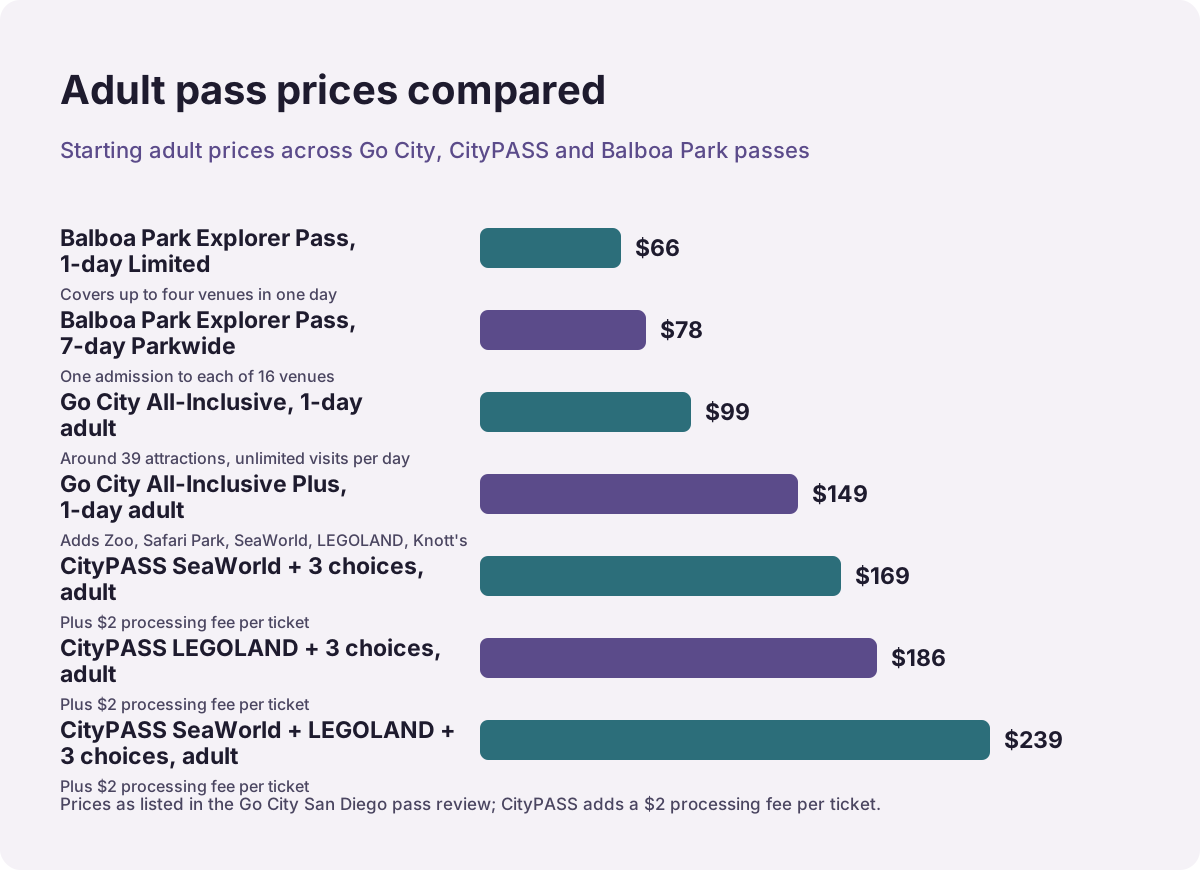
A 1-day All-Inclusive adult pass starts at $99, with children aged 3 to 12 at $69. The All-Inclusive Plus tier starts at $149 for adults and $139 for children on a 1-day pass, and the gap between the tiers is the price of the five premium attractions the Plus tier adds: the San Diego Zoo, the Safari Park, SeaWorld, LEGOLAND California with SEA LIFE, and Knott's Berry Farm. Multi-day passes cost more up front but the per-day rate drops as the day count rises.
The tier structure is where most of the confusion, and most of the bad purchases, come from. Here is the honest comparison, using the published starting prices:
| Pass tier | 1-day adult | 1-day child 3-12 | What it covers |
|---|---|---|---|
| All-Inclusive | $99 | $69 | Around 39 attractions, unlimited visits per day |
| All-Inclusive Plus | $149 | $139 | The same 39, plus Zoo, Safari Park, SeaWorld, LEGOLAND and Knott's Berry Farm |
Prices move with season and demand, so treat those as starting points and check the live listing for your travel dates. The operator's own ticket page is the source of truth, and Go City's pricing is genuinely dynamic the same way SeaWorld's and LEGOLAND's are.
The thing to internalize is that the $50 adult gap between tiers is not a small upsell. A single-day Zoo admission runs $76 at the gate on an Any Day ticket, and LEGOLAND's dynamic pricing starts around $119. If the premium attractions are on your list at all, the standard tier is not a discount product, it is the wrong product. One Plus-day covering the Zoo plus a downtown afternoon can already clear the $149 price.
Before committing to any pass, it helps to know what the individual tickets actually cost, because that is the denominator in every savings calculation. The Zoo's own ticket page publishes its Any Day and Value Day pricing, and the USS Midway's official visit page lists its online and door rates in full. Those two pages, plus the pass listings themselves, are the only numbers that matter when you do the math.
What Does the Go City Pass Include, and What Does It Leave Out?
The standard All-Inclusive list covers around 39 attractions, headlined by the USS Midway Museum, the Old Town Trolley hop-on hop-off tour, Birch Aquarium, the City Cruises harbor tour and Belmont Park. It does not include the San Diego Zoo, the Safari Park, SeaWorld, LEGOLAND California or Knott's Berry Farm; those five sit behind the Plus tier only. Balboa Park's museums are largely absent from both tiers because most of them are not sold through third parties at all.
The standard list is genuinely good for a downtown-and-coast trip. The USS Midway alone is a $39 online ticket and a half-day of your time, and pairing it with a harbor cruise and the Maritime Museum makes a full Embarcadero day. The Old Town Trolley inclusion is quietly valuable too, since a 2-day hop-on hop-off ticket is one of the more expensive single purchases in the city and doubles as transportation between sights.

What the standard list is not, is a family theme-park pass. Here is the split in plain terms:
| Included in standard All-Inclusive | Plus tier only | Not on either tier |
|---|---|---|
| USS Midway Museum | San Diego Zoo | Most Balboa Park museums |
| Old Town Trolley hop-on hop-off | San Diego Zoo Safari Park | Fleet Science Center tickets |
| Birch Aquarium | SeaWorld San Diego | San Diego Museum of Art |
| City Cruises harbor tour | LEGOLAND California + SEA LIFE | theNAT |
| Belmont Park | Knott's Berry Farm | Cabrillo National Monument |
The Balboa Park column deserves a word, because it trips people up. The park's major museums, including the Fleet Science Center, the Air and Space Museum, the Museum of Art, the Museum of Us and the Natural History Museum, sell their own tickets at their own gates and are not part of this pass. If your mental image of a San Diego trip is Balboa Park museum-hopping, read our guide to the Balboa Park museums and tickets and the Explorer Pass comparison below, because Go City is the wrong instrument for that job.
The premium five are the reason the Plus tier exists, and each of them has its own quirks. The Zoo now charges $16 per vehicle for parking, a cost no pass absorbs. LEGOLAND's gate price is dynamic, showing different starting figures on different days, and its published operating calendar closes the park entirely on some weekdays out of season, so a Plus-day aimed at Carlsbad can evaporate if you do not check the calendar first. SeaWorld's date-based pricing starts at $59.99 but climbs steeply in summer. Our guides to the San Diego Zoo, SeaWorld San Diego and LEGOLAND California cover each gate in detail.
Go City vs the San Diego CityPASS: Which One Should You Buy?
The Go City pass and the San Diego CityPASS solve different problems. Go City is a consecutive-day sprint across dozens of attractions; the CityPASS is a nine-day bundle built around one anchor theme park, SeaWorld or LEGOLAND, plus three choices from a list of seven. For a family whose trip centers on SeaWorld or LEGOLAND, the CityPASS is usually cheaper and far more forgiving. For a fast-moving solo traveler or couple hitting downtown sights, Go City wins.
The CityPASS structure is a study in simplicity. You pick a package, and the choice of package is really a choice of anchor:
| CityPASS package | Adult | Child 3-12 | Anchor |
|---|---|---|---|
| SeaWorld + 3 choices | $169 | $149 | SeaWorld San Diego |
| LEGOLAND + 3 choices | $186 | $166 | LEGOLAND California |
| SeaWorld + LEGOLAND + 3 choices | $239 | $219 | Both theme parks |
The three choices come from the San Diego Zoo or the Safari Park, the USS Midway, the City Cruises Best of the Bay tour, Birch Aquarium, the Old Town Trolley and the Maritime Museum. There is a $2 processing fee per ticket, the pass is valid for nine consecutive days from first use, and the purchase itself stays valid for a year before you activate it. Some attractions require a reservation through the pass app, so check each one before you turn up.
Do the arithmetic on the SeaWorld + 3 package. SeaWorld alone starts at $59.99, the Zoo is $76, the Midway is $39 online and the Best of the Bay cruise sits in the same range. Four adult admissions bought separately land well above $169, and the child math is even kinder. The catch is the same as Go City's Plus tier in miniature: if you were only going to visit one or two of the choices anyway, the bundle is a cost, not a discount.

The honest rule of thumb: families with kids under 12 whose trip includes a theme park should start with the CityPASS, and fast-moving adults doing downtown plus La Jolla should start with Go City. If your itinerary genuinely spans both worlds, a weeklong trip with SeaWorld and a couple of museum days, neither pass cleanly wins, and buying individual tickets sometimes beats both. Our first-time visitor guide and the one-day San Diego itinerary can help you sketch what your days will actually look like before you commit money.
Go City vs the Balboa Park Explorer Pass
The Balboa Park Explorer Pass covers only Balboa Park's own museums and cultural venues, and it is the right pass only if Balboa Park is the center of your trip. A 1-day Limited pass costs $66 for adults and covers up to four participating venues in one day, while the 7-day Parkwide pass at $78 covers one admission to each of 16 venues across a week. It does not include the San Diego Zoo, which sits inside the park but is run separately.
The Explorer Pass is the quiet specialist in this comparison. Go City and CityPASS both treat Balboa Park's museums as mostly out of scope, because those museums sell their own tickets at their own gates. The Explorer Pass is the only product that bundles them, and for a culture-heavy trip it is absurdly good value: 16 venues across 7 days for $78 adult is hard to beat when individual admissions run $25 at the Museum of Art and $24.95 at theNAT.

The tiers do different jobs. The 1-day Limited pass at $66 adult, $43 youth, is a museum sprint: four venues in one day, which is genuinely achievable in Balboa Park's compact core. The 7-day Parkwide at $78 adult, $52 youth, spreads one admission to each of the 16 venues across a week, which suits a trip that keeps coming back to the park between beach days. There is also an annual tier at $149, but that is a local's product, not a visitor's.
One structural note: the Explorer Pass and Go City do not overlap much, which means the two passes can legitimately be combined on a long trip. A visitor could spend three days on Balboa Park culture with the Explorer Pass and one or two sprint days on a Go City standard pass for the Embarcadero and La Jolla. Whether that beats buying everything individually depends entirely on how many admissions per day you realistically complete, and most travelers overestimate that number by half.
How Many Days Do You Need for a Go City Pass to Pay Off?
A Go City pass pays off when your individual ticket costs exceed the pass price, which for the standard tier means clearing roughly $99 in admissions across your chosen window. In practice that means two substantial attractions a day: the USS Midway plus a harbor cruise clears it, and the Midway plus the Maritime Museum and Birch Aquarium comfortably clears it. For the Plus tier the bar is higher but easier to clear, because a single Zoo or LEGOLAND admission eats most of the $149 price on its own.
The sprint math is easiest to see laid out. Here is a realistic two-day downtown itinerary priced individually, against the pass:
| Attraction | Individual adult price | Day 1 | Day 2 |
|---|---|---|---|
| USS Midway Museum | $39 online | Yes | |
| Maritime Museum of San Diego | $28 walk-up | Yes | |
| City Cruises Best of the Bay tour | on the listing | Yes | |
| Birch Aquarium | not published on the official page | Yes | |
| Old Town Trolley hop-on hop-off | on the listing | Yes | |
| Two-day total at individual prices | well above the 2-day pass |
The pattern in that table is the whole argument for the standard tier: the included attractions cluster downtown and along the coast, so a determined visitor can stack four admissions into a single day. The pattern against it is human nature. Real visitors sleep in, linger over lunch in Little Italy, and spend the late afternoon at the beach. A pass you activate and then only use once is the most expensive way to buy a USS Midway ticket that exists.

The Plus tier math is different in kind. LEGOLAND's dynamic gate price starts around $119, the Zoo is $76, SeaWorld starts at $59.99, and the Safari Park's Value Day online adult ticket is $73. Two of those in one day, say the Zoo in the morning and SeaWorld into the evening, already clears the $149 Plus price with room to spare, and anything downtown you add on top is pure savings. But two theme parks in one day with children is a heroic, possibly unwise, schedule. Most Plus buyers should treat the Plus tier as a two-day product at minimum, and price the 2-day pass against two premium admissions before buying.
When Is the Go City San Diego Pass a Bad Deal?
The pass is a bad deal on a slow itinerary, on a short stopover, and for anyone whose trip centers on Balboa Park's museums or the free outdoor city. If you are visiting two paid attractions across a whole week, no pass beats individual tickets. If your days belong to La Jolla Cove, Torrey Pines, Sunset Cliffs and the beach, the pass buys you nothing, because San Diego's best experiences are mostly free and the pass covers almost none of them.
The clearest bad case is the relaxed family week. Picture seven days: two beach days, a Balboa Park gardens day, a La Jolla day, a Coronado day, one theme-park day and a travel day. That trip contains maybe three or four paid admissions, and the honest move is buying those individually, possibly a single CityPASS package if the theme-park day is SeaWorld or LEGOLAND. A 5-day Go City pass on that itinerary would be mostly prepaying for days that never happen.

The second bad case is the Balboa Park trip, covered above: most of the park's museums are not on the pass, so a visitor who buys Go City expecting a museum bundle arrives to find the opposite. Our guide to free things to do in San Diego and the San Diego budget itinerary both show how much of this city costs nothing, and the more your trip resembles those pages, the less any pass makes sense.
The third bad case is seasonal. LEGOLAND closes on some weekdays outside peak season, SeaWorld's hours shrink in the off-season, and the marine layer in May and June can push you toward indoor, unplanned days. A pass bought for a rigid June itinerary can collide with a grey coastal morning and a closed park calendar. Check operating calendars for every premium attraction before you buy, not after.
How to Use a Go City San Diego Pass Well
Use the pass by front-loading your paid attractions into the earliest days of your trip, activating it only when you have a full day of admissions planned, and reserving any attraction that requires a booking before you arrive. Keep the phone charged, because the QR code is your ticket everywhere, and photograph the pass as a backup. Save the free stuff, beaches, gardens, sunsets, for the days after the pass window closes.
The practical habits matter more than the purchase. Build each pass day as a geographic cluster: Embarcadero day, Old Town and Balboa Park perimeter day, La Jolla day. Check each attraction's hours the night before, because several smaller ones on the list close by late afternoon, and a missed closing wastes a slot you already paid for. The Midway's last admission is at 4:00 pm even though the ship stays open to 5:00, a detail that catches sprinters every week.

Three specific tips from the fine print. First, some attractions require advance reservations through the pass system, and walking up without one can mean paying out of pocket. Second, parking is never included: the Zoo charges $16 per vehicle, the Safari Park $20 for general parking, and Balboa Park's lots run $8 to $16 a day for non-residents until the city removes paid parking on 1 January 2027. Budget parking separately or the savings evaporate. Third, the pass clock is consecutive, so a mid-window rest day is a paid rest day.
If you want a second opinion on the shape of your days before you buy anything, our San Diego 3-day itinerary and the guide to getting around San Diego cover how the attractions cluster by transit line, which is the difference between a four-admission day and a two-admission day. And for the full free-side picture, the weekend guide on Things to Do in San Diego lists what costs nothing at all.
Common Questions About the Go City San Diego Pass
Does the Go City San Diego pass include the San Diego Zoo?
Only the All-Inclusive Plus tier includes the San Diego Zoo. The standard All-Inclusive pass excludes the Zoo, the Safari Park, SeaWorld, LEGOLAND California and Knott's Berry Farm. If the Zoo is the reason you are buying a pass, you need the Plus tier or a San Diego CityPASS package.
Is Go City San Diego worth it?
It is worth it on a fast itinerary that stacks two or more paid attractions a day, especially downtown, where the USS Midway, harbor cruises and the Maritime Museum cluster within a mile. It is not worth it on a relaxed trip built around beaches, Balboa Park's free gardens and one theme-park day, where individual tickets or a CityPASS package win.
How many days should I buy on a Go City pass?
Buy the smallest number of days that covers your planned paid attractions, then add individual tickets for the stragglers. Most visitors overestimate how many admissions they will complete in a day. A 1-day or 2-day pass used intensively beats a 5-day pass used casually, because the days run consecutively whether you use them or not.
What is the difference between Go City and the San Diego CityPASS?
Go City is a consecutive-day pass across around 39 attractions with an optional premium tier. The CityPASS is a nine-day bundle anchored on SeaWorld or LEGOLAND plus three choices from a list of seven, including the Zoo or Safari Park, the USS Midway and Birch Aquarium. Families centered on a theme park usually do better with CityPASS; fast-moving adults usually do better with Go City.
Does the Go City pass include parking?
No. Parking is never included. The San Diego Zoo charges $16 per vehicle per day, the Safari Park charges $20 for general parking, and Balboa Park's lots run $8 to $16 a day for non-residents, with paid parking scheduled to end on 1 January 2027. Factor parking into any savings calculation.
Can I combine the Go City pass with the Balboa Park Explorer Pass?
Yes, and on a long culture-heavy trip it can make sense, because they barely overlap. The Explorer Pass covers Balboa Park's own museums, which Go City mostly excludes, while Go City covers the Embarcadero, trolley and coastal attractions. Only combine them if your admission count genuinely justifies both, which for most trips it does not.