What Is San Diego Known for? The Signature Sights, Food, and Scenes
San Diego is known for its waterfront attractions, Balboa Park, La Jolla's sea caves, the USS Midway, fish tacos, and a bay that shows up in every postcard. Here is what actually defines the city, section by section.
Short answer
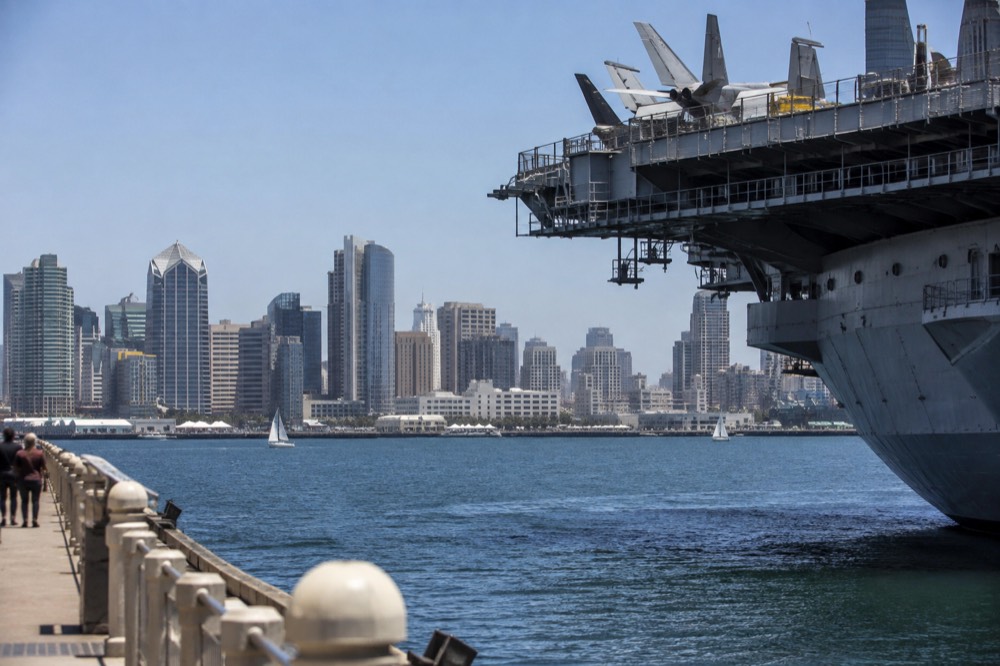
San Diego is known for Balboa Park and its museums, the USS Midway on the Embarcadero, La Jolla Cove and its sea caves, the Gaslamp Quarter, Hotel del Coronado, the San Diego Zoo, and a bay framed by aircraft carriers. Food-wise it is the fish taco and craft beer city. Gray whales pass offshore from mid-December through March.
Ask ten people what San Diego is known for and you will get the same five answers with different emphasis: the Zoo, the harbor, the beaches, the tacos, and the weather. The interesting part is how each one actually works once you arrive, because the postcard version and the practical version differ in ways that matter. The Zoo now charges for parking, the harbor is a working Navy port with a museum ship you can walk through, and the weather has a coastal grey streak in early summer that the postcards quietly omit.
This guide walks through every layer of the city's identity: the attractions people fly in for, the neighborhoods and scenes that define the postcard, the ocean and its wildlife, the food and beer culture, and the practical facts about getting around and timing a visit. It is the overview page on Things to Do in San Diego, so every section links out to the deeper guide where that subject lives.
What Is San Diego Known For?
San Diego is best known for five things: Balboa Park and its museum cluster, the USS Midway Museum on the Embarcadero, La Jolla Cove and its sea caves, the Gaslamp Quarter's nightlife and food scene, and a bay that serves as a working Navy port. Around those sit the San Diego Zoo, Hotel del Coronado, Petco Park, and a gray whale migration that passes offshore every winter. Food-wise, the fish taco and the craft brewery define the city as much as any building does.
Each of those deserves its own paragraph, because each one is bigger than the postcard suggests.
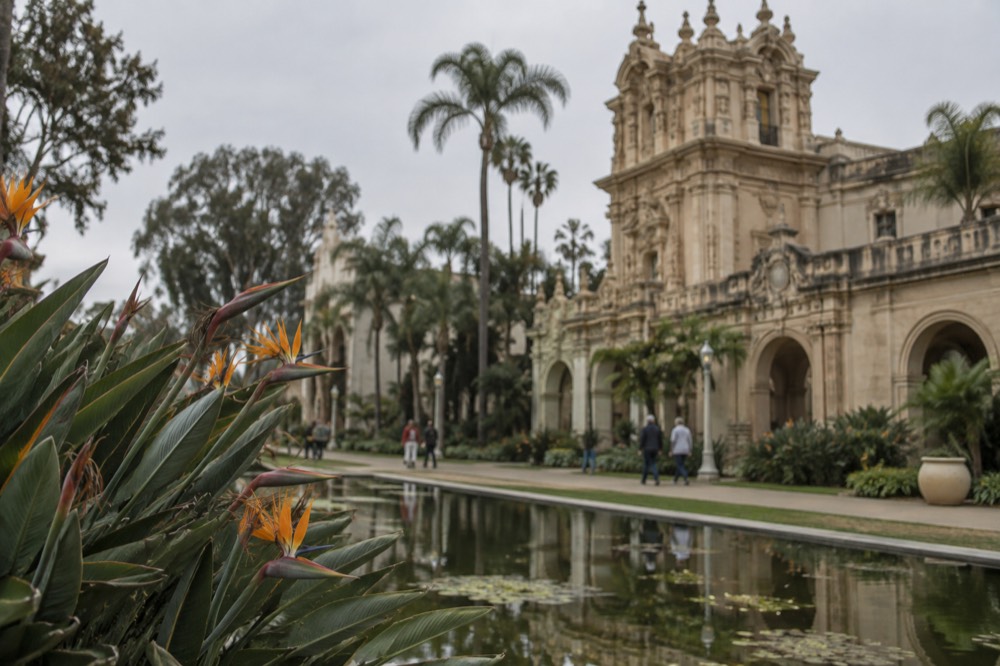
Balboa Park is not a single attraction but a huge cultural park holding more than a dozen museums, gardens, and the San Diego Zoo along its edge. The park grounds themselves are free to walk, which surprises visitors who assume the whole place is ticketed. The Balboa Park guide covers the museum cluster in detail and explains which ones sell tickets at the gate only.
The USS Midway is the visual anchor of the waterfront. A decommissioned aircraft carrier moored at 910 N. Harbor Drive, it is a full museum you climb through, from the flight deck to the engine room. Adult admission runs $39 online and $41 at the door, with youth tickets at $29 online, and children 3 and under enter free.
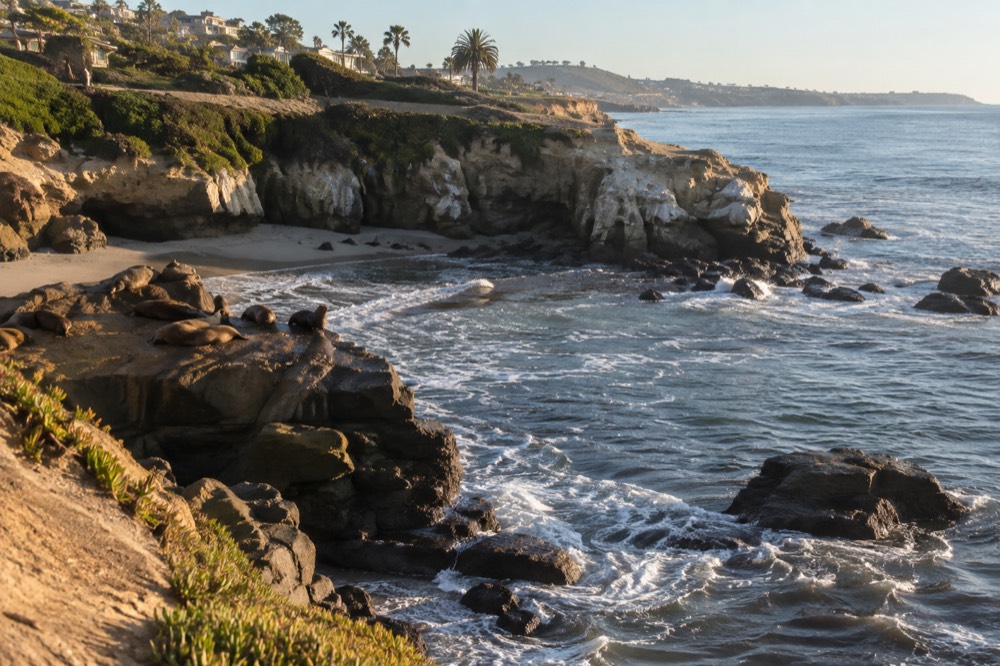
La Jolla Cove gives the city its sea-lion-and-kayak imagery. The Cove and the adjacent sea caves sit inside a protected marine reserve, and the sea lions haul out on the rocks in numbers that make the neighborhood instantly recognizable. The La Jolla Cove guide goes deep on the coastline and the wildlife rules around it.
The Gaslamp Quarter supplies the nightlife quarter, a historic district of Victorian-era buildings now holding restaurants and bars, sitting directly across from Petco Park where the Padres play. And the bay itself, with Coronado and the Hotel del Coronado across the water, is the scene that every harbor cruise, sailboat, and waterfront photo leans on.
Which Attractions Is San Diego Famous For?
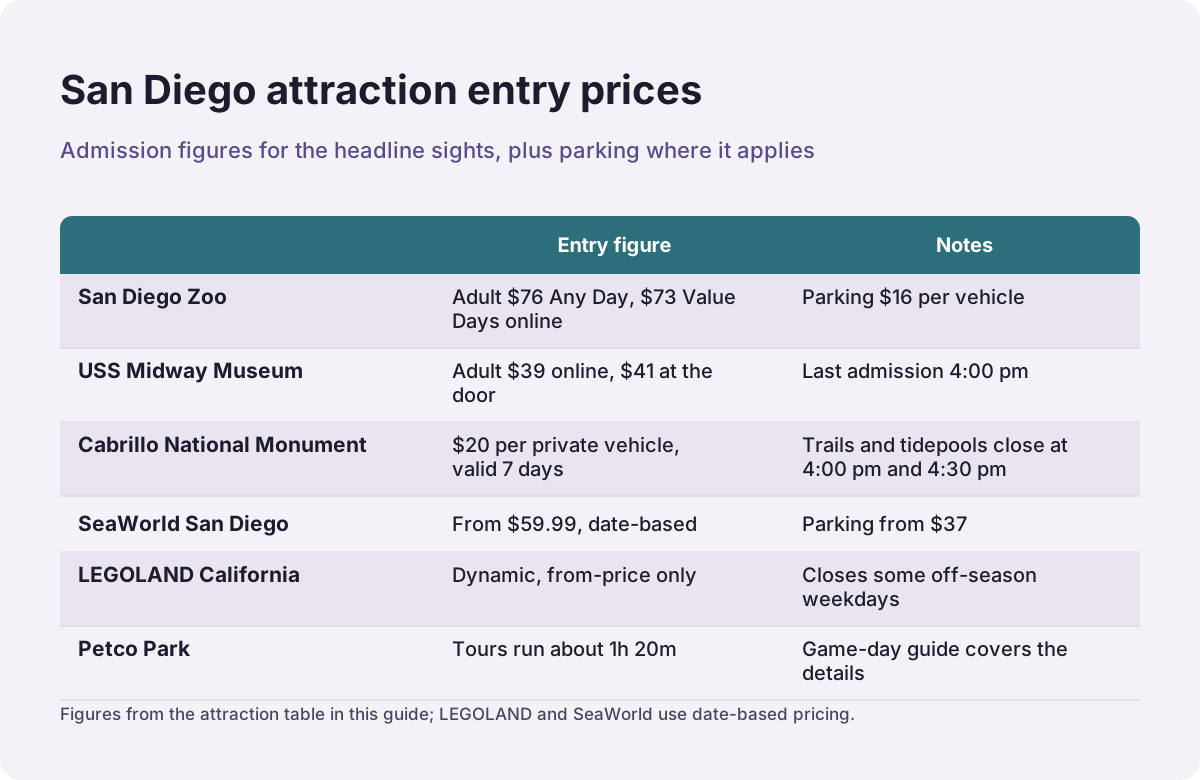
The headline attractions are the San Diego Zoo, the USS Midway Museum, Balboa Park's museums, SeaWorld, LEGOLAND California, Cabrillo National Monument, and Petco Park. The Zoo charges $76 for a 1-day adult Any Day ticket, Cabrillo charges $20 per vehicle for a 7-day pass, and the Midway runs $39 online. LEGOLAND and SeaWorld both use date-based dynamic pricing, so their numbers move with the calendar.
Here is the honest summary table, with every figure taken from the official sources.
| Attraction | What it is | Entry figure | Notes |
|---|---|---|---|
| San Diego Zoo | World-famous zoo inside Balboa Park | Adult $76 Any Day, $73 Value Days online | Parking $16 per vehicle, began January 5, 2026 |
| USS Midway Museum | Aircraft carrier museum on the Embarcadero | Adult $39 online, $41 at the door | Last admission 4:00 pm, closed Thanksgiving and Christmas |
| Cabrillo National Monument | Point Loma headland, tidepools, lighthouse | $20 per private vehicle, valid 7 days | Trails and tidepools close at 4:00 pm and 4:30 pm |
| SeaWorld San Diego | Marine theme park | From $59.99, date-based | Parking from $37 |
| LEGOLAND California | Theme park in Carlsbad | Dynamic, from-price only | Park closes on some off-season weekdays, check the calendar |
| Petco Park | Padres MLB stadium, downtown | Tours run about 1h 20m | Game-day guide covers the details |
Two things worth knowing beyond the numbers. First, the Balboa Park museum cluster, meaning Fleet Science Center, the Air and Space Museum, the San Diego Museum of Art, the Museum of Us, and theNAT, is not bookable through tour sites: you buy those tickets at the gate, full stop. Second, the Zoo's paid parking is new as of January 2026, so older advice you read elsewhere about free Zoo parking is now wrong.
The most efficient first-day move for seeing several of these is the narrated trolley loop. The hop-on hop-off trolley tour runs on a two-day ticket and connects Balboa Park, the Embarcadero, the Gaslamp, Old Town, and Coronado, which covers most of the list above in one circuit. If you would rather drive the loop yourself, the 2-hour GoCar tour puts you in a small narrated vehicle with a downtown route, and the Midway ticket below anchors the waterfront end of the day.
The trolley deserves a slightly longer explanation than the table gives it. Because the ticket is valid for two days, the practical pattern most visitors land on is a loop-and-hop: ride the full circuit once to hear the narration, then use the second day to hop off at the two or three stops you actually want time in. The Old Town stop is the one people most often underestimate, since it is also a transit hub with free parking around the state park.
The Midway pairs naturally with the Embarcadero stop. You can spend anywhere from two to five hours aboard depending on how many of the audio tour stops and flight-deck aircraft you want to see, and the entry ticket on the live listing covers the full ship including the flight deck and the restored aircraft on it.
Which Neighborhoods and Scenes Define the City?
The signature scenes are the Gaslamp Quarter's Victorian blocks, La Jolla's coastline, Coronado's island calm, Old Town's adobe-era state park, Little Italy's food corridor, and North Park's brewery row. Each one is a distinct neighborhood rather than a single sight, and each rewards an afternoon rather than a photo stop. Downtown's Embarcadero ties them together along the bay.
The table below is the honest one-glance comparison.
| Neighborhood | What it is known for | Best for |
|---|---|---|
| Gaslamp Quarter | Nightlife, dining, Victorian architecture | Evenings, pre-game Petco Park |
| La Jolla | The Cove, sea caves, galleries, coastal walks | Sea lions, kayaking, snorkeling |
| Coronado | Hotel del Coronado, wide flat beach, small-town feel | A slow beach afternoon |
| Old Town | California's adobe-era state historic park | History, Mexican food, transit hub |
| Little Italy | Restaurant corridor and the Saturday farmers market | Food-focused visits |
| North Park | Craft breweries and independent restaurants | Beer travelers |
The Gaslamp Quarter guide and the Coronado guide each go much deeper than this table can. Old Town deserves special mention because it is both a genuine historic park and the practical place where the free San Diego Flyer shuttle from the airport drops you off.
If the trolley loop from the previous section fits your first two days, the question of whether to add a GoCar or a walking format comes down to energy. The GoCar is a self-drive option that works well for travelers who want the narration but not a schedule, and the route choice between Old Town and the beaches is made at pickup.
The trolley, meanwhile, is the one product on this page that genuinely covers the whole "known for" list in a single purchase, which is why it is the related pick for this guide. Two days of hopping covers the park, the waterfront, the Gaslamp, Old Town and Coronado without a single parking decision.
For a slower pace, the free walking tours listed on GuruWalk cover historic downtown and the waterfront on a pay-what-you-want basis, and those are genuinely free at the point of booking. The Old Town walk on the Wild West years runs about two hours.
What Is the Ocean Side of San Diego Known For?
The ocean side is known for La Jolla's sea caves and sea lions, a 24-mile lifeguarded coastline, tidepools at Cabrillo, and one of the great whale migrations: more than 20,000 gray whales pass offshore each year, with mid-January the peak and the season running from mid-December through March. The water is warmest in August at a mean of 68.7°F and coldest in January and February around 58°F.
The gray whale migration is the fact that surprises people most. The National Park Service counts more than 20,000 gray whales passing the San Diego coast annually, and the best shore viewing inside Cabrillo National Monument is from the Kelp Forest Overlook and the Old Point Loma Lighthouse, with calm mornings giving the best odds. The park even runs a Whale Watch Weekend and Intertidal Festival in late January or early February. Boat-based whale watching runs three-hour cruises out of the bay all season.
The ocean temperature table is worth reading before you pack a wetsuit or plan swimming.
| Month | Mean sea temperature (°F) |
|---|---|
| January | 58.1 |
| March | 58.7 |
| May | 63.4 |
| July | 66.5 |
| August | 68.7 |
| September | 67.6 |
| November | 62.4 |
Those numbers come from NOAA's La Jolla station at Scripps Pier, averaged over three recent years. The short version: August and September are the warm-water months, and the Pacific here is cool enough in winter that most swimmers want a wetsuit for anything longer than a quick dip.
The coastline itself is staffed by nine permanent lifeguard stations year round, covering roughly 24 miles of beach, with seasonal towers added in summer. Rip currents are the primary hazard everywhere, and the official advice is to swim parallel to the shore until the pull relaxes, then angle in. Alcohol is prohibited on San Diego's city beaches, boardwalks, and parks, which catches some visitors off guard.
For getting on the water rather than beside it, the La Jolla sea caves kayak tour is the signature experience, running two hours through the caves with guides, and the snorkeling version puts you in the water with the sea lions for an hour and a half. The protected marine reserve status is the reason the wildlife is so dense here, and it is also the reason the rules around touching and distance matter.
What Food and Drink Is San Diego Known For?
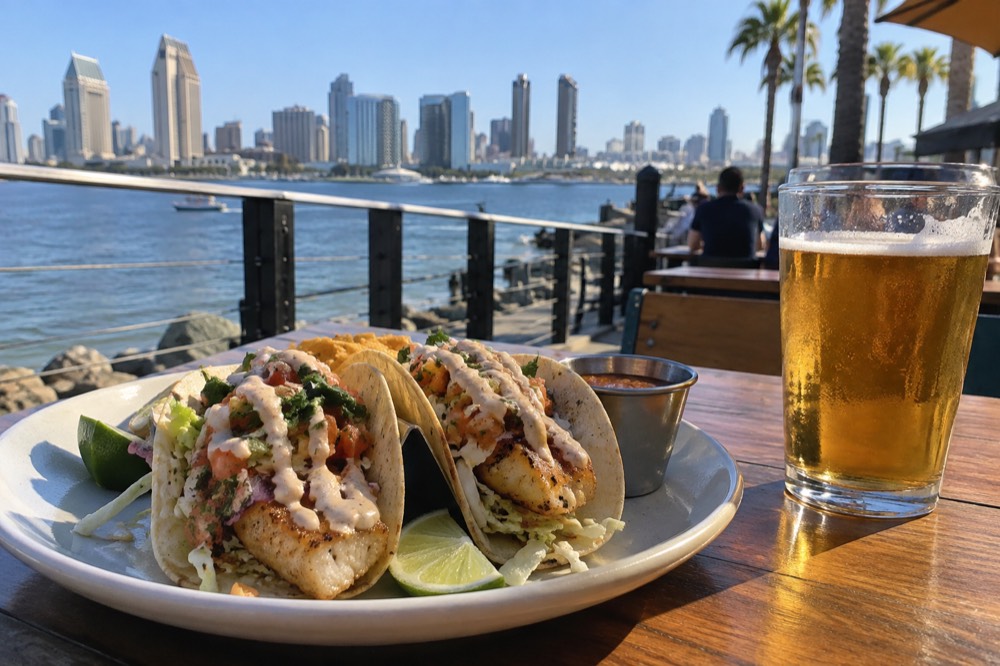
San Diego is known for the fish taco, California burritos, craft beer on an industrial scale, and a Mexican food culture that sits thirty minutes from the border. The fish taco is the signature dish, carne asada fries were invented here, and the county holds one of the densest concentrations of craft breweries in the country. Little Italy, North Park, and Old Town are the three main food neighborhoods.
The food identity is genuinely distinctive, not just "good restaurants." Being a border city shapes everything about how San Diego eats.
| Food or drink | Why it defines the city | Where to start |
|---|---|---|
| Fish taco | The signature dish, beer-battered or grilled | The best fish tacos guide |
| California burrito | Burrito stuffed with fries and carne asada | Taquerias citywide |
| Craft beer | One of the country's densest brewery scenes | North Park and its brewery row |
| Mexican food | Border-city depth, not a novelty | Old Town and the taco guides |
| Tacos generally | The everyday default meal | Best tacos in San Diego guide |
The best fish tacos in San Diego guide names the specific places worth crossing town for, and the San Diego breweries guide covers the beer side, where North Park's cluster of breweries within walking distance of each other is the standout.
If you want the food delivered with context rather than discovered by trial and error, the Gaslamp Quarter food and drink walking tour runs two and a half hours through the Victorian district, and the Old Town tequila and tacos version pairs the adobe-era state park with the city's two signature consumables in one walk. For a sit-down-and-be-driven version, the brewery tour with tastings and food pairings runs three hours across the beer scene.
What Is San Diego's Weather Actually Like?
San Diego's weather is known for mild winters and warm, dry summers, but the real pattern is that August and September are the warm months, not July: September's normal high of 77.2°F beats July's 75.3°F, and the ocean is warmer in September than in July. Early summer mornings carry a coastal marine layer locals call May Gray and June Gloom, and rain is almost entirely a December-through-March phenomenon.
The monthly normals from NOAA's San Diego airport station tell the story plainly.
| Month | Normal high (°F) | Normal low (°F) |
|---|---|---|
| January | 66.4 | 50.3 |
| April | 68.8 | 57.1 |
| June | 71.7 | 62.6 |
| July | 75.3 | 66.1 |
| August | 77.3 | 67.5 |
| September | 77.2 | 66.2 |
| December | 66.0 | 49.8 |
Two readings of that table matter for planning. First, the counterintuitive one: September is San Diego's real summer, with a normal high 1.9°F above July's and an ocean warmer than July's, yet it is the single lowest visitation month at Cabrillo National Monument across recent years, a gap of roughly 48 percent against July. If you want warm water and thin crowds, September is the city's best-kept month. Second, June's normal high of 71.7°F is lower than October's 74.6°F, which is the marine layer showing up in the 30-year statistics themselves. The grey-coast mornings of May and June are real, and they burn off by midday more often inland than right at the shore.
Rain barely exists outside winter: December through March carry 7.3 of the year's inches, and August's normal precipitation rounds to one hundredth of an inch. The San Diego weather and best time to visit guide expands all of this month by month, and the monthly things-to-do guides handle seasonal specifics from January through December.
What Day Trips Is San Diego Known For?
San Diego is known as a base for day trips to Julian's apple pie country, the Temecula wine valley, the Anza-Borrego desert, Tijuana across the border, and even Disneyland and Los Angeles to the north. Julian sits about an hour east, Temecula about an hour north, and Tijuana is at the southern end of the Blue Line trolley at San Ysidro, the busiest land border crossing in the western hemisphere.
The day-trip range is unusually wide for a single city, and it is a real part of the city's identity: mountains, desert, wine country, and another country all sit within a short drive.
| Day trip | What it is known for | Travel time |
|---|---|---|
| Julian | Historic gold-mining town, apple pie | About 1 hour east |
| Temecula | Wine country, Old Town Temecula | About 1 hour north |
| Anza-Borrego | Desert state park, wildflowers in spring | About 1.5 to 2 hours east |
| Tijuana | Border city food and culture | At the end of the Blue Line trolley |
| Disneyland | Anaheim theme parks | About 1.5 to 2 hours north |
The Julian guide and the Tijuana guide each cover their trip in full. Two practical notes carry real weight. These destinations, except Tijuana, need a car, so a rental genuinely earns its cost on a day-trip day. And for the border, never plan around a "usual" wait time, because none exists as an official figure: US Customs and Border Protection publishes live hourly wait times, and that live feed is the only reliable source on the day. US citizens re-entering by land need a passport book, passport card, enhanced driver's license, or Trusted Traveler card, and ESTA visitors need a valid approved ESTA before land entry.
The organized versions are worth considering for the wine and mining trips specifically, since both involve driving back after tastings. The Temecula 3-winery tour with tastings and lunch runs five hours across three wineries, and the Julian gold mine tour with pie is a seven-hour day trip that ends on the town's signature dessert.
How Do You Get Around San Diego?
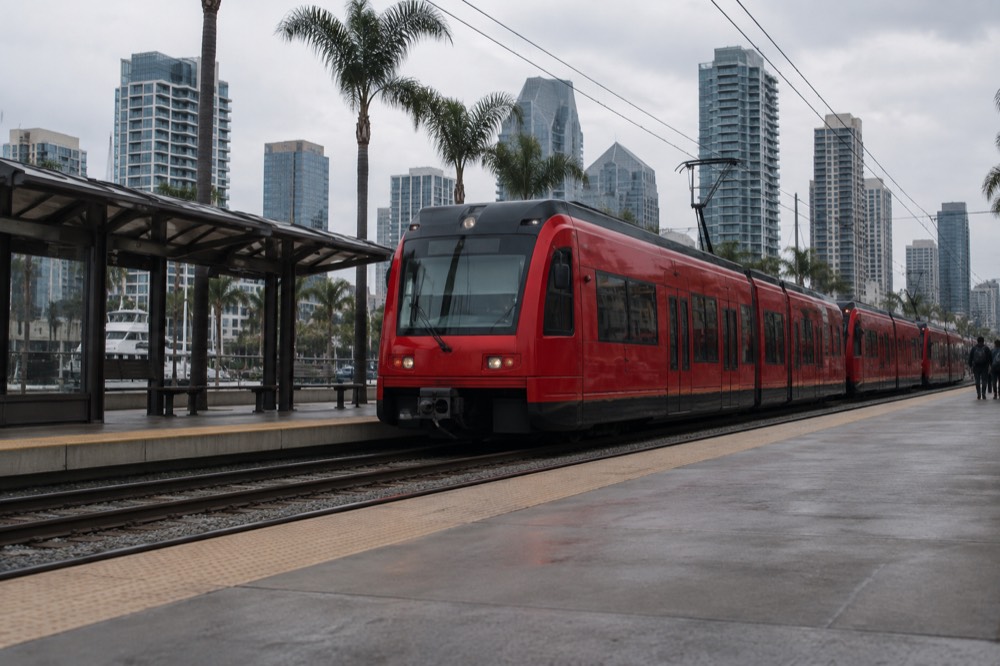
San Diego is easy to get around without a car inside the central zone. The MTS trolley and bus system charges $2.50 one-way with a $6.00 day pass, the PRONTO card caps fares automatically so there is no reason to buy a day pass up front, and the free San Diego Flyer shuttle connects the airport to Old Town. A rental car only earns its cost on day trips.
The fare chart is simple and worth memorizing.
| Fare | Adult | Reduced |
|---|---|---|
| One-way, bus or trolley, 2-hour transfers | $2.50 | $1.25 |
| Day pass | $6.00 | $3.00 |
The PRONTO detail is the one that saves money: load the card or app, pay as you go, and the system applies fare capping automatically, converting your day's rides into a day pass once the totals reach it. Contactless bank cards are accepted but are one-way only and do not cap, so the card or app is the better tool for a day of hopping between attractions.
Downtown parking meters run $2.50 per hour with enforcement generally Monday to Saturday, 8:00 am to 6:00 pm, and Sunday is no longer free everywhere since enforcement was extended into commercial areas under recent reforms. The getting around San Diego guide covers the whole picture, including the Balboa Park lot levels, where residents park free in most general lots and visitors pay up to $16 a day in the premium lots until the paid-parking program ends on New Year's Day 2027.
What Events Is San Diego Known For?
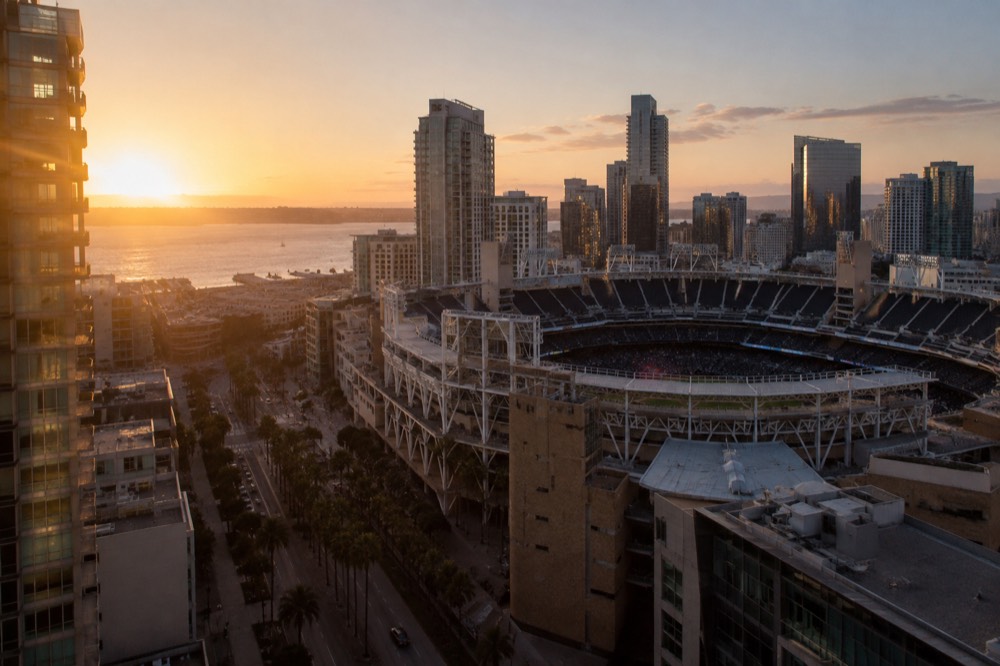
San Diego is known for Comic-Con International, the biggest convention in the city's calendar, plus Padres baseball at Petco Park, the San Diego County Fair, and Balboa Park's December Nights. Comic-Con 2027 runs July 22 to 25 with Preview Night on July 21, and the Padres play a full home season downtown. The city also hosts a major cruise port, with 177 ship calls scheduled across the 2026-27 season.
The event identity is real enough that it shapes hotel prices across the whole year. Comic-Con fills the downtown core every July, and the Comic-Con visitor guide covers how to navigate it, whether or not you hold a badge. Padres games are the everyday version of the same energy, and the Petco Park game-day guide covers tickets, transit, and the surrounding Gaslamp scene.
Balboa Park's December Nights is the city's signature free festival. The Spreckels Organ Pavilion, meanwhile, hosts free one-hour concerts every Sunday at 2:00 pm year round, rain or shine, which is one of the city's most dependable free rituals and a good answer for a Sunday afternoon with no plans.
What Should a First-time Visitor Not Miss?
A first-time visitor should not miss Balboa Park's grounds and at least one museum, the USS Midway's flight deck, La Jolla Cove at any hour, a fish taco, and a sunset from either Cabrillo's overlook or a harbor cruise. If you have a second day, add Coronado and the Hotel del Coronado, Old Town, and a North Park brewery. September is the smart month to do all of it, when the water is warm and the crowds are at their thinnest.
That list is deliberately short. The mistake first-timers make in San Diego is treating it as a checklist city when its real character is the slow stuff: the coastline, the food neighborhoods, the free Sunday organ concert, the sea lions barking under the cliffs. The first time in San Diego guide builds a full plan around exactly this, and the itinerary guides scale the same logic from a single day up to a five-day trip.
For the sunset and the harbor, the City Cruises Best of the Bay scenic harbor tour runs an hour and a half past the Navy ships and under the Coronado Bridge, and the sunset sailing version does the same water in the golden hour.
If you are still deciding how to structure the first two days, the three tours below cover the three layers of the city this guide has described: the narrated overview, the self-drive version, and the waterfront anchor.
Common Questions About What San Diego Is Known For
What is San Diego known for?
San Diego is known for Balboa Park and its museums, the USS Midway Museum, La Jolla Cove and its sea caves, the Gaslamp Quarter, the San Diego Zoo, Hotel del Coronado, and a working Navy harbor. Its food identity is the fish taco and craft beer, and more than 20,000 gray whales pass offshore each winter.
What is San Diego's most famous attraction?
Balboa Park is the most famous single destination, holding the San Diego Zoo and more than a dozen museums in a cultural park whose grounds are free to walk. On the waterfront, the USS Midway Museum is the most recognizable landmark, with adult admission at $39 online and $41 at the door.
What food is San Diego known for?
The fish taco is the signature dish, followed by the California burrito and a Mexican food culture shaped by the border. The county also holds one of the densest craft brewery scenes in the country, centered on North Park.
What is the best month to visit San Diego?
September is the standout: its normal high of 77.2°F beats July's, the ocean is warmer than July's, and it is the lowest visitation month at Cabrillo National Monument. August is marginally warmer but busier, and June carries the coastal marine layer locals call June Gloom.
Do you need a car in San Diego?
Not for the central zone. The trolley and bus system charges $2.50 one-way with automatic day-pass capping on the PRONTO card, and the free San Diego Flyer shuttle connects the airport to Old Town. You need a car only for day trips to Julian, Temecula, Anza-Borrego, or the northern theme parks.
Can you see whales from shore in San Diego?
Yes. Gray whales pass from mid-December through March, with mid-January the peak, and Cabrillo National Monument's Kelp Forest Overlook and Old Point Loma Lighthouse are the best shore viewpoints inside the park.