Accessible San Diego: A Practical Guide for Visitors with Limited Mobility
San Diego is one of the easier big American cities to visit with a wheelchair or limited mobility, but the accessibility is uneven: some of it is excellent and some of it is a surprise. This guide covers what actually works.
Short answer
Balboa Park offers free unlimited ADA parking in every lot, the MTS system charges $1.25 reduced one-way fares with a $3.00 day pass, and the USS Midway, Zoo and harbor cruise fleet are all genuinely accessible. The weak spots are the beaches, where access depends on seasonal wheelchairs and mats, and older neighborhoods like Old Town's unpaved edges.
San Diego builds its biggest visitor attractions on flat waterfront land, which gives the city a head start most destinations do not have. The Embarcadero, Balboa Park's central mesa and Mission Bay's shoreline paths are all gentle terrain, and the transit system runs a published reduced-fare program that is unusually generous. That is the good news, and it is real.
The uneven part matters just as much. The tidepools at Cabrillo National Monument close at 4:30 pm on a steep coastal road. The beach itself is the hardest problem, since sand defeats every standard wheelchair, and access there depends on borrowed equipment and seasonal mats. And a few much-loved neighborhoods, Old Town's edges in particular, mix smooth paths with historic dirt and cobblestone that no amount of planning fixes. This guide, published by Things to Do in San Diego, separates the two.
What Does Accessible Travel in San Diego Actually Look Like?
San Diego splits cleanly into an accessible core and a difficult periphery: the downtown waterfront, Balboa Park, Mission Bay and Coronado are flat, paved and well served, while the beaches, the tidepools and parts of the older historic districts need real planning. Transit covers the core well, with reduced fares of $1.25 one-way and free travel for anyone 18 and under. Parking with a disabled placard is free in every Balboa Park lot and at every downtown meter, which quietly removes the city's biggest expense and headache.
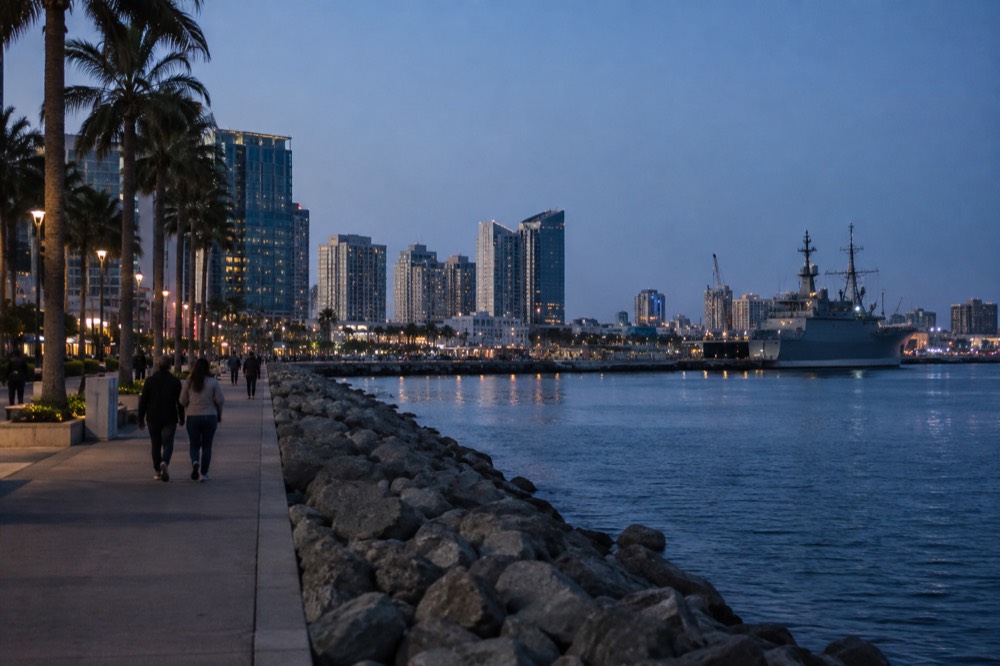
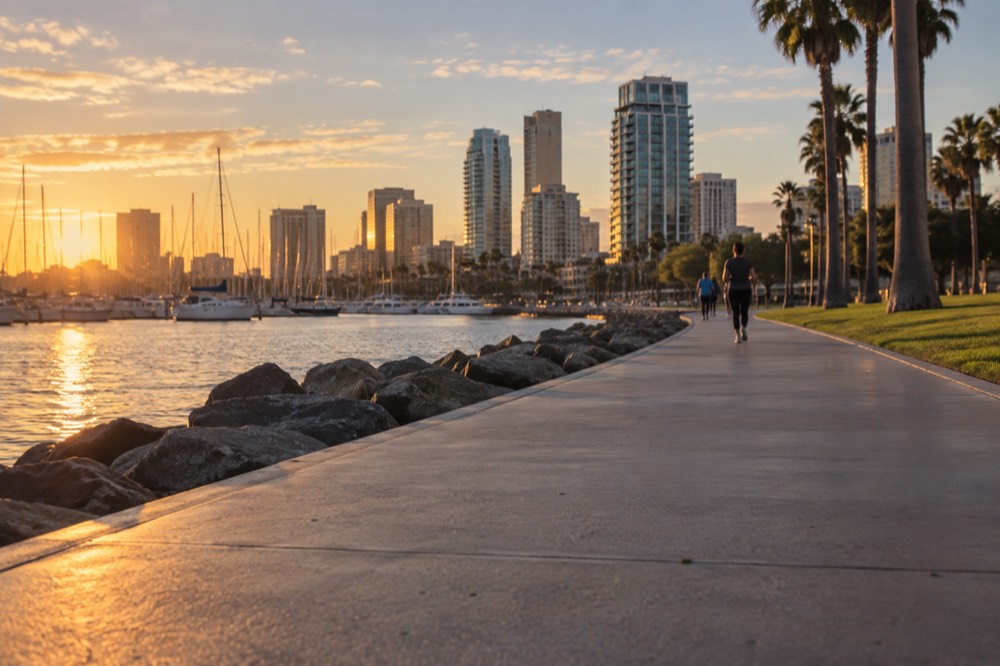
The geography explains most of it. The city's visitor economy sits on a coastal shelf: the bay, the Embarcadero, the Gaslamp's flat grid and Balboa Park's central mesa all sit within a few dozen feet of sea level. A wheelchair user can cover serious ground downtown without encountering a grade. Mission Bay is even better, with miles of continuous paved shoreline path and almost no elevation at all.
The periphery is where the work begins. Point Loma rises to Cabrillo National Monument, La Jolla's coast is a series of bluffs with stair access, and the beaches are, by definition, sand. None of this means "skip it." It means the accessible version of each is a specific route, a specific entrance or a borrowed piece of equipment, and this guide names those specifics throughout.
One thing worth saying plainly: San Diego's climate does a lot of quiet work for visitors with limited mobility. The normal high never leaves the 60s and 70s Fahrenheit in any month of the year, and August's normal high of 77.3 is the warmest the city gets. Heat is rarely the obstacle here that it is in Phoenix or Orlando, which extends the comfortable sightseeing window well beyond summer.
Which San Diego Attractions Are the Most Wheelchair Accessible?
The USS Midway Museum, the San Diego Zoo, Balboa Park's grounds and the harbor cruise fleet are the four most reliably accessible headline attractions. The Midway has elevator access to its main deck and hangar areas, the Zoo's canyon layout is served by an express bus and level paths, and Balboa Park's gardens and Botanical Building are free and step-free. The harbor cruises board from the Embarcadero's flat docks, though boarding assistance should be requested in advance.
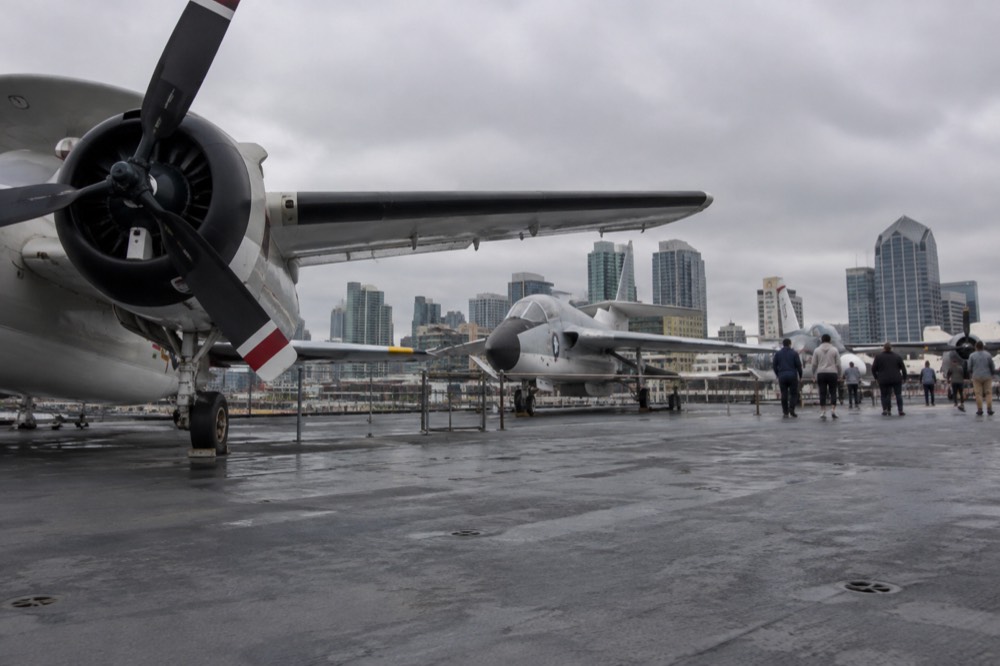
Start with the Midway, because an aircraft carrier is the last thing most people expect on an accessibility list. The museum keeps a large share of its route reachable: the hangar deck and flight deck are served by elevators, and the museum's own visit page spells out what to expect before you arrive. The standard entry ticket is sold through the site's roster, and the museum also lists a valid-any-date admission that suits visitors whose energy levels make firm schedules risky. The full rundown of decks and exhibits is in the USS Midway Museum guide.
The Zoo is the other strong headline. Its layout drops into a canyon, which sounds bad, but the park runs a Kangaroo Express bus that loops the steepest sections, and the main level paths around the entrance, the flamingos and the Elephant Odyssey stretch are gentle. Hours run 9:00 am to 6:00 pm, no timed entry is required, and parking is $16 per vehicle, first come first served. The San Diego Zoo guide covers the layout in detail.
Balboa Park itself is the free win. The grounds, gardens and trails carry no admission at all, the Botanical Building is free and step-free, and the free park tram loops the core from 8:00 am to 8:00 pm. The Balboa Park guide maps the tram and the flat routes between museums.
Two honest caveats belong here. First, the Midway's below-deck areas are reached by steep ship ladders, so the fully accessible portion is the upper route, not the engine room. Second, the Zoo's bus is popular; on busy days the accessible boarding queue moves slower than the paths, so the morning is the better window.
The table below is the short version of what to expect at the headline stops.
| Attraction | Access snapshot | What to plan for |
|---|---|---|
| USS Midway Museum | Elevators to hangar and flight deck | Request boarding help at the ticket booth; below-deck areas use ladders |
| San Diego Zoo | Level entry paths plus express bus | Arrive at opening; bus queues build midday |
| Balboa Park grounds and gardens | Free, flat, tram-served | Tram runs 8:00 am to 8:00 pm |
| Harbor cruises | Flat Embarcadero boarding docks | Tell the crew at booking that you need boarding assistance |
| Cabrillo National Monument | Road and overlooks accessible; tidepools are not | Tidepools close at 4:30 pm and sit below a steep road |
How Do You Get Around San Diego with Limited Mobility?
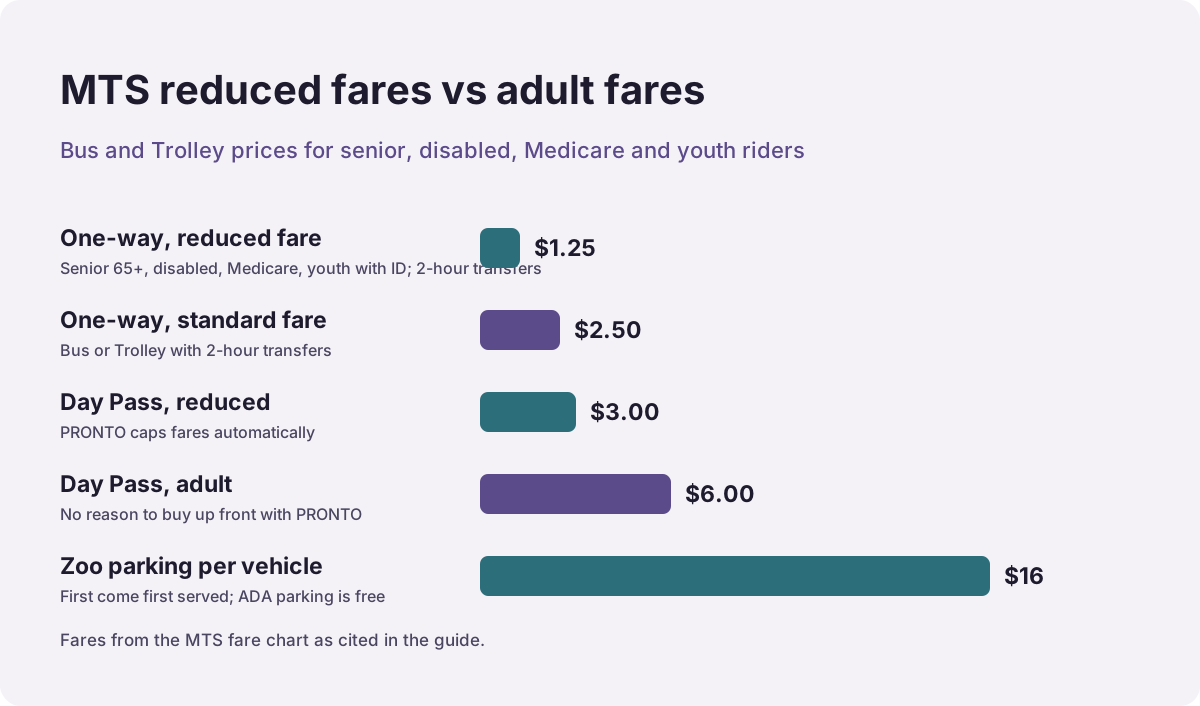
MTS buses and Trolley trains accept reduced fares of $1.25 one-way or $3.00 for a day pass for seniors 65+, disabled riders, Medicare cardholders and youth with ID, and every Trolley station has level boarding. The PRONTO card caps fares automatically, so there is no reason to buy a day pass up front, and riders 18 and under travel free. Buses are lift-equipped, and the airport connects to downtown via Route 992 at the same reduced fare.
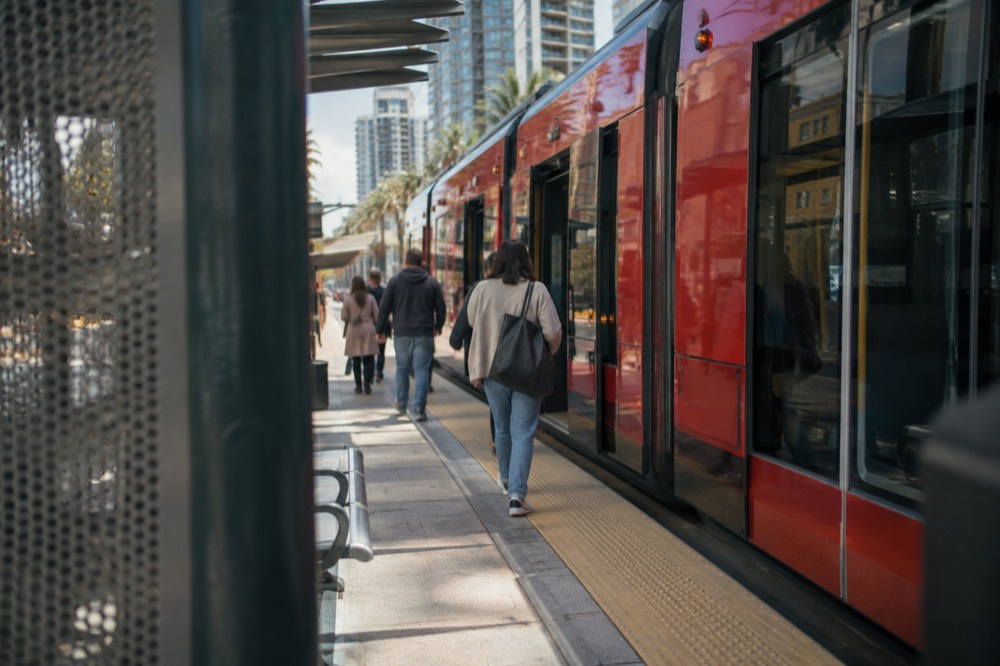
The Trolley is the backbone. The Blue Line runs from the border at San Ysidro through downtown to UC San Diego, the Blue, Orange and Green lines interleave downtown, and every train kneels to platform level at every door. The fare chart on the MTS site publishes the reduced fares directly: $1.25 one-way with two-hour transfers, $3.00 for a day pass. Pay with PRONTO, either the app or a $2 physical card, and the system stops charging once your rides reach the day-pass value. Contactless bank cards work too, but they do not cap, so a heavy sightseeing day costs more that way.
The airport link is simple and cheap. There is no Trolley station at SAN, but MTS Route 992 runs from both terminals to Broadway and Kettner, the downtown Trolley interchange, every 15 minutes from 4:30 am to 1:00 am. The standard fare is $2.50 and the reduced fare is $1.25. The free San Diego Flyer shuttle also runs from the airport to Old Town Transit Center, where the Blue and Green lines meet, roughly every 20 to 30 minutes.
| Fare | Adult | Reduced (senior 65+, disabled, Medicare, youth with ID) |
|---|---|---|
| One-way, bus or Trolley, 2-hour transfers | $2.50 | $1.25 |
| Day Pass | $6.00 | $3.00 |
The hop-on hop-off trolley tour is the tourist-friendly layer on top of transit, and for visitors who cannot stand at stops or manage transfers it solves a real problem: two days of narrated loops with boarding assistance at the main stops, hitting downtown, the Embarcadero, Balboa Park and Coronado's ferry landing without a single transfer. The getting around San Diego guide compares it against MTS for cost.
Rideshare fills the gaps, and the airport has organized its pickup lanes: Terminal 1 riders cross at the pedestrian crosswalk from baggage claim, Terminal 2 riders use the main crosswalk to the Transportation Plaza. Drop-offs stay curbside at both terminals. For visitors who find standing or waiting at stops the hard part, a mix of Trolley for the flat core and cars for the hills is the pattern that works.
Where Can You Park with a Disabled Placard in San Diego?
A disabled placard or plate parks free with no time limit in every Balboa Park lot and at every downtown meter, and downtown meters otherwise run $2.50 per hour with enforcement to 6:00 pm or 8:00 pm depending on zone. Balboa Park's paid lots currently charge $8 to $16 a day for other drivers, but City Council has approved removing paid parking entirely on 1 January 2027. At the Zoo, ADA parking is free but the general rate is $16 per vehicle.
Balboa Park's rules are the ones to know cold, because the park is the single most likely stop on any itinerary and its ADA policy is the best in the city. Disabled Person plates and placards park free with no time limit in every lot and at every meter in the park, per the city's own parking page. That is unlimited free parking at the Space Theater lot, the Organ Pavilion lot and the rest, in a park where everyone else pays up to $16 a day.
The time-boxed part: those paid rates are live now but scheduled to end. City Council has formally approved a settlement removing paid parking from Balboa Park effective 1 January 2027, so any advice you read elsewhere about "free Balboa parking" is either about the future or about ADA placards. Today, placard holders park free and everyone else pays; after New Year's Day 2027, everyone parks free and the placard advantage shifts from cost to the guaranteed closest spaces.
Downtown works on the same principle. Meters charge $2.50 per hour, enforcement runs Monday to Saturday from 8:00 am, and disabled placards park free at them. The parking in San Diego guide covers the zones and the Sunday changes, since Sunday is no longer free everywhere downtown.
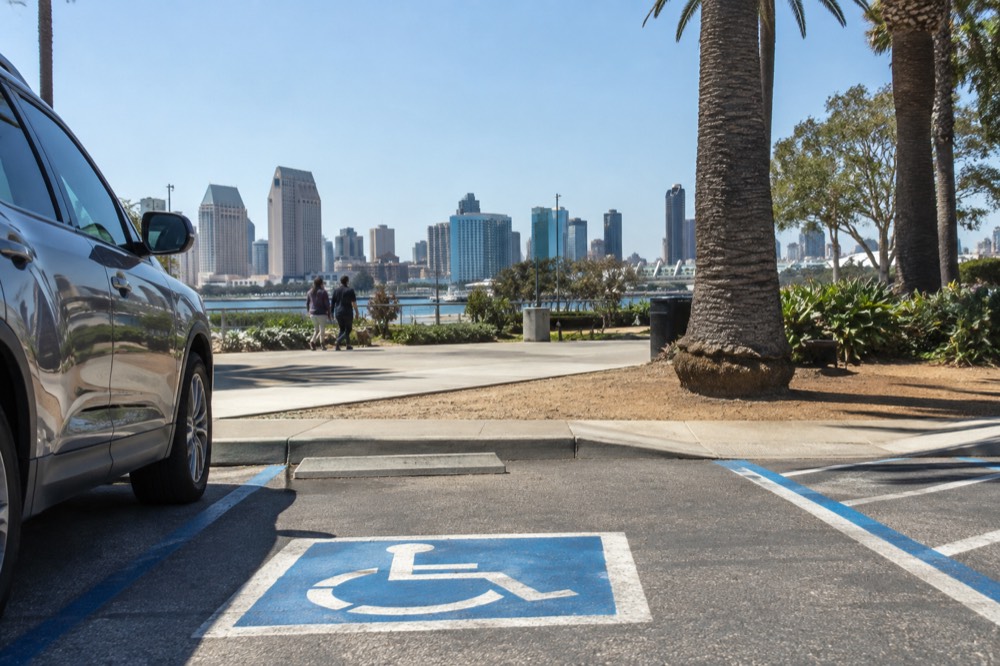
| Location | General rate | With a disabled placard |
|---|---|---|
| Balboa Park, Level 1 lots | $16/day non-resident, $8/day resident | Free, no time limit |
| Balboa Park, Level 2 and 3 lots | $10/day non-resident, free for residents | Free, no time limit |
| Downtown meters | $2.50 per hour | Free |
| San Diego Zoo | $16 per vehicle per day | Free ADA parking, closest spaces |
| Safari Park | $20 general | Free for Wildlife Alliance members; check the official page for placard policy |
Which San Diego Beaches Have Beach Wheelchairs and Access Mats?
San Diego's beaches are the hardest part of an accessible visit, because sand stops every standard wheelchair, but the city's lifeguard stations and Mission Bay's shoreline paths carry the workaround: beach wheelchairs borrowed from lifeguard stations, paved boardwalks at Mission Beach and Pacific Beach, and level waterfront paths around Mission Bay and Coronado. The bay side, not the ocean side, is where a wheelchair user actually spends a beach day in comfort.
Reframe the beach first. The Mission Bay shoreline is flat, paved for miles and continuous, with no sand between parking and water at many points; a wheelchair user can sit at the water's edge there without any special equipment. Coronado's beachside is served by its wide flat promenade. The Mission Bay guide and the Coronado guide map the accessible stretches.
The ocean beaches themselves depend on borrowed equipment. The city's lifeguard division staffs nine permanent oceanfront stations year round, generally 9:00 am to dusk, and beach wheelchairs are the standard request at staffed stations: ask early, because the inventory is limited and summer weekends empty it. The boardwalks at Mission Beach and Pacific Beach give a smooth paved ride directly behind the sand, with the beach itself one short transfer away.
The city's own beach regulations page is the primary source for what is and is not permitted, and its per-beach amenity key is where to check a specific beach before relying on it. Alcohol is prohibited on all city beaches and boardwalks, and glass containers are too, which matters for anyone packing a day's supplies.
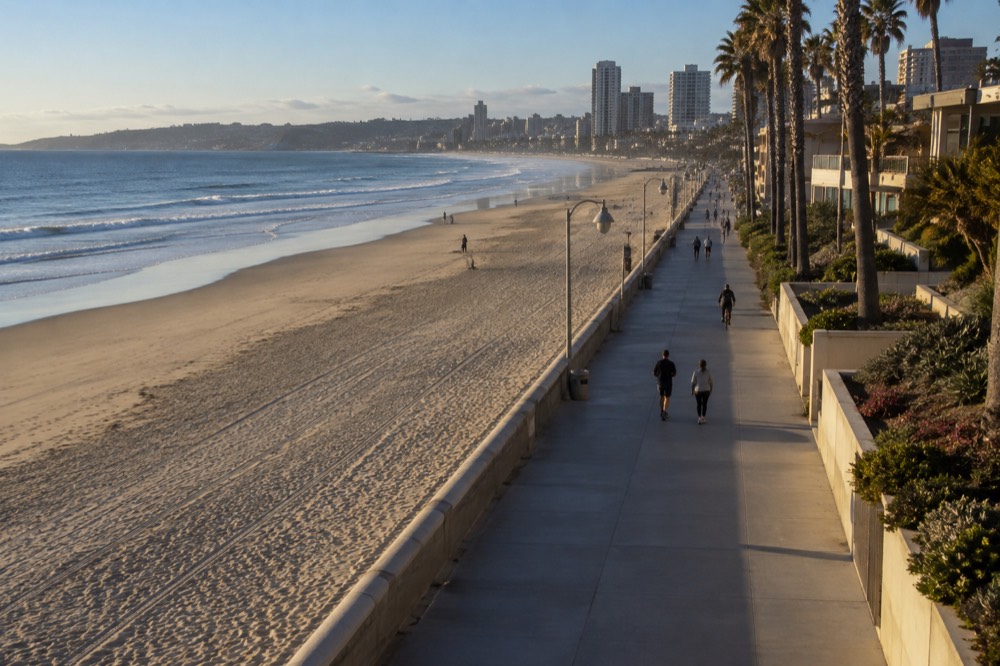
What to skip: the bluff staircases at Sunset Cliffs and the La Jolla Cove descent are genuinely not workable, and the tidepools at Cabrillo sit below a steep road with a closing time of 4:30 pm. Cabrillo's upper park, the lighthouse and the whale overlook are all reachable by road and worth the drive; the tidepools are the one part to release.
What Accessible Tours Work Best in San Diego?
The best accessible tours are the ones that do the moving for you: the hop-on hop-off trolley loop, the harbor cruises that board from flat Embarcadero docks, and the Balboa Park walking routes that can be done as a slow roll. Water-based tours are the standout category, because the bay is calm, the boarding docks are level and the entire experience is seated. The Gaslamp and Old Town food tours need a case-by-case check, since historic sidewalks vary block by block.
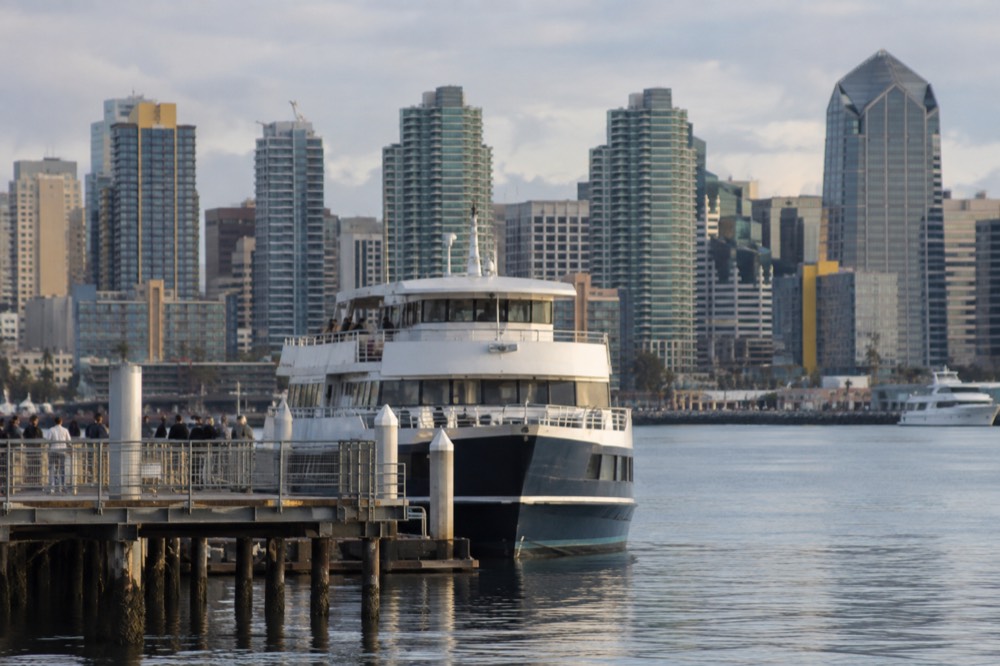
The harbor cruise is the single most reliable tour for limited mobility. It departs from the Embarcadero, boards from a flat dock, runs one hour on calm bay water, and passes the Midway, the Coronado Bridge and the naval fleet while everyone stays seated. The one-hour Harbor Cruise is the standard version. The La Jolla Cove guide covers the coast version of the same idea, though the Cove's launch point is far less accessible than the bay's.
The Best of the Bay scenic tour is the longer, 1.5-hour version with the same flat boarding and more of the north bay added. For a visitor who wants one big sightseeing block without walking a mile, this is the strongest single booking in the roster, and the crew should be told about boarding needs when you book rather than at the dock.
The GoCar tour is the wildcard. A two-seat, GPS-narrated scooter car routes downtown and Old Town or the beaches, and it suits visitors who can transfer into a low seat but cannot manage a walking tour's mileage. It is not a wheelchair solution, but for the limited-mobility traveler who can transfer, it converts a walking day into a driving day.
The Balboa Park walking tour with a local guide deserves a direct question to the operator before booking: the park's core is flat enough that a slow-roll version works, but the guide's route determines whether that is true on the day. The free Sunday organ concerts at Spreckels Pavilion, 2:00 to 3:00 pm year round, are the zero-cost alternative, with the pavilion reachable on the free tram.
Is the USS Midway Museum Accessible for Wheelchair Users?
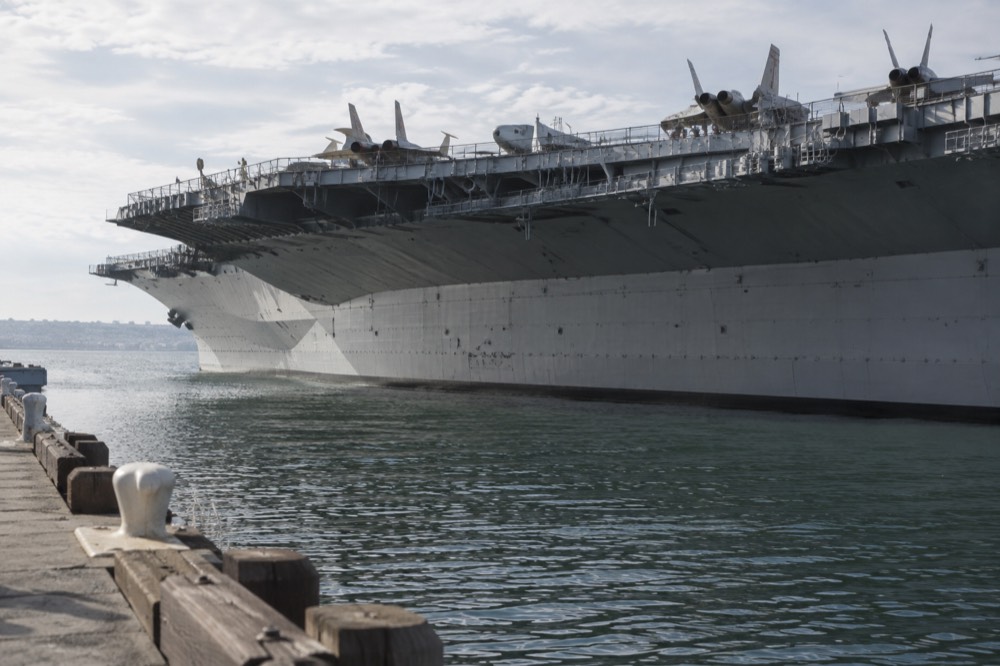
Yes, meaningfully: the Midway's hangar deck and flight deck are reachable by elevator, the museum publishes its access details on its own visit page, and the standard entry ticket and a valid-any-date admission are both sold through this site's roster. The honest limit is that the below-deck areas, the engine room in particular, are reached by ship ladders and are not accessible. Adult admission is $39 online or $41 at the door, and active duty military with ID enter free.
The Midway earns its place on this list precisely because it looks impossible and is not. The route is: ticket booth on the Embarcadero's flat promenade, elevator up to the hangar deck, then a second lift serving the flight deck. The hangar deck alone holds a large share of the aircraft collection and restoration exhibits, and the flight deck adds the skyline view over the bay. Plan two to five hours, which is the museum's own estimate of a visit.
The valid-any-date admission is the accessibility detail most visitors miss. A firm timed ticket is a poor fit for a day whose energy budget is unpredictable, and the any-date version removes that pressure entirely. Hours are 10:00 am to 5:00 pm with last admission at 4:00 pm, closed Thanksgiving and Christmas Day.
What Should You Skip, and What Should You Plan Instead?
Skip the bluff-and-staircase experiences: Sunset Cliffs' descents, the La Jolla Cove stairs, and Cabrillo's tidepools, which close at 4:30 pm below a steep road. Replace them with Cabrillo's upper overlooks by car, the Mission Bay shoreline paths, the Embarcadero's flat mile, and Balboa Park's gardens. September is the quiet, warm month to do all of it: it is the lowest-visitation month at Cabrillo despite being among the warmest of the year.
The skip list is short and specific. The tidepools at Cabrillo National Monument are the clearest case: the whole coastal area closes at 4:30 pm, the access road is steep, and the reward does not justify the effort for a visitor who cannot manage the grade. The upper park is the opposite story, with the lighthouse, the visitor center and the Kelp Forest whale overlook all reachable by vehicle on the park's main road. Entrance is $20 per private vehicle, valid for 7 days, and the Cabrillo National Monument guide covers the full layout.
The replacement list is where a trip gets built. The Embarcadero is a flat, wide promenade connecting the Midway, the Maritime Museum's berthed ships and Seaport Village, all visible from a chair without a single obstacle. Mission Bay adds miles of continuous shoreline path. Balboa Park's gardens, the Botanical Building and the Sunday organ concerts fill a full day at zero cost.
| Skip this | Plan this instead | Why |
|---|---|---|
| Cabrillo tidepools | Cabrillo lighthouse and whale overlook by car | Tidepools close 4:30 pm below a steep road; overlooks are road-served |
| La Jolla Cove stairs | La Jolla's Coast Boulevard overlooks | Bluff-top views without the descent |
| Sunset Cliffs staircases | Sunset Cliffs' drive-up viewpoints | The upper viewpoints are roadside |
| Ocean-beach sand | Mission Bay shoreline paths | Paved, flat, continuous, water-level |
Common Questions About Accessible San Diego
Is San Diego wheelchair accessible?
Largely, in the visitor core. The Embarcadero, Balboa Park's central mesa, Mission Bay and Coronado are flat and paved, every Trolley line boards level, and ADA placards park free in every Balboa Park lot and downtown meter. The weak points are the ocean beaches, the bluff staircases and the tidepool areas, which need borrowed beach wheelchairs or a substitute plan.
Does the San Diego Trolley have reduced fares for disabled riders?
Yes. The MTS fare chart lists $1.25 one-way and $3.00 for a day pass for seniors 65+, disabled riders, Medicare cardholders and youth with ID. Pay with PRONTO and the system caps automatically at the day-pass value, so there is no reason to buy a day pass up front.
Can you park free with a disabled placard in San Diego?
Yes, in the places that matter most. Disabled placards and plates park free with no time limit in every Balboa Park lot and at every downtown meter. Balboa Park's paid parking for other drivers, currently $8 to $16 a day, is scheduled to be removed entirely on 1 January 2027.
Is the USS Midway Museum accessible?
Partly, and the accessible part is the good part. Elevators serve the hangar deck and flight deck, and the museum publishes its access details on its own visit page. Below-deck areas such as the engine room are reached by ship ladders and are not accessible. Adult admission is $39 online or $41 at the door.
Which San Diego beaches are best for limited mobility?
The bay side beats the ocean side. Mission Bay's shoreline paths are flat, paved and continuous, and Coronado's promenade runs level behind the sand. For the ocean beaches, beach wheelchairs are borrowed from staffed lifeguard stations, generally 9:00 am to dusk, so arrive early in the day.
What is the best accessible tour in San Diego?
The harbor cruises, which board from flat Embarcadero docks and run on calm bay water with everyone seated. The one-hour Harbor Cruise and the 1.5-hour Best of the Bay scenic tour are the two versions. The hop-on hop-off trolley is the best land option for visitors who cannot manage transfers and standing waits.