Hidden Gems in San Diego: 15 Overlooked Spots Locals Actually Love
San Diego's famous attractions get the crowds, but the city keeps its best corners quiet: a free Sunday organ concert, a cliff road most visitors never drive, a mining town in the mountains, and a museum you can walk into without a ticket.
Short answer
The best hidden gems in San Diego include the Spreckels Organ Pavilion's free Sunday concerts, the Botanical Building in Balboa Park, Mount Soledad's hilltop viewpoint, the Berkeley ferry gift shop at the Maritime Museum, and the mountain town of Julian. Most cost nothing, and several sit within a short trolley or bus ride of downtown.
San Diego's postcard attractions, the Zoo, the Midway, SeaWorld, pull millions of visitors a year, and the crowds that come with them. The city's second layer is quieter. It includes a pipe organ the size of a building, a cliffside walking path where the marine layer burns off last, a historic ferry where the gift shop needs no museum ticket, and a mountain town an hour inland where the main event is pie.
This guide covers fifteen of those corners, organized the way you would actually visit them: free gems first, then outdoor ones, then the neighborhoods and small museums that never make a top-five list. Every practical figure here, hours, fares, entrance fees, comes from the official source, and where something is genuinely unknowable, like beach parking prices, this page says so instead of guessing.
What Are the Best Hidden Gems in San Diego?
The best hidden gems in San Diego are the Spreckels Organ Pavilion's free Sunday concerts, the Botanical Building and Timken Museum of Art in Balboa Park, Mount Soledad's hilltop viewpoint, Sunset Cliffs Natural Park, the Berkeley ferry gift shop on the Embarcadero, Potato Chip Rock, the town of Julian, and North Park's brewery side streets. Most are free, nearly all are reachable by the $6.00 MTS day pass, and none require a timed entry or a reservation.
That list is deliberately mixed. Some hidden gems are hidden because they sit inside a famous park that most people experience through one crowded attraction. Others are hidden because they sit an hour's drive from the coast, in country that does not look like San Diego at all. A few are hidden in plain sight, a gift shop aboard a historic steam ferry that thousands of people walk past on the Embarcadero every day.
The pattern worth knowing: San Diego's overlooked spots cluster around three things the city does unusually well. It has more free cultural institutions than a city of its size usually does. It has a coastline that keeps producing dramatic, hard-to-build-on edges. And it has mountains close enough that a gold rush town can survive as a day trip.
Which Overlooked Spots Should Top Your List?
Start with the Spreckels Organ Pavilion in Balboa Park, where free one-hour concerts run every Sunday from 2:00 to 3:00 pm, year round, rain or shine. Then add the Botanical Building, free and open roughly 10:00 am to 4:00 pm daily except city holidays, the Timken Museum of Art, also free, and the Maritime Museum's Berkeley ferry gift shop, open daily 10:00 am to 4:00 pm with no museum admission needed.
The organ pavilion is the single most under-visited thing in a park full of under-visited things. The pavilion holds one of the world's largest outdoor pipe organs, and the park runs a free concert every Sunday afternoon regardless of weather. Locals bring folding chairs and lunches. Visitors, bent on the Zoo, walk right past. The official pavilion page publishes the concert calendar, and the setting, an open-air colonnade facing a garden, costs nothing to sit in.
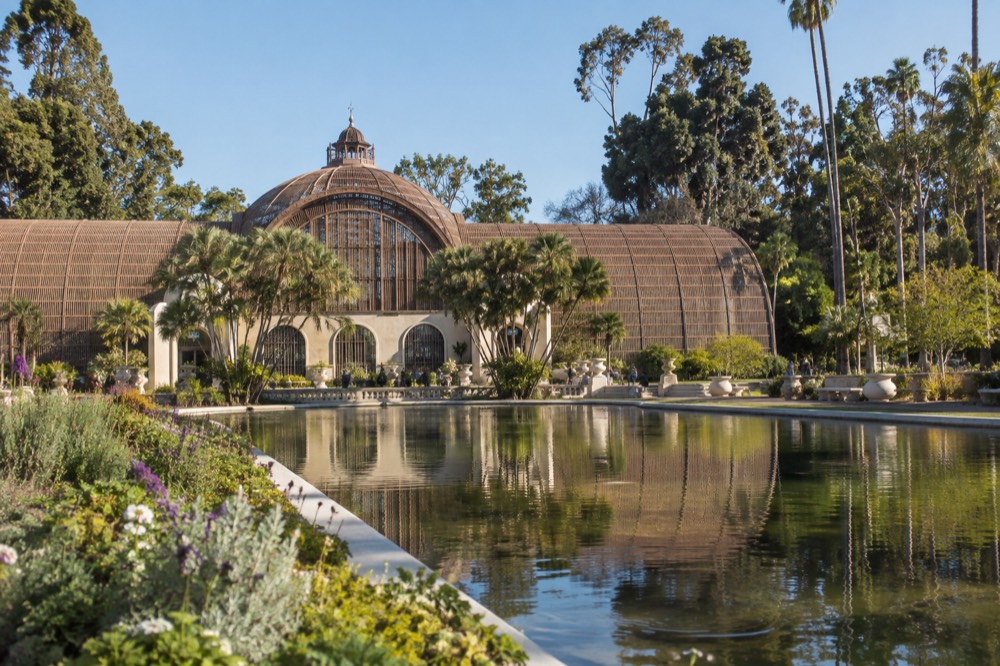
The Botanical Building sits a few hundred yards away, and it is the park's most photographed structure from the outside and one of its emptiest inside. It reopened after a restoration and holds a dense collection of plants under a lathwood dome. Next door, the Timken Museum of Art is free every day, a small, serious collection that takes under an hour. Between the two of them you can fill a whole Balboa Park morning without buying a single ticket.
Down on the waterfront, the Maritime Museum of San Diego moors the Berkeley, a historic steam ferry boat, at the foot of Grape Street. The museum itself charges admission, but the Berkeley's gift shop is open daily and needs no ticket, which makes it one of the few historic ship interiors in the harbor you can step into for free. The museum's visit page confirms the arrangement.
| Spot | What it is | Cost | Hours to plan around |
|---|---|---|---|
| Spreckels Organ Pavilion | Free outdoor pipe organ concerts | Free | Sundays, 2:00 to 3:00 pm, year round |
| Botanical Building | Restored lathwood conservatory | Free | Roughly 10:00 am to 4:00 pm, closed city holidays |
| Timken Museum of Art | Small fine-art museum | Free | Daily, under an hour to see |
| Berkeley ferry gift shop | Gift shop aboard a historic steam ferry | Free, no museum ticket | Daily, 10:00 am to 4:00 pm |
The trolley is the practical backbone for this kind of wandering. The narrated hop-on hop-off version runs for two full days, which is enough to hop off at Balboa Park, the Embarcadero and Old Town and still have a second day for the stops you missed. If you would rather set your own route, a two-hour GoCar tour covers downtown plus either Old Town or the beaches in a story-telling three-wheeler you drive yourself. And the USS Midway entry ticket, while not hidden, anchors the Embarcadero walk that the Berkeley and the waterfront gems below hang off.
What Are the Best Free Hidden Gems?
The free list runs deeper than most visitors expect: the Botanical Building, the Timken, the Spreckels concerts, the Berkeley gift shop, the weekend Lawn Programs at the House of Pacific Relations International Cottages, Sunset Cliffs, Mount Soledad, and the entire Balboa Park grounds and trail network. The resident free-Tuesday museum rotation exists too, but it is a residency benefit for City and County residents plus active military, not a visitor perk.
That last point matters, because it is the most commonly garbled fact in San Diego travel content. Balboa Park's rotating free Tuesdays are for residents of the City and County of San Diego and active military with dependents, with photo ID showing an address required. A visitor from out of state cannot use it, and the rotation has no program in December. The official rotation page is the only source to trust for which museum falls on which Tuesday, because the schedule has changed repeatedly over the years.
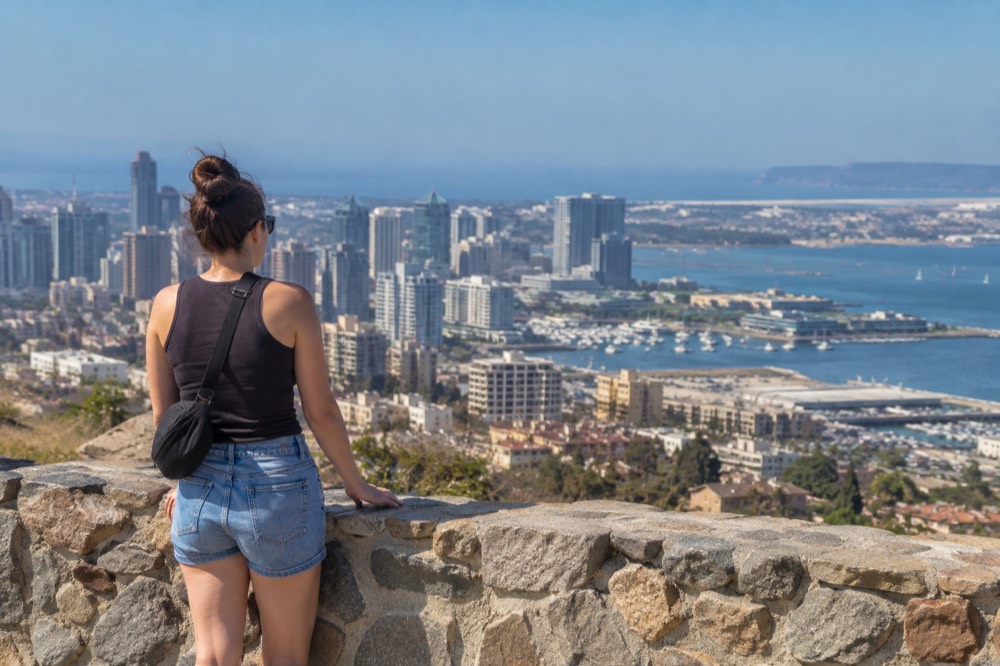
Mount Soledad is the free gem with the biggest payoff per minute. The hilltop memorial in La Jolla offers a full-circle view: the ocean, the bays, Mexico's hills to the south on clear days, and the mountains to the east. It costs nothing, it is open to the sky, and it sits a short drive or a solid uphill walk from the village. Our full Mount Soledad viewpoint guide covers how to get there and when the marine layer clears.
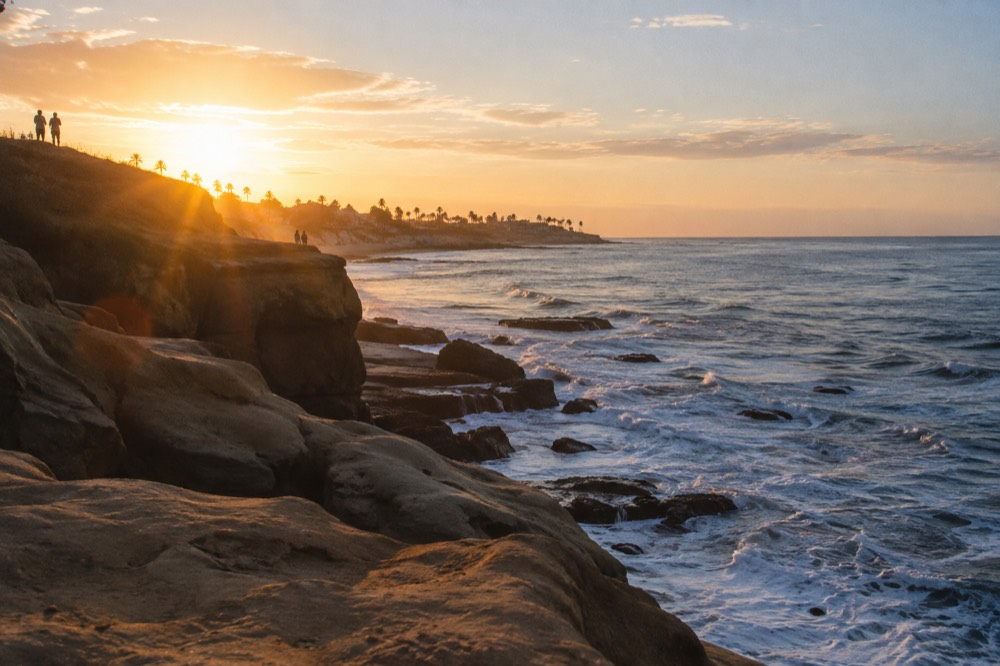
Sunset Cliffs Natural Park belongs on the same list. The oceanfront park in Point Loma is a chain of bluff-top walking paths and sandstone cliff faces that do exactly what the name promises at the end of the day. It is free, it is open, and it draws a fraction of the crowd that La Jolla's beaches do. The cliffs are also unfenced in places and the city's lifeguards, who staff nine permanent oceanfront stations along roughly 24 miles of coast, post rip-current advice that applies to every beach here: swim parallel to the shore if caught, and swim near a lifeguard. The city's rip-current page is worth sixty seconds before any coastal walk that might turn into a swim.
Which Hidden Gems Are Outdoors?
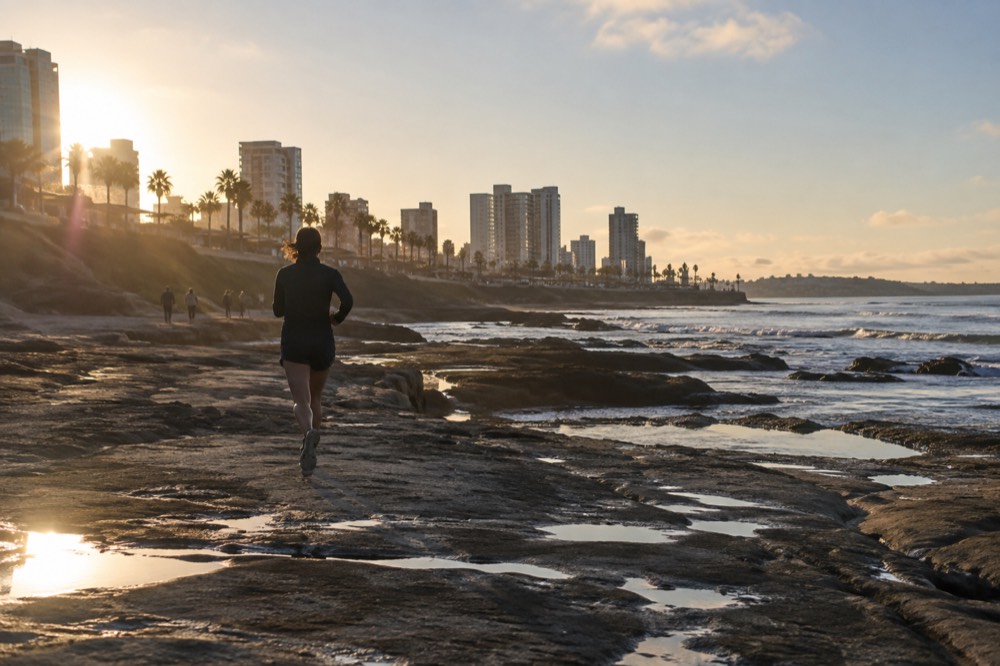
The outdoor hidden gems are Potato Chip Rock on Mount Woodson, the Bayside Trail at Cabrillo National Monument, the tidepools below Cabrillo's coastal area, Torrey Pines' quieter trails, and Sunset Cliffs. Note the clock at Cabrillo: the Bayside Trail closes at 4:00 pm, the tidepools and coastal area close at 4:30 pm, and the whole park shuts at 5:00 pm sharp, with no access before 9:00 am.
Cabrillo is the classic example of a famous place with hidden corners. Most visitors drive to the Old Point Loma Lighthouse, photograph the view, and leave. The park's own pages tell a fuller story: more than 20,000 gray whales pass offshore each year, most in late December through February, with mid-January the migration's peak, and the best in-park viewing spots are the Kelp Forest Overlook and the lighthouse itself. The Bayside Trail, which drops toward the bay through native scrub, is the walk most people skip. Entrance is $20 per private vehicle, valid for seven days, and the park's hours page lays out the staggered closing sequence that catches out late arrivals.
Potato Chip Rock is the region's most photogenic slab of granite, a thin fin of stone on Mount Woodson near Poway that produces the classic forced-perspective photo. The hike up is a real workout, several miles of steady climbing, and the rock itself is a short scramble off the summit trail. It is free, it is popular with locals rather than tourists, and weekday mornings are the quiet window. Our Potato Chip Rock trail guide has the trailhead logistics.
Torrey Pines State Natural Reserve is famous in name and quiet in practice on its north loops. The reserve protects the rarest pine tree in North America, and the beach below the bluffs is often near-empty on weekdays outside summer. The tidepools scattered along the reserve's base and across the county's rocky shelves are their own micro-hunt: our San Diego tide pools guide explains how tide timing turns a walk into an aquarium visit.
| Outdoor gem | Location | Cost | The catch |
|---|---|---|---|
| Bayside Trail | Cabrillo National Monument, Point Loma | $20 per vehicle, valid 7 days | Trail closes at 4:00 pm, park at 5:00 pm |
| Tidepools | Cabrillo's coastal area | Included in park entry | Coastal area closes at 4:30 pm, go at low tide |
| Potato Chip Rock | Mount Woodson, near Poway | Free | Several miles of steady climbing, hot midday |
| Sunset Cliffs | Point Loma | Free | Unfenced cliff edges, stay on marked paths |
| Torrey Pines north loops | Torrey Pines State Natural Reserve | Free | Quietest on weekday mornings |
Which Neighborhoods Count as Hidden Gems?
North Park, Ocean Beach, Hillcrest and Liberty Station are the neighborhoods that reward a half day each. North Park carries the city's beer-education culture, Ocean Beach keeps an old-school beach-town pace, Hillcrest packs a walkable restaurant core, and Liberty Station turns a former naval training center into parks, galleries and a public market. All four sit on or near MTS bus and trolley lines, where a day pass is $6.00.
North Park is the strongest pick of the four. The neighborhood's 30th Street corridor holds one of the densest craft brewery stretches in the country, and the North Park neighborhood guide maps the walk. The Beerucation tour built around it runs three hours and treats the beer as a curriculum rather than a crawl, which is the neighborhood's own spirit. If you would rather eat than drink, the San Diego breweries guide widens the net countywide.
Ocean Beach is the hippie beach of local legend, a dog beach, a pier, a farmers market and a sunset scene that has resisted every attempt at polish. Liberty Station, on the other hand, is the polished one: a converted Navy base where the parade ground is now a green, the barracks are galleries and maker spaces, and the public market feeds the crowds that the waterfront three miles east monopolizes. Hillcrest sits between them in spirit, walkable, food-dense, and largely invisible to visitors who never leave the Gaslamp. Everything else covered here is indexed on Things to Do in San Diego.
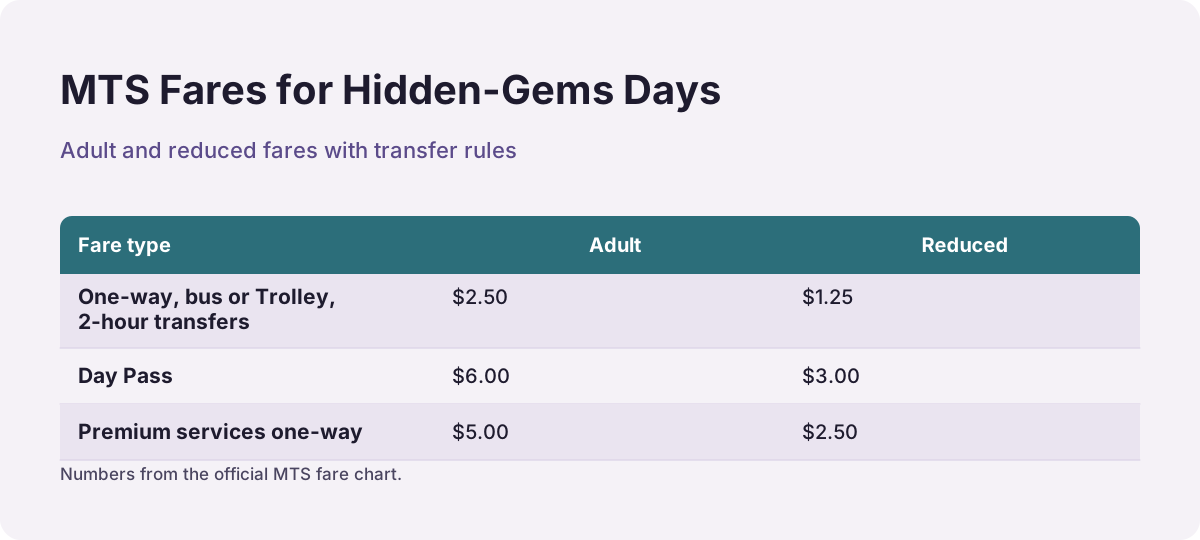
Getting between them is cheap. MTS fares are $2.50 one-way with two-hour transfers and $6.00 for a day pass, and the PRONTO card or app applies fare capping, so once your rides total the day-pass value the rest of the day rides free. There is no reason to buy a day pass up front. The official fare chart is the source for every number above.
| MTS fare | Adult | Reduced (senior 65+, disabled, Medicare, youth with ID) |
|---|---|---|
| One-way, bus or Trolley, 2-hour transfers | $2.50 | $1.25 |
| Day Pass | $6.00 | $3.00 |
| Premium services one-way | $5.00 | $2.50 |
Which Small Museums and Odd Corners Are Worth It?
The small-museum hidden gems are the Maritime Museum's historic ships, the Japanese Friendship Garden's quiet corners in Balboa Park, the Model Railroad Museum tucked under the park's west mesa, and Old Town's state park buildings, which are free to wander. The Balboa Park Explorer Pass, from $66 adult for a one-day limited tier, bundles up to four venues in a day if you want the indoor side in bulk.
The Model Railroad Museum is the one that surprises people. It sits beneath the Casa de Balboa and is one of the largest of its kind in North America, yet it never appears on visitor itineraries. The Japanese Friendship Garden sits above it, a compact, deliberate landscape that on a weekday morning can hold more koi than people. Note that neither this site nor any booking platform sells tickets for most of the Balboa Park museum cluster: Fleet Science Center, the Air and Space Museum, the Museum of Art, the Museum of Us and theNAT all sell through their own channels, so buy at the gate or on the venue's own site.
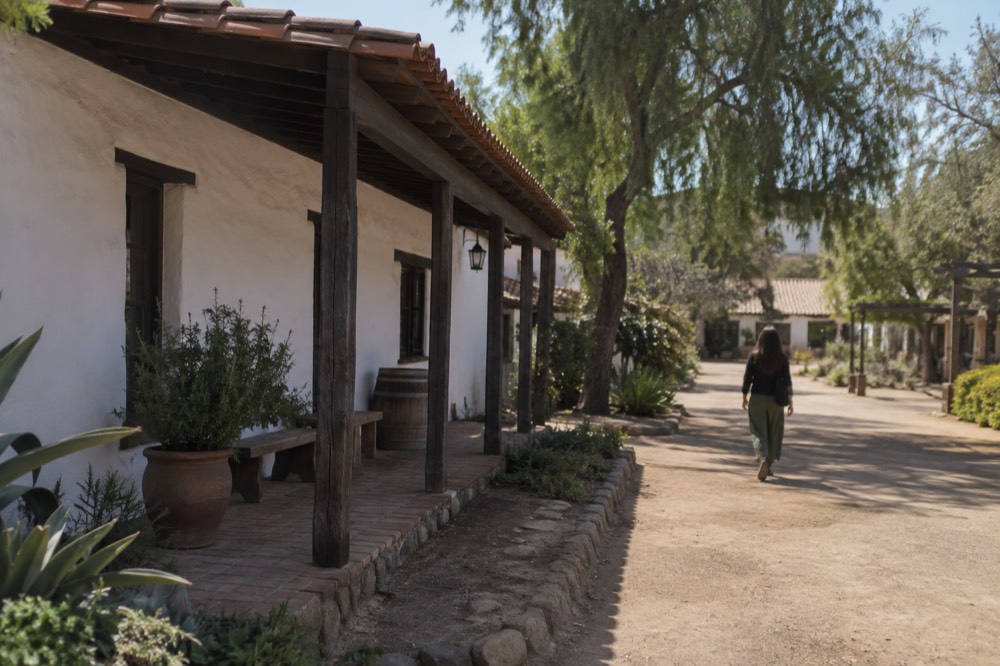
Old Town hides in the opposite direction, by being too famous in the wrong way. Most visitors hit the state park's central plaza and the first restaurant they see. The actual hidden gem is the perimeter: the restored adobes and period buildings of Old Town San Diego State Historic Park, which carry no admission at all, plus the quieter side streets where the tequila-and-tacos food tours run. Our Old Town guide separates the plaza from the periphery.
What Hidden Gems Sit Outside the City?
Julian, Anza-Borrego Desert State Park and the back roads of Palomar are the out-of-town gems. Julian is a gold mining town about an hour inland, known for apple pie and a historic main street. Anza-Borrego opens into desert badlands, wildflower springs and dark skies. Both need a car: there is no trolley or practical transit option, and this is one itinerary where renting one is genuinely the right call.
Julian is the easiest sell. The town's gold mine past survives in its buildings and its museum, and the apple orchards around it turn autumn into the town's whole personality. The seven-hour guided day trip from San Diego pairs a gold mine tour with pie, which is about as honest a summary of Julian as exists. If you would rather walk than ride, the historic walking tour of the town runs one to two hours on a pies-and-pickaxes theme. Our Julian guide covers the drive, the seasons and where the orchards are.
Anza-Borrego, two hours east, is the county's other face entirely: the largest state park in California, with slot canyons, palm oases and a spring wildflower bloom that arrives on its own schedule. The Anza-Borrego guide covers what a first visit can realistically hold. The practical warning for both trips is the same one that applies to every inland corner of the county: distances are real, cell service is not guaranteed, and the coastal marine layer that keeps the beaches grey in June does not follow you inland, where June is genuinely hot and clear.
How Do You Plan a Hidden-gems Day Without a Car?
Build the day around the trolley and the Embarcadero: MTS day pass at $6.00, Balboa Park's free layer in the morning including the Botanical Building and the Timken, the Berkeley gift shop and Embarcadero walk at midday, Old Town's free state park in the afternoon, and a Sunday organ concert at 2:00 pm if the day allows. Every stop on that route is either free or a small fee, and none needs a reservation.
The transit spine matters because parking is the city's most reliable hidden cost. Downtown meters run $2.50 per hour with enforcement Monday to Saturday, and Sunday is no longer free everywhere in the commercial areas of Downtown, Uptown, Mid-City and Pacific Beach. Balboa Park's lots currently run $8 to $16 a day for non-residents, though that program is scheduled to end on 1 January 2027. Honest advice: on a hidden-gems day, the car is more burden than help, and the trolley plus a good pair of shoes covers most of this list.
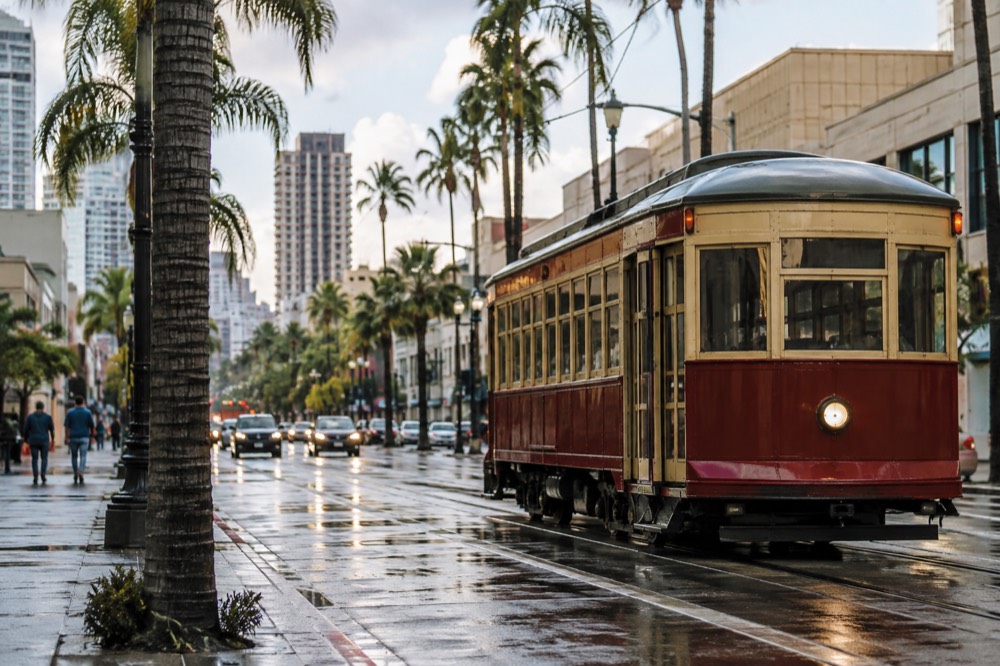
The narrated trolley tour is the version of that spine with the thinking done for you. Two days of hopping covers Balboa Park, the Embarcadero, Old Town, the Gaslamp and Coronado's edge, and the narration fills the gaps between stops with the city's history. It pairs naturally with the Midway, whose entry ticket sits a five-minute walk from the Berkeley: do the museum in the morning, the ferry's gift shop and the Embarcadero's free stretch in the afternoon.
For the under-served corners, the GoCar fills the gaps the trolley does not reach. The two-hour route covers downtown plus either Old Town or the beaches, and because you drive it yourself, you set the pace at the viewpoints the fixed routes skip. It is the closest thing to a self-guided hidden-gems loop with a narrator in the passenger seat.
One timing note that doubles as the best secret on this page: go in September. The month is statistically the city's real summer, warmer in air and ocean than July, yet it is the quietest month of the year at Cabrillo and across the coast's visitor counts. The marine layer that locals call May Gray and June Gloom, visible in the fact that June's normal high of 71.7F is lower than October's 74.6F, has long gone by September. You get the warmest water of the year, at a mean of 67.6F off La Jolla, with roughly half of July's crowds. Our San Diego weather and best time to visit guide unpacks the whole calendar, and the free things to do guide extends the zero-cost side of this list.
Common Questions About Hidden Gems in San Diego
What are the best hidden gems in San Diego?
The Spreckels Organ Pavilion's free Sunday concerts, the Botanical Building, the Timken Museum of Art, Mount Soledad's viewpoint, Sunset Cliffs, the Berkeley ferry gift shop, Potato Chip Rock, and the mountain town of Julian. Most are free and none require a reservation.
Are Balboa Park's museums free?
The park grounds, gardens and trails are always free, as are the Botanical Building, the Timken and the Sunday organ concerts. The museums charge admission, and the rotating free Tuesdays are a benefit for City and County of San Diego residents and active military with ID, not for visitors.
Can you visit San Diego's hidden gems without a car?
Most of them, yes. The MTS day pass is $6.00 with fare capping through PRONTO, and the trolley plus bus network reaches Balboa Park, Old Town, the Embarcadero, North Park and Hillcrest. Julian and Anza-Borrego are the exceptions: both genuinely need a car.
What is the best month to avoid crowds in San Diego?
September. Its normal high of 77.2F beats July's by almost two degrees and the ocean is warmer than July's, yet it is the lowest visitation month at Cabrillo National Monument, with 56,876 recreation visits against July's 83,999 across 2022-24.
Is Sunset Cliffs free?
Yes, the natural park is free and open. Stay on the marked paths: the cliff edges are unfenced in places, and the city's lifeguards treat rip currents as the coast's primary hazard for anyone who ends up in the water.
Do you need a tour to see San Diego's hidden gems?
No, but the hop-on hop-off trolley, valid for two days, is an efficient way to link the downtown, Balboa Park and Old Town gems without parking worries, and a guided tour is the only practical way to reach the Julian gold mine with pie in a single day.